Is the Blue Cave worth it? Our honest take after going twice
The honest version, before we tell you it’s worth it
Yes, the Blue Cave is worth it. But the full picture is more complicated than that, and we’ve seen enough people return from the tour disappointed — not because the cave wasn’t beautiful, but because they weren’t prepared for what the day actually involves — that we want to give you the complete version.
The cave is extraordinary. It is also ten to fifteen minutes of your life in an eleven-hour day. Everything else on the tour — the transit, the island stops, the lunch, the swimming — has to carry the experience emotionally. When it does, the tour is excellent. When it doesn’t (bad weather, inexperienced guide, a boat that smells of diesel), the cave alone can feel like an expensive, brief shimmer.
Here’s everything we actually know about it, from two trips.
| Where | Biševo island, southwest of Vis |
| Time in cave | 10–15 minutes, sometimes less if busy |
| Cost | around €55–80 for the tour + €18–24 cave entrance |
| Total day length | roughly 10–11 hours from Split |
| Best months | September for thinner crowds; peak season is very busy |
What you’re actually seeing in the cave
Biševo is a small island southwest of Vis, itself a 2–3 hour speedboat journey from Split. The cave — Modra Špilja in Croatian — is a sea cave with a submerged entrance. Between roughly 11 a.m. and noon, sunlight enters through the underwater opening and bounces off the white limestone seabed, filling the interior with an intense silver-blue glow that’s genuinely unlike anything we’ve seen in a natural space.
The glow is real. Photos don’t oversell it — if anything, the actual luminosity is more astonishing than images suggest. The cave is about 24 metres deep and up to 12 metres wide, large enough to feel dramatic but small enough that the sound of your breathing echoes.
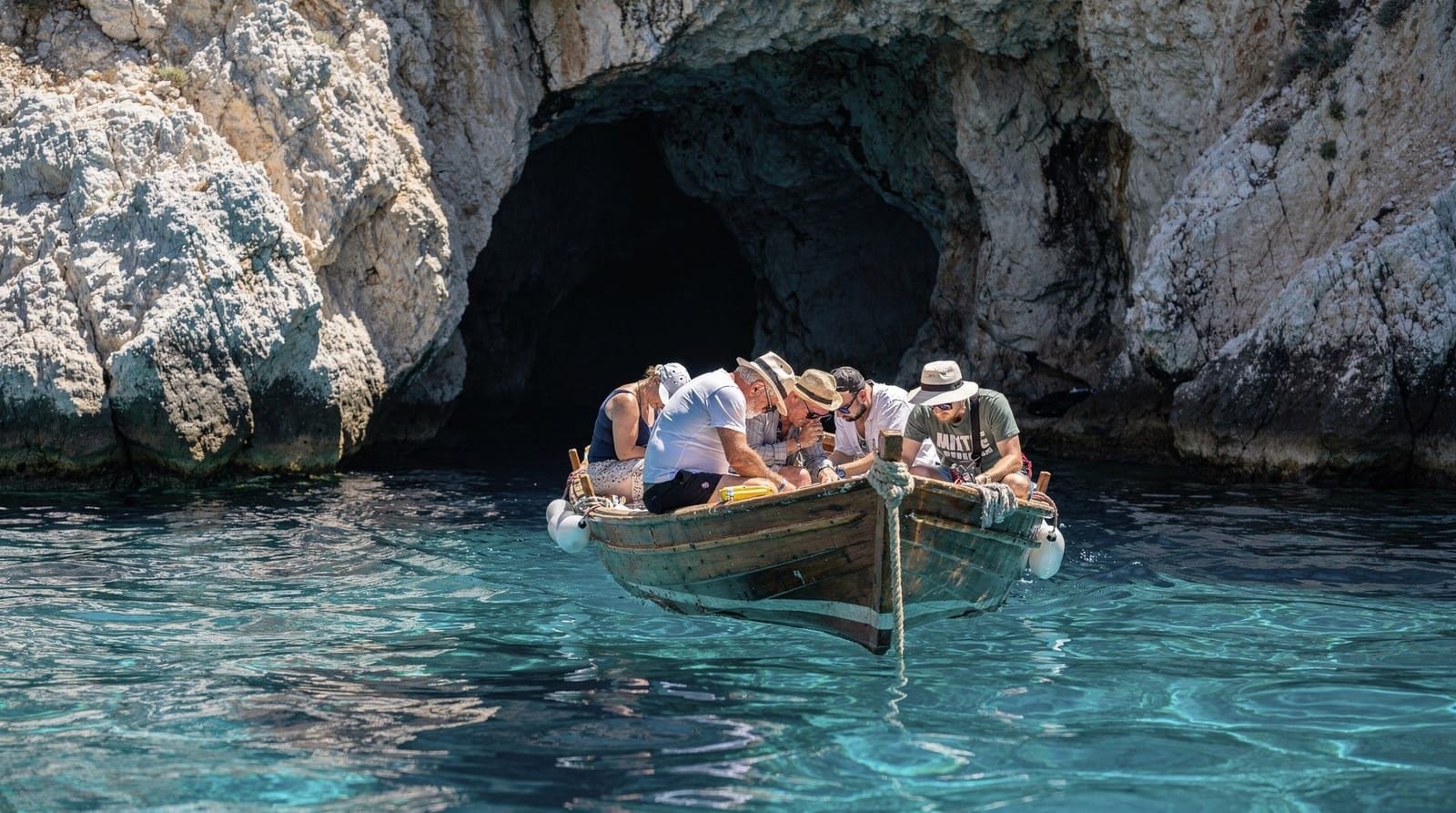
You enter by small rowing boat (the speedboat is too large to fit through the entrance). The standard visit is 10–15 minutes, sometimes less if the cave is busy. You look, you photograph, you absorb the light. Then you row back out.
That’s the cave experience. It is memorably beautiful. It is also brief.
The full-day structure of a five-island tour
The typical tour structure from Split, as offered by most reputable operators on the Blue Cave and five islands route, runs roughly like this:
6:30–7:00 a.m. — Departure from Split harbour by speedboat.
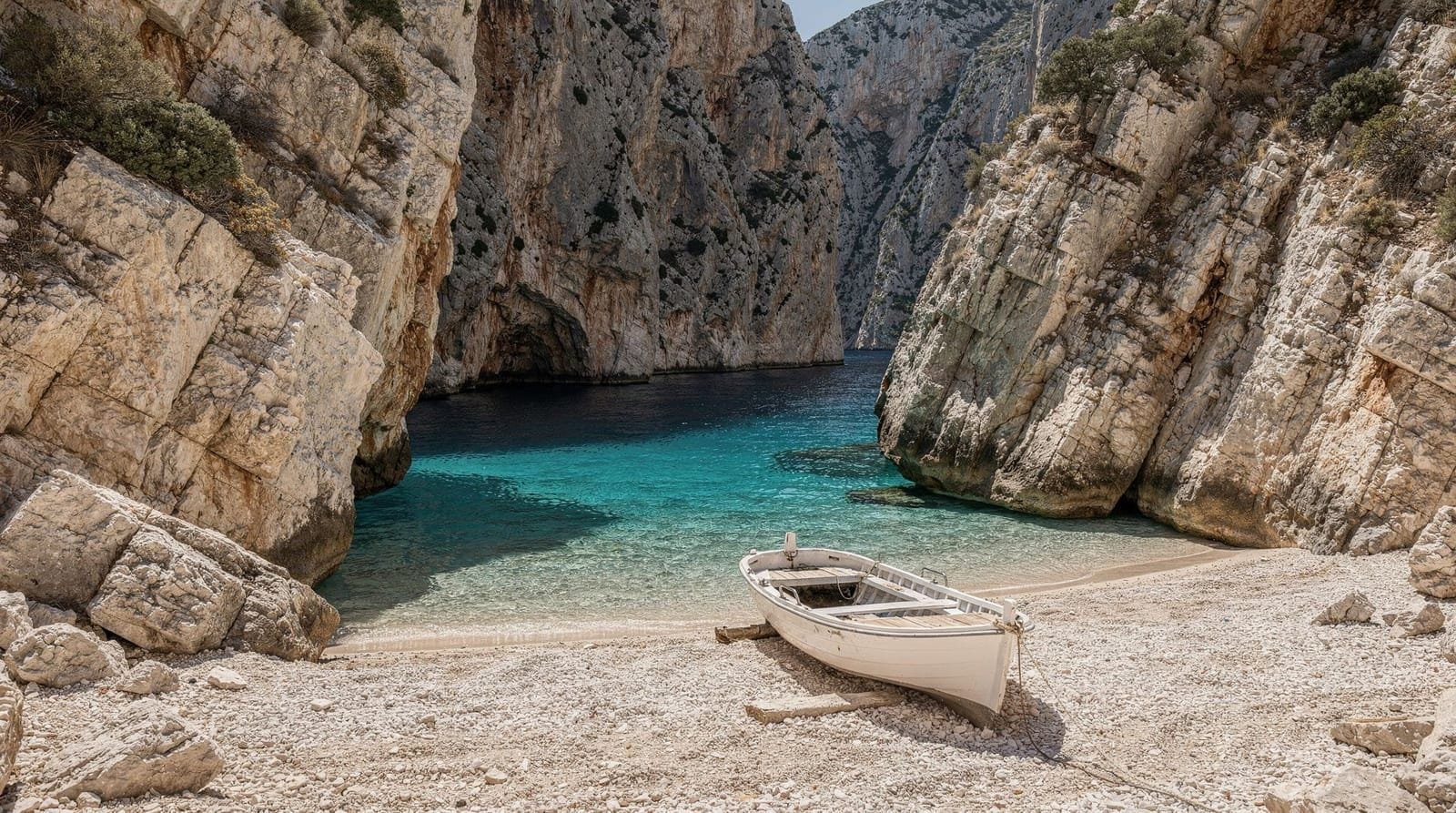
~8:30 a.m. — Stop at Stiniva Bay on Vis. This is arguably the best part of the whole day for many travelers. Stiniva is a natural limestone amphitheater beach, accessible only by sea, where you swim in clear water surrounded by towering rock walls. Vis island is genuinely stunning, and if you’ve never been, this first stop is often a surprise.
~10:30 a.m. — Blue Cave at Biševo. Timing matters here. The tour operators schedule arrival for the peak light window, but if the cave is busy with other boats, you queue on the water. We waited about 35 minutes on our second visit. The cave doesn’t lose its magic in the meantime, but the wait is real.
~12:30 p.m. — Mamma Mia Beach, Pakleni Islands (Hvar). This is the lunch stop — typically a simple restaurant by the water. Meals cost €15–25 extra; they’re included with some operators, separate with others. Confirm before you book. The beach here is nice but not the dramatic scenery of Stiniva.
~2:30 p.m. — Hvar town. An hour or two to walk around the fortified town, climb to the Fortica fortress for views over the Pakleni chain, have a coffee. Hvar in summer is extremely busy, and the town itself can feel overwhelming when you arrive on a tourist boat. See our Hvar island guide for context on what you’re looking at.
~5:00–6:00 p.m. — Return to Split. You’ll typically stop at Brač or another island en route, depending on the operator.
Total time: roughly 10–11 hours, with about 3–4 hours of actual travel by boat.
Book the five-island Blue Cave tour from SplitPrice and what’s actually included
Standard speedboat tours from Split run €55–80 per person, depending on the operator and season. This typically includes the boat, the guide, the rowing boat entrance to the cave, and cave entrance fees (currently around €18–24 per person, though this changes). It does not always include lunch or any food. Confirm explicitly before booking.
The entrance ticket for the cave itself is controlled by the local fishermen’s cooperative, which limits access and manages the queuing. You pay it at the cave — the tour operator arranges the purchase. Budget an additional €18–24 for this.
Some tours advertise lower headline prices (€45) but add the cave ticket as an extra. This isn’t a scam — it’s just how the pricing structure works — but it’s worth knowing.
Group speedboat tour vs. smaller-group alternatives
Not every Blue Cave tour runs the same way, and it’s worth knowing what you’re trading off between the standard version and the smaller-group or differently-routed options.
| Standard group speedboat | Smaller-group / different route | |
|---|---|---|
| Group size | Often 20–40 people on a larger boat | Typically 8–15 people |
| Price | around €55–80 | usually €75–110 |
| Flexibility | Fixed schedule, fixed stops | Sometimes more time at each stop |
| Best for | First-timers, budget-conscious travelers | Travelers who found the description above too rushed |
If the queue-management feeling described above puts you off, a version that swaps the Hvar town stop for extra time at Vis and the Pakleni Islands is worth looking at.
Blue Cave, Vis and Hvar tour with Mamma Mia beach stopWe haven’t found the difference dramatic enough to always recommend paying more — the cave itself is identical regardless of which boat brings you there — but if you value a calmer group and slightly more breathing room at Stiniva, it’s a reasonable upgrade.
When not to book
If the sea forecast is poor. Speedboat tours to Biševo are occasionally cancelled due to rough water — the crossing to Vis is exposed, and a 2–3 hour speedboat ride in one-metre swell is genuinely unpleasant. Check the forecast for the Vis channel specifically (not just Split), and if there’s any doubt, talk to the operator. Most will reschedule or refund if the sea is unsafe.
If you’re prone to seasickness. The speedboat sits low on the water and bounces. If you get sick on ferries, you will likely struggle on a 2-hour speedboat run. Take medication proactively if you’re going.
On the absolute peak days of August. The Blue Cave has a maximum number of boats allowed at any given time. On the very busiest days — late July, the August 15 week — the queue at the cave entrance can stretch to over an hour. This doesn’t ruin the experience, but it does mean 45 minutes sitting in the sun on a small boat.
What we’d change about the experience
On our second visit, we booked a tour that departed slightly later (7:30 a.m.) and included a longer Stiniva stop. This was better. The guide was knowledgeable about the geology of Biševo and the history of the island — something the cheapest tours sometimes skip. We had real time in the cave rather than a rushed ten minutes.
We’d also skip the Hvar town stop if given the option. By the time you arrive in the afternoon, the energy is flat — you’ve been on a boat all day, and Hvar town in summer is very crowded. The Pakleni Islands stop before Hvar is better: you can swim in clear water rather than queue at a café.
Alternatives and ways to pair the cave with the rest of your trip
If the long day on a speedboat doesn’t appeal, you have options. Our Blue Cave tours explained guide compares the different formats side by side, and the five-island tour guide walks through the stops in more detail than we can here. If what you really want is a calm swim in clear water, the best swimming spots near Split are far closer to home and need no early start.
Another way to see the outer islands is to go by public boat rather than a tour. The ferries and catamarans guide explains how that works, and Hvar vs. Brač vs. Vis helps you decide which island deserves a longer stay. For a first look at the cave’s home island, the Biševo destination page gives the background.
If you’d rather spend a day inland, a trip to Krka National Park makes a very different but equally rewarding outing, and our diary of island hopping around Dalmatia shows how the islands feel when you take them slowly. Whichever you choose, plan the day around the weather: September in Split is where we’d point you for calmer seas and thinner crowds. Putting it all together, our five-day island-hopping itinerary shows how the Blue Cave can slot into a longer trip.
The verdict
Go. Book it for a clear-weather day, ideally in September when the crowds at the cave itself are thinner and the Stiniva stop feels more relaxed. Do not underestimate how much the rest of the day matters — the operators who give you real time at Stiniva and have guides who explain what you’re looking at make the trip considerably better than the ones who are running a queue-management operation.
For island hopping more broadly, the five-island tour is an excellent introduction to the outer islands that would otherwise require multiple separate ferry trips over several days. Treat it as a sampler, not a deep dive. If Vis gets into your head — and it often does — go back for a night or two. It’s worth the slower journey.
We also recommend reading our Vis island guide before the tour so Stiniva doesn’t pass in a blur. Context makes extraordinary places more extraordinary.
Trying to decide between islands? Our which Dalmatian island for you guide helps you match your travel style to the right destination.