Packing for a Dalmatian summer: what we actually use
The luggage rule that changed our trips
After our first Dalmatian trip — two suitcases for two weeks, €35 in checked baggage fees, a sweaty struggle up the marble steps of an apartment in Diocletian’s Palace with no lift — we made a rule: one carry-on each, maximum, for any trip of 12 days or fewer. Every subsequent trip has been better for it.
Dalmatia is a lightweight-travel destination whether you intend it or not. The old town streets are cobbled and often steep, ferry-to-ferry island hopping means carrying your bag in and out of boats, and the climate in summer eliminates most of what you’d pack for a city break in northern Europe. Here’s what we’ve landed on after multiple trips.
| Luggage | one carry-on each, for trips up to ~12 days |
| Key items | water shoes, quick-dry swimwear, one light layer |
| Laundry | most apartments have a machine; handwashing works too |
| Buy locally | sunscreen, insect repellent, beach towels (widely available) |
| Skip entirely | umbrella, extra jeans, hairdryer |
Clothes: less is correct
The baseline for a Dalmatian summer week:
3–4 t-shirts or lightweight shirts. Fabric matters here more than anywhere else we travel. Linen or a linen blend is markedly better than cotton in 30°C+ humidity — it breathes, dries overnight if you wash it, and doesn’t hold sweat odour the same way. Merino wool is also good if you prefer technical fabrics. Cotton is fine but takes longer to dry.
1–2 pairs of shorts or lightweight trousers. We pack one pair of chino-weight shorts that passes for smart-casual (useful for nicer restaurants) and one pair of swim-ready trunks/shorts that also work as daywear. If you’re a dress-wearer: a single lightweight dress or two can cover both beach and evening contexts, which is efficient.
1 light layer. Evenings in Dalmatia can feel warm by northern European standards, but if you’re spending time on a boat or up on Marjan Hill at dusk, a thin layer is genuinely useful. A linen button-down or a packable thin-knit covers this. September specifically: bring one layer of substance — a cotton cardigan or lightweight fleece — for evenings, which cool to around 18°C.
1–2 swimsuits. Two is better than one if you’re island-hopping because one may still be damp the next morning. Quick-dry fabric is worth specifying.
Underwear and socks for the trip length, minus two. You can do a small handwash in the sink every other day. Most apartments have a washing machine; it takes ten minutes to use if you ask or check.
One smart option for dinner. Dalmatian restaurants are not formal. A clean pair of trousers and a collar does the job anywhere you’d want to eat. You don’t need a blazer unless you’re celebrating something significant.
Footwear: the crucial category
This is where packing decisions matter most in Dalmatia, and where most first-timers get it wrong.
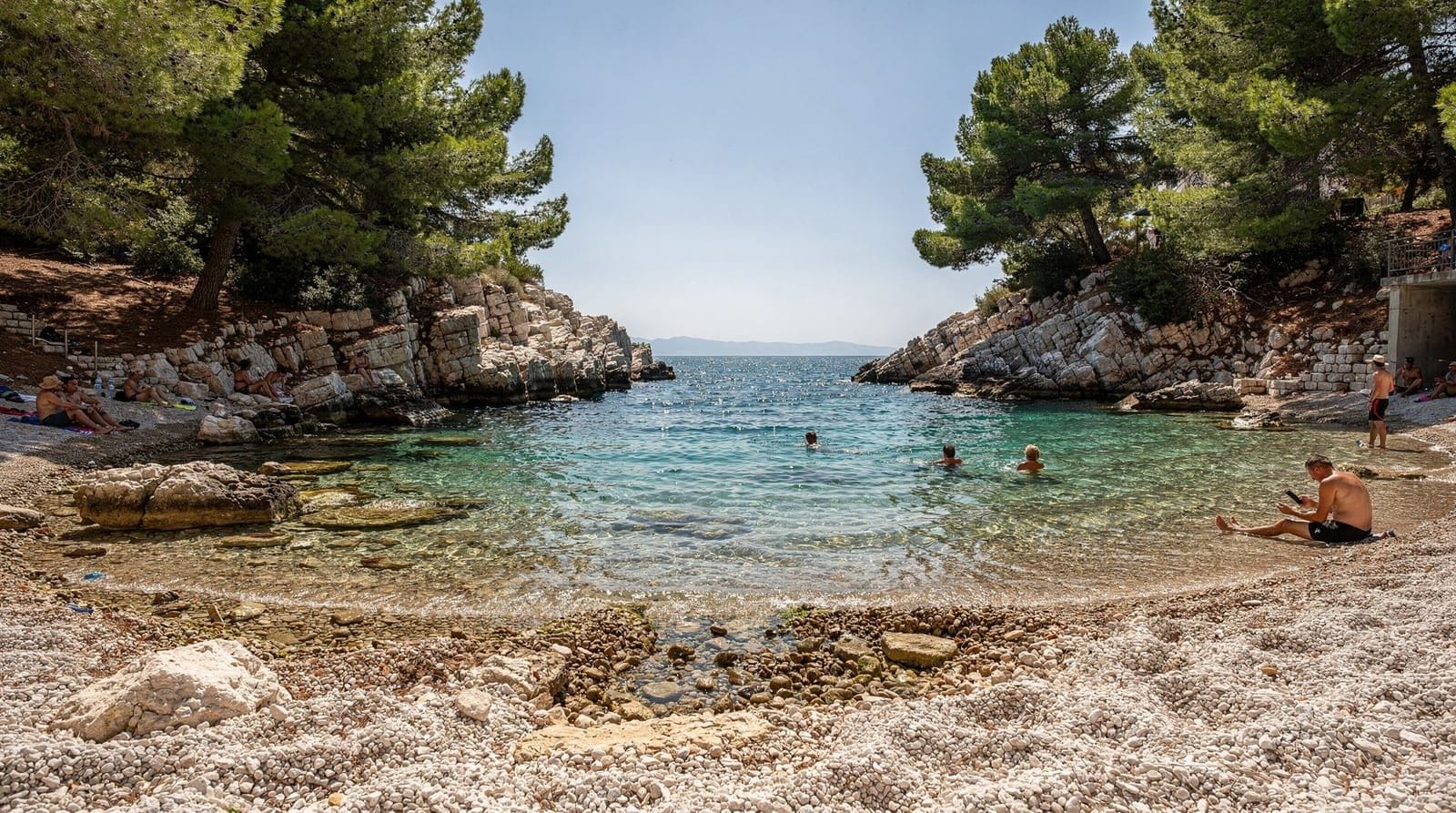
Water shoes or lightweight sport sandals. Essential. Dalmatian beaches are overwhelmingly pebble rather than sand. Walking on wet pebbles in bare feet ranges from uncomfortable to painful on sharp rock shores. Water shoes are also useful when snorkelling off rocks, entering the water at a pebble beach, and for the occasional boat tour where the hull is slippery. Salomon Techamphibians and similar styles work well; any aqua shoe with a rubber sole is fine.
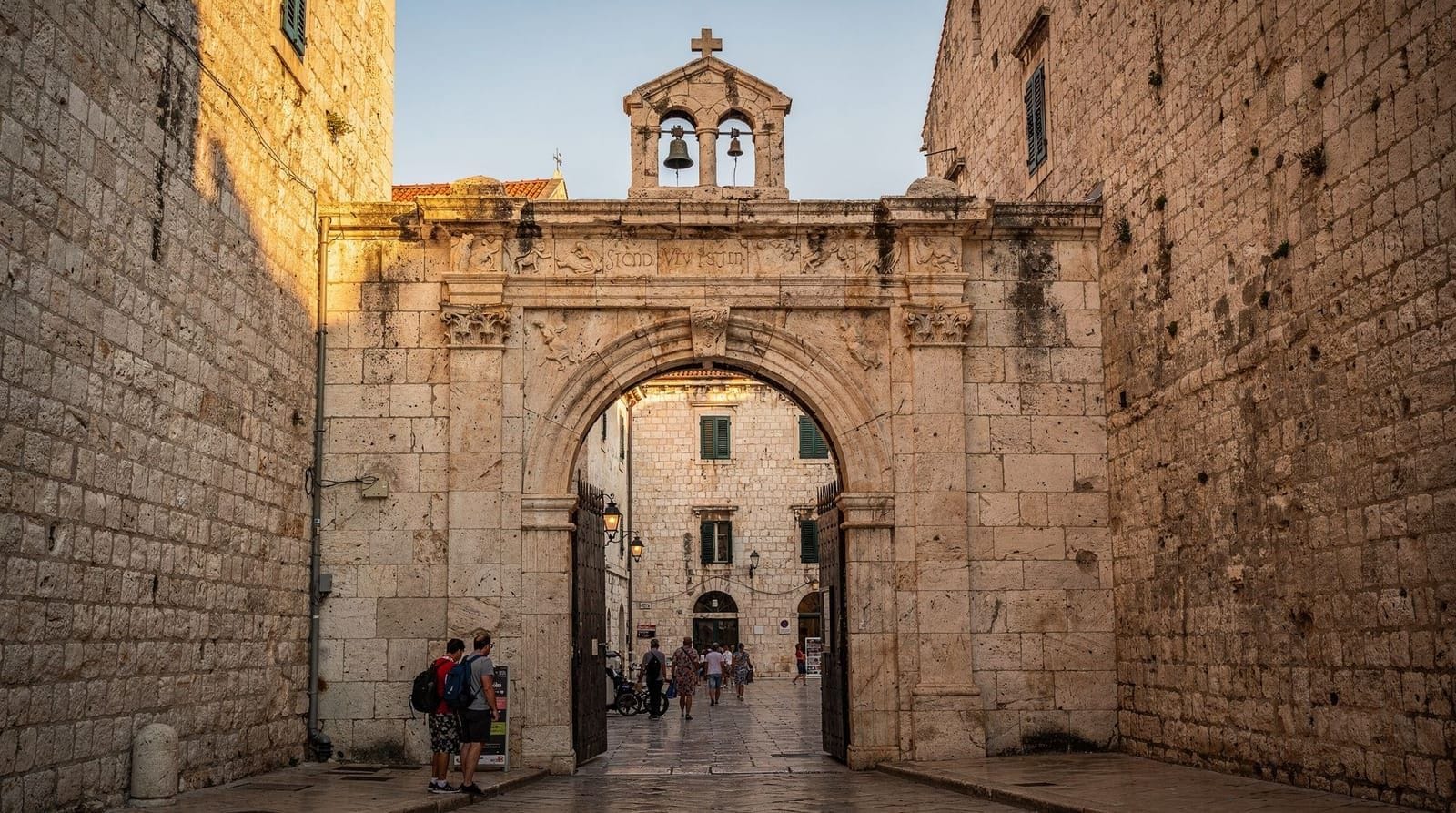
Comfortable walking shoes. The Diocletian’s Palace marble pavement is smooth and steeply sloped in places. Cobblestones elsewhere in the old town are irregular. Do not walk the old town in shoes that provide no grip. Trainers or lightweight trail shoes in good condition are appropriate. Avoid new shoes — break them in before the trip.
Optional: a sandal that works for both walking and evening. Something like a Birkenstock or a Reef with a back strap can replace both a casual walking shoe and a flip-flop if you’re trying to get the count down. This works for a very casual trip; it’s less functional on a day you’re walking 15,000 steps.
What not to pack: heeled sandals (the cobblestones are not your friend), canvas slip-ons with no grip (wet marble is treacherous), fashion trainers without real soles.
Beach gear
A compact, fast-drying microfibre towel weighs almost nothing and eliminates the need to rent towels at beaches (€3–5/day at some locations). Most apartment rentals provide towels but ask before your departure if you can use them at the beach — some decline.
A rashguard/UPF swim shirt: optional but useful if you burn easily. The Adriatic sun on open water during a boat tour hits harder than the shade of a beach umbrella.
Snorkel and mask: the Adriatic is worth snorkelling, the visibility is typically excellent, and rental gear at beach operators is often poor quality. If you pack carefully, a compact snorkel set (mask + snorkel, no fins needed at most locations) adds minimal volume.
Beach read: bring one. The islands and beaches of Dalmatia are places where time genuinely slows down and you will want something to do with the slowing.
If you want to test your swim kit on something other than a pebble beach, a sunset swim from a boat is a good excuse; something like an evening cruise along the Riviera with a swim stop is where quick-dry swimwear, a thin layer for the ride back and a dry bag all earn their place in the same evening.
Sun and health
Sunscreen is available throughout Croatia and doesn’t need to be brought in volume from home. Pharmacy chains (Ljekarni) and supermarkets stock it reliably. Bring a small travel bottle for day one.
Lip balm with SPF: surprising number of people forget this and regret it on day three of boat-based travel.
A reusable water bottle: tap water in Split is safe and good quality. Hotels and apartments fill water bottles for free. This saves €3–5/day on bottled water and eliminates plastic waste. Get one with a carabiner clip so it attaches to your bag on boat trips.
Basic first-aid kit: antiseptic wipes and a few plasters for the inevitable pebble-beach foot incident. Not extensive, just present.
What not to bring
Formal clothing beyond one smart outfit. Dalmatia doesn’t need it. Even the nicer restaurants have a relaxed dress code.
An umbrella. Summer in Dalmatia is one of the driest climates in Europe. The chance of rain in July or August is very low. September has slightly more chance of a brief shower, but a light waterproof jacket packs smaller than an umbrella and is more useful on a boat.
Multiple pairs of jeans or heavy trousers. Jeans in 30°C and coastal humidity are a misery. If you need a heavier layer for cooler evenings, one thin pair of chinos suffices.
A hairdryer. Almost every accommodation in Split and the islands provides one. Check your specific listing, but it’s nearly universal.
What changes by season
The packing list above is a summer baseline. Dalmatia’s shoulder and off-season months change the layer mix more than most first-timers expect:
| Month | What to add | What to leave out |
|---|---|---|
| May | a proper light jacket, closed shoes for cooler mornings | flip-flops as your only footwear |
| June | little change from the summer list | heavy layers |
| July–August | a rashguard, extra swimwear, wide-brim hat | anything you’d hate to sweat in |
| September | one substantial layer for evenings (18°C is common) | a second swimsuit — one dries fast enough |
| October+ | a waterproof jacket, a warm layer for Marjan Hill evenings | pure summer wardrobe |
If you’re travelling in September specifically, the sea is warm enough for a single swimsuit but the evenings genuinely need that cardigan or fleece — don’t assume Mediterranean means warm after dark. Our best time to visit Split guide has the fuller month-by-month temperature picture if you’re still choosing dates.
Packing for specific activities
Islands and ferries: pack lighter than you think you need to. Carrying a full suitcase up a gangplank or across a pebble beach to reach an apartment is genuinely unpleasant. See our getting around Split guide for how ferry luggage limits work in practice.
Beach days: water shoes matter more here than almost any other Mediterranean destination, because most beaches near Split are pebble rather than sand. A dry bag is worth the small extra volume if you’re doing a boat tour — phones and cameras get wet more often than people expect.
City walking: the marble of Diocletian’s Palace becomes genuinely slippery when wet or worn smooth by centuries of feet. Trainers with real tread beat anything fashion-first. Our Diocletian’s Palace guide and old town walking guide show how much of Split you cover on foot, which is the best argument for sensible shoes.
National park days: a Krka visit mixes boardwalks, wet stone and a boat ride; swimming has been banned at Skradinski Buk since 2021 and is only possible in designated zones or at the excursion’s own swim stop, so the water shoes and quick-dry swimsuit from the list above come along, plus a light layer for the boat. If you book something like a waterfalls day trip with a boat cruise and a swim , keep a small daypack with a spare t-shirt and a dry bag for your phone. Our Krka National Park guide and the comparison of Krka vs Plitvice help you decide which kit suits which park.
Hiking and viewpoints: for Marjan Hill and similar walks, a hat, a full water bottle and shoes with real grip matter more than any extra outfit. Pack the same lightweight kit whether you stay on the mainland or head out on an island-hopping trip, and check our day trips guide for what each excursion asks of your bag.
The full digital checklist
We keep a running list at our Split packing list tool which lets you customise by trip length, activities (islands vs hiking vs city), and season. It’s interactive and takes about three minutes to run through.
For budget planning around what you’ll buy in Dalmatia vs bring, our Split travel budget guide has current market prices for common items.
The one thing we always forget
Hair ties / sunglasses retainer straps. Every boat trip, every hike up Marjan, every moment in a gusty Adriatic wind. Pack extras. They disappear.
Frequently asked questions about Packing for a Dalmatian summer
Do I need a rental car to justify packing light? No — packing light matters even more without a car, since you’ll be carrying bags on and off ferries and up cobbled streets to apartments without lifts.
Can I buy anything I forget once I’m in Split? Yes, almost everything. Sunscreen, insect repellent, basic beachwear and toiletries are all easy to find in pharmacies and supermarkets; the only things worth bringing from home are items you have strong preferences about, like a specific snorkel mask.
For a broader pre-trip overview, our Split first-timer guide covers everything from arrival to departure.