Plitvice vs Krka: which we picked and why
The choice most Split visitors face
You’re spending five days based in Split. Your itinerary includes islands, the old town, maybe a day trip to Omiš or Trogir. You want to see a Croatian national park. The question: do you go to Krka (1 hour away, easy logistics, boat ride included, a shorter route) or Plitvice (3 hours away, UNESCO-listed, often described as the most beautiful park in Europe)?
We’ve done both from Split, in different seasons, on tour and independently. We have a clear opinion, but the right answer genuinely depends on your trip — and we’re going to explain the actual differences rather than just telling you what to do.
| Krka | ~1 hr from Split, half-day possible, no swimming at Skradinski Buk (since 2021) |
| Plitvice | ~3 hrs from Split, full 10–12 hr day, no swimming |
| Cost | both €40 entry in summer (less in spring and autumn), plus transport |
| Best time | Krka: anytime; Plitvice: May, September for smaller crowds |
| Book ahead | yes for both, especially July–August |
Krka vs Plitvice at a glance
| Krka | Plitvice | |
|---|---|---|
| Distance from Split | ~85 km / 1 hr | ~200 km / 3 hrs |
| Round-trip day length | half-day to full day | full 10–12 hr day |
| Swimming | banned at Skradinski Buk since 2021; designated zones only, in summer | not permitted |
| Walking distance | ~3 km boardwalk | 3–18 km depending on route |
| Entry cost | €40 in summer | €40 in summer |
| Crowds in July/Aug | busy but manageable | very busy |
| Best months | year-round | May, September, October |
The fundamental difference
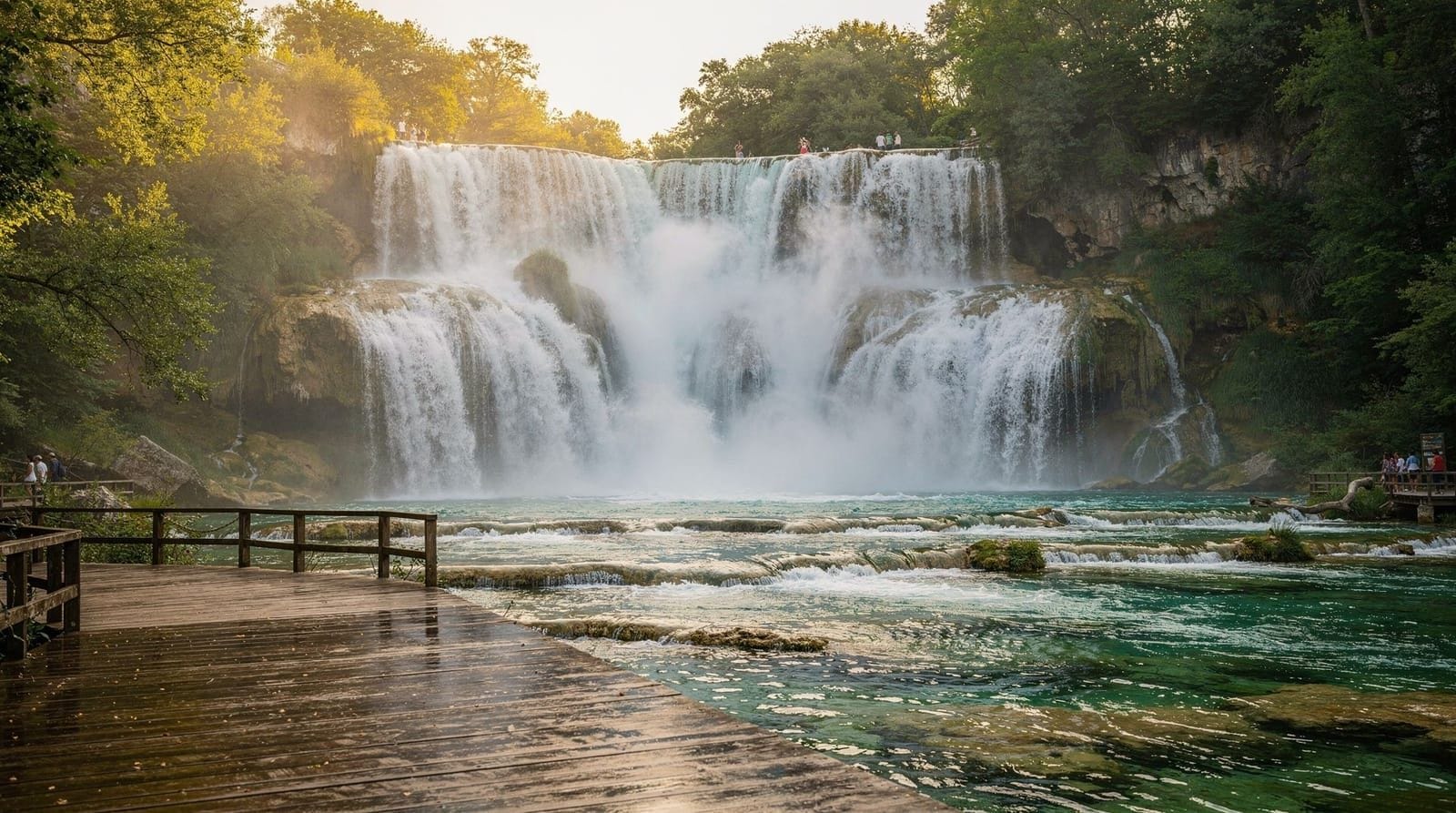
Krka is a park where the experience is the waterfalls and the boat ride. You walk a relatively short route (3–5 km around the main Skradinski Buk waterfall area), the scenery is extraordinary, and you see the turquoise pools below the falls (swimming there has been banned since 2021). That’s the core of it. It’s excellent.
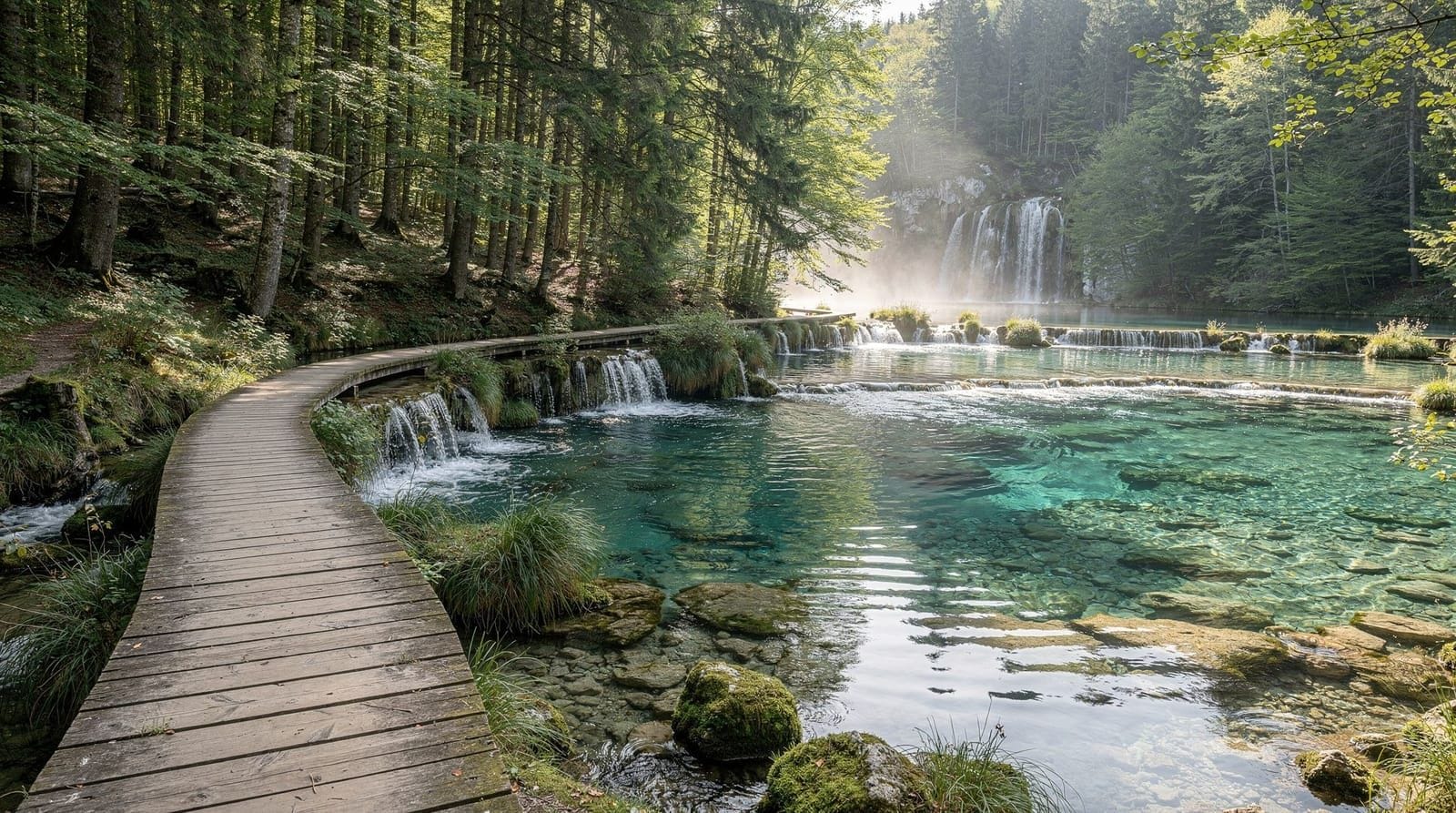
Plitvice is a hiking park where the experience is moving through a series of sixteen terraced lakes connected by waterfalls over a longer route. You don’t swim (it’s prohibited now to protect the travertine formations). You walk — potentially 8–18 km depending on your route. The scenery is staggering but requires more time and effort to fully appreciate.
The simplest version of the choice: If you want an accessible, beautiful waterfall experience with a boat ride and a shorter route, go to Krka. If you want a full-day hiking experience in genuinely extraordinary scenery and can give it 8–10 hours, go to Plitvice.
Krka: what the day actually looks like
Krka is 85 km north of Split, about an hour by car or organised shuttle. The main entrance point for most day-trippers is Skradin, a small town on the Krka River that serves as the park’s gateway. From Skradin, a boat ride (30 minutes, included in the entry ticket) takes you up the river to the main waterfall area.
Entry tickets: €40 per adult from June to September (€20 in April, May and October), with a timed entry system that limits crowding. Book in advance — the park sells out its morning slots by mid-summer.
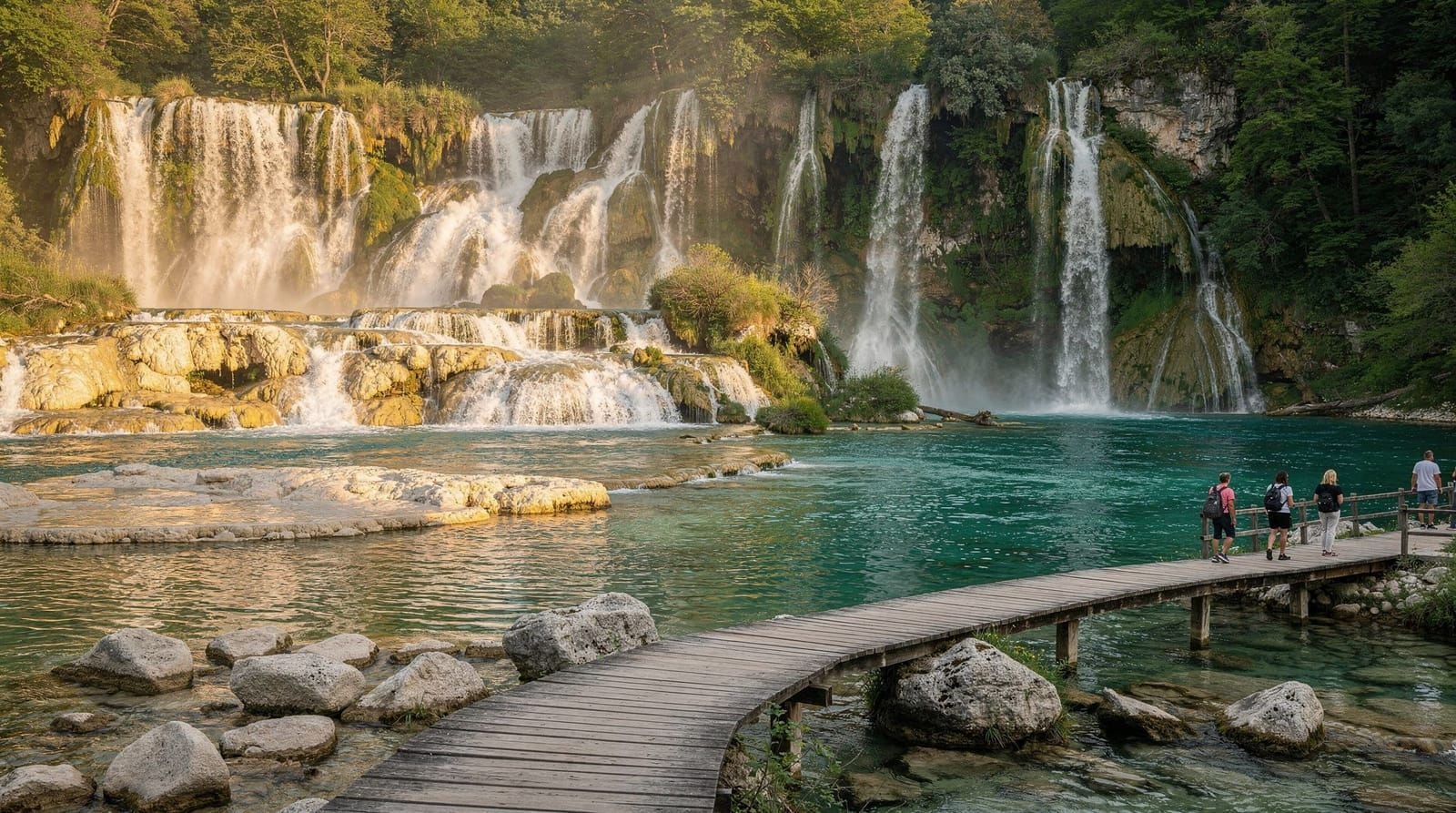
The walk around Skradinski Buk is about 3 km of boardwalk through what feels like a scene from a nature documentary: multiple waterfall cascades dropping into pools of extraordinary transparency, with travertine formations on every side. In summer the air temperature in the gorge is several degrees cooler than the surrounding coast, which is a genuine pleasure.
Swimming: since 1 January 2021, swimming is banned at Skradinski Buk, the park’s main waterfall, to protect the travertine. You can’t swim at the foot of the falls or in the pools below them. Swimming is possible only in a few designated zones away from Skradinski Buk (around Roški slap, Stinice and Remetić-Pisak), in summer only. Check the rules on np-krka.hr, and note that “swimming” tours make their swim stop outside the falls.
Book a Krka National Park day tour from SplitThe day from Split: leave at 8–9 a.m., arrive Skradin by 10, boat ride, 2–3 hours in the park, boat back, lunch in Šibenik (the historic city 20 minutes from Skradin, well worth an hour in its own right), back to Split by 5–6 p.m. A manageable day.
Plitvice: what the day actually looks like
Plitvice is 200 km from Split — about 3 hours by car or organised bus. This is the first and most important logistics note: the day trip from Split to Plitvice is a 6-hour round trip by road alone. The driving or bussing cost in time is significant.
Total day from Split: leave by 6:30–7 a.m., arrive by 10 a.m., 4–6 hours in the park depending on your route, leave by 4–5 p.m., back to Split at 7–8 p.m. It’s a 12-hour day. You’ll be tired.
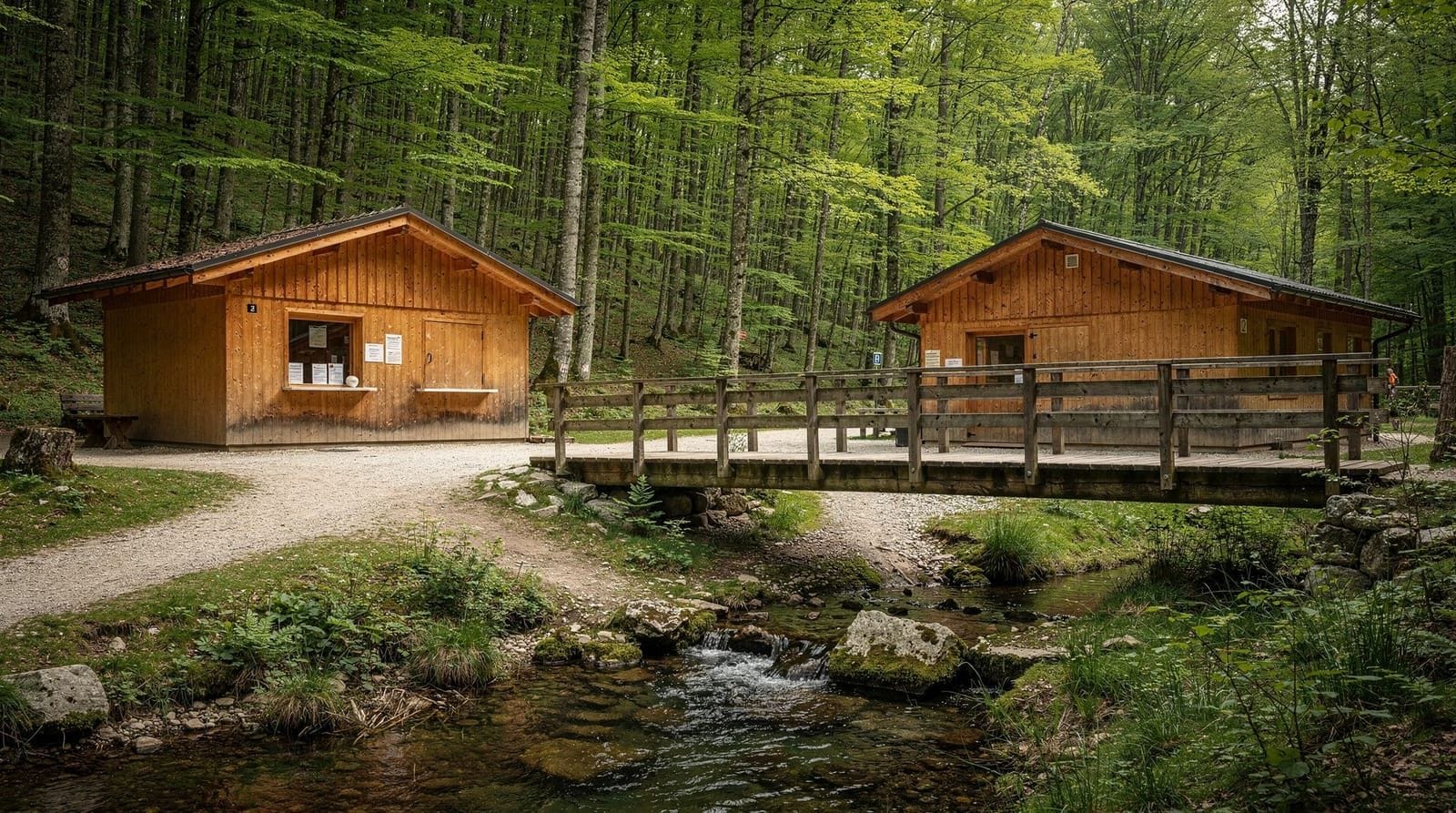
Entry tickets: €40 per adult from June to September (€23 in April, May and October). Timed entry is enforced; book well in advance for summer. The park offers multiple numbered routes ranging from 3 km to 18 km — Routes A and B are the most complete, Routes C and K shorter.
The scenery at Plitvice is genuinely world-class. The sixteen lakes cascade into each other through a series of waterfalls ranging from gentle ripples to dramatic drops of 78 metres (Veliki Slap, Croatia’s highest waterfall). The water is extraordinary — from emerald to deep turquoise depending on depth, mineral composition, and light. In autumn the surrounding forest adds colour that summer lacks. In spring after snowmelt the falls run at their most powerful.
But — and this is important — Plitvice is extremely crowded in peak summer (June–August). The boardwalks around the main upper and lower lakes fill to the point where movement is slow and photography requires patience. The experience is best in May, September, or shoulder-season months. If you’re visiting in July or August and have a choice, Krka is the less-crowded experience for a similar visual payoff.
Book a Plitvice day tour with entry tickets from SplitThe one-day-slot question
If you genuinely have one day for a national park and the rest of your trip is planned around islands and Split, the calculation is:
Choose Krka if: Your trip is 4–5 days. You want to maximise time on islands. You’re traveling with children or anyone who finds long hikes unappealing. You want to be back in Split by early evening for dinner in the old town.
Choose Plitvice if: Your trip is 7+ days. You genuinely love hiking. You’re visiting in September or May when the long drive pays off with smaller crowds. You won’t be back in Croatia anytime soon and want to see the park considered the country’s natural crown jewel.
Do both if: Your trip is 10 days or more. They’re different enough that neither replaces the other, and doing both gives you a genuinely comprehensive picture of Croatian national park landscape. Combine Krka with a Šibenik half-day; give Plitvice its own overnight if you can.
For our complete detailed comparison with route suggestions, ticket logistics, and seasonal advice, see the Krka vs Plitvice guide.
What we wish we’d known before our first Krka trip
We assumed Krka would feel like a smaller, lesser version of Plitvice. It doesn’t — it’s a genuinely different kind of park, built around one dramatic waterfall area rather than a chain of lakes, and the boat ride up the river from Skradin is part of the experience rather than just transport. If you want the specifics on tickets, timing and what the boardwalk loop actually covers, our Krka day trip from Split guide and the Krka National Park guide go deeper than we can here. For Plitvice specifically, our Plitvice day trip from Split guide and the dedicated Plitvice Lakes guide cover route choice in detail — Route A versus Route C matters more than most people research in advance.
The photography difference
If photography is part of why you’re visiting, this tips the decision further. Krka’s Skradinski Buk is one dramatic, photogenic scene you circle on the boardwalk — great for a handful of striking shots in under an hour. Plitvice, spread across sixteen lakes and multiple viewpoints, rewards people willing to walk further and shoot throughout the day; the light changes as you move between the upper and lower lakes, and the famous turquoise colour shifts with depth and mineral content as you go. Neither is objectively better for photos — it’s a question of whether you want one great scene or a long sequence of them.
How the choice fits the rest of your trip
A national park day rarely stands alone, so it helps to see where it sits in the whole week. If you are still shaping the plan, our best day trips from Split guide shows what else competes for the same slot, and the Split 5-day itinerary shows how a Krka day slots in between island days and time in the old town. Anyone planning a longer stay can look at the Dalmatia 10-day itinerary, which is the kind of trip where doing both parks stops feeling like a sacrifice.
Getting there is the other half of the decision. Our getting to Krka and Plitvice guide compares the ways to reach each park, and the car versus no car in Dalmatia guide helps you decide whether the long Plitvice drive is something you want to handle yourself or leave to a tour operator. If you are weighing the season too, Split in September explains why that month suits the longer park day so well.
Our pick
We’ve been asked to commit, so here it is: given a five-to-seven day trip based in Split, with islands as the primary focus, we pick Krka. The logistics are easier, the boat ride is a highlight, Šibenik adds cultural value to the day, and we get back to Split in time for a proper dinner.
If we had a nine-day trip and were willing to put in a long travel day: Plitvice. Without question. It’s one of the most beautiful places in Europe and it earns the effort.
Frequently asked questions about Plitvice vs Krka
Can I do both Krka and Plitvice in one trip? Yes, if your trip is 8–10 days or longer. They’re different enough that doing both is worthwhile rather than repetitive — combine Krka with a Šibenik half-day and give Plitvice its own dedicated day, ideally with an overnight nearby if your schedule allows it.
Is Plitvice really not swimmable at all? Correct — swimming has been prohibited at Plitvice for years to protect the delicate travertine formations that create the lakes’ terraces. Krka has designated swimming zones in summer, but swimming at Skradinski Buk, its main waterfall, has been banned since 2021.
For all national park logistics from Split in one place, see our Croatia national parks from Split guide and national park tickets and logistics guide.