Split family 5-day itinerary
Split: Krka Waterfalls Trip with Boat Cruise and Swimming
Split with kids: what actually works
Split is an excellent family destination when approached with realistic expectations. Diocletian’s Palace is large enough to keep curious kids occupied for half a day, Brač has the sandy (unusual for Croatia) beach at Zlatni Rat, Krka National Park has boardwalk waterfall walks and a boat ride, and Trogir is compact enough for a morning without anyone’s patience running out.
This itinerary skips the ferry-heavy island hopping of adult-focused itineraries and focuses on experiences that work for children aged roughly 5–14. It stays car-free — buses and organised tours handle all logistics, so you’re not navigating unfamiliar Croatian roads.
Budget for a family of four (two adults, two children) at mid-range: roughly €700–1,000 for accommodation across five nights, plus meals, transport, and activities. September significantly reduces accommodation costs and makes everywhere more comfortable for children.
| Where | Split, Brač, Krka National Park, Trogir |
| Cost | around €700–1,000 accommodation (family of four, 5 nights) |
| Time needed | 5 days, no car needed |
| Getting around | City buses, a car ferry to Brač, and organised day tours |
| Best time | September for cooler heat and lower prices; July–August workable with a midday rest |
Five days at a glance
| Day | Focus | Highlight |
|---|---|---|
| 1 | Arrival, Diocletian’s Palace | Bačvice beach at sunset |
| 2 | Brač island | Zlatni Rat beach |
| 3 | Split city rhythm | Pazar market, Marjan Hill, Bačvice |
| 4 | Krka National Park | Waterfall boat ride and boardwalk walk |
| 5 | Trogir, then departure | Cathedral and fortress walls |
Day 1 — Arrive in Split, explore the palace
Arrival
Split Airport (SPU) to city: Pleso shuttle bus (€8/person, 30–40 min) or taxi (€25–40 per vehicle). If arriving with children and luggage, a taxi to your accommodation is worth the extra cost.
Afternoon: Diocletian’s Palace
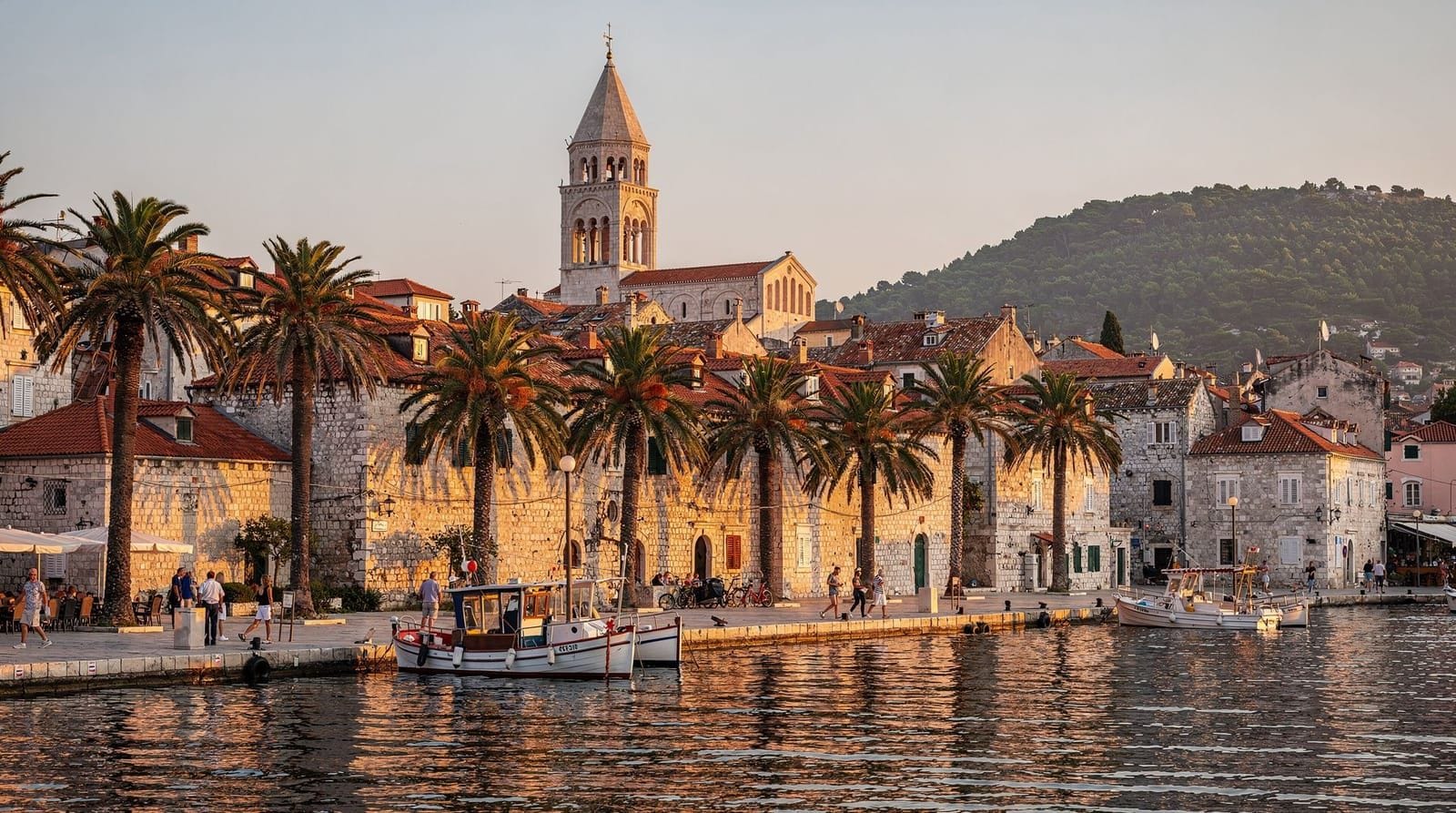
Split’s old town is a 4th-century Roman palace-turned-living-neighbourhood. For children, the selling points are: you can walk through actual Roman arches, the streets are narrow and maze-like, there are stray cats everywhere (a hit with younger visitors), and the central Peristyle is alive with cafés and street musicians in summer.
The Cathedral of Saint Domnius bell tower (€3 for kids) gives rooftop views — good for a “we climbed a Roman tower” story, but the steep narrow stairs require steady footing. The palace basement halls (€10 adults, €5 children) are atmospheric vaulted chambers beneath the Peristyle — dark, cool, and ancient. Children who enjoy Roman history or mythology will find these genuinely interesting.
Split: Old Town - Diocletian Palace Guide Tour - Small GroupA guided tour of the palace (small group, 1.5 hours) works well if your children have the attention span for it; the good guides use storytelling rather than dates.
Evening: Bačvice beach
Bačvice is 10 minutes’ walk south of the ferry terminal — a sandy-bottomed shallow beach. The sandy seabed (rare in Croatia) makes it good for young children. The beach shallows to roughly knee depth for 30 m before dropping off. An evening visit after arrival, with gelato from the beachside kiosk (€1.50–2/scoop), is a gentle introduction to Split. The Bačvice park behind the beach has benches, trees, and more space than the old town.
Day 2 — Brač island: Zlatni Rat beach
Morning ferry: 09:00
Car ferry from Split to Supetar, Brač (1 hour, €8/adult, children under 6 free or reduced). From Supetar, bus to Bol (45 minutes, €4). Total travel time: approximately 2 hours.
A day tour from Split that combines Hvar and Brač by speedboat covers the distance faster:
Split: Day Trip to Hvar & Brač Islands with Zlatni Rat BeachZlatni Rat: 11:00–16:00
Zlatni Rat (Golden Cape) is Croatia’s most famous beach — a 500 m pebble spit extending south from Bol village. The water is clear and relatively shallow near the beach edges. The pine trees shading the back of the spit provide some relief from midday heat. For children, the gradual entry and calm water make it one of the more child-friendly beach setups in Dalmatia.
Practical notes: bring flip-flops (the pebbles are uncomfortable barefoot at midday), water and snacks (cafés near the beach are overpriced), and reef shoes if you have them. Shade spots near the trees fill up by 10:00 in peak season — arrive early or accept midday sun.
Windsurfers use the beach in the afternoon maestral wind — children often find this entertaining to watch.
Bol village: 15:30
Walk to Bol village (10 minutes from the beach) for ice cream and a rest. The Dominican monastery at the eastern end of Bol’s waterfront is worth a brief look (€3 entry; the interior has an interesting mix of medieval and Baroque).
Return: 16:30
Bus back to Supetar, ferry to Split. Arrive Split around 19:30.
Day 3 — Split morning, Bačvice afternoon
Morning: Pazar market and Marjan Hill base
The Pazar market (Green Market) outside the Silver Gate opens early and is one of the most sensory-rich parts of Split: local produce, fresh bread, dried figs, and the social theatre of a working market. Children who like food or colour find it interesting. Budget €10–15 for fruit, snacks, and local cheese.
Walk west to Marjan Hill for a gentle morning hike. The lower path (to the first viewpoint at St. Michael’s chapel) takes about 25 minutes on a paved path — manageable for children from age 5 upward. The summit path (45 minutes) adds effort but the panorama is notably better. Bring water; no cafés on the hill.
Afternoon: Rest and Bačvice
The walk to Bačvice beach from Marjan Hill base takes about 30 minutes along the seafront, or take bus 12 from the city centre. Afternoon swimming, a rest for parents while children play in the shallows, and early dinner nearby.
Evening: Konoba near the old town
For families, a restaurant with outdoor seating and a broad menu is preferable to the more specialist konobas. Trattoria Bajamonti on Republic Square just outside the palace walls has outdoor tables, a children-friendly menu, and enough variety (pasta, grilled chicken, pizza) to cover different preferences. Budget €12–18 per main for adults.
Day 4 — Krka National Park
Departure: 08:00
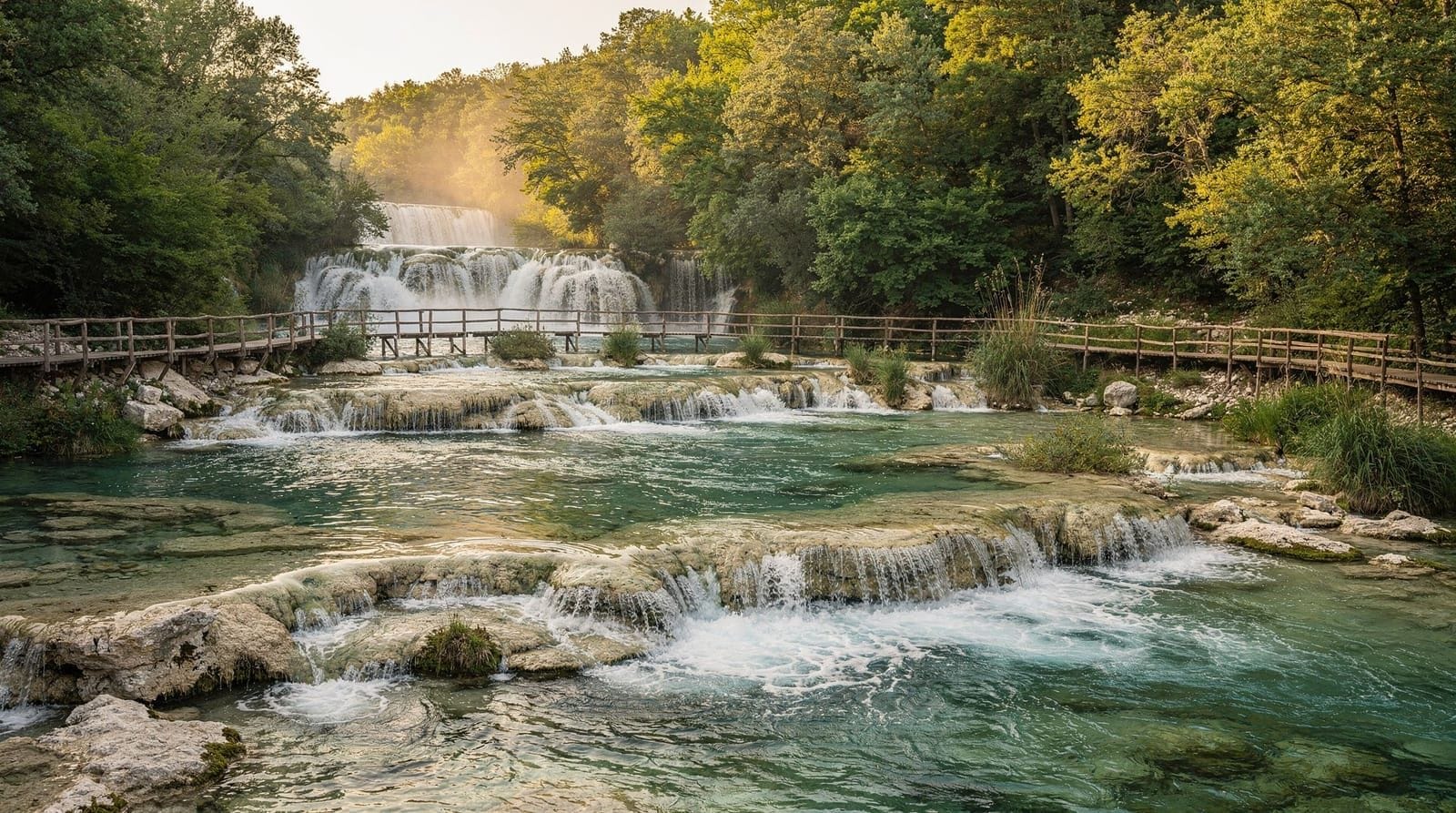
Krka National Park is one of the best family day trips from Split in Dalmatia. The boardwalk waterfall circuit is pushchair-accessible in most sections (though some areas have steps). The boat ride into the park from Skradin is itself a highlight for children — 30 minutes on a small wooden boat through a canyon with herons overhead.
Organised tours handle all logistics (pickup at hotel, direct entry, boat ride included, return by 18:00), making them the practical choice for family travel:
Split: Krka Waterfalls Trip with Boat Cruise and SwimmingIn the park: 10:00–15:30
Skradinski Buk is the main waterfall complex — travertine cascades, pools, and a boardwalk circuit (1.5–2 hours). Swimming at Skradinski Buk has been banned since 2021 to protect the travertine, so no one swims below the falls. Swimming is only possible in a few designated areas elsewhere in the park (such as Roški slap, Stinice and Remetić-Pisak) in summer, or at the swim stop of your excursion outside the waterfalls; check the rules on np-krka.hr. Water temperature in July–August is around 18–20°C (cold but manageable), warmer September days it reaches 21°C.
The Visovac island monastery boat trip (extra €15/person) is worthwhile if children have the patience — the 45-minute addition includes a boat ride and a tiny island with peacocks (not official, but resident peacocks do occasionally wander the grounds). Worth it for the boat ride alone.
Practical tips: pack a full water bottle (€3–5 at park kiosks), sunscreen, and spare clothes for post-swimming. The park café serves reasonable sandwiches and coffee. Arrive before 10:00 if possible — the waterfall boardwalk becomes more crowded after 11:00.
Return: 17:30–18:00
Day 5 — Trogir half-day, then depart
Morning: 09:00 — Bus 37 to Trogir
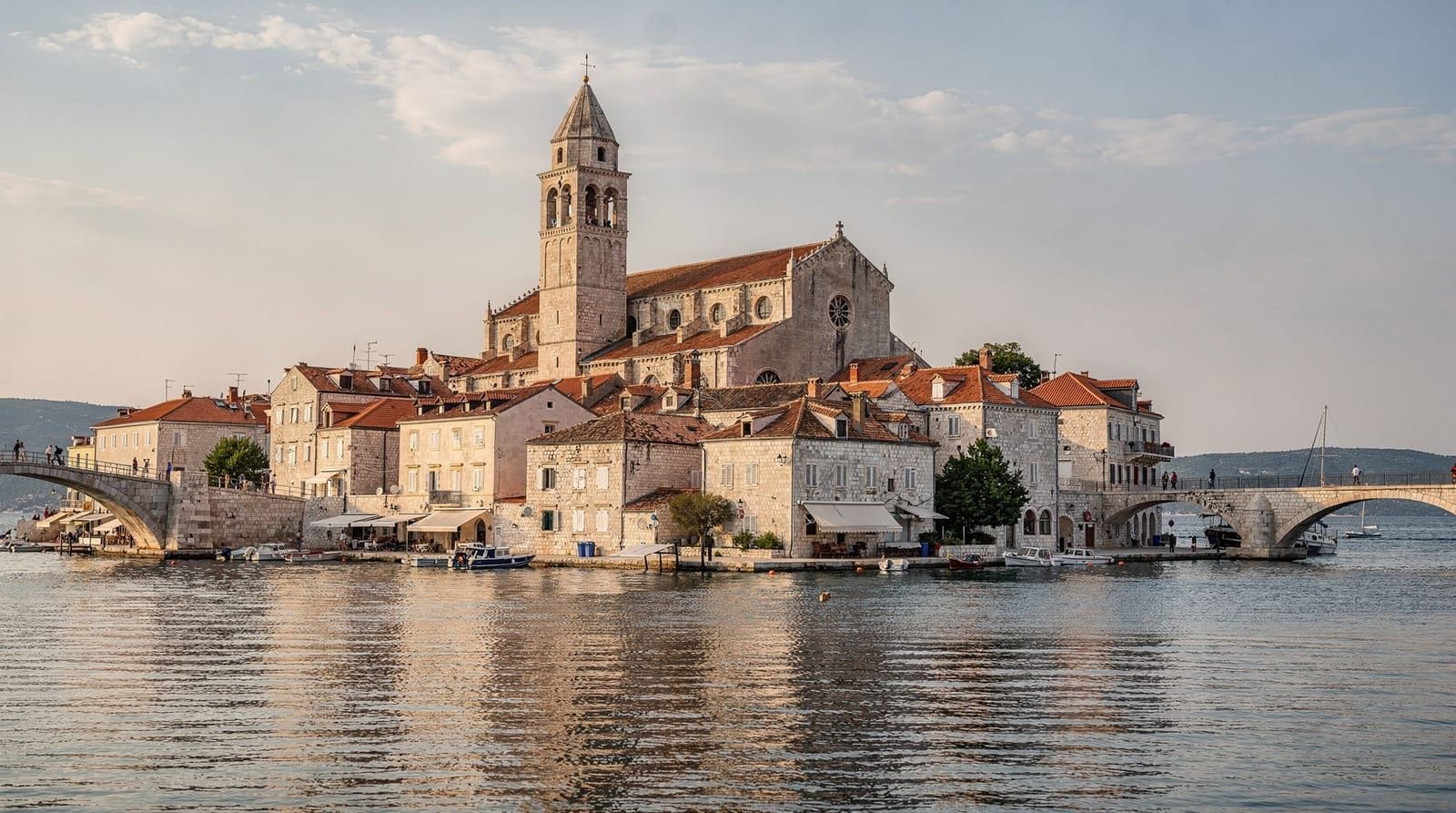
Bus 37 from Split station every 20–30 minutes, reaching Trogir in 30–40 minutes (€3/adult, children often half price or free under a certain age — ask the driver). Trogir is small and contained — easy to navigate with children.
The Cathedral of Saint Lawrence is the primary attraction (west portal stone carving, bell tower with views). For children, the more engaging element might be the medieval fortress walls and the feeling of an island town entirely surrounded by water. Allow 2 hours.
Ice cream from a café on the main square, then bus back to Split by noon.
Final afternoon before departure
If your flight is in the evening, a final hour in Bačvice or along the Riva promenade is the right way to use the time. The ferry terminal ice cream stand (on the promenade heading toward the ferry port) is a Split institution — the soft serve at approximately €1.50 is genuinely good.
Airport shuttle departs every 30–40 minutes from the main bus/ferry terminal (€8/person, 30–40 min).
Practical family notes
Pushchairs and mobility: Split old town (inside the palace) has uneven cobblestone streets — narrow-wheel pushchairs struggle. A baby carrier or wider-wheeled buggy handles it better. The Bačvice promenade and Marjan Hill lower paths are smooth.
Accommodation for families: apartments with a kitchen allow simpler (and cheaper) breakfasts and snacks for children. The area around Bačvice beach is good for families: quieter streets, near the beach, and 10 minutes from the old town by foot.
Shade and heat: July and August reach 30–32°C with intense midday sun. Schedule outdoor activities for 08:00–12:00 and 17:00–20:00 with a midday rest. September is significantly more comfortable (24–27°C) and strongly recommended for families with young children.
Medical: the KBC Split hospital (Split University Hospital) is the main facility, on Šoltanska Street. Pharmacies (ljekarna) are in most neighbourhoods; the one outside the Silver Gate is convenient for sunscreen and minor supplies.
For more family-specific guidance, see Split with kids and family beaches and activities in Split.
What to pack for a family trip to Split
A few items make the difference between a smooth week and a stressful one. Reef shoes or old trainers for pebble beaches (Zlatni Rat and Kašjuni are pebble, not sand — only Bačvice is sandy). A wide-brimmed hat and reef-safe sunscreen for each child, reapplied at midday. A lightweight rain jacket if travelling in shoulder season, since September showers are brief but real. A printed or offline copy of ferry and bus timetables, since mobile signal on the Supetar crossing can be patchy. For a broader packing and weather picture across the year, see best time to visit Split.
Pack light for the Krka and Trogir days specifically — both involve walking on boardwalks or cobblestones where a bulky bag becomes a liability. A small backpack with water, snacks, sunscreen and a spare set of clothes for the youngest child covers most eventualities.
If you only have three or four days
Families arriving with less time can drop either Trogir or the Brač day without losing the trip’s core: the palace, Bačvice, Krka. The 3-day Split itinerary is built around exactly that shorter frame and reuses the same no-car logistics. If Krka is the one non-negotiable, see the dedicated Krka day trip from Split guide for timing it as a single focused day. Families wanting more beach time than palace time should also check best beaches near Split before deciding which day to cut.
Frequently asked questions about a family trip to Split
Is Split good for families with young children?
Yes, with some planning. The old town is interesting even for young children (Roman architecture, narrow streets, cats), Bačvice beach has a sandy, shallow entry ideal for small children, and Krka’s waterfall boardwalk works for all ages. The main challenges are cobblestone streets (pushchair-unfriendly), midday heat in July–August, and the cost of restaurants in tourist areas.
What are the best beaches near Split for families?
Bačvice (sandy, shallow, city beach), Kašjuni on Marjan Hill (pebble, quieter), and Zlatni Rat on Brač (pebble, clear water, good shallow entry). See family beaches and activities in Split for more detail.
Is Krka National Park suitable for kids?
Krka is one of the best family day trips in Dalmatia. The boardwalk is largely flat and accessible, the boat ride into the park is a hit with children, and the waterfalls of Skradinski Buk are a highlight (swimming there has been banned since 2021; it is only allowed in designated areas elsewhere in the park, in summer). Pack a change of clothes and arrive before 10:00 to avoid the worst crowds.
Do I need a car to travel with kids in Split?
No. Bus 37 to Trogir and organised tours to Krka handle the primary day trips. The ferry to Brač (Supetar) with a connecting bus to Bol is straightforward with children. Within Split, everything on this itinerary is walkable or reachable by city bus. See getting around Split.
What age is the ferry to Brač suitable for?
The Supetar car ferry is a large, stable vessel — suitable for all ages including infants. The crossing is 50–60 minutes; the upper deck views are enjoyable. Seasickness is rarely an issue on the sheltered route between Split and Brač.
Is September better than summer for a family trip to Split?
Yes, noticeably. At 24–27°C air and 23–24°C sea, September is comfortable for outdoor activity without the exhausting heat of August (30–32°C). Beaches are less crowded, Krka’s boardwalk is navigable, and accommodation costs 20–30% less. The sea is actually warmer in September than in June, making it better for swimming.
Is Zlatni Rat safe for young swimmers?
Generally yes. The beach shelves gradually and the water near the spit’s edges stays shallow for a stretch before deepening, which suits confident young swimmers under close supervision. There are no official lifeguards at all times, so treat it the way you would any open beach — keep younger children within arm’s reach and watch for the afternoon maestral wind, which can add a light chop later in the day.
What if we only have three or four days with kids in Split?
Drop either the Brač day or Trogir rather than trying to compress everything — the palace, Bačvice, and Krka form the core that works for most families. See the 3-day Split itinerary for a shorter frame built the same way, or the family day trips from Split guide for swapping in a different single-day option.
Top experiences
Bookable activities with verified prices and instant confirmation on GetYourGuide.