Konoba culture in Dalmatia: how to eat like you mean it
The word everyone mispronounces
Konoba (KOH-no-bah) is the Dalmatian word for a particular type of informal tavern — traditionally, the ground-floor storage room of a stone house where the family kept wine, oil, and salted fish. These rooms opened gradually to guests, then to paying guests, and eventually became the dominant form of casual restaurant in coastal Croatia.
The word doesn’t translate perfectly into any other European dining category. It’s not a restaurant in the formal sense. It’s not quite a tavern. The closest analogy might be the Italian osteria — informal, family-run, serving a short menu of seasonal food that reflects what the kitchen knows how to cook and what the local suppliers have that day.
The best Dalmatian konobes are among the best eating experiences in the Mediterranean. Here’s how to find and navigate them.
| Where to find real ones | Varoš, Manuš, Lučac, or villages 30 km+ from Split |
| Peka notice | 24–48 hours, always, no exceptions |
| Peka price | around €20–35 per person for octopus, more for lamb |
| Meal length | expect 2–3 hours; it’s not slow service, it’s the pace |
| Avoid | laminated multilingual menus with 40+ dishes |
What distinguishes a real konoba
A konoba worth eating in usually has most of the following characteristics:
A short menu, handwritten or minimal. The better the konoba, the less the menu looks like a production. Two or three starters, four or five mains, a couple of desserts. If a laminated menu has forty dishes with photographs, it’s catering to tourist preference rather than kitchen reality.
A waiter who tells you what’s good today. The highest compliment you can give a konoba cook is to ask what they’re proud of. “What’s fresh today?” gets you an honest answer in good places. A waiter who immediately recites the pizza options in English is a signal.
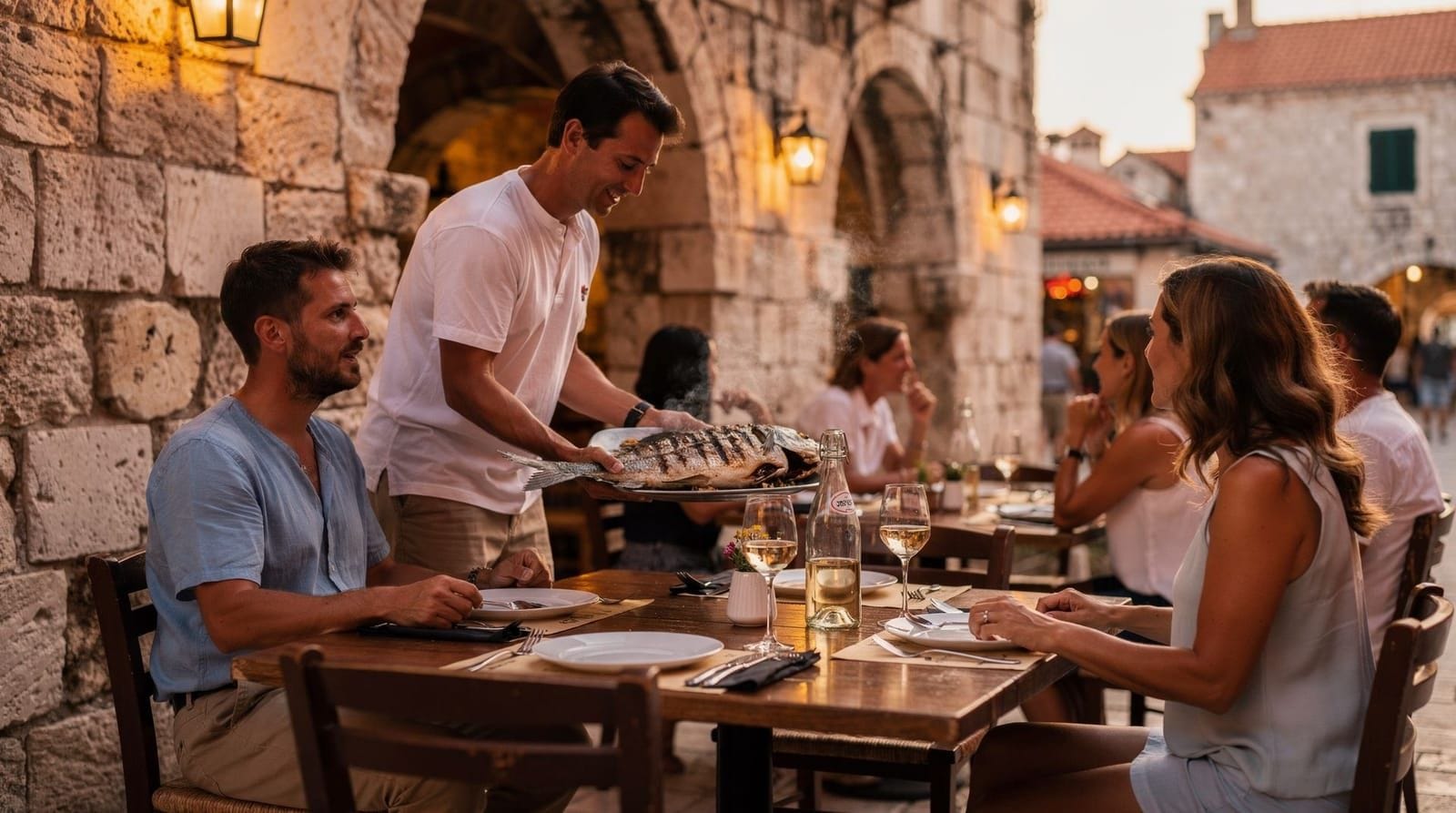
Slow service. Not incompetent service — slow service. Dalmatian meals have a different rhythm from northern European or American restaurant meals. A two-hour lunch is normal. A three-hour dinner with wine is expected rather than exceptional. If you’re in a hurry, you’re in the wrong type of establishment.
Stone walls and simple furniture. This is superficial but correlates. The konobe that have spent money on décor have often spent less on the kitchen. The ones with exposed limestone walls, mismatched chairs, and light that comes from candles in bottles have usually been feeding people in the same room for decades.
Family in the kitchen. The best konobe in Dalmatia are family operations. Grandmother’s recipe for the octopus, son running the floor, daughter serving. The investment in the food is personal rather than commercial.
The geography of quality
In Split’s immediate old town — particularly along the Riva and in the tourist lanes near the Peristyle — most of what presents as a konoba is actually a tourist restaurant using the aesthetic of one. The prices are Riva prices (€16–22 for mains), the menus are multilingual, and the fish is occasionally frozen.
The real ones are: in the Varoš neighbourhood (the old settlement immediately west of the palace walls), in the residential streets of Manuš and Lučac east of the Golden Gate, and — increasingly well-documented — in small villages within 30 km of Split where the tourist circuit doesn’t reach. The village of Klis (see our Klis Fortress guide if you’re combining a meal with the fortress), Žrnovnica, and the settlements along the Cetina valley all have proper konobe if you know to look.
Our where to eat in Split guide has specific names in the neighbourhoods we trust. Our peka and konoba dining guide covers the mechanics of ordering specific dishes.
Konoba vs. tourist restaurant, at a glance
| Real konoba | Tourist restaurant | |
|---|---|---|
| Menu | Short, handwritten or minimal | Long, laminated, multilingual |
| Location | Varoš, Lučac, hinterland villages | Riva, Peristyle-adjacent streets |
| Main price | around €12–20 | €16–25+ |
| Pace | 2–3 hours, expected | Often turned around quickly |
| Fish | Confirmed fresh, ask directly | Sometimes frozen |
If you’d rather have someone who already knows which villages have the real thing take you there, a guided food and wine day trip into the hinterland removes the guesswork entirely.
Peljesac Peninsula food and wine tour from SplitA konoba meal also fits naturally into a wider plan. If you’re building a trip around eating well, our four-day food and wine itinerary puts these lunches in sequence, and the Split old town walking guide shows how to reach Varoš on foot from the palace.
How to order peka (the critical advance notice)
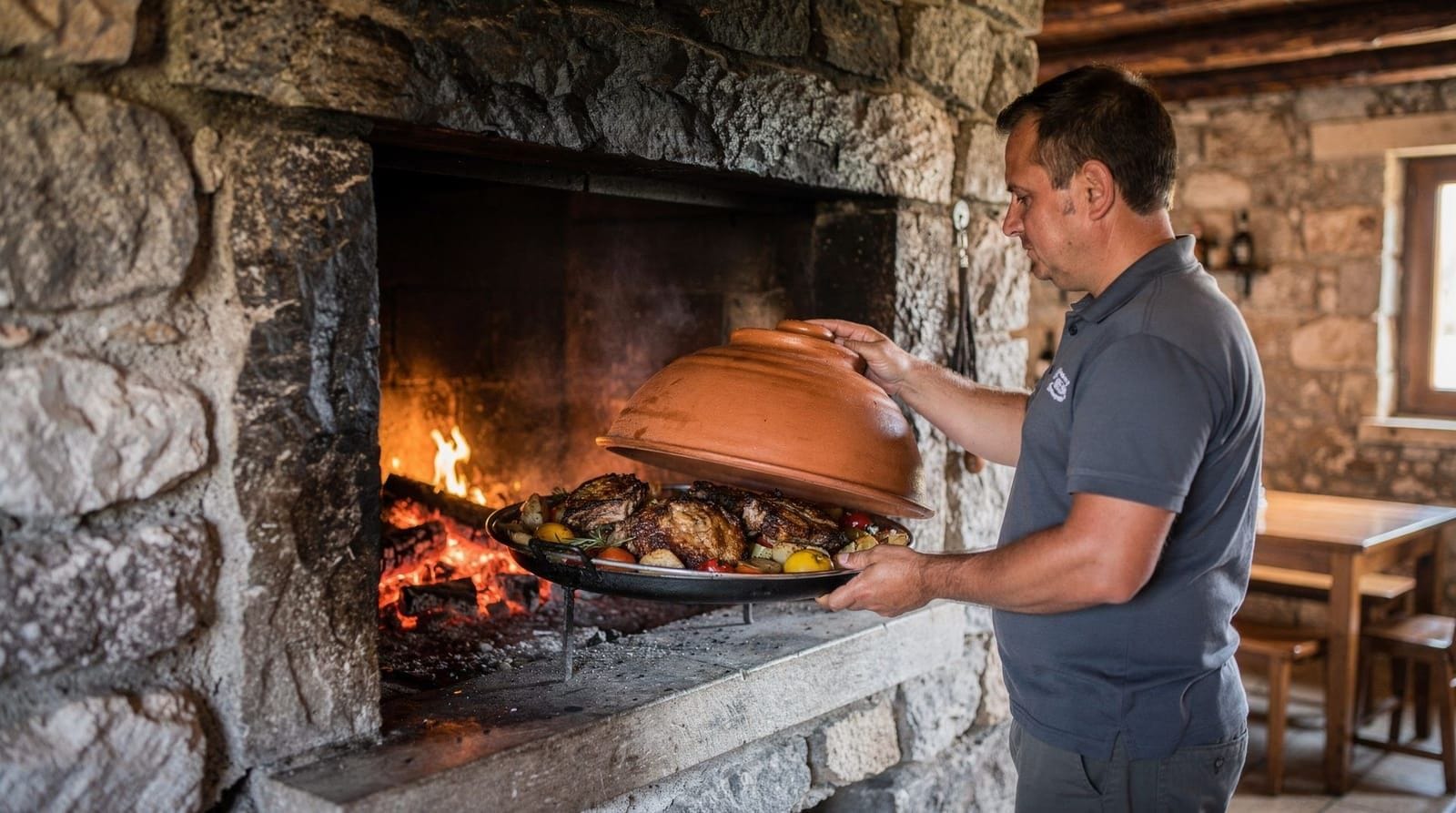
Peka is the slow-cooked dish — lamb, veal, or octopus under an iron bell buried in embers — that defines konoba cuisine. It requires 24-hour advance notice, minimum. Some places want 48 hours.
The correct approach: walk into the konoba the day before you plan to eat. Tell them how many people, what you want (octopus peka is generally easier to source than lamb in coastal areas), and what time you’ll arrive. They’ll tell you the price (€20–35 per person for octopus, more for lamb) and confirm the reservation.
Because peka needs planning, it helps to decide your konoba evening early in the trip rather than at the last minute. Our first-timer guide to Split is a good place to slot it into the days you have.
Show up on time. The peka is timed to be ready when you arrive; arriving an hour late means the dish has been sitting. Arriving early means it’s not done.
Do not try to order peka spontaneously. No good konoba will attempt it. The ones that say yes to a same-day peka order either had one already in progress for someone else or are cutting corners on the cooking time — which changes the dish entirely.
The dalmatian meal structure
Understanding how locals eat helps you navigate konoba menus correctly:
Prošek and rakija before eating: Prošek is a sweet fortified wine, offered in some places as a welcome drink. Rakija (grappa-like spirit) is ubiquitous. Neither is obligatory; both are offered warmly.
Starters: usually cold appetisers — prut (Dalmatian air-dried ham, similar to Italian prosciutto but saltier and smokier), sheep’s cheese from Pag, olives, capers, and occasionally small fried anchovies. At a good konoba the prut is often made by the owner’s family.
Soup or pasta: some places serve a maneštra (vegetable and bean soup) or pasta as a middle course. This is not always on tourist menus. It’s worth asking.
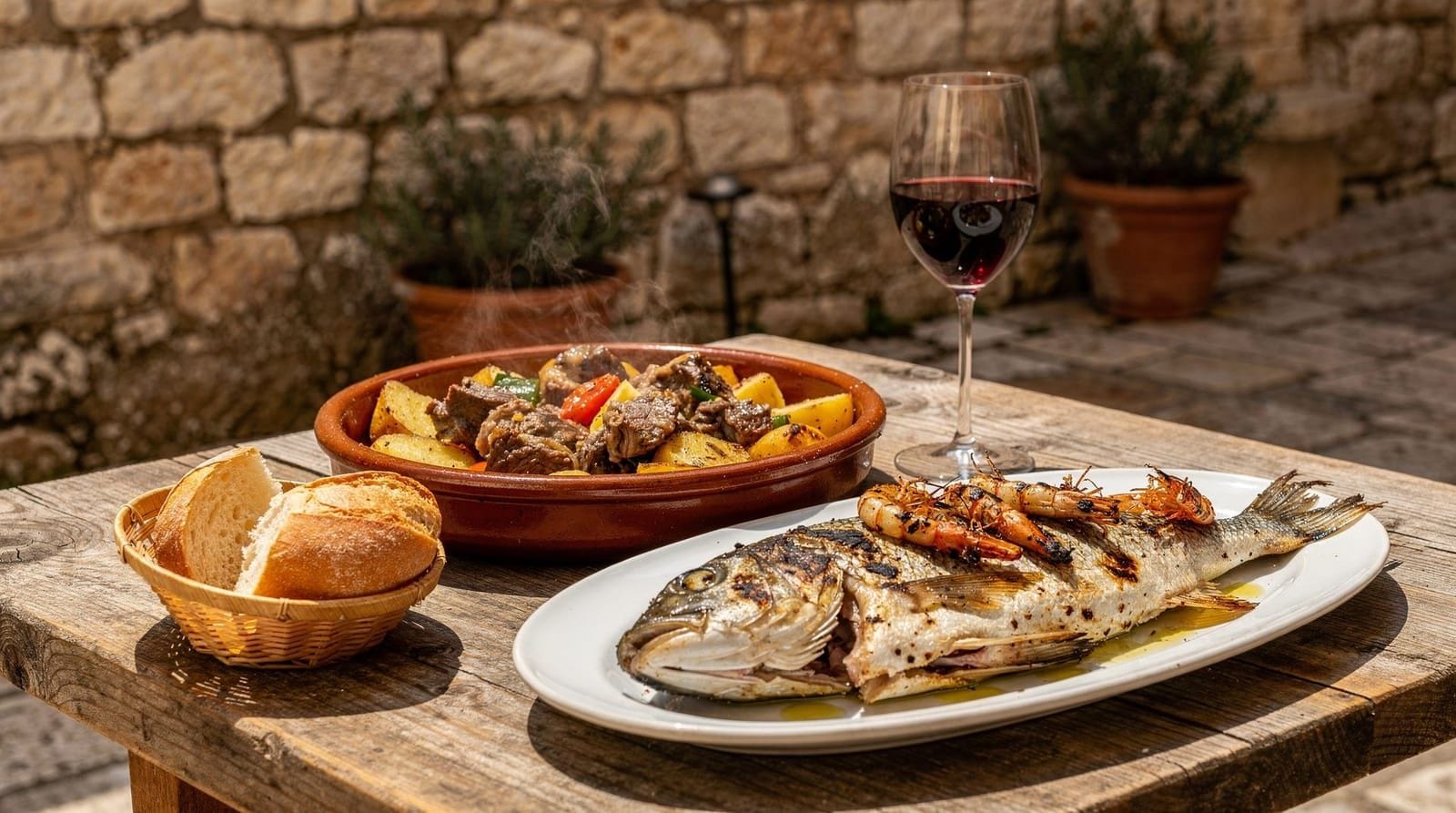
Mains: grilled or baked fish, the peka if ordered, grilled meat. One main per person is typical, not multiple sharing dishes in the Spanish style.
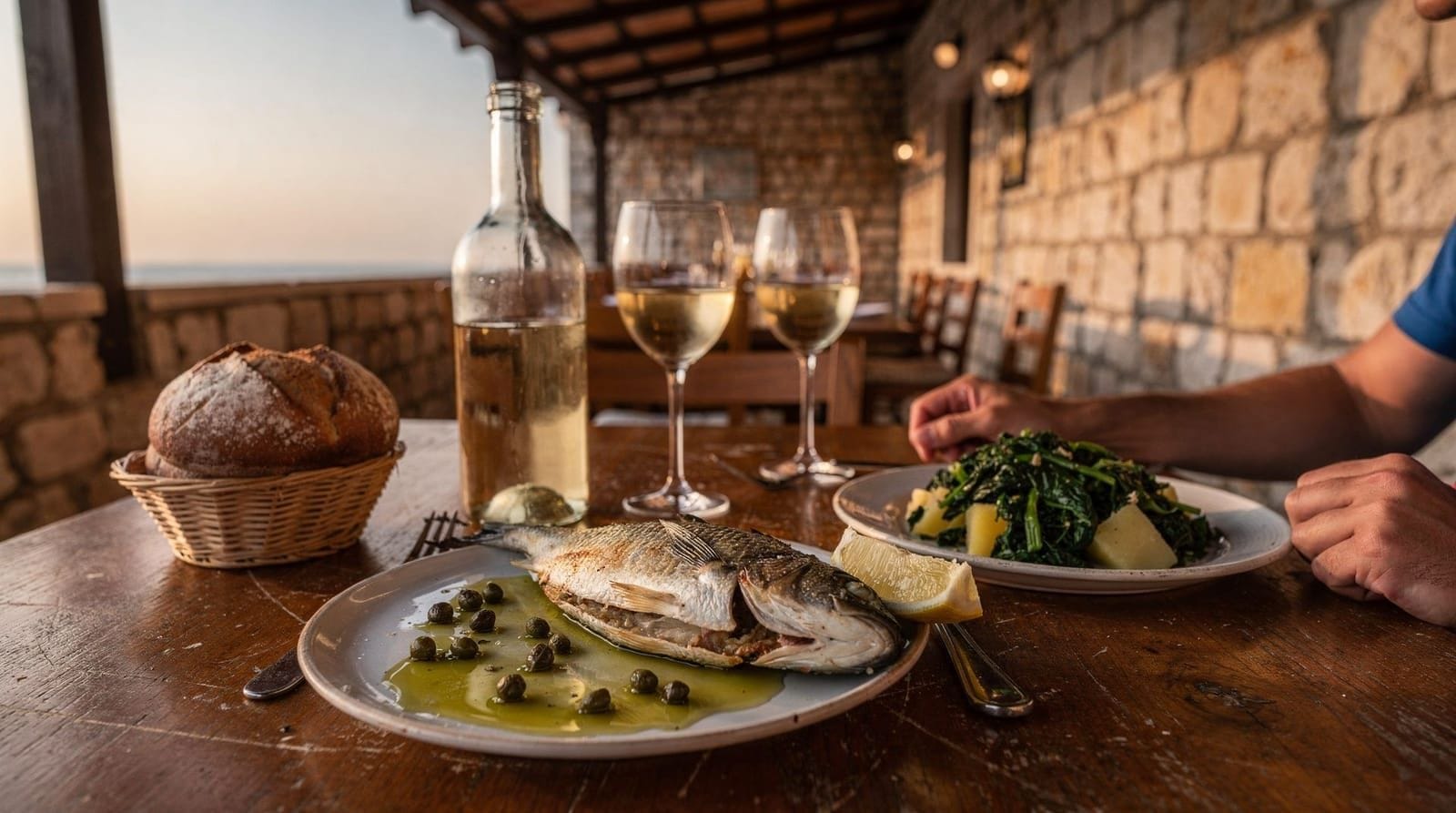
Salad: often a simple green salad or mixed salad, ordered alongside the main. Side vegetables may be included with the main or ordered separately. Seasonal Swiss chard (blitva) with potato and olive oil is the Dalmatian classic.
Dessert: often fresh figs, a simple cake (fritule — fried dough balls — in winter), or the local cheese with honey.
Wine: local by default. The best Dalmatian wines — Plavac Mali from Pelješac, Pošip from Korčula, Grk from Lumbarda — are excellent and poorly known outside Croatia. Order the house wine; in a real konoba it’s usually the owner’s or a neighbour’s.
If the wines are what draw you, a day spent among the vineyards of the peninsula where Plavac Mali grows is the natural companion to a konoba lunch, and a food and wine day out with a local guide is an easy way to taste them at the source. a guided tasting day through the peninsula’s wineries and food stops pairs well with the konoba habits described above.
The coffee question
Croatian coffee culture deserves its own mention. Dalmatians don’t drink filter coffee the way northern Europeans do. The default is espresso-based — either a single espresso, a macchiato, or a bijela kava (white coffee, essentially a flat white). Coffee is not served with dessert as a matter of course; you order it afterward, separately, and it comes after the table has been cleared.
The ritual of coffee — sitting with a small cup at an outdoor table for 45 minutes, talking, looking at whatever passes by — is part of the meal’s structure rather than a quick caffeine delivery mechanism. Accommodate it if you can. The best konoba conversations happen here.
When to go and who to go with
Konobe feel different across the year. In high summer the best ones fill quickly, which is another reason to reserve ahead; see Split in summer crowds for how the season changes the city. In the quieter months the pace slows further and owners have more time to talk, which is part of why we like Split in September so much for eating. Travelling with children is also easy in a konoba, where the short menu and relaxed rhythm suit families, as covered in our Split with kids guide.
What the good ones feel like
We’ve sat in konobe that felt like someone’s actual house — because they were, effectively, before the front room was designated for guests. Where the owner emerged from the kitchen to ask if the octopus was right, where the waiter knew which regulars were coming that evening and rearranged tables accordingly, where the bill arrived written on a slip of paper and we genuinely didn’t know whether to leave before or after we paid.
These moments are the specific thing Dalmatian dining offers that no other food culture quite replicates. Find the right konoba on the right evening, order 24 hours in advance, arrive without a hurry, and eat slowly.
For our complete Dalmatian food guide including what to try by region, and for specific food experiences in Split, we have both covered.
Next time you’re deciding between restaurants, our honest piece on Dalmatian food we loved and didn’t gives the full picture of what the cuisine is and isn’t.