Dalmatian food we loved — and a few things we didn't
We arrived with modest expectations
Croatia’s food reputation in English-language travel writing is curiously subdued. You read about the wine, occasionally about the seafood, and fairly often about something called peka. You don’t often read the level of genuine enthusiasm you see for, say, Italian or Spanish cuisines, which sit right across the Adriatic.
After four trips to the Dalmatian coast we can tell you that the reputation is simply wrong. The food here — when you find the right places — is seriously good. The problem is that the right places and the tourist-obvious places are often in completely different parts of the same street, and the tourist-obvious ones are just mediocre enough to flatten most visitors’ impressions.
Here’s what we actually loved, what left us cold, and how to find the better version.
| Order ahead | Peka needs 24 hours’ notice, always |
| Fresh fish price | around €30–45/kg, sold by weight |
| Black risotto | around €12–18; under €9 usually means the packet version |
| Best mornings | Green Market and fish market, roughly 7 a.m.–2 p.m. |
| Avoid | Riva tourist menus and “Dalmatian mixed grill” plates |
Peka: worth the advance planning
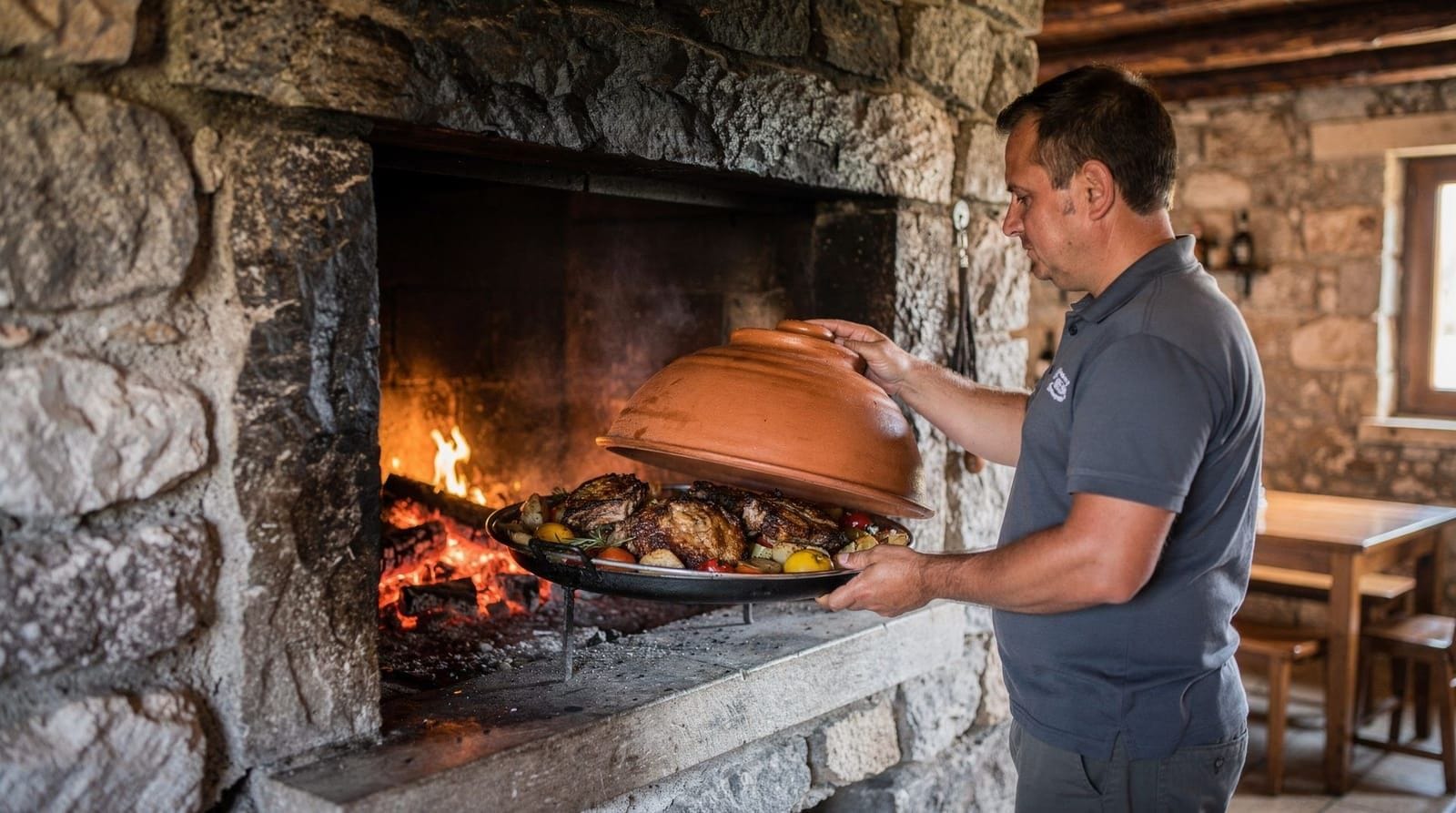
Peka is a method rather than a single dish. Meat and vegetables (classically lamb or octopus) go into a round clay or iron pot covered with a bell-shaped lid called a peka. That lid is then buried under a pile of glowing wood embers and left to cook slowly — sometimes two to three hours — until the contents are falling-apart tender and infused with smoke and herb.
The octopus peka in particular has become one of our benchmark dishes in Dalmatia. Done properly, the tentacles are almost impossibly soft, the potatoes around them are slicked with octopus ink and olive oil, and the whole thing tastes like the Adriatic rendered into food.
The logistical reality: peka must be ordered 24 hours in advance. You call (or ask at the door), specify how many people, and the konoba will have it ready at the time you agree. Do not try to walk in and order it spontaneously.
For a detailed guide to ordering peka and the konoba culture around it, we’ve written separately. Short version: go to Varoš or any village konoba outside the immediate tourist circuit, order 24 hours ahead, and show up hungry. Our broader piece on konoba culture in Dalmatia covers what actually separates a family-run konoba from a restaurant dressed up to look like one, which matters more than any single dish once you’re choosing where to sit down.
If you’re building a whole trip around eating, our four-day food and wine itinerary shows how to space a peka dinner between lighter days so that you arrive at the table properly hungry.
If you’d rather have someone else navigate the ordering and the wait for you, a guided food tour that includes a peka-style meal takes the guesswork out of it entirely.
Split wine and Dalmatian peka tasting experienceThe fish situation
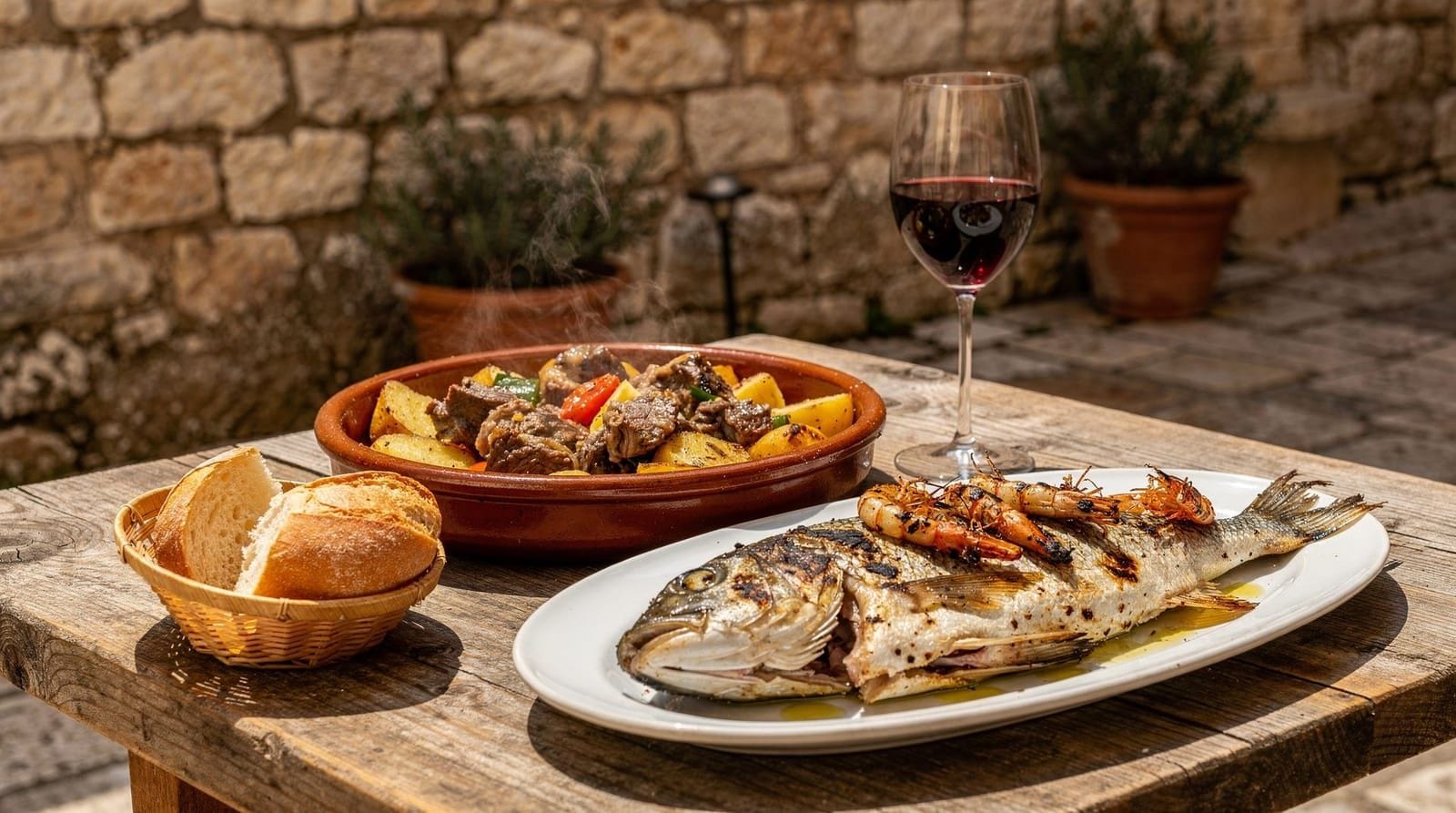
Dalmatian grilled fish is often presented as a simple thing — here is a sea bream, here is a sea bass, here is a flame — but when the fish is fresh and the grill is right, it’s one of the cleanest flavours you can eat. The Adriatic is relatively cold and clean, the fish stocks (diminished but still present) include excellent brancin (sea bass), orada (sea bream), and various whole fish that arrive simply dressed with olive oil and lemon.
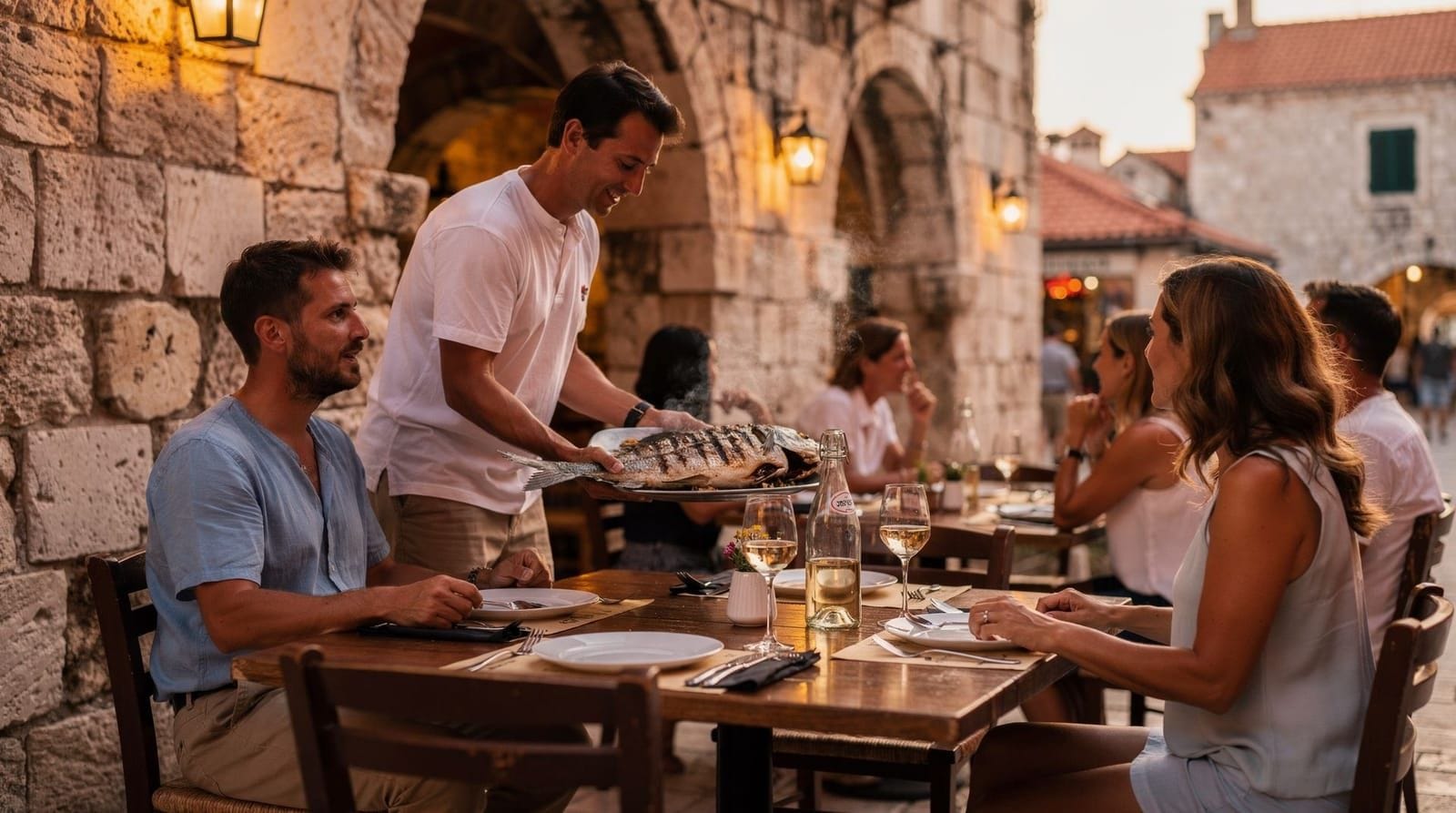
The split (no pun intended) between frozen and fresh fish is the single most important variable in the Dalmatian restaurant experience. Several Riva restaurants and tourist-facing establishments serve frozen fish for prices that imply fresh. You can tell by price (fresh whole fish is typically sold by the kilo, around €30–45/kg; suspiciously cheap fish portions are often the freezer), by asking directly, or by trusting restaurants that have a visible fish counter where the day’s catch is displayed on ice.
Our rule: if there’s a photo of fish on the menu, that’s a menu photo restaurant. If the waiter tells you what’s available today rather than handing you a laminated page, you’re probably in the right place.
For specific restaurant recommendations in Split, we have a separate guide. And if the Riva crowds are what put you off in the first place, our notes on Split’s tourist traps explain which streets to walk past and which to wander into.
Black risotto: better than it sounds
Crni rižot — black risotto — is made with cuttlefish or squid ink, giving it a deep inky colour and a rich, briny flavour that’s genuinely different from anything we’d eaten before trying it in Dalmatia. The texture is softer than Italian risotto, the colour is dramatic (warn people before they smile), and the seafood flavour is concentrated in a way that plain seafood risotto rarely achieves.
It’s on almost every menu in Dalmatia. Not all versions are equal — the better ones use fresh squid and real stock; the worse ones use pre-packaged ink sachets and a generic base. The difference is detectable. Good crni rižot has layers; mediocre ones are just dark-coloured starch.
Price: €12–18 depending on the restaurant. It’s a fair indicator of quality — a €9 crni rižot in a tourist restaurant is almost always the packet version.
Prstaci — date mussels — and the conservation catch
Prstaci (date mussels or stone mussels) are a local delicacy with a significant backstory. They grow attached to limestone rocks along the Dalmatian coast and were traditionally harvested by hand. They’re now protected under Croatian law — the harvesting of prstaci has been banned since the 1980s — but they still appear on menus occasionally in the form of older preserved batches or, less flatteringly, through illegal harvesting.
We mention them here not to recommend ordering them — we wouldn’t, given the conservation status — but because they come up in any conversation about traditional Dalmatian cuisine, and it’s worth knowing the context. If a restaurant offers them as a fresh dish, something unusual is happening.
What you can and should eat: ordinary mussels (dagnje), clams, and oysters from the Pelješac or Šibenik area are excellent and entirely sustainable. Pag cheese island lamb, when available, is outstanding.
What we didn’t love
The Riva tourist menus. Not because they’re offensive — they’re not — but because they charge €18 for a plate of pasta with average seafood while sitting in front of a sunset that should be reserved for places earning it with their kitchens. The location is doing all the work, and you know it.
“Dalmatian mixed grill” on tourist menus. Often just grilled pork and chicken with fries. Nothing wrong with pork and chicken, but it’s not representative of the coast’s cuisine. Ordering it means you’ll leave not knowing what Dalmatian food is.
Restaurant fish that needs to be confirmed as fresh. We had one unfortunate grilled fish in Hvar that tasted of the freezer in a way that was unmistakable. We should have asked. Lesson learned. If you’re heading to the islands, our Hvar island guide is a better starting point for choosing where to sit down than whichever terrace happens to be nearest the ferry.
The markets: Green Market and the fish market
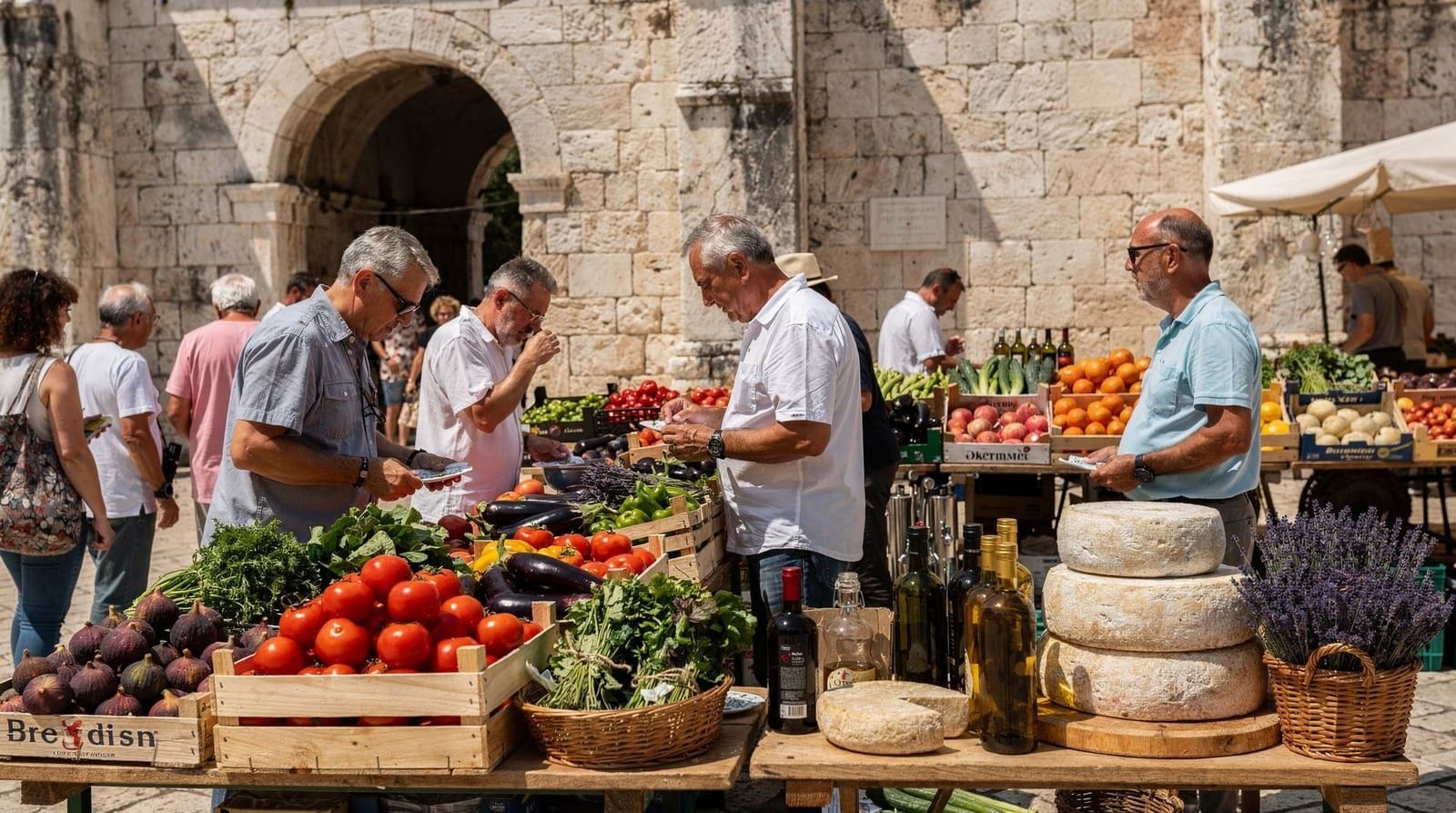
The Green Market (Pazar) just outside the eastern gate of Diocletian’s Palace is one of the genuinely excellent morning experiences in Split. It runs every day, winding down by about 2 p.m. You’ll find vegetables from the Dalmatian hinterland, local herbs, lavender sachets from Hvar, honey, and — in season — figs so ripe they’re splitting at the skin.
The fish market is adjacent, in a hall just inside the eastern wall. It operates from roughly 7 a.m. to noon. In summer it’s busy; the selection reflects whatever came off the boats. This is where to buy fish if you have a kitchen. This is also where to understand what fresh looks like so you can make better restaurant choices.
Our Split food tour and markets guide covers both in detail with a suggested morning route.
A note on the olive oil
Croatian olive oil — particularly from the islands of Brač and Hvar — is genuinely excellent and underappreciated outside Croatia. The island varietals include Oblica and Levantinka, producing oils with a distinctive peppery finish. Many of the better konobe bring their own oil to the table. When you taste it poured over fresh bread or a simple salad, you understand something about why Dalmatian food tastes the way it does: good ingredients, treated simply. A day on Brač is an easy way to see where some of that oil comes from.
If you want a bottle to bring home, buy it from the markets or directly from producers rather than from airport gift shops. The price difference is significant and the quality is the same.
Wine to go with it
Dalmatian wine doesn’t get talked about nearly as much as the food it’s served with, which is a shame — the reds from the Plavac Mali grape (a relative of Zinfandel) pair naturally with peka and grilled meats, and the whites, particularly Pošip and Grk from the islands, cut through the oiliness of good fish exactly the way they should. Our Croatian wine and Dalmatian vineyards guide goes into the varietals and where to taste them properly, whether that’s a hinterland winery day trip or a wine bar in the old town.
Taking a class if you want to cook this at home
A handful of small operators run hands-on cooking classes in and around Split, usually built around a market visit followed by cooking two or three dishes — often a version of black risotto or a simplified peka — in a home kitchen or a small culinary studio. It’s a good option if you’ve read this far and want to actually learn technique rather than just eat well once. Groups tend to be small, which keeps it hands-on rather than a demonstration you watch from the back.
Split small-group food tour with tastingsIf oil is more your interest than the cooking itself, there are also olive oil tastings and short courses on Brač and Šolta that pair naturally with a day trip — see our olive oil and cooking classes guide for specifics.
If you’re still deciding where to base yourself for all this eating, start with our Split destination page.
For our full guide to Dalmatian food with regional specialties and what to try in different towns, see our Dalmatian food guide.