Split vs the rest of Croatia: why we keep coming back to Split
Croatia has good options. Split is our answer to most questions.
We’ve spent time in seven Croatian cities — Split, Dubrovnik, Zagreb, Zadar, Rovinj, Šibenik, and Pula — and we’ve stayed long enough in most of them to form opinions beyond the first-impression highlights. This is not a “Split is perfect” argument. It’s more like an explanation of why, given the choice between several strong destinations, we keep gravitating back to Split as the base that makes the most sense for the most trip types.
Start with the geographic reality and work outward.
| Best all-round base | Split — sea, history, and the widest day-trip range |
| Most photogenic | Dubrovnik, at a real cost premium |
| Best value | Zadar, if the southern islands aren’t a priority |
| Best inland/culture city | Zagreb — no sea access |
| Verdict for first-timers | base in Split, day-trip the rest |
Split vs the rest, at a glance
| City | Best for | Trade-off |
|---|---|---|
| Split | islands + history + hub logistics | busiest in July–August |
| Dubrovnik | walls, Stradun, photogenic old town | 30–50% pricier, feels curated |
| Zadar | value, quieter pace, sea organ | fewer island connections |
| Šibenik | day trip, fortresses | not a workable base |
| Zagreb | museums, café culture | inland, no sea or islands |
| Rovinj (Istria) | Venetian architecture, truffle food | 4+ hrs away, separate region |
The hub argument
Split sits near the middle of the Dalmatian coast. From here, you can day-trip to Krka National Park (1 hour north), Omiš and the Cetina River (30 minutes east), Trogir (30 minutes west), Plitvice Lakes (3 hours north), Mostar in Bosnia (2 hours east), and Dubrovnik (3 hours south). Each of these is genuinely distinct — you’re not visiting variations on a theme, you’re accessing different landscapes, histories, and atmospheres.
Dubrovnik, for comparison, is a superb city but a poor hub. It sits at the southern end of Croatia, backed against the Montenegrin border, with the geography working against day trips in multiple directions. Plitvice is 4+ hours away. Split is the better anchor.
If you’d rather not plan each of those outings yourself, the best day trips from Split guide ranks them, and the national parks guide explains how Krka and Plitvice fit together. For the longest of the lot, Dubrovnik as a day trip is realistic if you’d rather leave the driving to someone else — a guided day trip to Dubrovnik from Split is covered in our transport guide, and many people simply book a guided day trip to Dubrovnik with pickup in Split and sit back for the road.
Zagreb is a different conversation. It’s a Central European city with a developed cultural scene, good museums, and excellent café culture. It’s also inland, which eliminates the sea and the islands as options. If beaches and Adriatic light are part of your ideal trip — and they usually are for people researching Dalmatia — Zagreb is a bad base.
For detailed Split logistics, our split first-timer guide covers everything you need before arrival.
Split vs Dubrovnik
This is the comparison people ask about most, and our dedicated Split vs Dubrovnik piece goes deep on it. The short version:
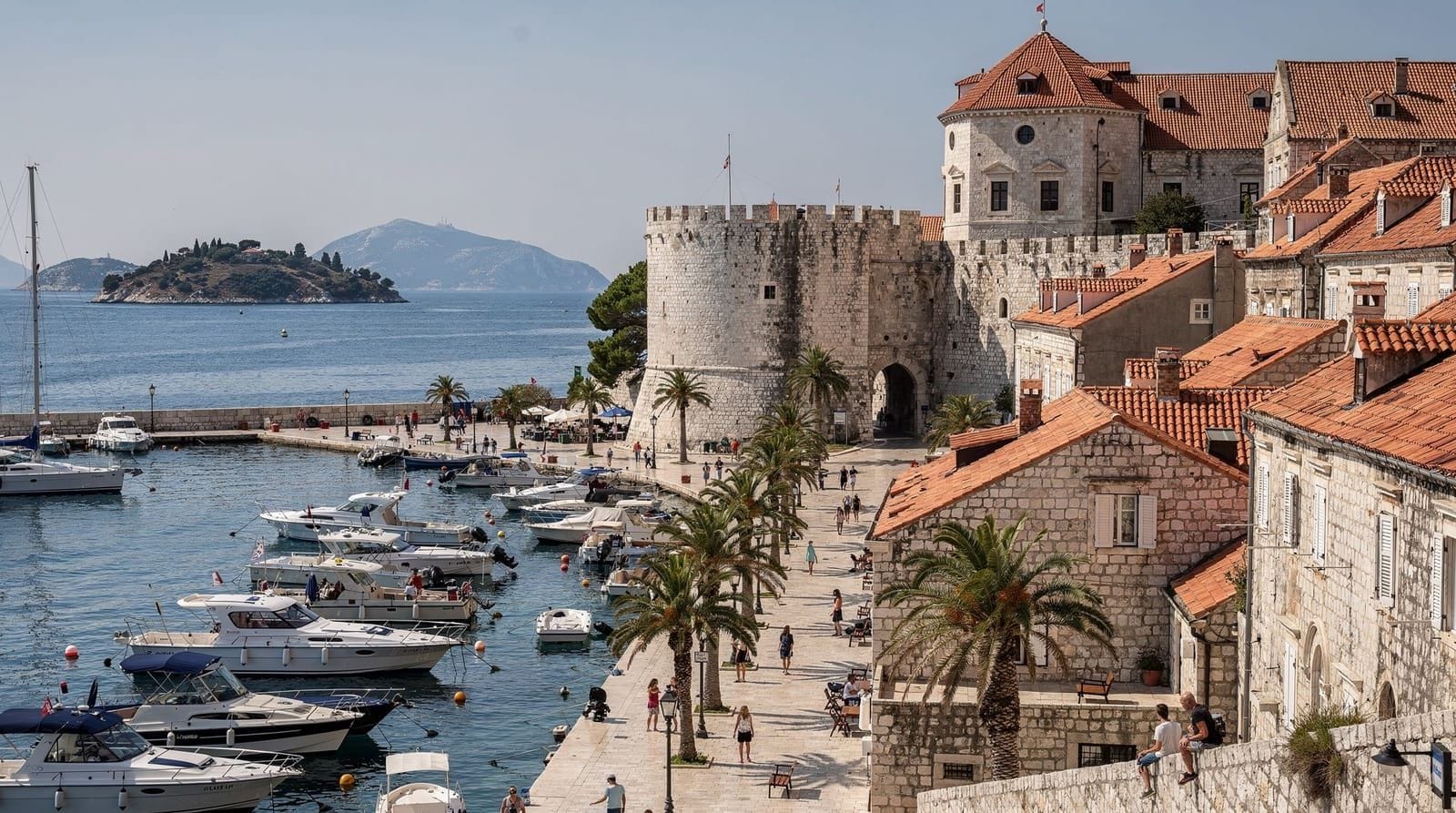
Dubrovnik is more photogenic in a specific sense — the walls, the Stradun, the views from Mount Srđ are picture-perfect and genuinely extraordinary. But it’s also more expensive (accommodation runs 30–50% higher than Split for comparable quality), more crowded in summer (it’s a smaller city absorbing a similar tourist volume), and less authentic-feeling as a living city. It has been so thoroughly optimised for tourism that it can feel more like a historic theme park than an inhabited place.
Split is messier, more lived-in, and — we’d argue — more interesting for extended stays. The palace is UNESCO-listed and extraordinary; the city around it is a functioning Croatian municipality with real residents, local markets, and a working harbour. You don’t feel like you’re touring a curated experience in quite the same way.
The honest view for people who have time for only one: visit Split and do Dubrovnik as a day trip or add an overnight. You’ll understand both cities, and your base will be the more manageable one.
If you do go for the overnight, our Split to Dubrovnik transport guide lays out the options, and the Split, Dubrovnik and Mostar itinerary shows how a week can be shaped around the two cities. The Dubrovnik destination page and Mostar are worth a look before you commit.
Split vs Zadar
Zadar is the underdog option and probably Croatia’s most underrated city. The sea organ, the land art installations at sunset, the old town’s Roman grid — it’s all genuine and lovely. Accommodation is cheaper than Split, the tourist crowds are lighter, and the overall atmosphere is more relaxed.
The trade-off is reach. From Zadar, the island connections are fewer and the specific islands less visited (the Kornati archipelago is extraordinary for sailing but not easily visited by casual traveler). The Plitvice connection from Zadar is actually better than from Split — it’s closer. But the southern islands, Hvar, Vis, and the five-island tour circuit are not well-served from Zadar.
If your trip is built around Plitvice, the Zadar region, and quieter exploration without the Dalmatian island circuit, Zadar is excellent. If you want Hvar and Vis and the broader island-hopping network, Split is correct.
Split vs Šibenik
Šibenik is a delightful small city with the best medieval street geometry in Dalmatia and two extraordinary fortresses, but it’s not a base — it’s a day trip. The Šibenik and Krka day is one of our favourite combinations from Split, and it’s convincing evidence that Šibenik works best as part of a broader itinerary rather than as an anchor.
Stay in Split, visit Šibenik from there. You don’t miss anything by not basing yourself there and you gain the split hub advantages.
Split vs Rovinj (Istria)
Rovinj is in Istria, the peninsula at Croatia’s northwestern tip, and it’s a genuinely beautiful place — Venetian architecture, cobbled harbour, excellent truffle-based food. It’s also 4+ hours from Split by bus or car (400+ km) and represents a completely different culinary and cultural area.
If you have two weeks in Croatia and want to cover both Istria and Dalmatia, you’d fly or drive between the two. They don’t serve as alternatives to each other so much as separate chapters of the same country. Deciding between them is more a question of which food tradition appeals (Dalmatian seafood or Istrian truffle-and-pasta) and whether you want an active island scene or a more contained, refined coastal town.
Split vs Pula
Pula, at the tip of Istria, is worth a mention because it’s Croatia’s other major coastal city, anchored by a genuinely spectacular Roman amphitheatre still used for concerts. It’s a smaller, more workaday city than Split — good for a day or two, less compelling as a week-long base, and geographically it belongs to the same Istrian trip as Rovinj rather than the Dalmatian island circuit. If your trip is specifically about Istria’s food and coastline, Pula and Rovinj pair well; if it’s about the Dalmatian islands, Split remains the better fit.
Split vs Zagreb, for families specifically
Zagreb is genuinely good with kids — parks, a good zoo, museums built for interactive learning — but it trades away the beach and boat experiences that usually define a family’s memory of a Croatian trip. For a family week that includes both culture and swimming, most people are better served basing in Split and treating Zagreb as a separate city-break trip, rather than trying to force both into one itinerary.
What Split has that no other Croatian city does
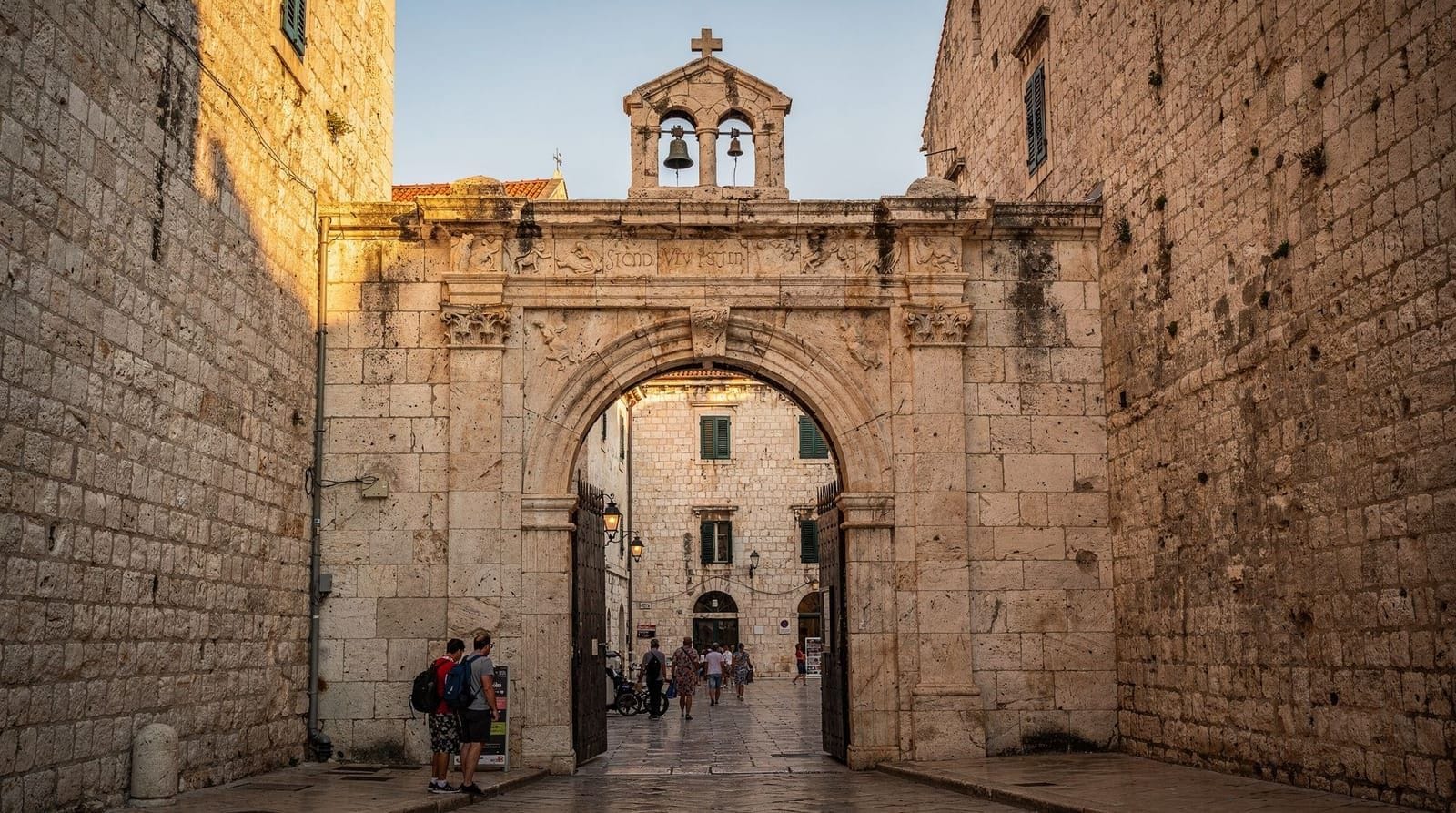
The specific thing Split offers that’s genuinely unique in Croatia: an inhabited Roman palace. Diocletian’s Palace was built in the third and fourth centuries A.D. as a retirement home for the emperor. After Rome’s decline, people moved in. They’re still there. Apartments, restaurants, churches, and bars occupy space inside what was originally imperial architecture. You can sleep in a room whose walls are the original Roman stone. You can eat dinner in a cellar that was a slave pen in the 6th season of a fantasy TV show.
This isn’t a reconstruction or a maintained archaeological site. It’s a city within a city, still accreting. The Diocletian’s Palace guide goes into what you’re actually seeing, but no guide fully captures how strange and good it is to actually inhabit this space.
Because the palace is lived-in, it rewards a bit of context on the first visit. A good walking tour of the old town and Diocletian’s Palace helps you read what you’re looking at, and if you’d like a local voice to explain the layers, a small-group guided walk through the palace and old town is an easy way to start. Nearby, Salona and Klis Fortress extend the Roman and medieval story, and the Split destination page pulls the whole city together. For the dining side of palace life, the Dalmatian food guide is a useful companion, and our konoba culture notes explain where locals actually eat.
The honest case against Split
It gets very crowded in July and August. If this is when you’re visiting, the crowd management required is real work — see our overtourism piece for what that actually means.
Accommodation in the old town at peak season is expensive (€100–200/night for private apartments with palace views is common). You can find cheaper options ten minutes’ walk from the centre, but the price gap between Split and Zadar or interior Croatia is real.
The Riva restaurant situation — overpriced tourist food at the most scenic spots — is a persistent irritant that requires informed navigation. Our where to eat in Split guide helps with this.
But for first-time visitors to Dalmatia, for families doing a broad trip, for anyone who wants the sea plus history plus easy access to multiple landscapes: Split is correct. It’s the right answer more often than not, and we keep proving this to ourselves by returning.
Frequently asked questions about Split vs the rest of Croatia
Is Split or Dubrovnik the better first-time base in Croatia? Split, for most itineraries — it has stronger day-trip logistics (Krka, Plitvice, islands, Trogir, Omiš) and lower prices, while Dubrovnik works well as a one- or two-night add-on rather than the whole trip’s base.
Can I base in Zadar instead of Split? Yes, if your trip prioritises Plitvice and a quieter pace over the southern islands. Zadar is cheaper and less crowded, but Hvar, Vis and the five-island circuit are not well-served from there.
For where to stay in Split specifically, our where to stay guide covers neighbourhoods and what to book in each season.