Honest take: is Split's overtourism problem as bad as people say?
Split is crowded. Let’s not pretend otherwise.
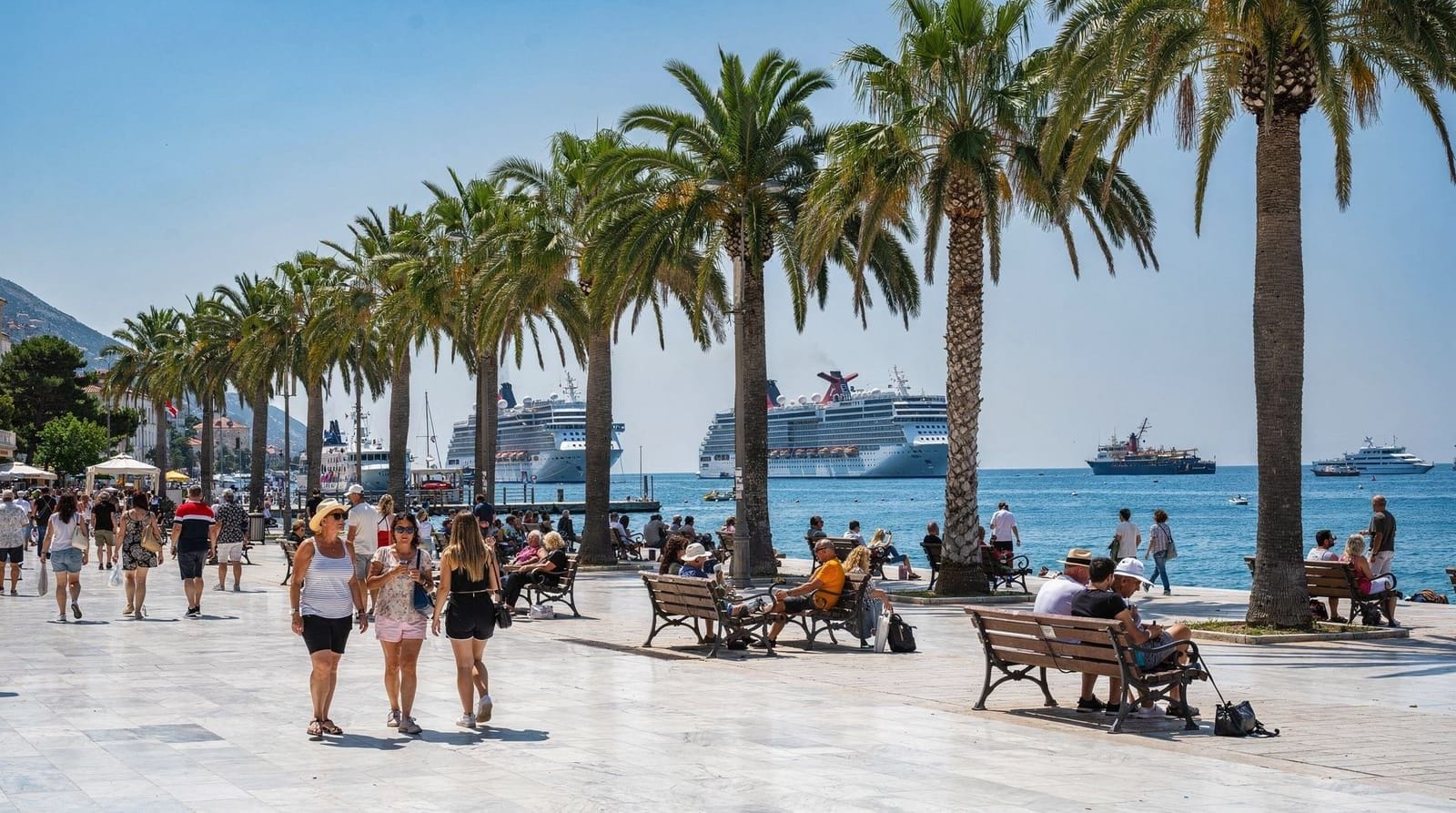
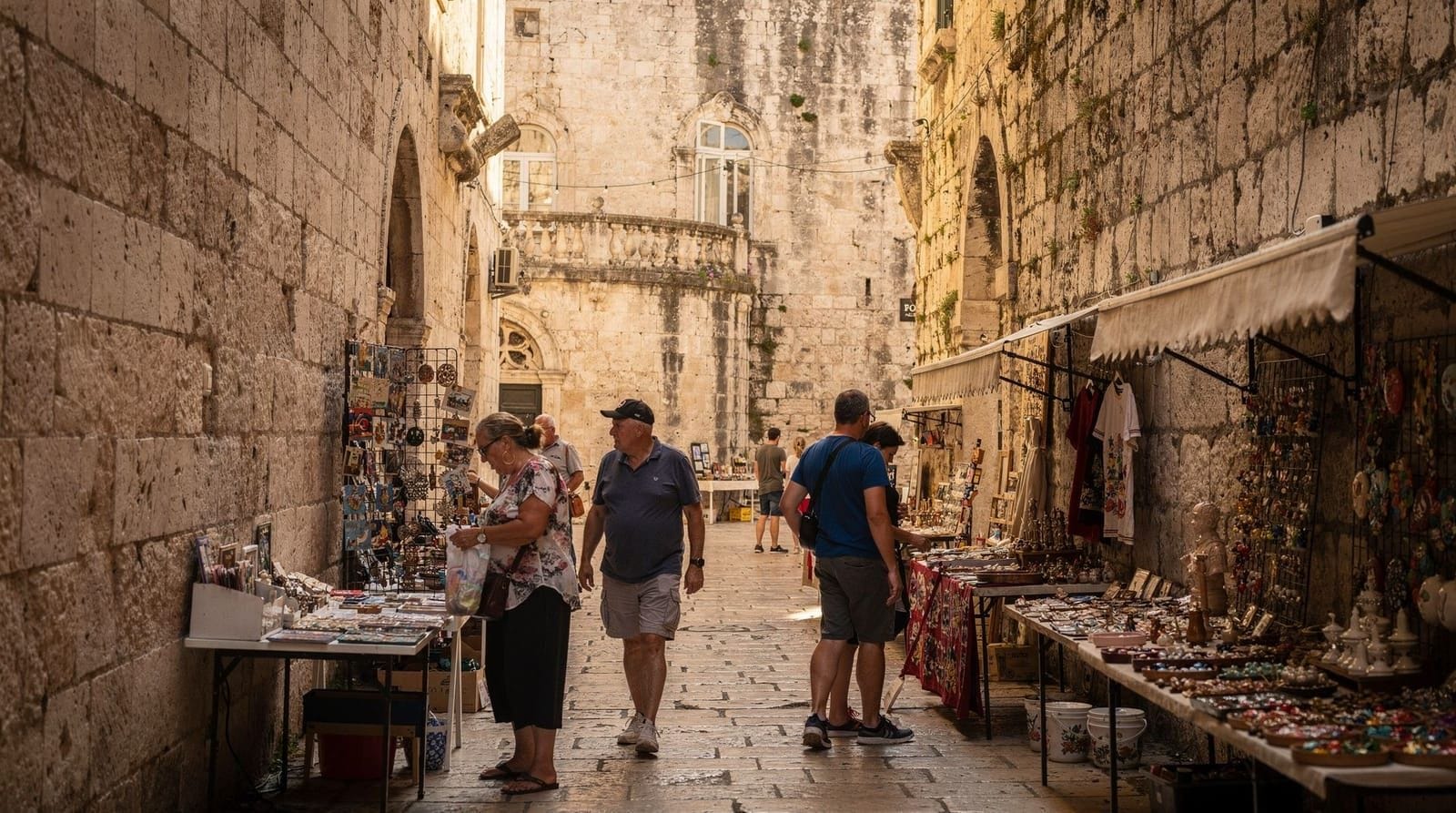
Every summer since roughly 2016, the Riva has looked like a conveyor belt of tourists. Cruise ships dock at the harbour, disgorge several thousand people between 8 a.m. and 4 p.m., and the old town absorbs the hit. You’ll see selfie sticks in the Peristyle, €18 cocktails on restaurant terraces with laminated menus in eight languages, and enough luggage rolling over ancient marble that the city has had to designate quiet hours in parts of the old town.
None of this is made up. We’ve seen it, we’ve written honestly about it elsewhere on this site, and we’re not going to tell you Split is some hidden gem that Instagram hasn’t discovered yet. It hasn’t been hidden for about a decade.
But the doom-framing — the think-pieces about Dubrovnik-ization, the social media posts of heaving streets that imply the whole city is underwater — often misleads as much as it informs. Because the overtourism problem in Split is real but also very specifically located, very specifically timed, and more manageable than the coverage suggests.
Here’s an honest breakdown.
| Worst window | 11 a.m.–1:30 p.m., Peristyle and cellars, cruise ship days |
| Best windows | before 7:30 a.m. or after 7 p.m. |
| Worst months | late July, first two weeks of August |
| Better months | May, June, September |
| Easy escape | Marjan Hill, six minutes’ walk from the Peristyle |
Where the crowds actually concentrate
The crowds in Split are not randomly distributed. They’re concentrated in three overlapping zones:
The Peristyle and immediate palace interior, roughly 9 a.m. to 3 p.m. on any day that a cruise ship is in port. This is genuinely packed. Photographing the cathedral facade without a crowd of bodies in frame between 11 a.m. and 1 p.m. requires either patience or waking up before 7:30. The palace interior is, yes, a tourist corridor during this window.
The Riva waterfront, from the Hajduk fan shop westward toward the ferry port, roughly 10 a.m. to midnight in summer. This is less intense than the palace — it’s an open waterfront, not a narrow alley — but it has the overpriced café problem badly. The restaurants with prime Riva positions are, frankly, mostly mediocre and expensive. The view is the product.
The ferry terminal and Green Market area, in the morning hours, especially around 9–10 a.m. when the ferry queues form for Hvar and the market fills with day-trippers.
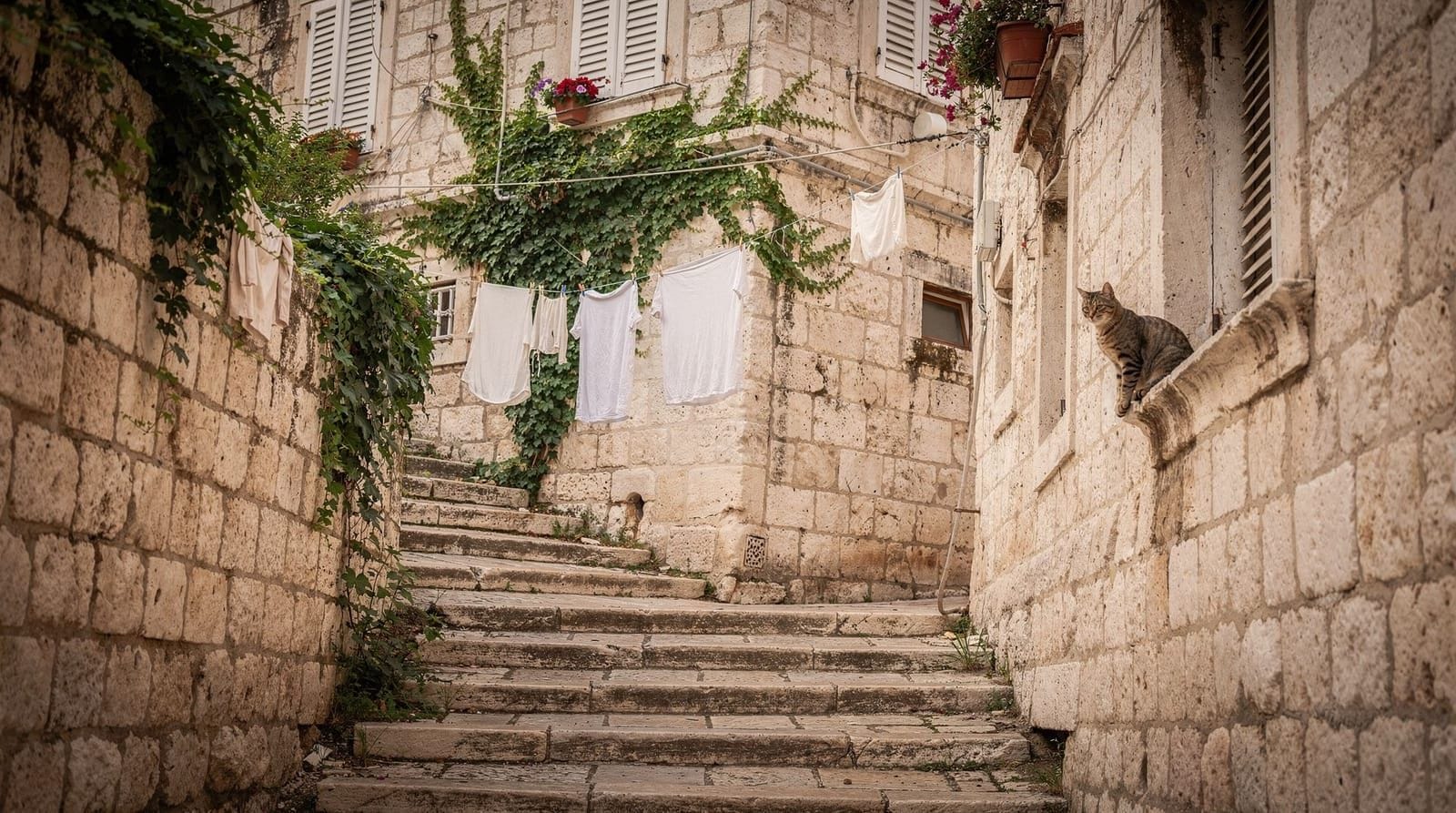
That’s roughly it. Walk six minutes in any direction from the Peristyle and the crowd drops dramatically. Meštrović Gallery neighbourhood: quiet. The residential streets above Bačvice: quiet. The western edge of Marjan Hill: often completely empty. The back streets north of the Golden Gate: you can walk for twenty minutes without hearing another English conversation.
For a walk that deliberately routes around the tourist corridors, see our Split old town walking guide.
The cruise ship timing problem — and the solution
The worst version of the overtourism problem is cruise ship day, and this has a specific shape you can plan around. Cruise ships typically dock in the morning, visitors flood the old town from about 9:30 to 10 a.m., hit peak density from 11 a.m. to 1:30 p.m., and then ebb from 2 p.m. onward as people return to the ship.
By 4 p.m. on cruise ship days, the palace is noticeably quieter than at noon. By 6 p.m., the Riva has filled back up again — but with a different, more local-feeling evening crowd. Sunset from Marjan Hill at 7:30 p.m. has nothing to do with the morning crush.
The actual practical solution is simple: don’t do the Peristyle at 11 a.m. in August. Go at 7:30 a.m. or go at 7 p.m. Use the middle of the day to eat at a non-Riva restaurant (we have recommendations in our where to eat in Split guide), walk somewhere outside the immediate palace complex, or — best of all — get on a boat and leave the city entirely for the day.
If mornings before 7:30 a.m. aren’t realistic for you — jet lag, kids, whatever — a small-group or private walking tour booked for first thing has the same effect: you’re moving through the palace before the cruise crowd lands, just with a guide instead of alone.
Private early-morning walking tour of Diocletian’s PalaceThe boat option deserves a closer look, because it turns the worst hours of the day into the best ones. While the old town fills up, you’re out on open water, swimming and looking back at the coast. Our island hopping from Split guide covers the options, and if you’d rather not commit to a full day, a sunset cruise with a swim stop brings you back after the crowds have thinned. For the wider picture of what to do with a day away from the palace, see best day trips from Split.
How the months actually compare
| Month | Crowd level | Price vs. July/August | Sea temperature |
|---|---|---|---|
| May | Low–moderate | around 30–50% lower | Cool, swimmable by late May |
| June | Moderate, rising | around 20–30% lower | Warm |
| July–August | Peak | full price | Warmest |
| September | Moderate, falling fast | around 30–50% lower | Still warm |
This is the practical version of “avoid peak season” — the difference isn’t subtle. If your dates are flexible at all, shifting even two weeks either side of the August 15th holiday changes the trip meaningfully.
The restaurants: where the rip-off actually lives
The most legitimate grievance about Split’s tourist economy is the quality of food on the Riva and in the immediate palace interior. Several restaurants in these positions are charging €18–25 for main courses that are, to put it charitably, unremarkable. The fish might be frozen. The wine might be a house pour from a box. The view and location are doing 90% of the work.
This isn’t specific to Split — it’s the universal law of high-foot-traffic tourist zones — but it is more pronounced here than it used to be.
The fix is also universal: walk two streets back. Konobe (traditional Dalmatian restaurants) in the streets just behind the Riva, in Varoš, and in the Lučac neighbourhood east of the old town serve better food for 30–40% less money. These places don’t have the view, but they have the actual product. Our Dalmatian food guide has specific names.
The Green Market near the Golden Gate is also genuinely good — the vegetable stalls, the fig sellers, the handful of vendors doing local sheep’s cheese — and operating there costs you nothing. It’s a fifteen-minute walk from the Riva’s most expensive terrace.
The honest verdict on July and August
If you’re visiting in July or August — particularly the two weeks surrounding the August 15th holiday — you will encounter crowds that meaningfully reduce some of the pleasures of the old town. You’ll also pay 30–50% more for accommodation and tours than you would in May or September.
Whether that’s acceptable depends entirely on your priorities. If you have fixed summer holidays because of school schedules, the crowds are the price of the season and Split is still worth it. The sea is warm, everything is operating at full capacity, and the evening energy on the Riva is genuinely vibrant.
If you have flexibility, September is significantly better by almost every metric — see our case for September. May is similarly underrated.
But August at its worst is not Dubrovnik at its worst. Split is a bigger, more spread-out city. The tourist pressure per square meter is real but not crushing outside the specific zones we’ve named. And unlike Dubrovnik, Split has an actual resident population of around 170,000 that pushes back against the worst homogenization. There are still konobe that local families eat at. There are still working fishermen. The city hasn’t been entirely hollowed out.
The Marjan escape valve
We’ve come to think of Marjan Hill — the forested peninsula that juts west from the old town — as Split’s best answer to its own overtourism problem. It’s a twenty-minute walk from the Peristyle, almost completely free of tourist infrastructure (a few cafés, no restaurants), and extraordinarily beautiful. On a weekday morning in summer, you can walk its main ridge path with only occasional other walkers for company.
It’s genuinely baffling how few visitors go there, given how close it is. Our piece on Marjan at dawn goes into what to expect if you make the early morning effort.
For hiking around the hill and for general planning of days that don’t route through the most congested zones, see our outdoor guides.
The hill also solves the evening problem. Rather than fighting for a terrace table on the Riva, you can take your sunset up high and walk down once the light has gone. We’ve ranked our favourite spots in best sunset spots in Split, and the Marjan Hill destination page has the lay of the land if you want to plan a longer visit.
Planning your days around the crowds
A few habits make the difference between a frustrating trip and a pleasant one. Treat the palace as a morning or evening stop, not a midday one. Keep the middle of the day for things that don’t depend on the old town: a long lunch away from the water, the hill, or a boat. If you haven’t been before, our Split first-timer guide puts the essentials in order, and Split in summer: crowds is the place to go if your dates are already fixed. If you’re still choosing dates, the best time to visit Split compares the seasons side by side.
Slow itineraries also help. Fewer sights per day means you’re never forced to queue at the busiest hour, and our Split slow travel itinerary is built on exactly that idea. If you only have a couple of days, the Split weekend escape shows how to fit the main sights around the crowd windows rather than into them.
Is Split worth visiting despite the overtourism?
Yes. Unambiguously.
Diocletian’s Palace is one of the genuinely extraordinary UNESCO sites in Europe. The fact that it’s also a functioning neighbourhood — apartments, restaurants, churches — makes it unlike any other Roman-era monument we’ve experienced. The food, when you find the right places, is excellent. The coastline is beautiful. The islands are easily accessible. The city has real character that survives its own peak-season pressures.
The honest answer isn’t “avoid Split” — it’s “visit at the right time, eat at the right places, and don’t confuse the tourist corridor for the whole city.” Read our tourist traps to avoid guide before you go, set your expectations correctly for the season you’re visiting in, and you’ll likely have a much better trip than the doom-posters would have you expect.
The city can handle you. The question is whether you handle the city well.
Planning around the crowds? Our escape the crowds in Split guide has specific strategies by neighbourhood and time of day.