Marjan at dawn: the best version of Split most visitors never find
Why we started getting up early in Split
The honest reason we first climbed Marjan Hill at dawn was that our accommodation was above a bar in the Varoš neighbourhood and the ventilation was poor. We were awake at 5:45 a.m. with nowhere obvious to go for the next two hours, so we put on trainers and walked uphill.
That accidental morning became the single best thing we did in Split on that trip. It’s also never intentionally planned by almost any international tourist, which is part of what makes it good.
| Start point | Šperun trailhead, edge of the old town |
| Time to best viewpoint | around 35–40 minutes on foot |
| Sunrise (June–August) | between 5:15 and 6:00 a.m. |
| Cost | free — no entry fee, no booking |
| Easiest months | September and May, later sunrise |
What Marjan is
Marjan is the forested hill-peninsula that juts westward from the edge of Split’s old town, flanked by the Adriatic on three sides. It’s the city’s green lung — formally designated a protected park in the 1960s, though used as public forest long before that. The hill rises to about 178 metres at its highest point; the most useful viewpoints are on the western and northern faces at elevations of 100–140 metres.
The park has walking and cycling paths, two old churches (one visible from most of the city below), a small zoo, and several cafés that open mid-morning. None of the cafés open at dawn. At 6:30 a.m. in summer, there is almost nobody there except the occasional runner and, in our experience, a man who appeared every morning with a thermos and sat at the same bench facing the sea.
The route at dawn
The main approach from the old town starts at Šperun — the street that climbs west from the neighbourhood behind the palace — and meets the main Marjan trailhead above the road. From here the forested path begins, climbing through pines and Mediterranean scrub.
The key waypoints:
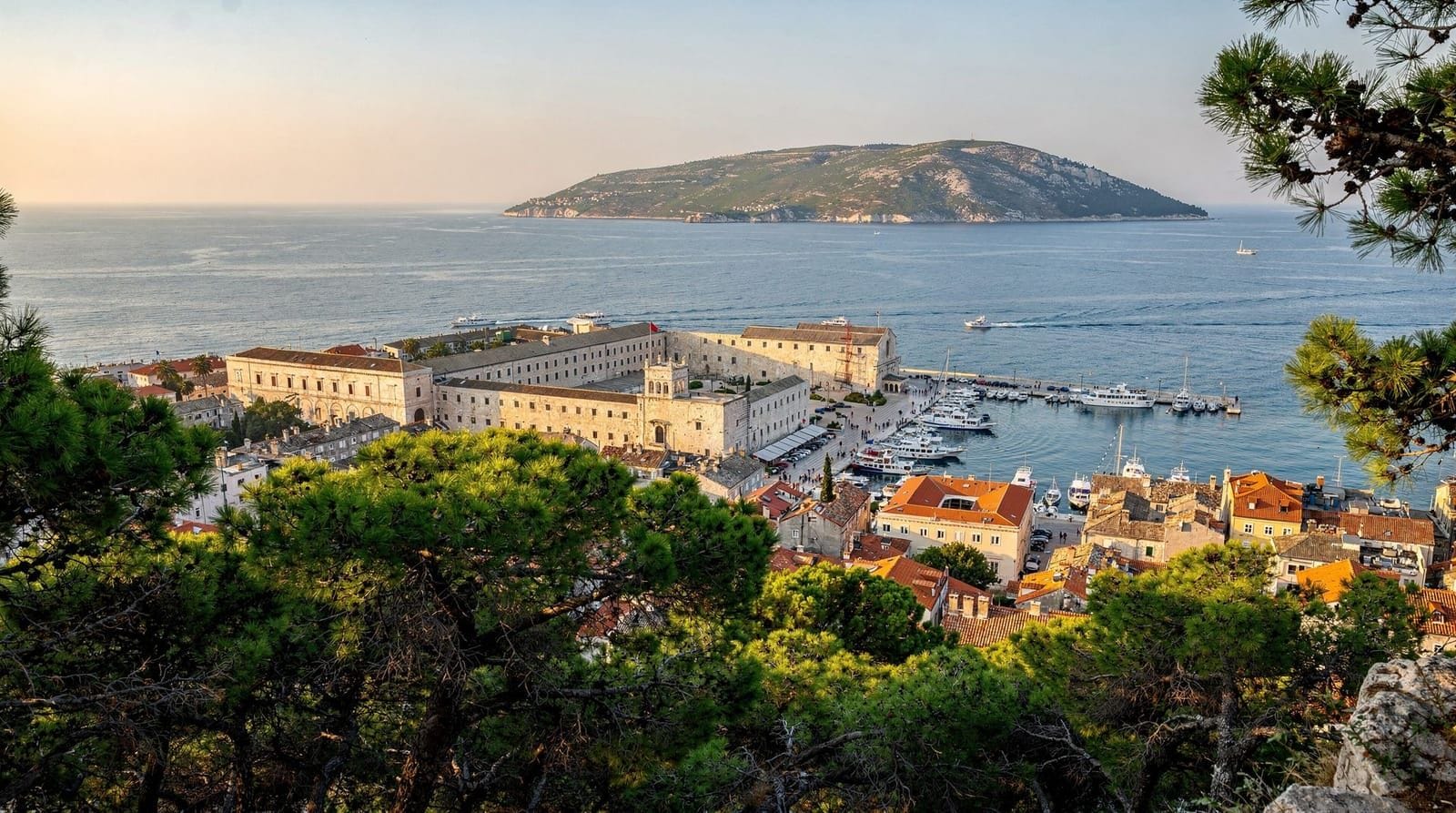
First viewpoint (approximately 15 minutes from the trailhead): A small terrace with a low wall that faces northeast, back over Split’s rooftops and down to the Riva and harbour. In early morning, the city is almost entirely dark except for the occasional lit window. The ferry port is beginning its first movements. The air smells of pine and sea. This is not the best view on the hill, but it’s the one that feels most like an arrival.
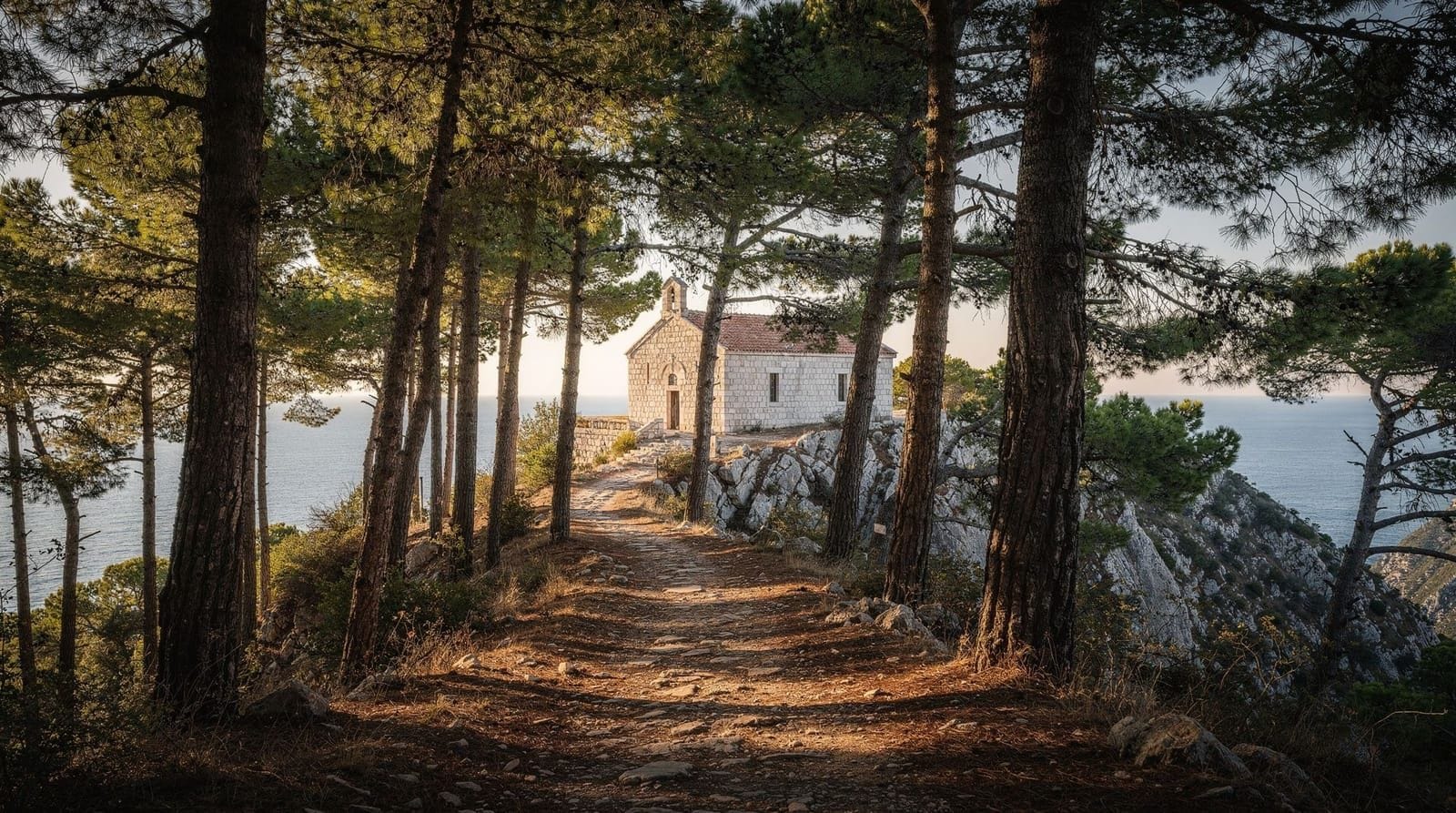
The chapel of Sveti Jere (approximately 25 minutes): A medieval church on the hill’s northern face, with a terrace that has become one of the hill’s most photographed viewpoints. At dawn the light comes from the east, behind you, and illuminates the sea and islands to the west in a way that the midday sun doesn’t replicate.
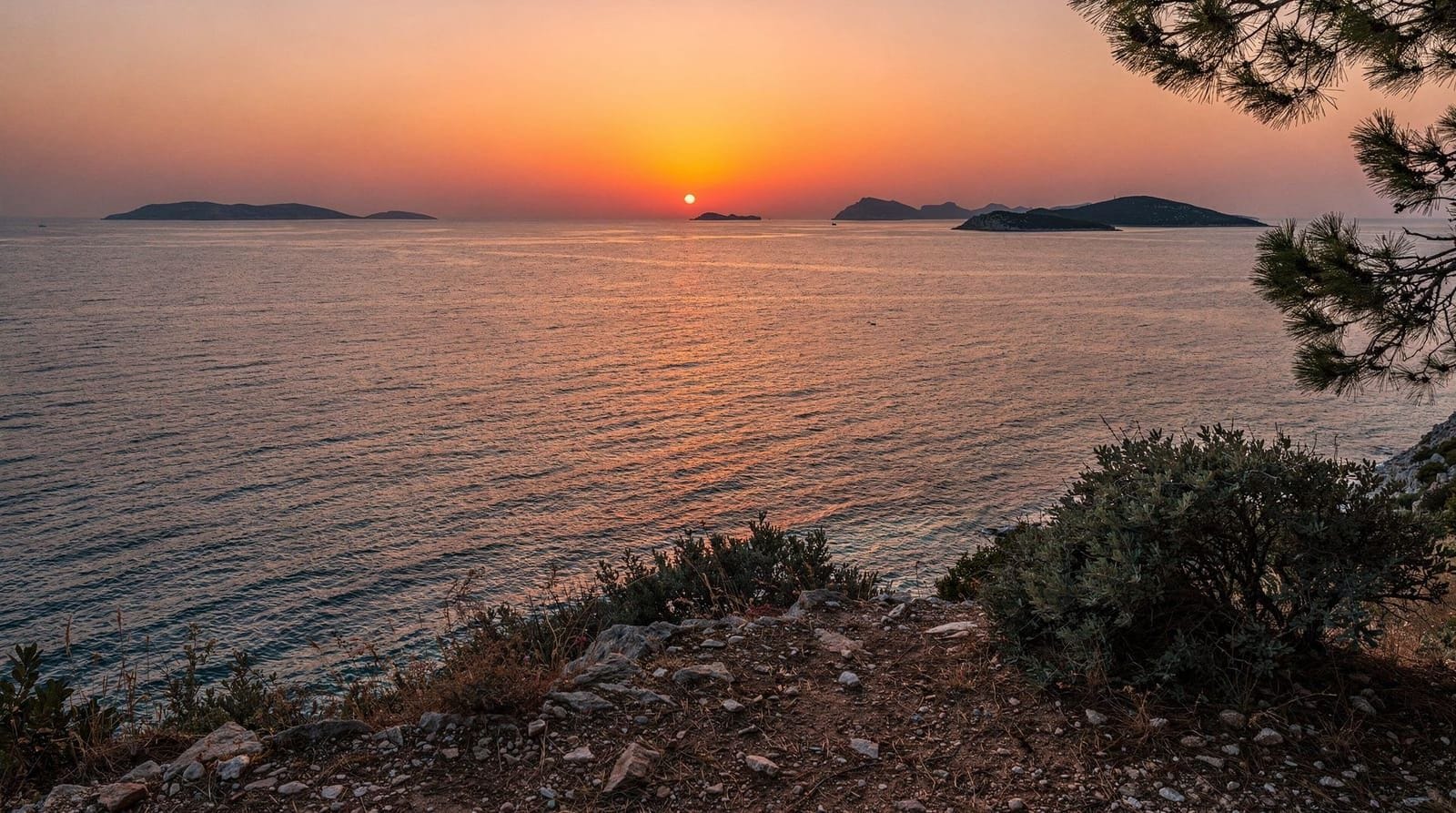
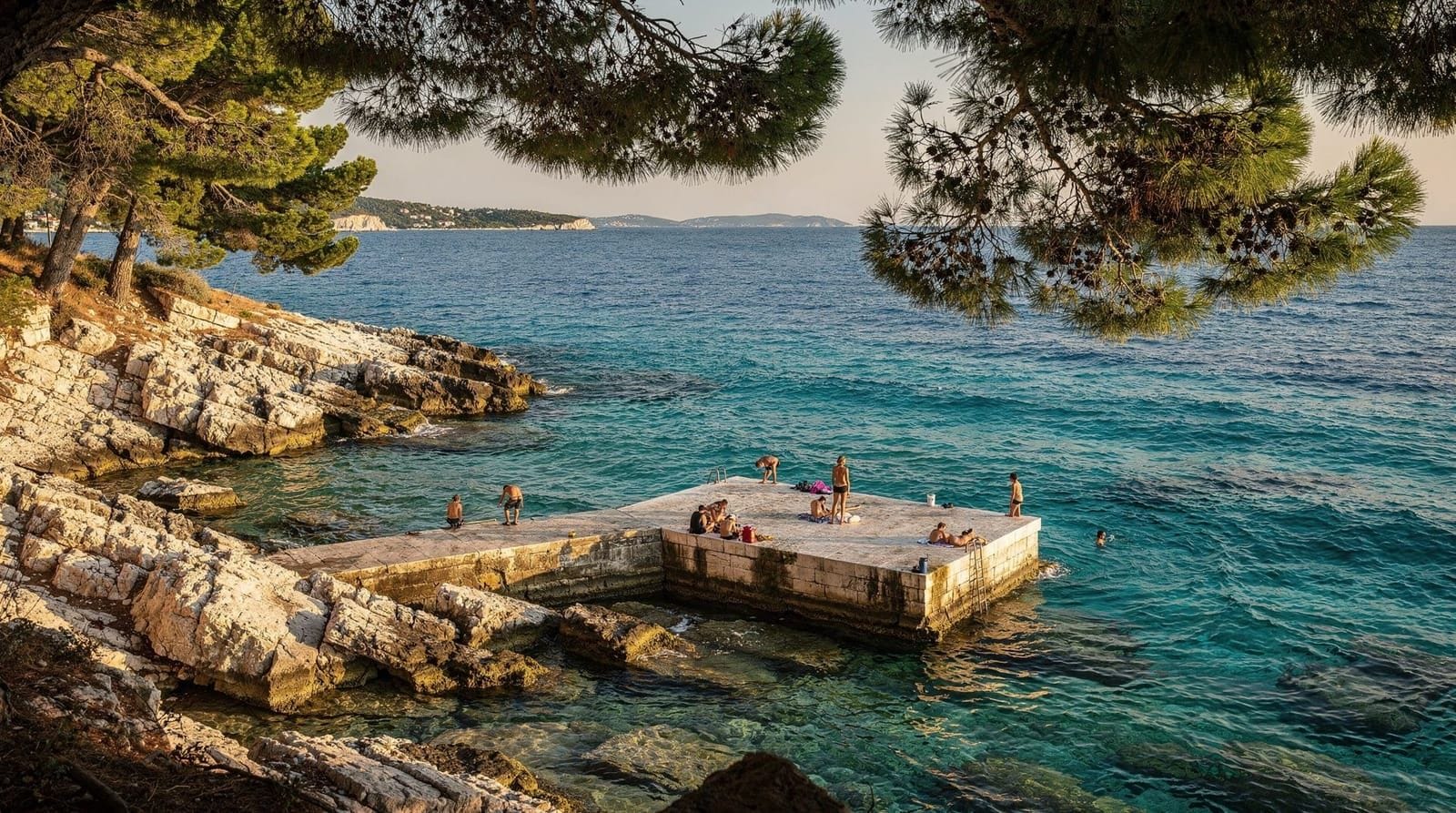
The northwest viewpoint (approximately 35–40 minutes): This is what we came for. A promontory on the hill’s western face with an unobstructed view across open water toward the islands. In early morning in summer, the sky over the islands begins to lighten before the sun has cleared the hills behind Split. The water goes from dark to pearl to silver to the first warm yellow before the sun itself appears over the hinterland ridge.
We’ve watched this sequence several times now and it hasn’t lost its effect.
The light in summer
Sunrise in Split in summer (June–August) is between 5:15 and 6:00 a.m. This is early, and we’re not going to claim it’s comfortable. What we’ll say is that the hour before sunrise on Marjan — when the sky goes through every shade of blue and then starts warming at the horizon — is a different quality of experience from the late-afternoon version of the hill.
The afternoon hill has better café options (Kila bar opens around 10 a.m. and has beer and coffee), more other walkers, and the city already awake below. The morning hill is essentially empty, the sea is flat and dark, and Split looks from above like a sleeping organism rather than a machine in motion.
September is the easiest season for this: dawn at 6:30–7 a.m. means you don’t need a 5 a.m. alarm. May is similar. If you’re visiting in July and are serious about this, set an alarm for 5:00 a.m. and think of it as sleep-in-later insurance for the rest of the day.
Sunrise by month
| Month | Approx. sunrise | Effort required |
|---|---|---|
| May | around 5:45–6:00 a.m. | Moderate |
| June–July | around 5:15–5:30 a.m. | High — genuine early alarm |
| August | around 5:45–6:00 a.m. | Moderate |
| September | around 6:30–7:00 a.m. | Low — an ordinary early start |
What you’ll encounter
Joggers, mostly Croatian. A few cyclists going slowly on the main path. Dogs being walked before the heat of the day. Occasionally a couple. Never, in our experience, a large group of tourists.
There’s no café, no shop, no signage in English. There are path markers (red circles on trees and rocks) that keep you on the main route. If you have a phone with offline maps downloaded, you can explore the smaller side paths without losing the main route back.
Wildlife: you’ll hear more birds than you’ll see, but the dawn chorus on Marjan is genuine and prominent — hoopoes, various warblers, and the small falcons that nest in the limestone outcrops. Bring binoculars if that matters to you.
The descent and the morning city
The walk back down typically takes 20–25 minutes on the main path, returning you to Varoš or the edge of the old town between 7:30 and 8:00 a.m. At this hour, the city is beginning. The bakeries are open — a specific one in Varoš near the foot of the hill has been selling fresh burek (flaky pastry with cheese or meat) from 6 a.m. — and the Green Market will be setting up its vegetable stalls.
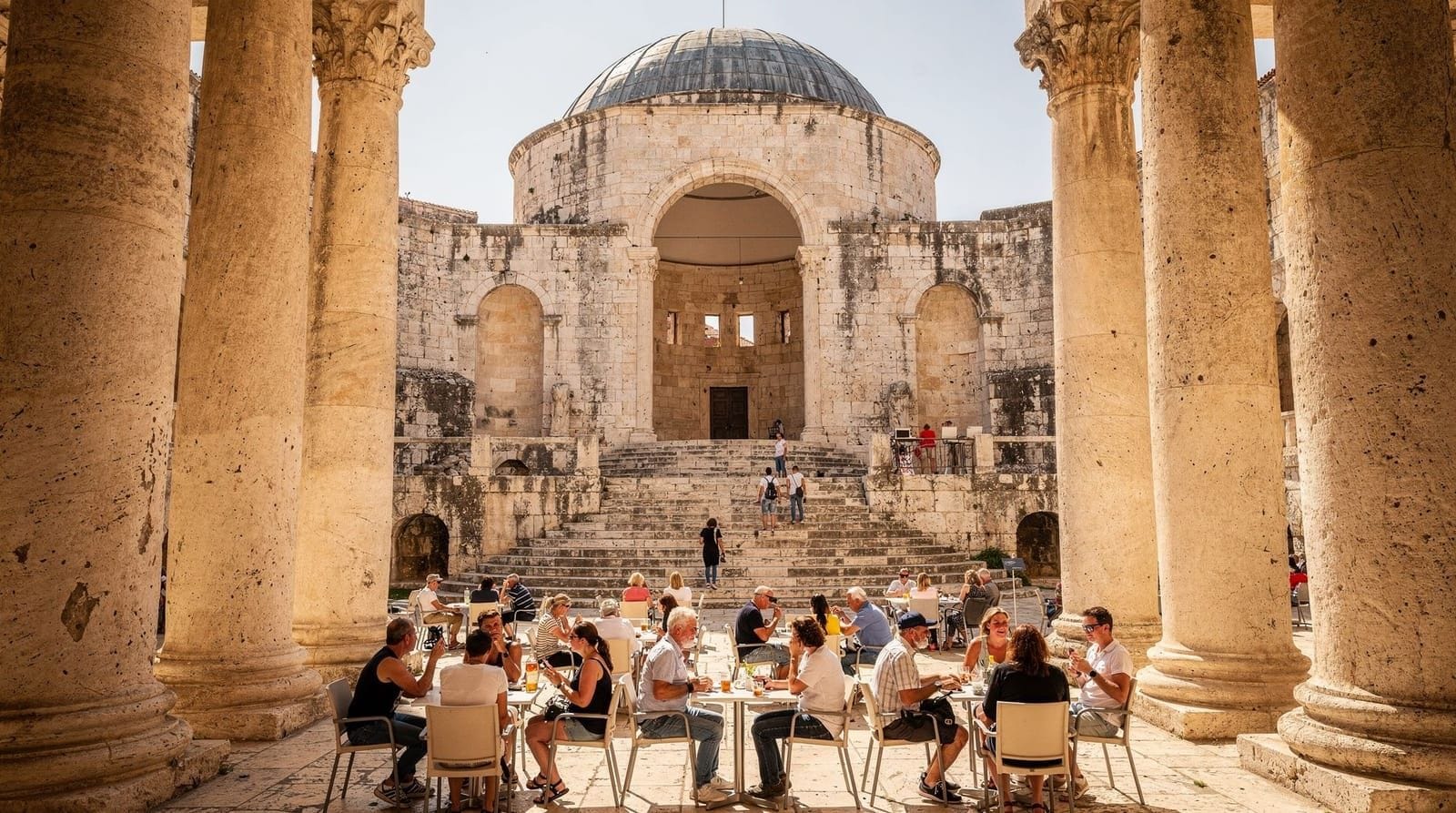
This is the best time to walk through the palace, before the cruise ships have docked and the morning tour groups have begun. The Peristyle at 7:45 a.m. in summer has a small number of people, beautiful light through the Vestibule opening, and something approaching the atmosphere the space actually deserves.
The walking tour of the old town routes can be done starting from here, or you can simply make your way to coffee and a table in the morning.
Turning the morning into a full day
Because you come down from the hill with the whole day still ahead, it pairs well with the palace. If you want the history explained rather than just felt, a small-group guided walk through Diocletian’s Palace and the old town fits neatly into the late morning. Our Diocletian’s Palace guide covers what you’re looking at if you’d rather wander alone, and the Cathedral of St Domnius guide is worth reading before you climb the bell tower.
For breakfast and lunch after the descent, where to eat in Split points you towards places that are good rather than merely near the Riva. If the walk has made you hungry for something more local, the Dalmatian food guide explains what to order.
Fitting dawn on Marjan into a longer stay
A dawn walk works best early in a trip, when jet lag or the first-morning excitement gets you out of bed anyway. It also sets the tone for the days after: once you have seen the city from above, the streets below make more sense. If you are still planning, the Split first-timer guide puts the hill in context alongside everything else worth doing, and the Split 3-day itinerary shows where an early Marjan morning can sit without wrecking the rest of your schedule.
Anyone trying to avoid the busiest hours will appreciate the logic here. The same instinct is behind our advice in escape the crowds in Split: the city is at its best when you move before everyone else does. For the shoulder-season angle, our why September is the best month in Split post explains why the later sunrise makes this walk so much easier.
If walking uphill at dawn isn’t for you
We’d still argue the walk itself is part of what makes this work — the quiet, the gradual light change, the effort earning the view. But if an early hike genuinely isn’t realistic for you and you still want to see Marjan properly, an e-bike route covers the hill’s main paths with much less effort, just later in the morning once rentals open.
Split city and Marjan Hill e-bike tourIt’s a different experience from the dawn walk described above — you’ll have company on the paths and the low, dramatic light will be gone — but it’s a reasonable way to see the hill’s geography if 5 a.m. isn’t happening on your trip. For the full geography of the peninsula beyond just the trail, our Marjan Hill destination overview is worth a read before you decide which version suits you.
The practical version
For the full Marjan hiking guide including all the named viewpoints, the cycling routes, and the beach access on the hill’s southern face, we have a dedicated resource.
For the dawn version: wear trainers with grip, bring a light layer (the hill is slightly cooler than the city, and you’ll feel it standing still at the viewpoints), carry water even though it’s only an hour, and have your phone charged for photos. The path is easy to follow in daylight and reasonable by phone torch if you’re starting in darkness.
The view from the northwest promontory at the moment the sun clears the hills to the east and the first warm light hits the sea: not easily forgotten. We’ve photographed it three times and the photographs are not really the point.
For the afternoon and sunset version of Marjan, see our best sunset spots in Split. For swimming access from the hill’s southern face, see our best swimming spots in Split guide.