Why September is the best month to visit Split
The moment we stopped going in August
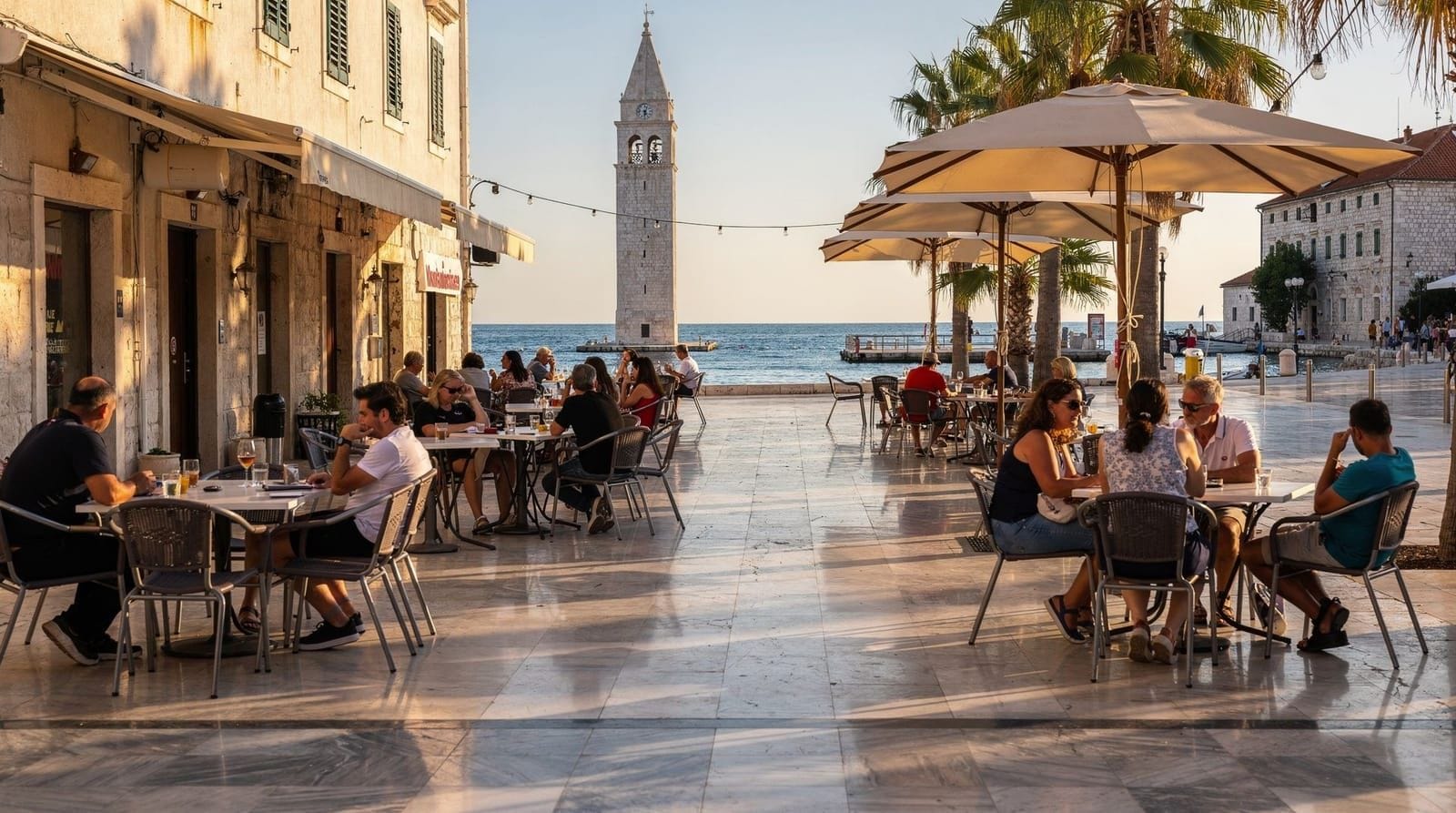
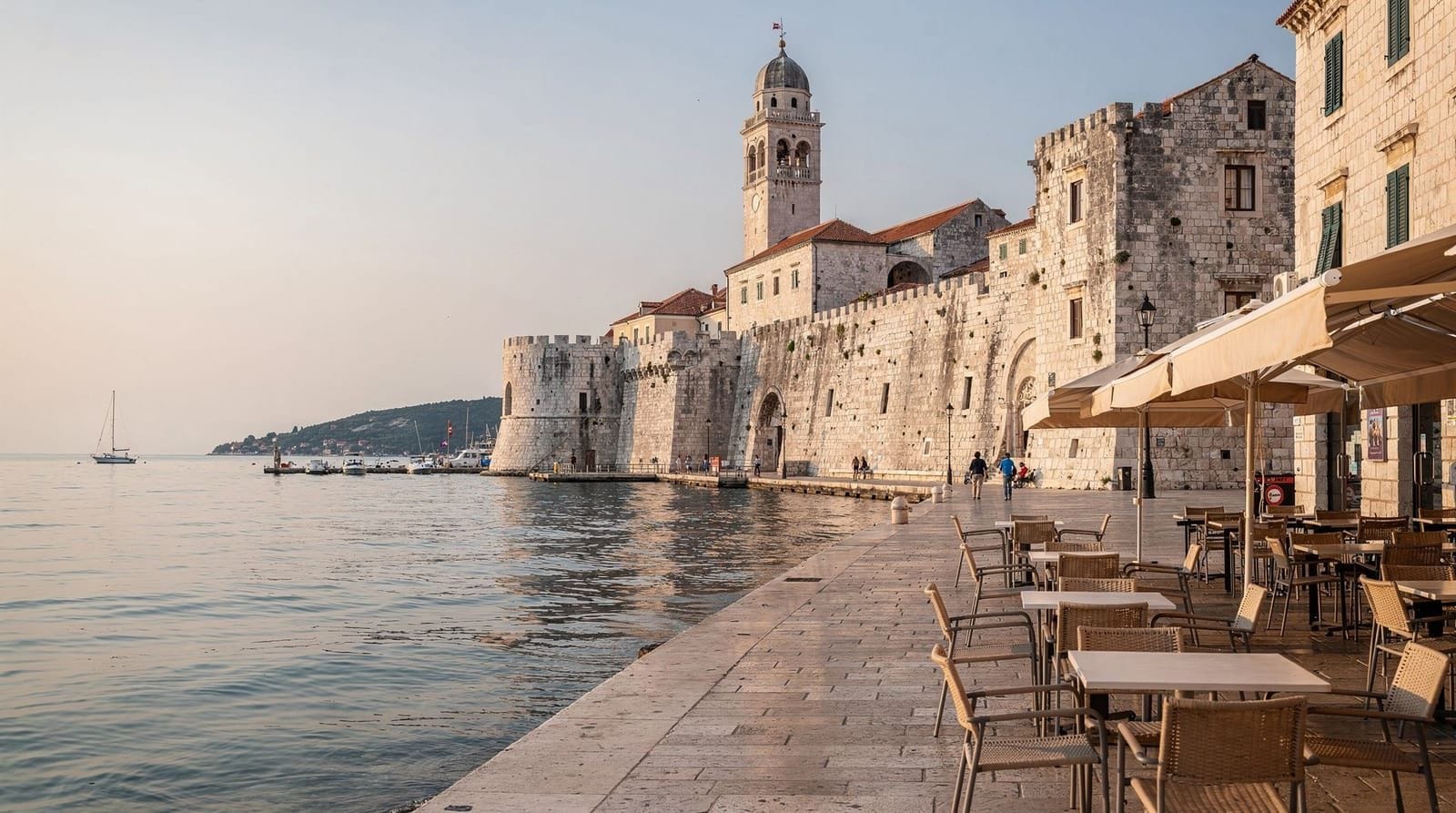
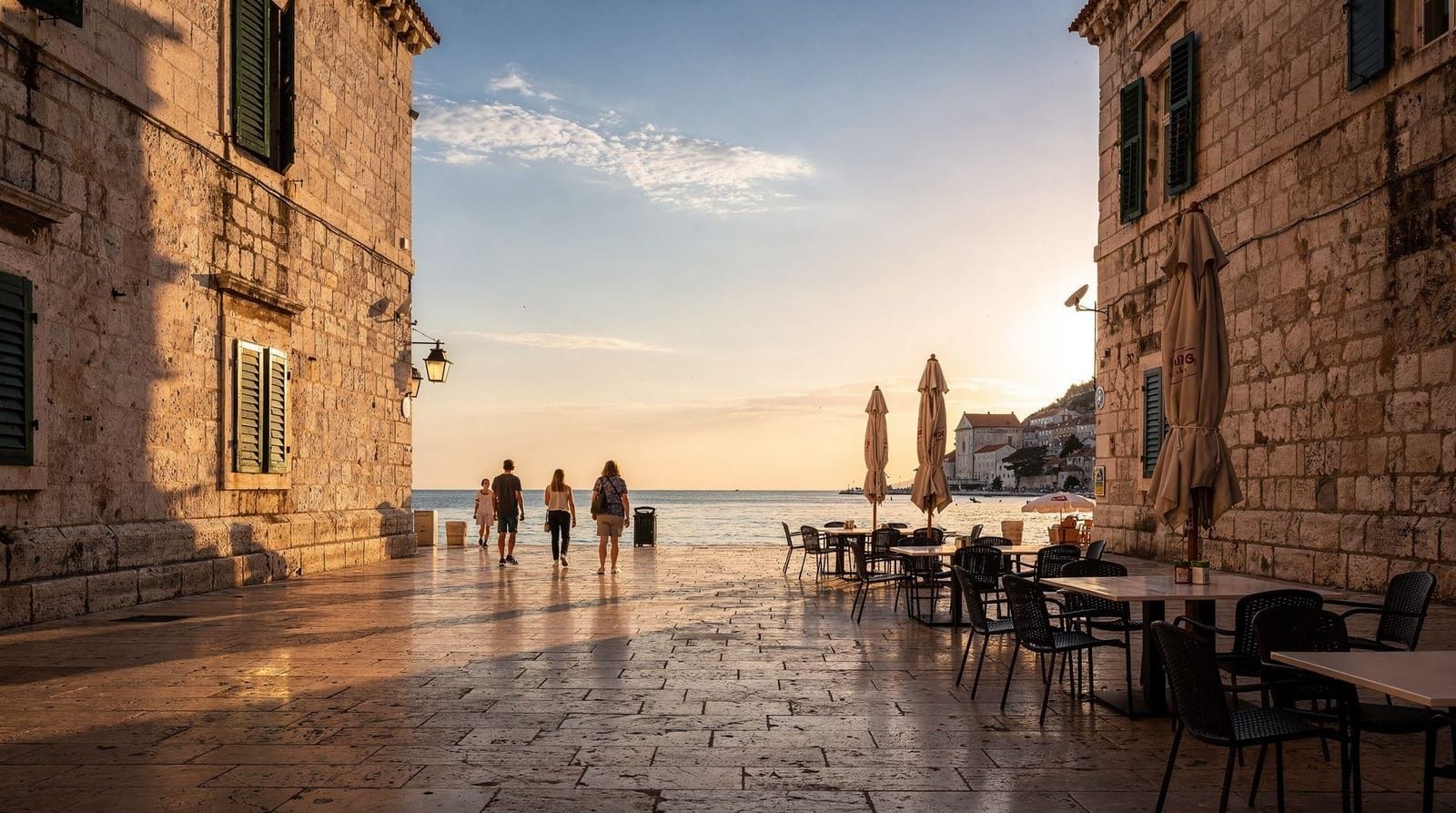
It was a Tuesday morning in late September. We’d walked from our apartment near the Vestibule down to the Riva before seven o’clock, and there were maybe twelve other people on the entire promenade. A fisherman was coiling rope beside his boat. A woman was sweeping the pavement outside a konoba that wouldn’t open for another two hours. The sea was an impossible shade of teal, and it was 24°C.
We sat at the one café already running and ordered coffee. Nobody was jostling for a table. Nobody was dragging a rolling suitcase over the marble-slick stones of Diocletian’s Palace. We had the entire peristyle almost to ourselves for forty minutes.
That morning is why we now book September by default and refuse to argue with anyone who still insists August is the right call. It isn’t. Not anymore. Here’s the evidence.
| Sea temp | 23–25°C, warmer than June |
| Air temp | 24–28°C highs, 19–21°C evenings |
| Prices | 20–30% below August peak |
| Crowds | roughly half of peak-season volume |
| What’s open | everything, through September 30 at minimum |
August vs June vs September
| August (peak) | June | September | |
|---|---|---|---|
| Sea temp | 24–26°C | 20–21°C | 23–25°C |
| Air temp (highs) | 32–36°C | 27–30°C | 24–28°C |
| Crowds | maximum | building fast | roughly half of August |
| Accommodation price | highest | rising | 20–30% below August |
| Booking lead time | weeks ahead | 1–2 weeks | days ahead is often fine |
Temperatures that actually let you enjoy the place
In peak season — roughly mid-June through mid-August — the thermometer in Split regularly touches 32–36°C at midday. The humidity coming off the Adriatic makes the narrow alleys of the old town feel like a very beautiful sauna. You can still enjoy it, but you’ll be doing so with sweat running down your back and a €7 bottle of water in your hand.
September is different. Average highs sit between 24 and 28°C for most of the month. Evenings drop to around 19–21°C — warm enough to eat outside in a t-shirt, cool enough that you actually want to walk somewhere after dinner. The air feels lighter. You do more.
The sea temperature in September is typically 23–25°C, which is actually warmer than in June (when it’s still hovering around 20–21°C as the Adriatic slowly heats up). You get the payoff of a whole summer’s solar gain without the oppressive midday heat of August. Swimming in late September off Bačvice or from a beach on Hvar is genuinely one of the most pleasant things you can do on this coast.
The crowds drop by roughly half
Nobody has accurate counts, but accommodation data and ferry queue anecdotes tell a consistent story. The week of August 15th — Croatian national holiday, Assumption Day — is the worst single week in the entire Adriatic calendar. Hotels run at absolute capacity, the Green Market is gridlocked by 9 a.m., and the ferry queues for Hvar stretch back two city blocks.
By the first week of September the school year has resumed across most of Europe and the US. Families with children have gone home. Young Europeans with jobs have used up their summer leave. What remains is a mix of older travelers, honeymooners, people who work for themselves, and anyone else who has figured out the same thing we have.
In practical terms: you don’t need to book island-hopping tours weeks in advance. You can walk into a restaurant without a reservation on most evenings. You can find parking if you’re visiting by car. The Diocletian’s Palace fills to its usual morning rush of day-trippers from the big cruise ships between 10 a.m. and 2 p.m. — but by 4 p.m., it empties back to something approaching normal.
For context on planning your time inside the old town, see our Split old town walking guide.
Prices drop 20–30% almost across the board
The seasonality math in Dalmatia is fairly blunt. Most accommodation providers operate a “high season” rate from around June 15 to August 31, and then drop to “shoulder” pricing from September 1. That shift is typically 20–30% depending on the property.
A private studio apartment that runs €120/night in late July might be available for €85–90 in mid-September. A room in a mid-range hotel that was €180 in August might be €130 or even less. Restaurants don’t change their menus, but you’ll spend less on drinks and incidentals simply because you’re not waiting in a queue and impulse-ordering another round while you do.
Tours also have more flexibility. Boat tours that sold out days in advance in summer often have open spots in September. Some operators actually prefer September — the sea conditions are usually good, the groups are smaller, and the guides have their energy back after a punishing high season.
For a full breakdown of what things actually cost at different times of year, our Split travel budget guide has month-by-month numbers.
Island-hopping is better in September
This deserves its own section because it’s the single best argument for September we can make to anyone who’s been to the islands in August.
In late July and August, the Blue Cave entrance at Biševo can have queues that back up for over an hour. The cave itself allows only about four small boats at a time, and every speedboat on the Dalmatian coast seems to be attempting to get there simultaneously. The experience — which genuinely is extraordinary when the conditions are right — gets compressed into a 10-minute slot while someone behind you is already jostling.
In September the groups are smaller. The caves are less crowded. The speedboat tours that run for the Blue Cave, Hvar, and the five-island circuit feel more like excursions and less like queue management. Hvar town, which in August can feel overwhelming — thousands of people converging on a small port — returns to something like itself. The bars are still open. The Fortica fortress is still worth climbing. But you can actually stop and look around.
Book a five-island tour in SeptemberThe Jadrolinija ferry to Hvar (about an hour from Split) runs reliably through October. Brač, Korčula, and Vis all remain fully connected. The catamaran frequency drops slightly compared to peak, but the ferries you need still run multiple times daily.
What’s still open in September
A concern we hear occasionally: “But won’t things be closed?” The answer, for the first half of September at least, is almost entirely no.
Restaurants: open. All of them. Konoba season runs through at least mid-October in most places, and many stay open year-round.
Bars and nightlife: still running, though the mega-parties of Hvar have wound down. If you want a quiet night, September is perfect. If you wanted Ultra Music Festival, you should have come in July.
National parks: Krka and Plitvice are both open through October. Plitvice is particularly beautiful in September when the crowds are thinner and the light has that first hint of autumn gold. See our comparison of Krka vs Plitvice to decide which suits your trip.
Tours: the vast majority of GYG and Viator operators run full schedules through September 30. Some extend into October. A few specialized sea tours start reducing frequency in the second half of October.
Adventure activities: rafting on the Cetina River runs through mid-October. Kayaking tours, cliff jumping, canyoning — all available in September. In some ways preferable, because the guides are more relaxed and less depleted than they are in August. Read more about rafting the Cetina if that’s on your list.
Book a Cetina rafting tour from Split, ideal in September’s calmer waterWhy locals prefer it too
It’s not just visitors who notice the difference. Restaurant staff, boat crews and shop owners we’ve spoken with over multiple Septembers consistently describe it as the month they actually enjoy working, rather than the month they’re surviving. That shows up in small ways that matter to your trip: a konoba owner who has time to explain the peka, a boat guide who points out something beyond the standard script, a market vendor who isn’t rushing five transactions at once. None of this is measurable the way price or temperature is, but it’s a real part of why September feels different from August beyond the numbers.
Where to read more before you commit
If September is still only a maybe, start with our Split in September guide, which takes the month week by week. Our escape the crowds in Split guide pairs well with it, because the same habits that work in September (early starts, late afternoons, the quieter side of the old town) work in any month. For the mistakes that make summer trips feel worse than they should, see peak-season mistakes in Split. And for the wider argument about why travelling just outside the peak is smarter, our shoulder season travel piece makes the case from a different angle.
The one honest caveat
Weather. September is generally excellent, but the Adriatic does occasionally produce a burst of late-summer storms, especially in the second half of the month. These pass quickly — a day of rain and wind, then back to sunshine — but if your trip is only four or five days, you can’t simply ignore this possibility.
Our practical advice: avoid scheduling island excursions for days immediately after a forecast low-pressure system. The sea calms down quickly, but 48-hour-old swell is still uncomfortable on a small speedboat. Check weather three days out, not six. Pack one light jacket you don’t mind getting wet.
Also worth noting: a few beach bars and some of the more seasonal restaurants on the smaller islands start closing in the second week of September. On Vis especially, which is already quiet, things thin out fast after the 10th. If you want the island to feel alive, aim for early September.
How to plan the perfect September escape
The sweet spot is September 1–20. You get the full shoulder-season benefits — lower prices, thinner crowds, warm sea — without the risk of hitting the weather window where late-season storms become more frequent.
Book accommodation at least three to four weeks in advance if you want the best apartment options in the old town. September is still popular enough that last-minute options in prime locations go fast. For everything else — restaurants, day tours, ferry tickets — you’ll have much more flexibility than in summer.
For itinerary structure, our five-day September itinerary is built specifically for this window. It sequences the islands, the national park, and the city in a way that avoids double-back travel and makes the most of the longer evenings.
If you’re deciding between Split and other parts of Croatia, our Split vs Dubrovnik comparison covers the different character of each city — and September makes both more appealing, though Dubrovnik crowds also thin later than Split’s do.
The version of Split you actually want
There’s a version of Split that the tourism brochures promise and that most visitors — arriving in the height of summer — only partially experience. It’s the version where you can hear the fountain in the Peristyle, where the Golden Gate doesn’t have a selfie queue, where a konoba owner has time to tell you what’s good today.
That version exists year-round. But September is when it’s easiest to find it. The place is still fully alive — music, restaurants, ferries, markets, the Riva filling up in the evenings — but the pressure is off. You can actually be there instead of surviving there.
We’ve done both. September wins, every time.
Frequently asked questions about Why September is the best month to visit Split
Is September warmer than it sounds for swimming? Yes — at 23–25°C, the sea in September is actually warmer than June, because the Adriatic has spent the whole summer absorbing solar heat. It’s arguably the best swimming month of the year, not a fallback.
Do I need to book everything weeks in advance for September? Only accommodation in the old town, ideally 3–4 weeks ahead for the best options. Restaurants, day tours and ferry tickets have far more flexibility than in peak summer — a few days’ notice is usually enough.
For more planning details, see our best time to visit Split guide and our rundown of what to skip in Split to protect your time and budget.