Split September shoulder-season 5-day itinerary
From Split: Krka Waterfalls, Food & Wine Tasting Tour
Why September is the smart month for Split
September in Split is not a compromise. It is the best version of the Dalmatian trip — the same scenery, the same sea, the same restaurants, but with 30–40% fewer people and prices 20–30% lower than August. The sea temperature peaks in late August and remains at 23–24°C through September, which is warmer than it is in June. The air temperature sits at 24–27°C — comfortable for walking, hiking, and being outside without the aggressive heat of July and August.
The tourist infrastructure that serves peak season doesn’t disappear. Ferry services to Hvar and other islands run frequent schedules through September. Krka National Park is open and accessible. Restaurants keep full menus. But the Hvar main square is navigable. The Krka boardwalk has space. Diocletian’s Palace in the morning feels like a city rather than an attraction.
This itinerary is designed specifically for the September window: timing recommendations to maximise the shoulder advantage, notes on what’s closed (almost nothing), and the specific experiences that become possible when crowds thin.
Budget estimate for two people, five nights, September pricing: roughly €700–1,100 (accommodation €70–110/night, meals €30–45/day/two people, transport €10–20/day, activities €50–70/day). This is 20–30% less than the same trip in August.
| Where | Split, Hvar, Krka National Park, Trogir |
| Cost | around €700–1,100 for two, 5 nights |
| Time needed | 5 days, no car needed |
| Sea temperature | 23–24°C — the annual warmest |
| Best time | Early to mid September, before the October ferry-schedule reduction |
Dalmatia by month: the shoulder-season picture
| Month | Sea temp | Air temp | Crowds | Prices vs August |
|---|---|---|---|---|
| June | 19–20°C | 24–28°C | Building | -10 to -15% |
| July–August | 24–25°C | 30–32°C | Peak | Baseline |
| September | 23–24°C | 24–27°C | 30–40% lower | -20 to -30% |
| October | 20–22°C | 18–22°C | Low | -30 to -40%, reduced ferries |
Day 1 — Arrive in Split: the uncrowded palace
Arrival
Split Airport (SPU) to city: Pleso shuttle bus (€8, 30–40 min). In September, taxis are slightly easier to flag down than in August because demand drops.
Late afternoon: Diocletian’s Palace without the crush
Check in and walk into Diocletian’s Palace. In peak season, the Peristyle at midday is a dense mass of visitors and tour groups. In September, the afternoon light finds the Peristyle relatively calm by 17:00. Sit at one of the café terraces under the ancient columns with a local beer (Karlovačko or Ožujsko, €3–4) and notice that you can actually hear the fountain.
The Cathedral of Saint Domnius bell tower (€3) at this hour of the day — late afternoon sun on the ancient stonework — is as good as it gets. The queue at 17:00 in September is short or nonexistent.
Evening: Varoš neighbourhood
The old stone neighbourhood west of the palace is where Split’s non-tourist restaurant scene clusters. Konoba Matoni (Tomića stine) does grilled fish and lamb peka slow-roasted under a clay bell (order the peka 24 hours ahead; it’s worth the planning). Plavac Mali from Pelješac peninsula at €4–6 per glass. Dinner for two: €50–65.
The evening walk back through the palace is recommended: the narrow alley of Papalićeva in the dark is genuinely atmospheric in a way that mid-afternoon traffic cannot be.
Day 2 — Hvar in September: the island as it should be
Morning ferry: 08:30
Jadrolinija catamaran to Hvar town (1 hour, €10–13). In September, the catamaran is rarely sold out. Buy at the terminal or online at jadrolinija.hr; departure from the Split ferry port, 15 minutes from the old town.
Hvar town: 09:30–13:00
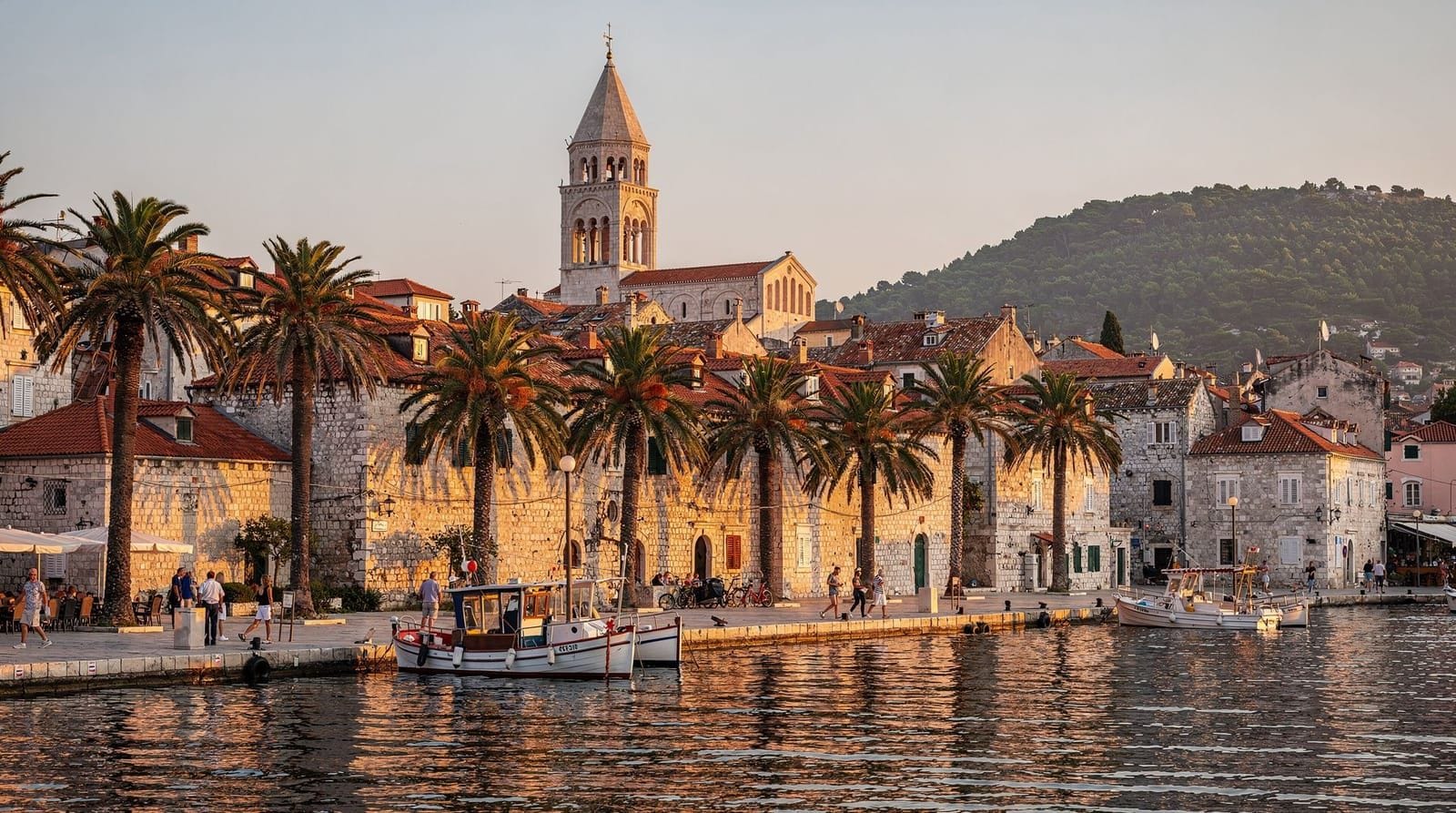
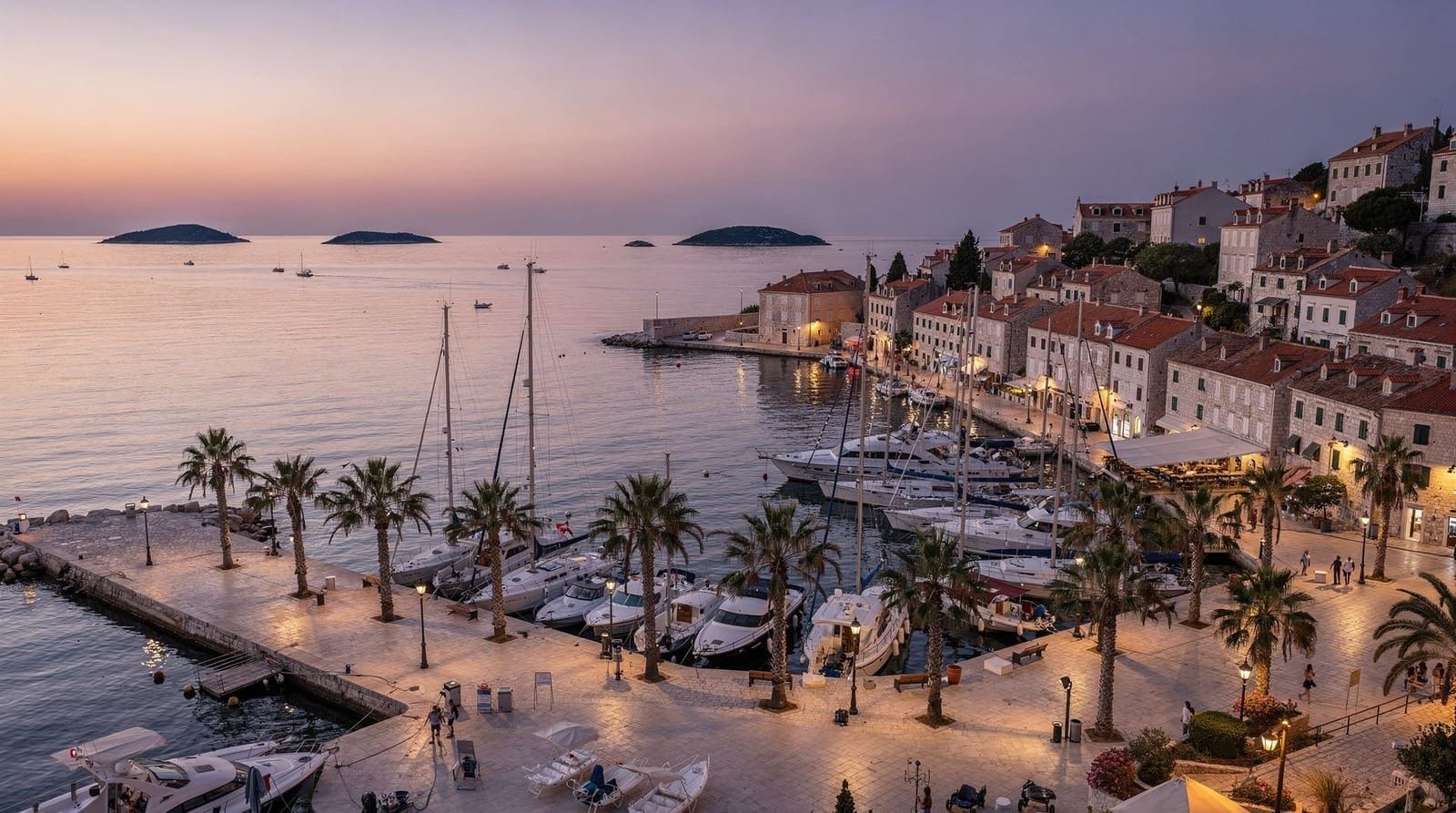
The main square in September can be crossed without negotiating. Fortica fortress (€10) earns the panorama over the Pakleni Islands; the 45-minute climb is comfortable at September temperatures. The Franciscan monastery at the harbour end of the square has a Last Supper painting attributed to a follower of Titian — worth the €3 entry. Konoba Menego on the Groda stairs for lunch (prsut, cheese, local wine, bread) around 13:00 — this is exactly the kind of Dalmatian lunch that the season is for.
Afternoon: Pakleni Islands
Pakleni Islands by water taxi from Hvar harbour (€3–6 one way, 10–20 min). In September, the water clarity in the Pakleni coves is at its annual best — summer algae blooms have cleared, and the turquoise is genuinely vivid. Stipanska or Zdrilca coves are quieter than Palmizana (the main tourist landing). A mask and snorkel here in September, in 23–24°C water with 10–15 m visibility, is the quintessential Dalmatian experience.
Return catamaran to Split: 18:00
Check the timetable before departing in the morning. In September, the last catamaran is often at 18:00 or 19:30. Do not miss it — overnight Hvar accommodation in September is expensive relative to Split.
Day 3 — Blue Cave and 5 islands tour
Departure: 08:30 from Split harbour
In July and August, Blue Cave tours are crowded — the cave itself hosts queues of 30–60 minutes at peak periods (10:00–12:30 when the light is correct). In September, the same tours run with smaller groups and the cave queue is typically 10–20 minutes. The experience at the cave is essentially the same (10 minutes inside regardless of season) but the surrounding tour is more relaxed.
From Split: Blue Cave, Hvar, Mamma Mia, 5 Islands Boat TourThe 5-island speedboat tour covers Blue Cave (Biševo), Stiniva Bay (Vis), Vis town, Hvar, and Pakleni Islands over 10–11 hours. Cost: €60–90 per person including speedboat and guide; Blue Cave entry (€18 in September) paid separately at the cave.
What September changes on this tour: the Stiniva Bay landing in September is calmer — the cove takes fewer boats than in August, giving you longer in the water. The lunch stop on Vis is less crowded. The speedboat ride across open Adriatic is genuinely pleasant at September air temperatures rather than scorching.
Return: 19:00
Dinner near the ferry port. Nostromo (north of the terminal, Kraj Sv. Marije) is Split’s best fish restaurant and takes reservations — book in advance even in September. Alternatively, the waterfront promenade south toward Bačvice has several well-regarded grill restaurants.
Day 4 — Krka National Park with wine tasting
Departure: 08:00
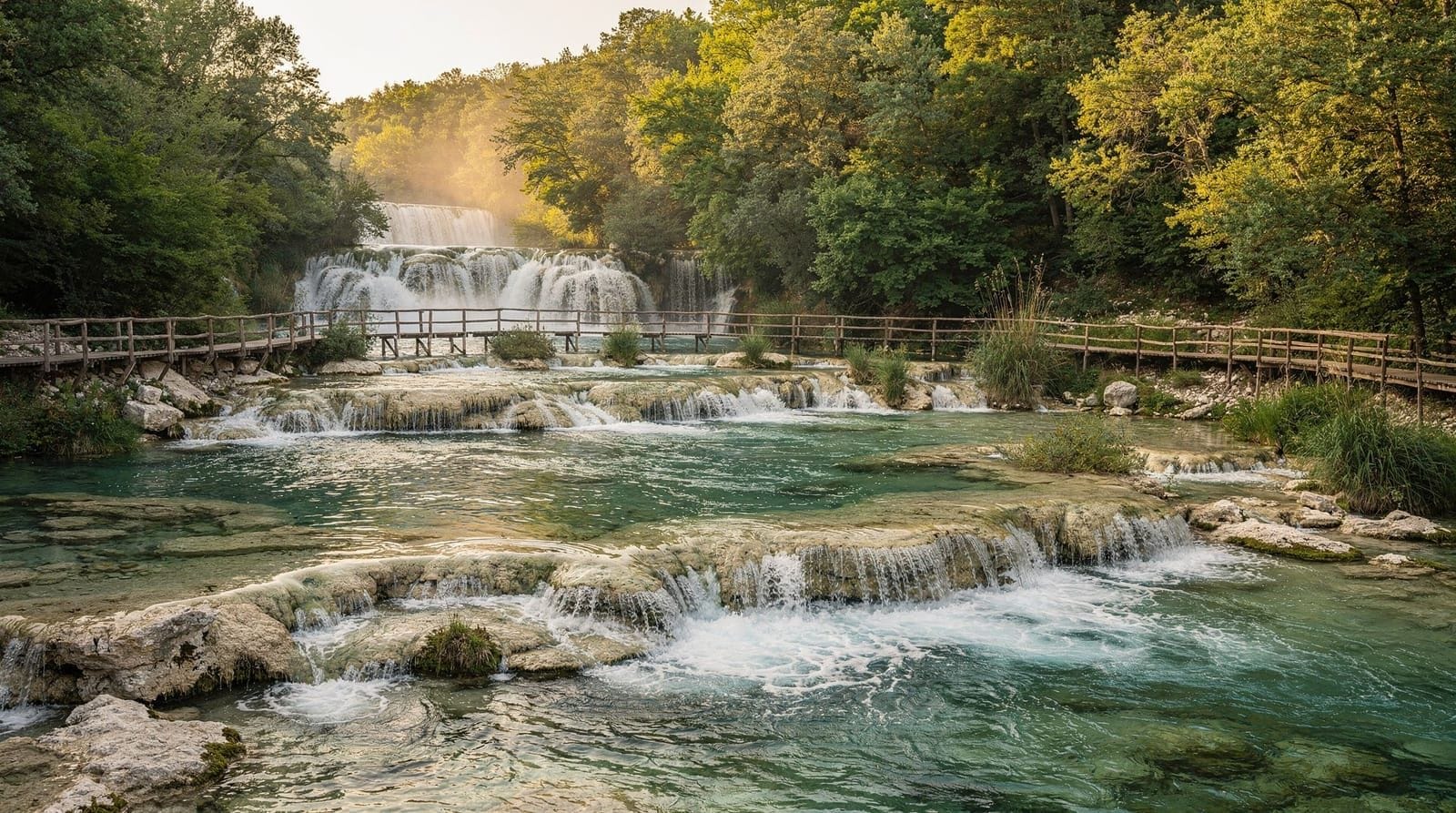
Krka National Park in September is arguably its best month. The summer crowds have thinned — the Skradinski Buk boardwalk in July can be shoulder-to-shoulder. In September you walk it normally. Swimming has been banned at Skradinski Buk since 2021, but the designated swimming zones elsewhere in the park are less contested. The boat to Visovac island monastery (€15 extra) runs on a relaxed schedule.
The Krka with wine tasting tour adds a local farm visit and wine/olive oil tasting in the Šibenik region to the standard Krka day:
From Split: Krka Waterfalls, Food & Wine Tasting TourCost: €55–75 per person including transport, boat ride, tasting; park entry extra.
In the park: 10:00–15:00
Skradinski Buk waterfall circuit (1.5–2 hours), Visovac boat trip (optional, €15 extra). Swimming at Skradinski Buk is banned since 2021; it is only possible in a few designated zones elsewhere in the park in summer (check np-krka.hr) or at the swim stop of your tour, away from the falls. The park water (spring-fed) stays around 18–20°C — cooler than the sea, but welcome after the boardwalk in September sunshine.
The wine and olive oil tasting adds 1.5 hours and gives context to the local food culture: Šibenik region produces some of Croatia’s better Debit white wine, and the olive oils from the inland groves are worth bringing home if your luggage allows.
Return: 17:30
Evening in Split: sunset from Marjan Hill upper viewpoint (accessible by 45-minute walk or taxi to the base). The September sunset over the Adriatic turns the islands — Hvar, Brač, Šolta — from grey to gold before dropping. Walk down for dinner in Varoš.
Day 5 — Sunset kayak and Trogir half-day
Morning: 09:00 — Trogir
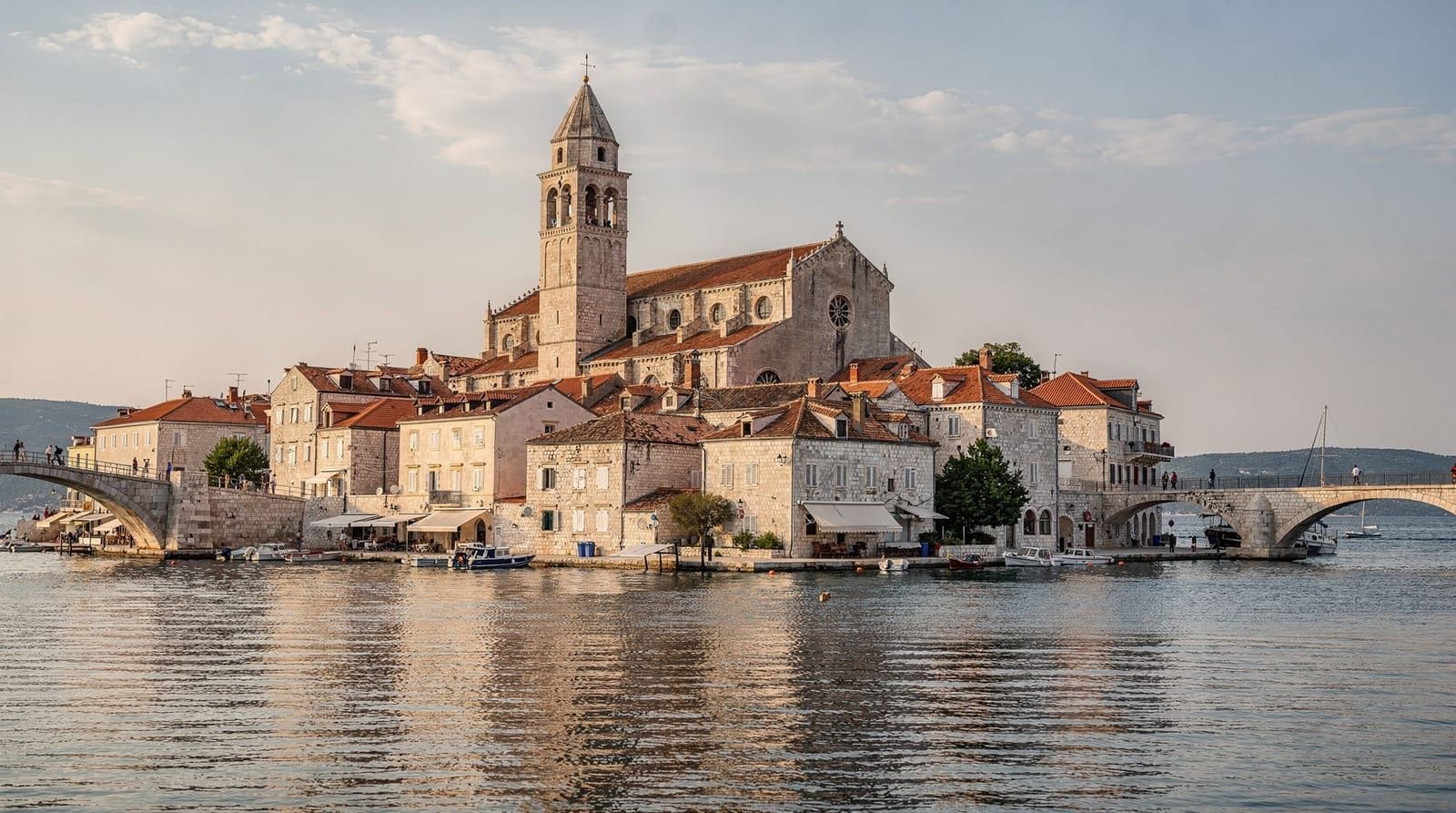
Bus 37 from Split station to Trogir (30–40 min, €3 one way). In September, the UNESCO old town is walkable at a human pace. The Cathedral of Saint Lawrence west portal (1240, Master Radovan) and Kamerlengo Fortress (€3) take about 2 hours. The side streets — never crowded even in peak season — are especially pleasant in September morning light.
Lunch in Trogir: Konoba Trs on Radovanova street for fresh pasta with local seafood (€12–15), then bus back to Split, arriving around 13:30.
Afternoon: Rest and swim at Kašjuni
Kašjuni beach on the western slope of Marjan Hill is accessible by a 30-minute walk or by taxi to the Šperun stairs. It’s a pine-shaded pebble cove that locals use rather than tourists — in September this is the closest Split gets to a quiet beach. The sea at 23–24°C in September is genuinely the best swimming of the year.
Evening: Sunset sea kayaking
The sunset kayak tour from the Bačvice waterfront (17:30–20:30) is the perfect final evening activity — paddling west along the limestone coast as the sun drops behind Šolta and Brač, with wine at the end. This tour operates through early October.
Split: Guided Sunset Sea Kayaking & Snorkeling Tour w/ WineDinner: 21:00
For a final dinner, Zinfandel Food & Wine Bar on Mihovila Pavlinovića offers a compact menu of modern Dalmatian sharing plates and an excellent local wine list. Book a table — even in September, this is a popular spot. Budget €50–70 for two with wine.
September in Split: practical notes
What is open: everything on this itinerary is fully operational in September. Ferry schedules to Hvar are frequent (though slightly reduced from peak season). Krka, Trogir, and Split city are fully open. Most restaurants keep summer hours through September.
What changes after September: Jadrolinija catamaran frequency to some islands reduces in October. Some beach bars and tourist-facing restaurants close after 30 September. October is still viable for most of this itinerary but requires timetable checking.
September sea temperature: 23–24°C — warmer than June (19–20°C) and the same as peak July–August. This is the most misunderstood fact about shoulder-season Dalmatia: the sea is at its annual warmest in September, not in June.
Accommodation pricing: September rates are typically 20–30% below August peak. Availability is better: book 1–2 weeks ahead rather than months. See split in September for a full seasonal breakdown.
Smart booking: ferries do not usually sell out in September. Krka and Blue Cave tours still benefit from advance booking (24–48 hours) to guarantee your preferred time slot.
For the full seasonal picture, including May as a second shoulder-season option, see best time to visit Split.
September vs the other shoulder months
May and October both flank September as shoulder-season options, but they trade differently. May has cooler seas (19–20°C, fine for confident swimmers, cool for everyone else) and the lowest crowds of the three, with the added bonus of local festival season. October has genuinely low prices and near-empty attractions but a real drop in ferry frequency to the outer islands after the last week of September, plus a real chance of rain by mid-month. September sits in the middle: warm sea, comfortable air, still-full ferry schedules, and the biggest single price drop from peak. For most first-time visitors weighing the three, September remains the safer bet; see Split off-season if a quieter, cheaper October or November trip appeals more than swimming does.
Ferries and timetables in shoulder season
Jadrolinija’s schedule reduction happens gradually rather than on a single cutoff date — some island routes lose one or two daily departures starting late September, with the fuller reduction in place by mid-October. Booking a specific early-September date rarely requires advance ferry booking; by late September, checking the timetable a few days ahead is worth doing, particularly for Vis and the smaller islands with fewer daily sailings. See ferries and catamarans to the islands for the full network and how it contracts through autumn.
Frequently asked questions about Split in September
Is Split good in September?
September is the best month to visit Split by most metrics: sea at 23–24°C, air at 24–27°C, 30–40% fewer visitors than August, and prices 20–30% lower. The full tourist infrastructure — ferries, restaurants, tours, national parks — remains operational. Read the full September in Split guide.
Is the sea warm enough in September for swimming?
Yes. The Adriatic sea temperature in September is 23–24°C — warmer than it is in June (19–20°C) and comparable to August. Swimming is banned at Skradinski Buk at Krka since 2021; the designated zones elsewhere in the park are cooler (spring-fed, 18–20°C) but refreshing in summer. There is no better month for sea swimming in Dalmatia than September.
Are the ferries running in September?
Yes, full schedules. Jadrolinija catamarans to Hvar and other islands run frequently through September. Some connections reduce slightly in October. Check jadrolinija.hr for the current season timetable.
What should I avoid in peak season that works in September?
Blue Cave: queues of 45–60 minutes in August drop to 15–20 minutes in September. Krka’s Skradinski Buk boardwalk: shoulder-to-shoulder July becomes walkable in September. Hvar old town main square: navigable. Trogir: no material crowds even in peak season, but more pleasant in September.
Is May as good as September for visiting Split?
May is the other shoulder-season sweet spot. Sea temperature is cooler (19–20°C — comfortable for many swimmers but not peak swimming weather). Air temperature is 20–24°C — ideal for walking. Crowds are even lower than September. The May festival season (Split Spring Festival, local events) adds value. See Split in spring/May for the comparison.
Can I do the Blue Cave in September?
Yes — September is actually the better month for the Blue Cave tour. The cave conditions are the same (light enters 10:00–12:30 via the underwater opening). The tour boats are less crowded, waits at the cave are shorter, and the surrounding island stops are more relaxed. See Blue Cave tours explained.
How much should I budget for a September trip to Split?
For two people over five nights, roughly €700–1,100 covers mid-range accommodation, meals, transport, and the main tour activities described in this itinerary — about 20–30% less than the same trip in August. See Split travel budget for a fuller cost breakdown across budget tiers.
Is October a better choice than September for lower prices?
October is cheaper again, but the trade-off is a real one: ferry frequency to the outer islands drops, some beach-facing restaurants close for the season, and rain becomes more likely. For a trip built primarily around island days and swimming, September remains the better balance; October suits travellers prioritising low prices and quiet over guaranteed swimming weather.
Top experiences
Bookable activities with verified prices and instant confirmation on GetYourGuide.