What we'd skip in Split (and what to do instead)
The post nobody writes first
Most travel coverage of Split is aspirational by design. You get the palace at golden hour, the ferry gliding toward Hvar, the fig on the vine. What you get less of is: what not to bother with, what’s quietly overpriced, what the guides recommend because they earn commission, and what honest travelers return wishing they’d done differently.
We’ve been wrong about Split enough times to have developed specific opinions about what to skip. Here they are.
| Skip | Do instead |
|---|---|
| Riva cocktail bars | Varoš neighbourhood bars, same drinks, better prices |
| Palace VR experience | free audio guide + standing in the actual Peristyle |
| Peristyle-facing restaurants | tables just inside the walls, same setting, real prices |
| Riva kiosk boat tours | book 24–48 hrs ahead online for the same boat, less markup |
| Sunset cocktail cruise | sea kayaking sunset tour, or free from Marjan Hill |
The Riva cocktail bar scene
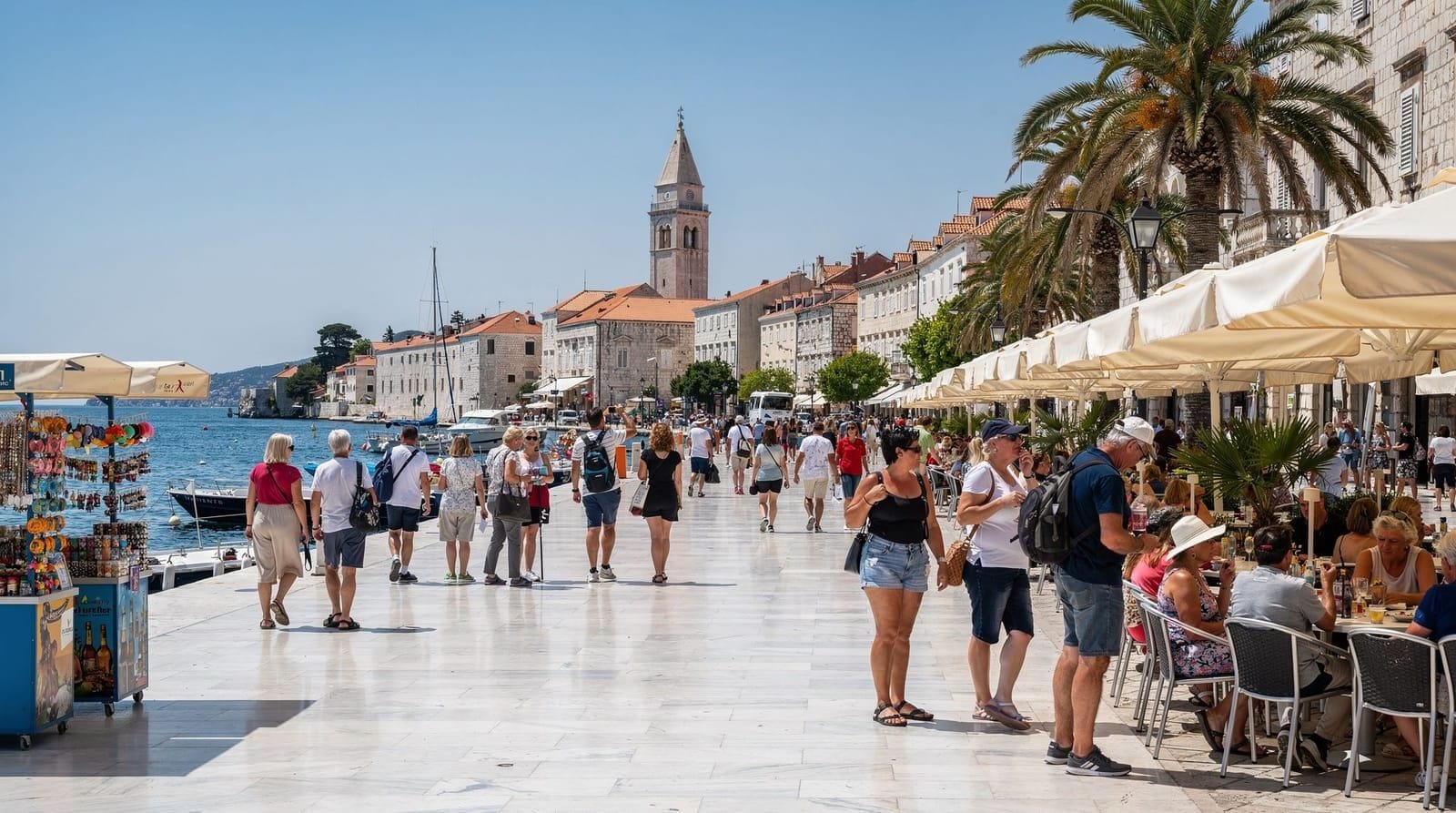
The Riva waterfront promenade is genuinely beautiful — the view west over the harbour, the evening crowds, the ferries loading across the road. What it’s not is a good place to drink.
A cocktail on the Riva runs €12–18 at the better-positioned bars. A beer runs €6–8. These are prices driven entirely by location premium, not quality. The cocktails are ordinary, the service is fast because the operators are managing high volume, and the seats are often plastic chairs with a slight sense of being processed.
The alternative: there’s a bar in the Varoš neighbourhood called Zinfandel (approximately, the name has changed once) with better wine, €4 craft beer, and a terrace that’s genuinely local. Several similar places exist within a ten-minute walk of the Riva without the address charge. Our where to eat in Split guide has more specific recommendations that have survived across visits.
The Riva is worth walking along. Sit and have one coffee if you want the view. But if you’re spending your evening drink budget there nightly, you’re subsidising the real estate value rather than the product.
The Diocletian’s Palace VR experience
There’s a VR (virtual reality) experience available in the palace complex that offers a digital reconstruction of Diocletian’s Palace as it appeared in Roman times. Entry is €15–20.
It’s fine. The reconstruction is reasonably accurate. The VR headsets are standard. The 15-minute experience shows you what the palace looked like with the emperor’s actual room intact rather than converted to apartments.
What it isn’t: necessary. The free audio guide available through several apps does a better job of explaining the same information without removing you from the actual space. Standing in the actual Peristyle while a good guide describes what stood where is more affecting than a digital overlay. We’d skip it and spend the €15 on a better lunch.
If you want the story told properly, a small-group walk led by a good local guide does the job: a small-group guided walk through the old town and the palace keeps you in the real space, and our Diocletian’s Palace guide and old town walking guide cover the route if you prefer to go on your own.
The restaurants immediately inside the Peristyle
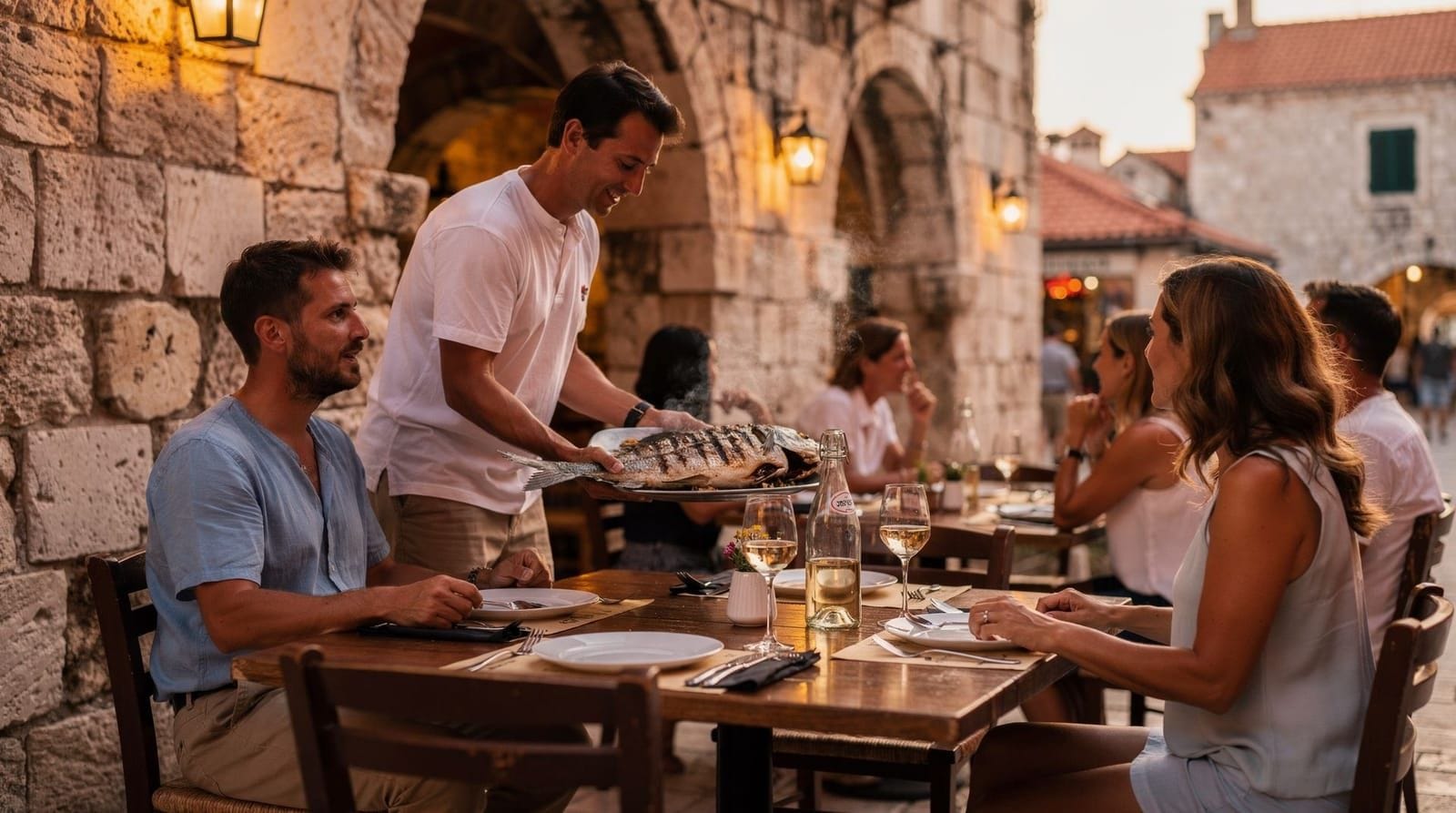
The restaurants with tables literally in the Peristyle courtyard are charging for the experience of eating in one of the most extraordinary Roman spaces in Europe. The experience is real; the food usually isn’t worth the price.
We had a €65 dinner for two here on our first visit — pasta with scampi, a glass of wine each, some bread. It was fine. The setting was extraordinary. The food was what €25 gets you in Varoš. The difference was pure location markup.
If you want to sit in the palace at dinner, find a restaurant just inside the walls but not on the Peristyle directly — there are several. Or eat outside the palace and walk through the Peristyle on your way home, which you can do for free. For dishes worth ordering once you are seated, our Dalmatian food guide and peka and konoba dining guide point you toward the real thing.
The “Dalmatian mixed grill”
On tourist menus throughout Split, you’ll see some variation of “Dalmatian mixed grill” — an assortment of grilled meats (usually pork chops, chicken, and ćevapi) with chips. It’s filling. It’s also not Dalmatian in any meaningful sense. It’s the international beach-resort food option dressed in local branding.
If you’re going to eat in Dalmatia, order the Dalmatian food. The grilled fish is the point. The peka is the point. The seafood pasta is the point. The mixed grill exists because operators have learned it sells reliably to people who are uncertain about local cuisine — don’t be that person.
Booking a boat tour from the most visible operators on the Riva
The Riva and ferry terminal area has numerous tour operators selling boat excursions from kiosks and carts along the waterfront. These are often fine but are frequently priced at a premium over the same tours booked 24 hours in advance online or through your accommodation.
We’ve compared prices for the same five-island tour booked walk-in from a Riva kiosk versus booked 48 hours in advance on the operator’s own site: the difference was €15 per person with the walk-in. The tours ran on the same boat. This isn’t always the case, but it’s common enough to be worth checking.
Also: some Riva kiosk operators earn commission from specific tour companies rather than offering a neutral comparison. Book directly with operators we mention in our guides, or ask your accommodation host who they recommend — hosts often know which operations are well-run.
The sunset cocktail cruise (usually)
There are multiple sunset cruises from Split harbour offering drinks and music. Entry is €30–50 per person. They’re popular and well-marketed.
They’re also: a two-hour experience in a group of forty to sixty people, on a boat crowded enough that you’re not really looking at the sunset so much as looking at other people looking at the sunset. The drinks are included but the quality is what you’d expect from included drinks on a party boat.
If you want a sunset on the water, the sea kayaking sunset tour is a better product — smaller groups, physically engaging, and actually on the water in a way that puts you in the scene rather than watching it from a deck. For a completely private experience, some small speedboat charter operators offer 1.5-hour sunset tours for groups of 4–6 at similar per-person price points to the group cruises.
Book a small-group sea kayaking sunset tour insteadOur sea kayaking guide explains what to expect on the water, and the Marjan Hill hiking guide covers the walk up.
The sunset from Marjan Hill is free and, at its best, more beautiful than either. See our best sunset spots in Split.
The overpriced five-island tour add-ons
Some of the bigger five-island boat operators upsell extras once you’re already on board — an “upgraded lunch,” a photo package, a “VIP” front-row seat. None of these meaningfully change the experience. If you want a genuinely better version of the same day, book a smaller operator with fewer passengers rather than paying for add-ons on a large one; our island hopping from Split guide compares operator sizes and what actually differs between the cheap and expensive options.
Buying Pag cheese from the airport
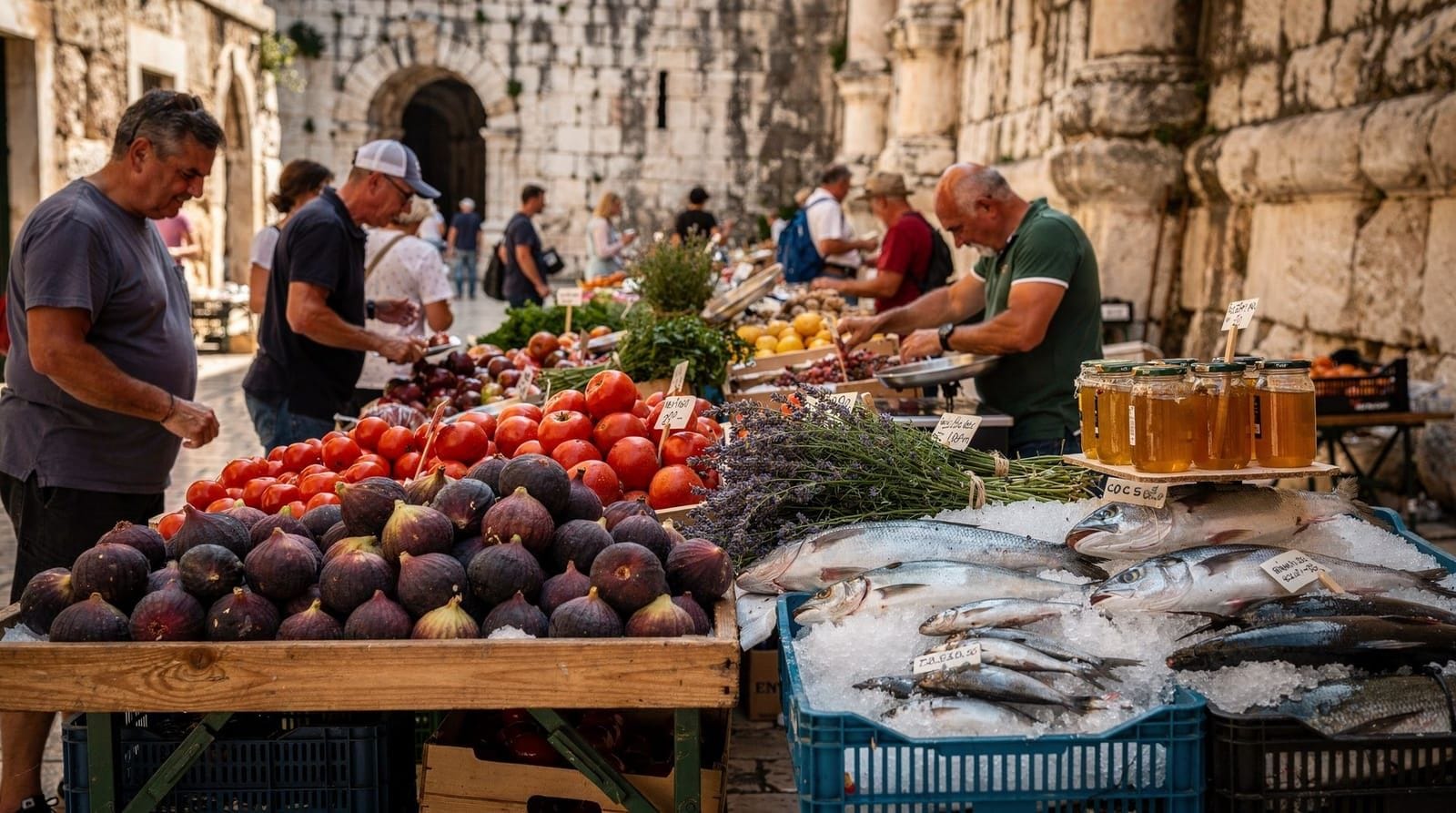
You can buy Pag cheese (paški sir) at Split Airport. You can also buy it at the Green Market in Split proper, from vendors who source it directly from the island, for about 30–40% less. If you’re planning to bring some home, buy it from the market on your last day rather than the airport retail version.
Same applies to locally produced olive oil and lavender products from Hvar. The airport sells them; the market or the island producers sell them better and cheaper.
What we’d never skip
For the record, in case this reads as too negative:
The Green Market in the morning, the Diocletian Palace cellars, a peka dinner ordered 24 hours in advance, the Jadrolinija ferry to at least one island, the Marjan Hill walk at dawn or dusk, swimming off any beach on a September afternoon, and the Peristyle at 7:30 a.m. when it’s briefly, beautifully empty.
None of those cost much or require booking weeks in advance. Several of them are free.
If you are still shaping the trip, our first-timer guide to Split and Split travel budget help you decide where your money is best spent, and the 3-day Split itinerary shows how to fit the good parts together without the traps.
For everything we’d specifically avoid — with more detail on the tourist traps, overpriced areas, and commission-driven recommendations that characterise Split’s tourist economy — our tourist traps guide covers the full picture.
Frequently asked questions about What we’d skip in Split (and what to do instead)
Is it worth paying more to eat inside the Peristyle? Not really — the setting is genuinely special, but the food is what €25 gets you a street away. Eat outside the palace walls and walk through the Peristyle for free on your way home instead.
Are Riva kiosk boat tours a scam? Not a scam, but often a markup — the same tour booked 24–48 hours in advance directly with the operator’s own site is commonly €15/person cheaper for an identical boat and route.
To plan around the crowds and find the best version of each experience, our escape the crowds guide has specific strategies by neighbourhood and time of day.