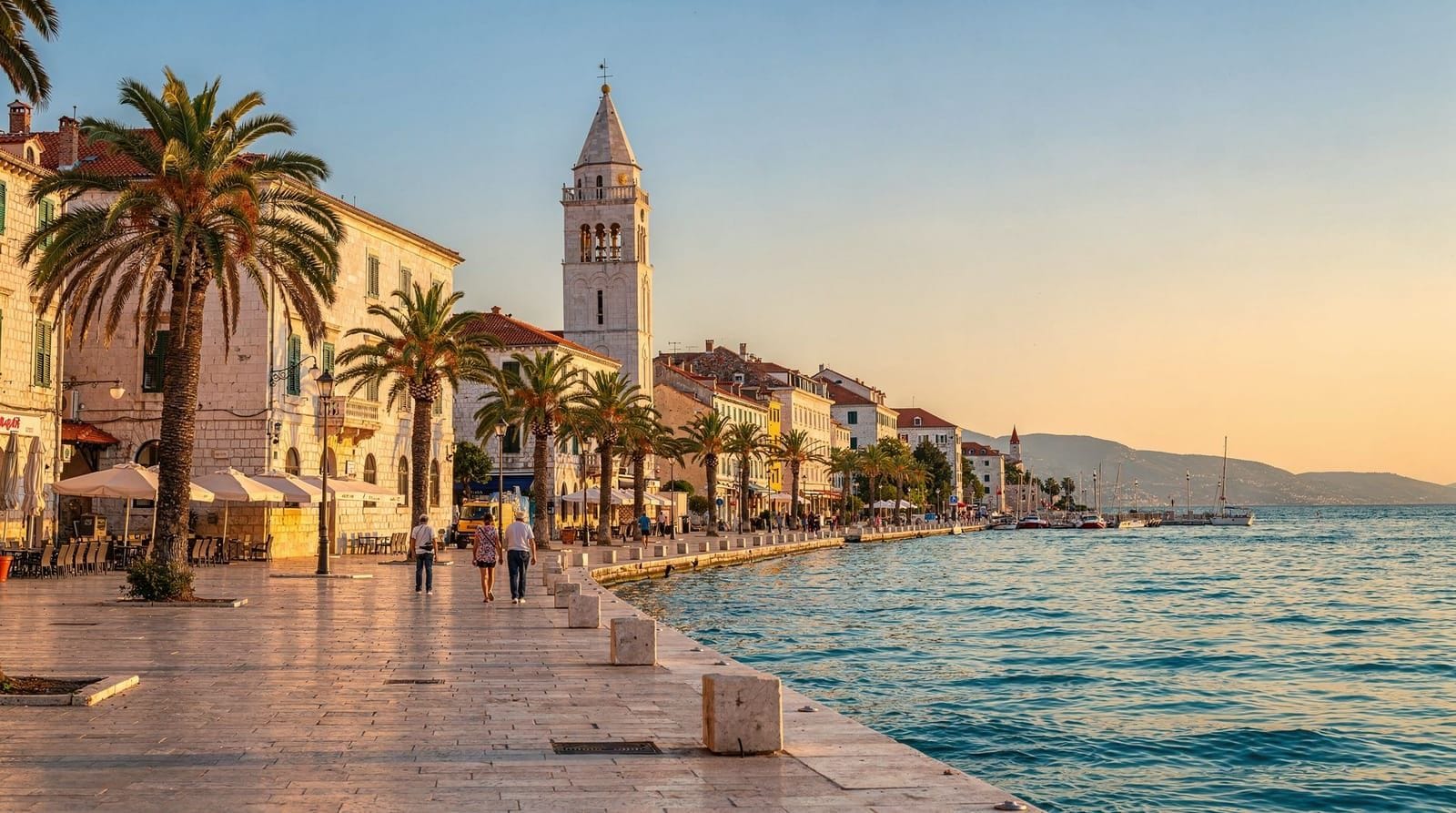
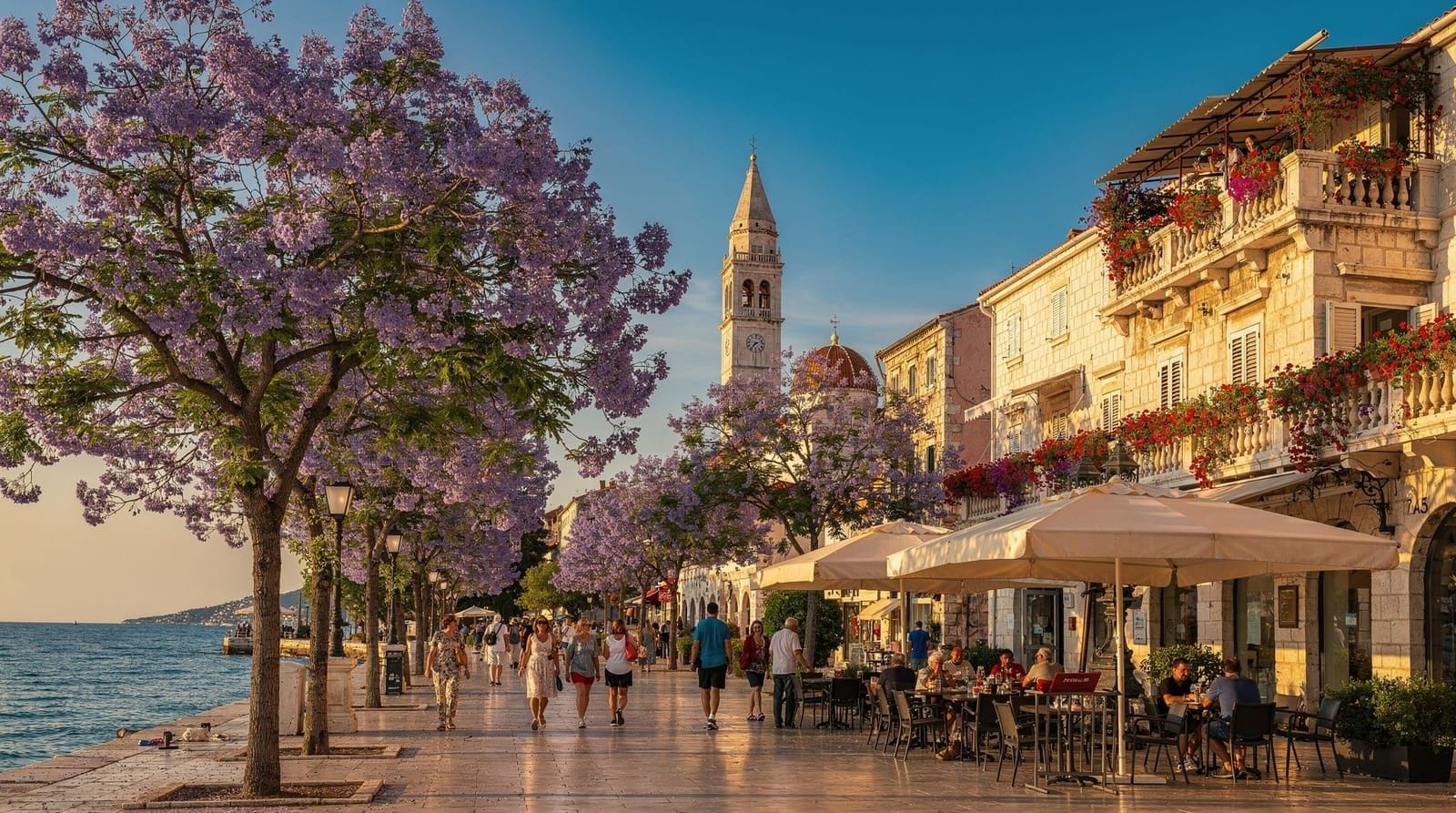
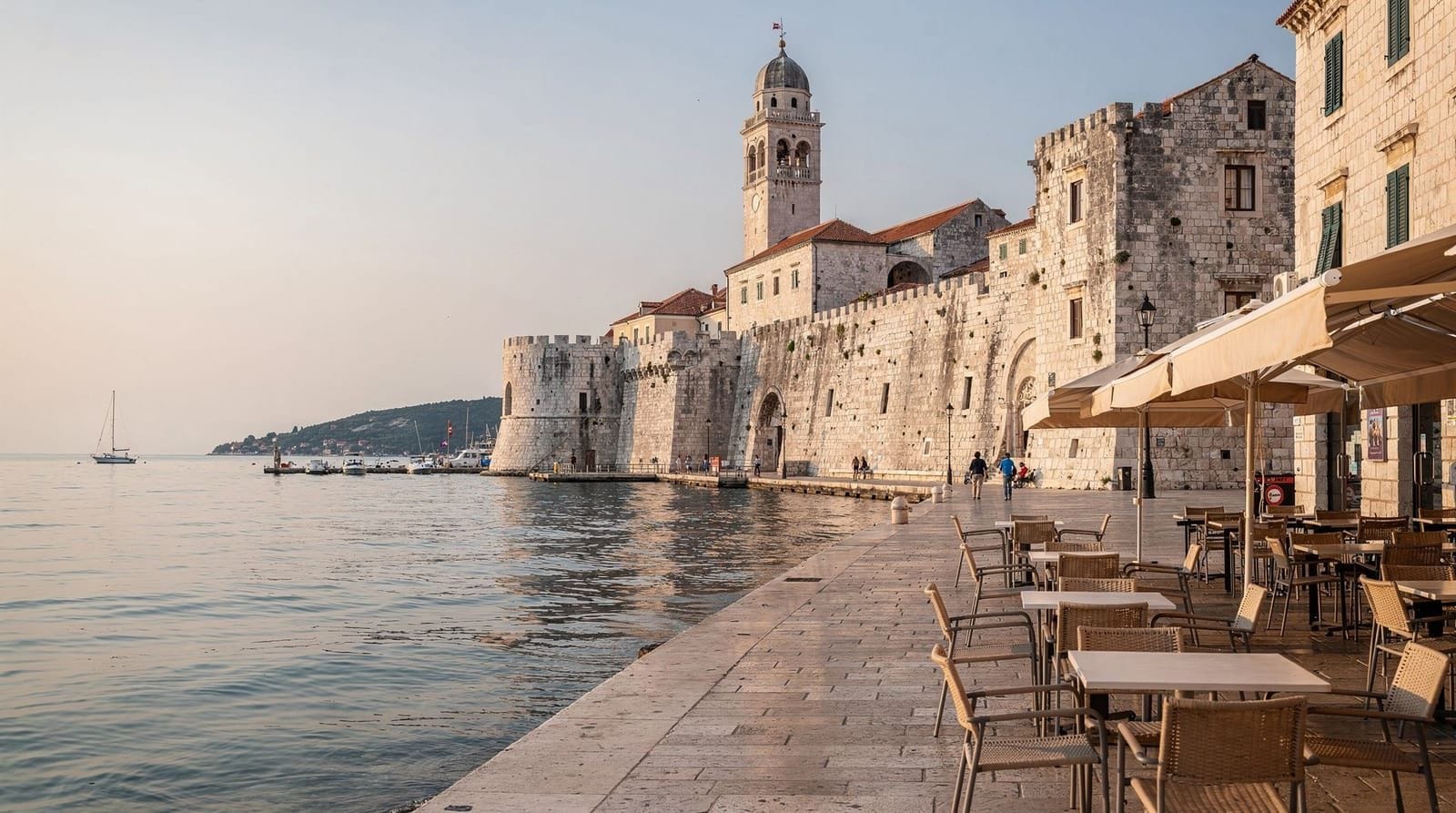
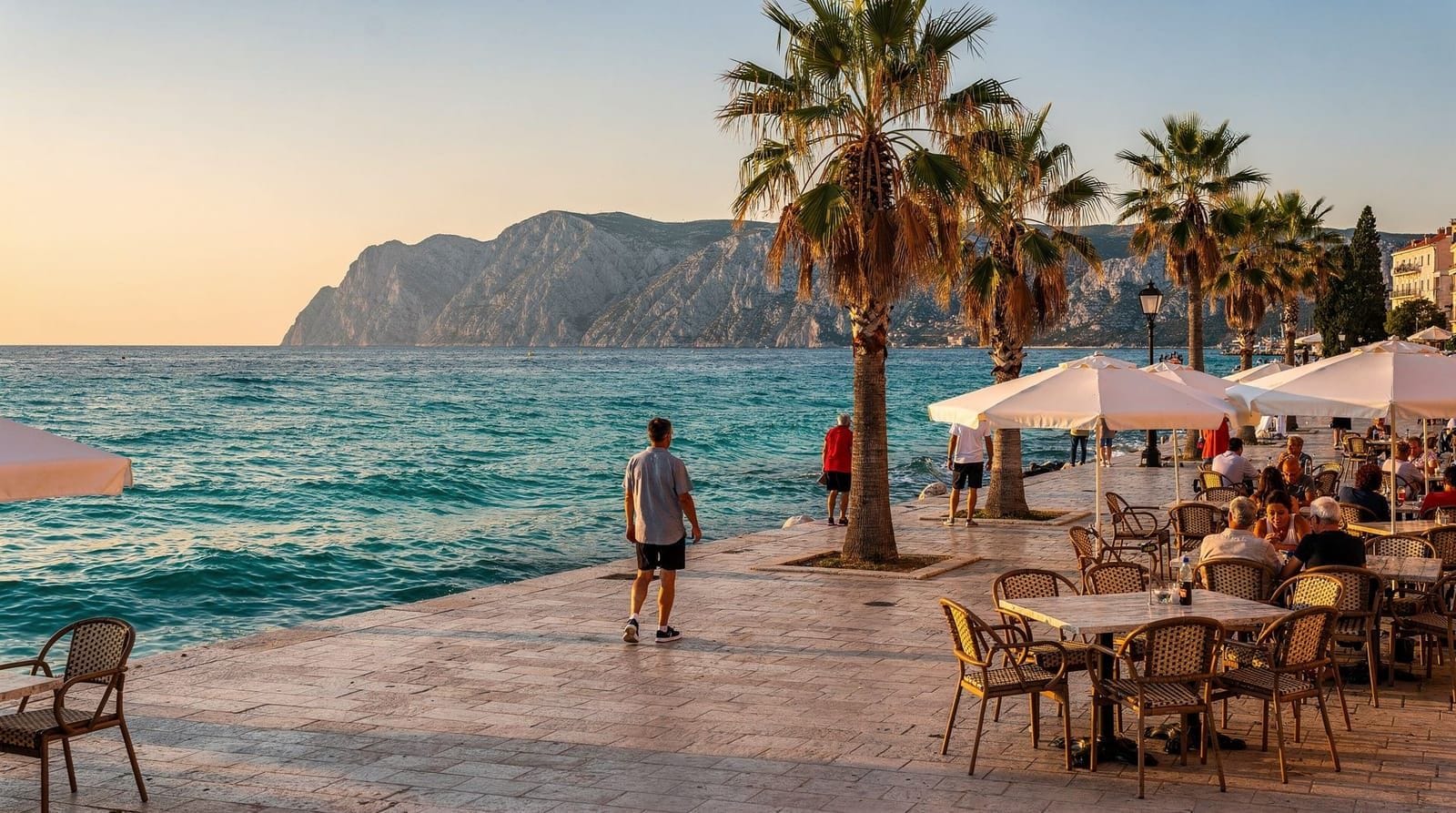
Shoulder season smart travel in Split: the complete playbook
The peak season math doesn’t work out
We’ve run the numbers on what a week in Split costs in late July versus late September. The difference — across accommodation, tours, and dining flexibility — typically amounts to €200–400 per person. For a couple, that’s €400–800 saved on the same trip with better crowds, similar weather, and warmer sea.
This is not a subtle arbitrage. It’s a significant enough difference that it changes what you can do on the trip. The shoulder-season version of a Dalmatian week often includes a better accommodation option, more flexibility on tours, and dinners at places that don’t require 8 p.m. reservations made three days in advance.
Here’s the complete guide to making shoulder season work — what actually changes, what stays the same, and how to think about May versus September.
| Savings vs peak | around €200–400/person for a week |
| Sea temp | May: 18–21°C · September: 23–25°C |
| Crowds | roughly half of peak-season volume |
| Everything open | September: yes, fully · May: nearly all, a few island bars not yet open |
| Booking window | accommodation 2–3 weeks ahead; tours a few days ahead |
Month-by-month shoulder-season snapshot
| Month | Sea temp | Crowd level | What to know |
|---|---|---|---|
| May | 18–21°C | low | some seasonal beach bars on Vis not yet open |
| June | 21–23°C | rising fast | approaching peak by mid-month |
| September | 23–25°C | low-moderate | everything fully open through the 30th |
| October | 20–22°C | very low | weather risk rises; ferries reduce frequency |
May: the spring case
May is the underrated shoulder month. The sea hasn’t fully warmed yet — water temperatures typically range from 18 to 21°C by late May, which is chilly by Adriatic summer standards but swimmable for people who don’t need the sea to be warm — but the land temperature is perfect for everything else.
Average highs in May: 20–24°C. Evenings: 14–18°C (bring that light layer). Rain: more likely than in summer, but still modest — a few days of light rain across the month, nothing that should derail a trip. The light in May has a particular quality — softer and less harsh than midsummer — that makes photography of the old town more interesting.
What’s open in May: essentially everything. The national parks (Krka, Plitvice) are fully operational. The island ferries run, though at slightly reduced frequency compared to peak. Restaurants and konobes are open; many preferred the shoulder months we spoke to in person because the pace is more manageable for staff and the produce is the beginning of the season’s best.
What’s not yet open in May: a small number of seasonal beach bars and summer-only operations on the outer islands, particularly Vis. These are marginal losses — the island itself is fully accessible and the main restaurants are operating.
The sea in May: cold but clear. If swimming is a central activity, May is suboptimal. If swimming is one activity among many, it’s still possible and the water visibility is often better than in summer (less boat traffic, cleaner marine conditions).
Our Split in spring/May guide has the month-by-month detail, including which festivals run in May and the specific accommodation pricing window to target.
September: the autumn sweet spot
We’ve written a dedicated piece on why September is the best month so we won’t repeat all of it here. The summary:
The sea in September is at its warmest (23–25°C) — warmer than June, because the Adriatic has been collecting solar heat all summer. The air temperature is comfortable rather than oppressive (24–28°C highs). The crowds are substantially thinner. Accommodation prices drop 20–30% from their August peak.
The specific advantage September has over May is that everything is still fully running. Every ferry route, every tour operator, every restaurant and bar on every island is still open through September 30 at minimum. There’s no “not yet open” caveat. What you’re trading is only the peak-season volume of crowds and prices.
The risk in September is weather. The Adriatic can produce strong south winds (Jugo) and brief storm fronts in the second half of September, particularly in October. These typically last 1–2 days and then clear. If you’re planning boat-based excursions, check the forecast and have a flexible schedule rather than a rigid one. The ferries and catamarans still run in most conditions.
Early September (September 1–15) is optimal. You get the full benefits with minimal weather risk.
What actually changes in shoulder season
Accommodation: significant improvement in availability and pricing. The best apartments in Diocletian’s Palace that required booking 2–3 months in advance in summer are available with 2–3 weeks’ notice. Prices at properties we tracked over multiple seasons dropped an average of 25–30% between August 15 and September 1.
Tours: most organised tours run identical schedules in shoulder season. Boats are smaller (fewer seats taken), guides are less depleted, and departure times occasionally have more flexibility. Some operators offer small-group rates in September that they can’t in summer because they can fill a speedboat with eight rather than twelve people.
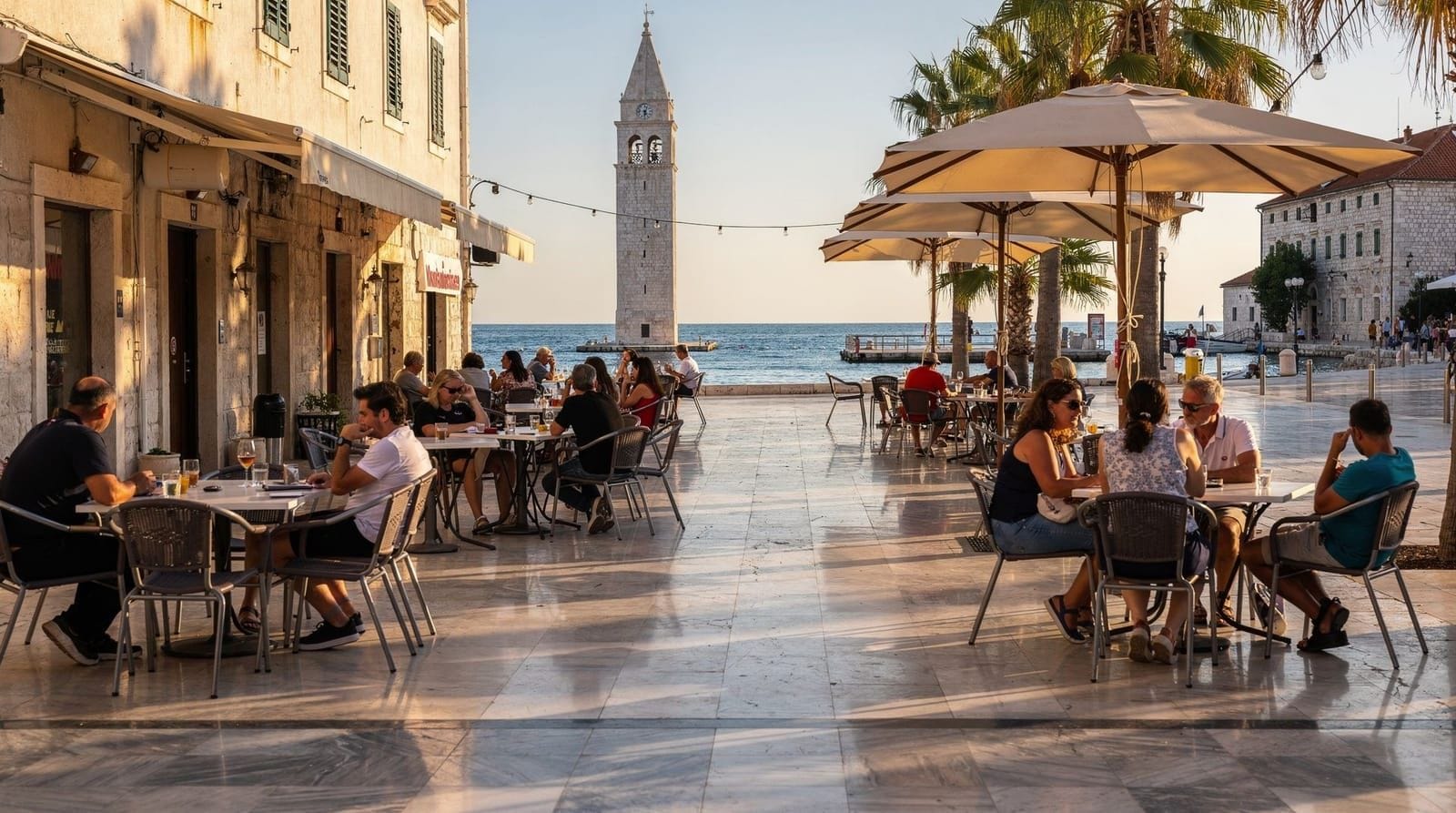
Restaurants: the main change is that reservations become optional rather than mandatory for most places. The konobes in Varoš that were turning away walk-ins in August will have your table. This makes the evenings considerably more spontaneous.
Ferries: the Jadrolinija schedule in September runs at roughly 80–85% of peak frequency. The high-demand routes (Split to Hvar, Split to Brač) still have multiple daily departures. The lower-demand routes (Split to Vis, Hvar to Korčula) may have one or two fewer options per day. This is rarely a constraint on a normal itinerary.
Beach space: the difference between August and September on any beach is visible. Zlatni Rat, which in August is wall-to-wall sunbeds, in September has space to put a towel without negotiating. Bačvice in Split becomes a genuine morning swim option rather than a competitive sport.
The shoulder-season itinerary approach
The best shoulder-season trip structure is slightly different from peak-season planning. A few specific recommendations:
Book accommodation first, then tours. In peak season you might book tours weeks in advance to secure spots; in shoulder season you can book with a few days’ notice on most excursions. This lets you adjust based on weather and energy.
Make weather-dependent plans flexible. The main risk in shoulder season is a 48-hour weather window that grounds boat tours. Plan your best boat excursion (Blue Cave, Vis, or island hopping) for a period with a confirmed good forecast, not on a fixed date decided months before.
Use the national parks now. Plitvice and Krka are both significantly better in September — smaller crowds, better light quality, and you’re not competing for a timed entry ticket. Our Plitvice vs Krka guide covers the decision, but both are strong in September.
Go further into the islands. Vis and Korčula, which require more time and slower ferries, are accessible in a way they’re not when you only have five days and the peak-season ferry schedule is the constraint. September lets you spend a proper two nights on Vis rather than squeezing it into a day-trip.
For a five-day itinerary built specifically for the September window, our September shoulder-season itinerary is sequenced to take advantage of these conditions.
If you prefer a looser structure, our slow-travel week suits the shoulder-season rhythm well, and the island hopping guide explains how to string the ferries together without rushing. For the wider question of how to avoid the busiest hours even outside summer, see escape the crowds in Split.
Booking boat tours in shoulder season
Because September crowds thin out, operators run smaller groups and occasionally have last-minute availability that simply doesn’t exist in August. That said, don’t assume you can always walk up — the popular routes (Blue Cave, five-island) still sell out on the nicest-weather days, since everyone with flexible dates converges on the same forecast window.
Book a five-island and Blue Cave tour for shoulder seasonIf you are still choosing between boat days, our Blue Cave tours explained and five-island tour guide break down what each format actually involves, and our honest take on the Blue Cave helps you decide whether it earns a place in a short trip.
Land-based day trips follow the same logic. A trip to the waterfalls and boardwalks is the easiest way to use a shoulder-season day when the sea is too cold or the wind is up, for example a Krka National Park day trip with a boat ride (swimming at the falls themselves has been banned since 2021) or a full-day excursion to the lakes of Plitvice . Booking either a few days out, once you have seen the forecast, is usually enough.
The price difference, in numbers
Let’s be concrete. These are approximate figures based on tracking a specific week (five nights) at the same range of properties over multiple years:
Peak (July 20–August 15):
- Palace-area apartment, 1 bedroom: €110–150/night
- Split to Hvar day catamaran: €18/person
- Five-island boat tour: €75/person
- Dinner at a good restaurant: €50–70 for two
Shoulder (September 1–20):
- Same apartment category: €80–105/night
- Split to Hvar: €18/person (ferry prices don’t change seasonally)
- Five-island boat tour: €60–70/person (modest improvement)
- Dinner: €40–55 for two (slight improvement due to restaurant flexibility)
Weekly total saving for a couple: approximately €300–600. That’s a meaningful number — it’s an extra night on the trip, a nicer hotel, or simply money that stays in your pocket.
Talking yourself out of peak season
The peak-season pull is real. Friends are going. Social media shows Hvar in August. The fear that you’re missing the “best” version of the destination is persistent.
We’d push back on this framing. The “best” version of Split is not the version with the most people in it. It’s the version where you can walk through the palace without being bumped into, where the konoba owner has time to talk about the peka, where you get to Stiniva Bay at 8:30 in the morning and have it briefly to yourself. September gives you that. August doesn’t.
If you want the other side of the argument, what peak summer is really like and our peak-season mistakes guide show what you would be paying extra for. The best time to visit Split guide covers the full month-by-month picture if you’re still deciding. For the full shoulder-season playbook for October and the off-season, see our Split off-season guide.
Frequently asked questions about Shoulder season smart travel in Split
Is May or September the better shoulder month? September, for most people — the sea is at its warmest (23–25°C) and everything stays fully open through the month. May is better if you don’t mind a cooler sea and want lower prices with fewer crowds still.
How far in advance should I book a shoulder-season trip? Book accommodation 2–3 weeks ahead for the best old-town options; tours, restaurants and ferries can usually be arranged with just a few days’ notice, which is the real advantage over peak season.
For shoulder-season accommodation timing specifically, our where to stay in Split guide includes notes on booking windows by season.