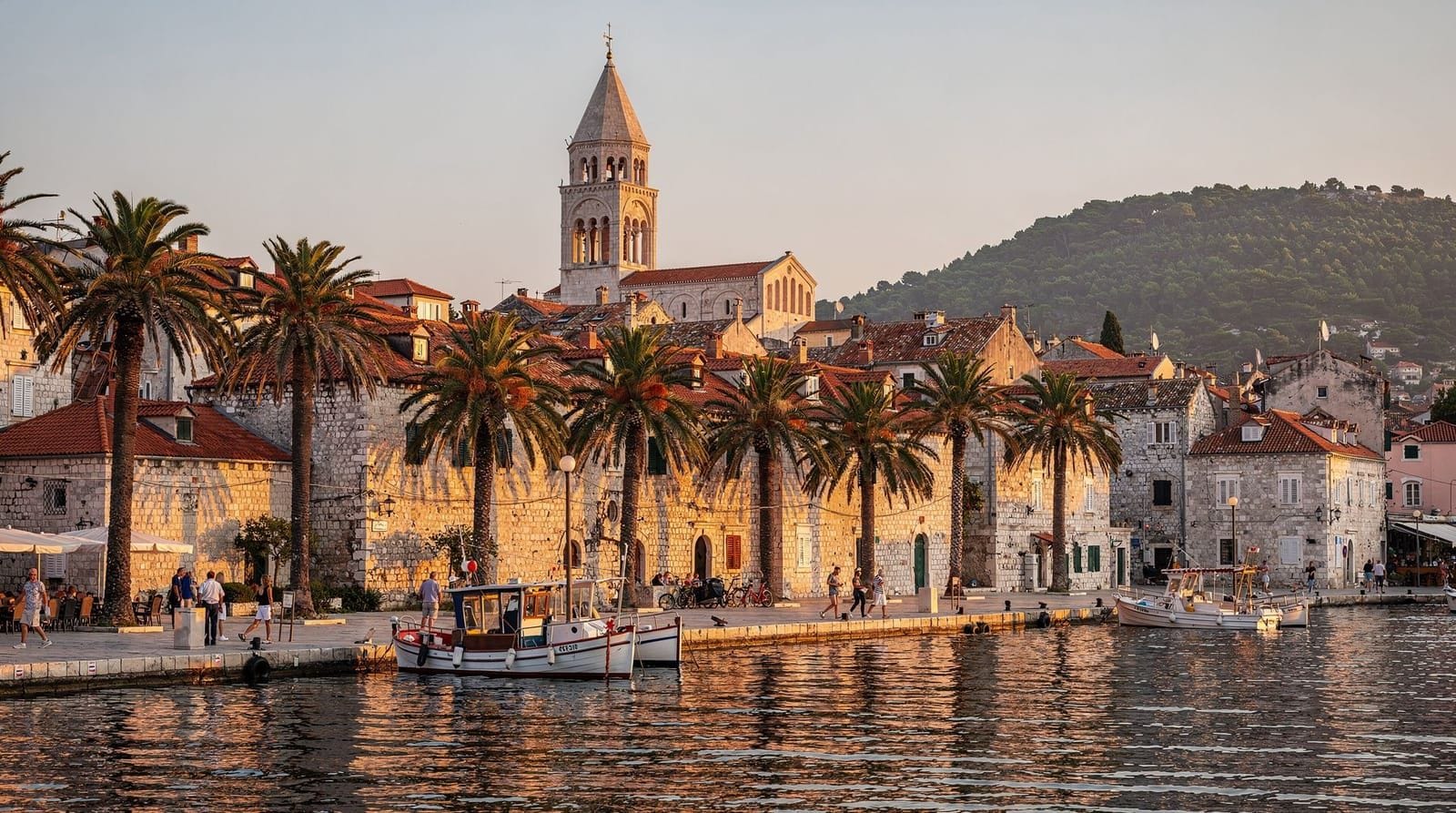
Split 3-day itinerary
Split: Krka National Park Day Trip with Boat Ride & Swimming
What three days in Split actually covers
Three days is the sweet spot for a first visit to Split. You get enough time to explore Diocletian’s Palace without rushing, add a Trogir half-day by public bus, and still fit in Krka National Park — arguably the most satisfying waterfall day trip in Dalmatia. You do not need a car. The bus network from Split’s main station handles all three stops.
This itinerary works in any season but shines in May, September, or early October, when crowds thin and prices drop 20–30%. In peak July and August, Diocletian’s Palace can feel claustrophobic by mid-morning; start earlier than suggested below if that’s your window.
Budget estimate for three nights (mid-range): accommodation €90–150/night, meals €15–25/person/day, transport €5–15/day, Krka entry €7–40 depending on season. Total outlay for two people: roughly €450–650 excluding flights.
| Where | Split old town, with a Trogir half-day and Krka day trip |
| Cost (2 people, 3 nights) | around €450–650, mid-range |
| Getting around | No car needed — walking, bus 37, and public buses or a tour |
| Best time | May, September, or early October |
| Booking | Reserve the Krka tour and dinner spots a day ahead in peak season |
Day-by-day at a glance
| Day | Focus | Pace |
|---|---|---|
| 1 | Diocletian’s Palace, Marjan Hill | City walking, moderate |
| 2 | Trogir half-day, Split afternoon, Bačvice | Mixed bus + walking |
| 3 | Krka National Park day trip | Long day, mostly seated transport |
Day 1 — Arrive in Split, settle into the old town
Morning / Arrival
Split Airport (SPU) sits 25 km southeast of the city. The Pleso airport shuttle bus departs 30 minutes after arrivals and drops you at the main bus and ferry terminal on Domovinskog rata street for around €8. Uber and taxis cost €25–40 depending on traffic. If you arrive early enough, drop bags at your accommodation and head straight for the palace.
The Peristyle and palace courtyards: 10:00–12:30
Diocletian’s Palace is not a museum — it’s a living neighbourhood of around 3,000 residents. Enter through the Golden Gate on the north side and walk toward the central Peristyle courtyard. The Cathedral of Saint Domnius, converted from Diocletian’s mausoleum, charges €5 for entry to the nave, another €3 for the bell tower. Climbing the tower (131 steps, narrow) earns a panoramic view over the terracotta roofscape worth every step.
A guided walking tour adds essential context. Many visitors walk through without understanding which walls are Roman, which are medieval Venetian, and which are 19th-century reconstruction.
Split: Old Town - Diocletian Palace Guide Tour - Small GroupWalk the Riva promenade along the waterfront afterward — the reconstructed café-lined boulevard running along the palace’s southern wall. Sit at any café for a coffee (€1.50–2) and watch the ferries depart. Avoid the restaurants on the Riva itself; they charge tourist premiums for average food.
Lunch: 13:00
Head two or three streets north of the Riva into Varoš neighbourhood (the old stone quarter west of the palace) for better value. Konoba Matoni on Tomića stine serves grilled fish and peka (slow-roasted lamb or veal under a clay bell) at honest prices — expect €12–18 for a main course. Book ahead for dinner; walk-ins for lunch are usually fine.
Afternoon: 14:30–17:30
Walk west toward Marjan Hill. The hill is Split’s forested park, rising 178 m above the Adriatic. The main path from Šperun steps takes about 25 minutes to the first viewpoint, 45 minutes to the summit. You pass a 13th-century stone chapel (Sv. Jure) and, on clear days, see as far as the Dinaric Alps. Free, always open, no facilities — bring water.
Back down at the base, the small pebble beaches of Bene and Kašjuni on the western slope are swimmable from May through October.
Evening: 19:00
The Golden Gate area has better evening restaurants than the tourist strip. Konoba Fetivi on Pupačićeva is a local favourite for grilled meats and Dalmatian wines by the glass (Plavac Mali from Pelješac, €4–6/glass). Dinner for two with wine: €50–70. After dinner, the Peristyle fills with evening walkers and occasional live music in summer — entirely free and worth a 20-minute loop.
Day 2 — Trogir half-day, then Split afternoon
Morning: 09:00 — Bus to Trogir
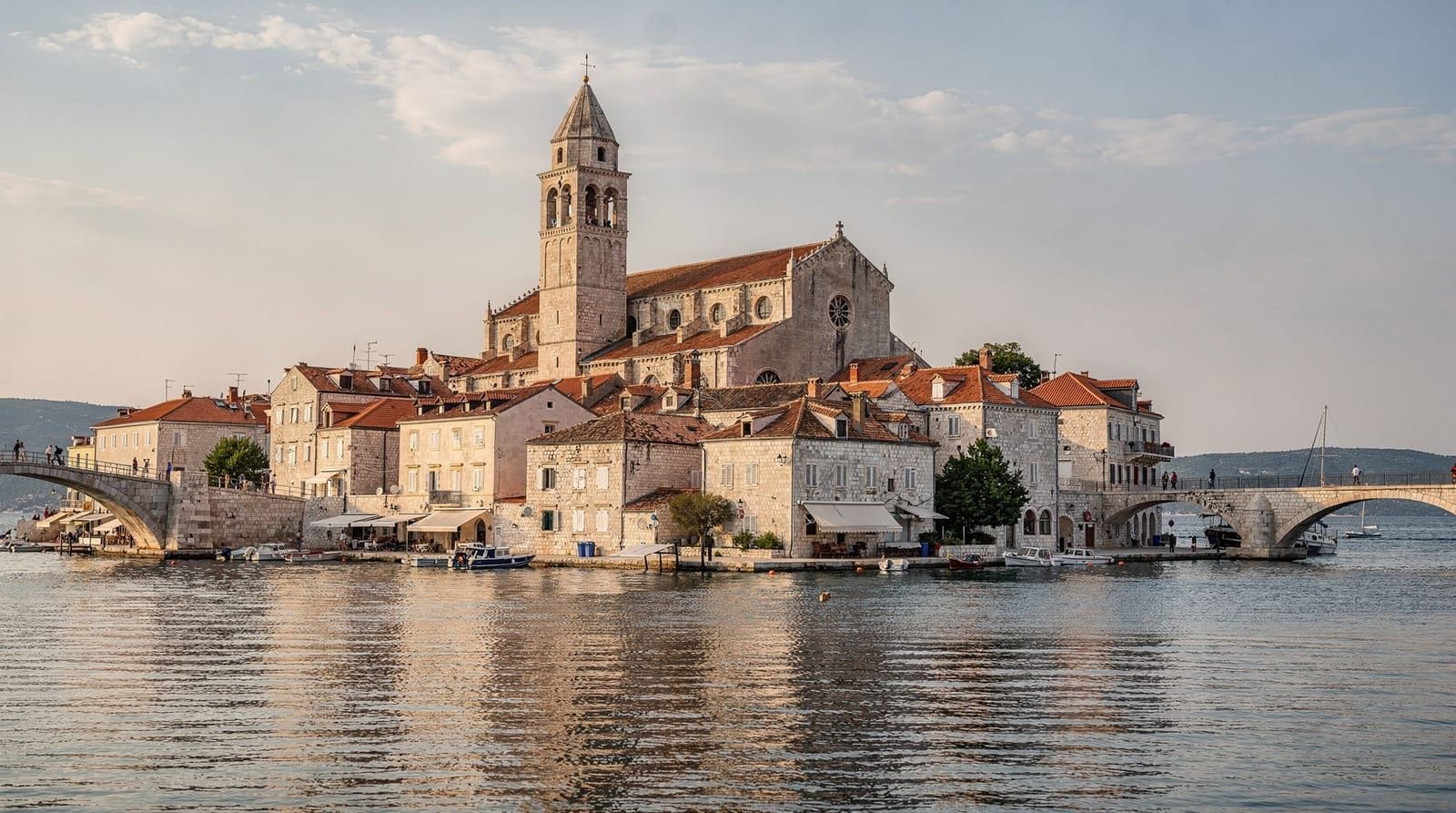
Bus 37 departs Split’s main bus station roughly every 20 minutes and reaches Trogir in 30–40 minutes (€3 one way). Buy the ticket from the driver. Trogir old town sits on a small island connected by bridge to the mainland and to the larger island of Čiovo.
The Trogir UNESCO old town is compact — you can walk its length in 10 minutes. Allow 2–3 hours to do it properly. Priority stops:
- Cathedral of Saint Lawrence (Katedrala Sv. Lovre): the Romanesque-Gothic west portal carved by Master Radovan in 1240 is among the finest stone sculpture in the Adriatic region. Entry to the cathedral nave is free; the bell tower costs €3.
- Kamerlengo Fortress (15th century): rooftop city views, entry €3.
- Town Loggia and Clock Tower: the open-air loggia on the main square hosted civic functions for centuries. Free, always accessible.
Lunch in Trogir before heading back: Konoba Trs on Radovanova street does fresh pasta with seafood for €12–15 — significantly cheaper than the main square restaurants facing the cathedral.
Afternoon return: 13:30
Bus back to Split, arriving around 14:10. This gives you a free afternoon in Split for anything missed the previous day: the basement halls beneath the Peristyle (€10 entry, atmospheric vaulted Roman chambers), the Gregory of Nin statue on the north side of the palace (rub the toe for luck, if you enjoy the ritual), or simply the waterfront.
Late afternoon: 16:00 — Bačvice beach
Bačvice is Split’s most famous city beach, a 10-minute walk south from the ferry port. It’s a shallow, sandy-bottomed cove — unusual for Dalmatia, which is mostly pebble. The beach gets crowded in summer; go late afternoon when the sun angle drops and day-trippers leave. The sport being played in the shallows is picigin, an ancient Split water game involving keeping a small ball in the air — genuinely fun to watch.
Evening: 19:30
Bačvice itself has a waterfront promenade lined with bars and restaurants. Nostromo (just north of the ferry port, a few minutes from Bačvice) is Split’s best-regarded fish restaurant — not cheap (€25–40 mains), but the freshness is notable. Book ahead. Alternatively, Bokeria on Domaldova is a wine bar with excellent small plates at more accessible prices.
Day 3 — Krka National Park day trip
Departure: 08:00
This is the long day. Krka National Park is 85 km north of Split, reachable by organised tour or public bus to Skradin (the park entry village), then a boat ride into the park. Travel time each way: about 1 hour by organised shuttle, 1.5 hours by public bus from Split’s main station (change at Šibenik; ticket around €6).
The organised tour is significantly easier: pickup from Split, direct entry, boat cruise included, and return by early evening. It typically costs €50–70 per person including boat ride and park entry.
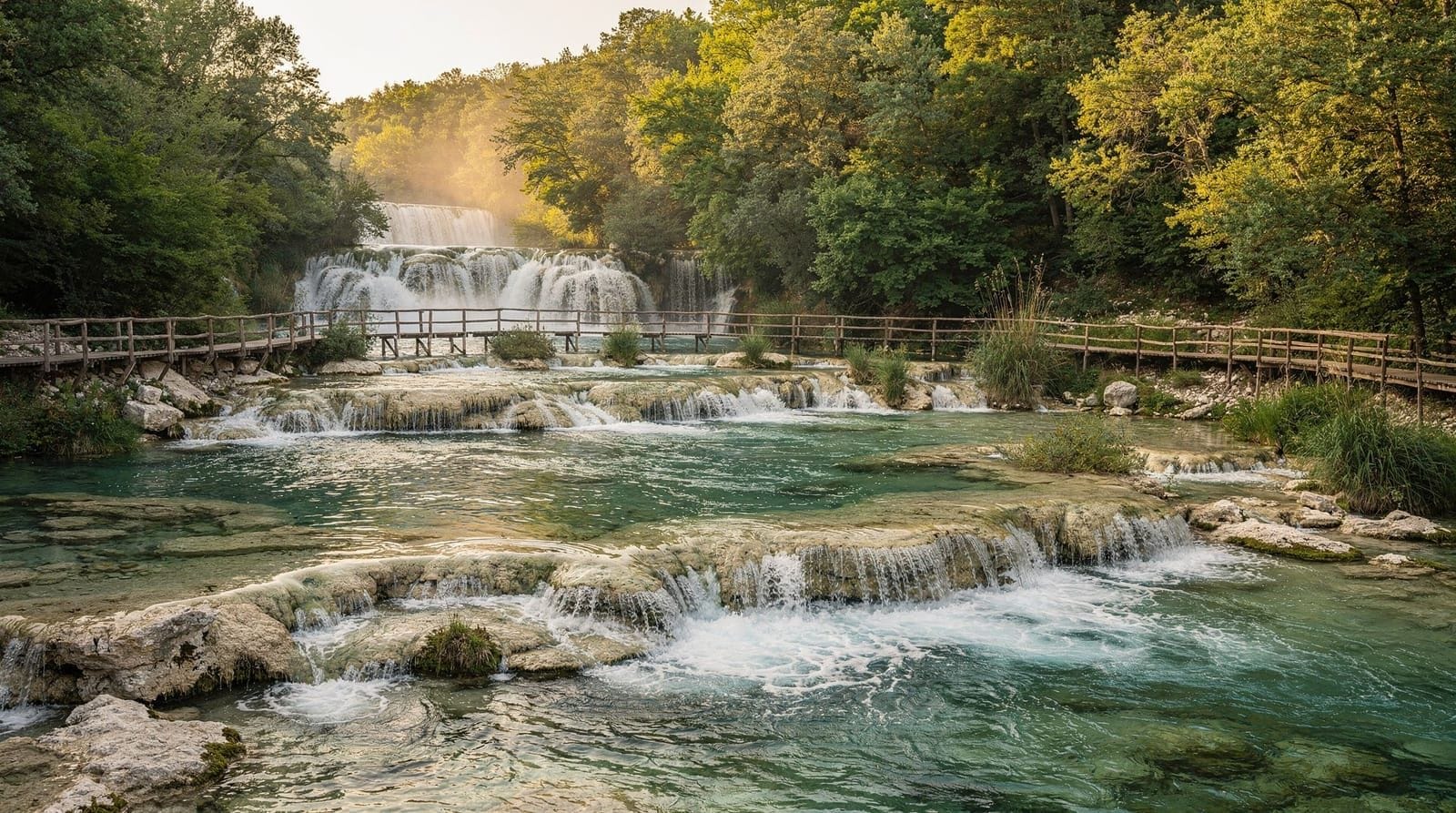
Split: Krka National Park Day Trip with Boat Ride & SwimmingIn the park: 10:00–15:00
Krka’s main attraction is the Skradinski Buk waterfall — a series of travertine cascades descending 45 m over 800 m, surrounded by a boardwalk loop (allow 1.5 hours). Swimming is allowed at designated points below the falls. Note: the park bans swimming directly at the main cascade since 2021; permitted swimming areas are clearly marked.
Upstream from Skradinski Buk, a short boat cruise to the island monastery of Visovac (additional €15) adds historical context. The Franciscan monastery dates to 1445 and sits on a tiny island in the middle of Krka Lake — one of the better photographs you’ll get in Dalmatia.
Bring: sunscreen, water (limited water points in the park; bring 1.5 L minimum), comfortable shoes for the boardwalk, and swimwear.
Park entry fees (2026): €40 from June to September, €20 in April, May and October, €7 from November to March. If you’d rather compare Krka against the other big national park option before committing your one full day away from Split, the Krka vs Plitvice guide breaks down which suits a short trip better; Plitvice is further and needs closer to a full extra day.
Return to Split: 16:30–17:30
Most tours return to Split by 17:30–18:00. That leaves time for a final dinner in the old town. Zinfandel Food & Wine Bar on Mihovila Pavlinovića is a good-value choice for Dalmatian-influenced modern cooking — mezze-style plates designed for sharing, wine list focused on local producers.
Practical logistics for 3 days in Split
Getting around: no car needed. Bus 37 to Trogir, bus from Split station to Šibenik for Krka (or organised tour), all other movement on foot within Split’s compact old town.
Accommodation zones: the old town (inside or immediately outside the palace walls) puts you within walking distance of everything. Expect to pay €80–130/night for a decent apartment or hotel in peak season, €60–100 in shoulder season. The area around Bačvice beach is quieter and 10 minutes’ walk from the palace.
Ferry port awareness: Split’s ferry port is immediately west of the bus station. You do not need to use it on this itinerary, but it’s the departure point for island hopping if you return.
September note: September is genuinely the best month for this itinerary. Sea temperature stays above 22°C, air at 24–27°C, crowds drop by 40% from the August peak, and accommodation prices fall 20–30%. The Krka park is less congested, ferry connections remain frequent, and Trogir’s narrow streets are navigable again.
Where to eat: a short cheat sheet
The pattern that works across all three days: avoid restaurants with a direct view of the Riva or Trogir’s cathedral square, and walk two or three streets back instead. This isn’t a hard rule — Nostromo near Bačvice is excellent and not cheap — but the correlation between “best view” and “tourist markup” holds surprisingly often in Split’s old town. For a fuller list beyond the handful mentioned in the day-by-day plan, see the where to eat in Split guide and the Dalmatian food guide for what to actually order — peka needs ordering in advance at most konobas, so plan that into whichever evening you want it.
If you have half a day to spare
Three days rarely leaves true free time, but if a ferry or tour finishes early, two options fit well without derailing the schedule: a short loop of Marjan Hill from a different trailhead than Day 1, or the basement halls beneath the Peristyle, which many first-time visitors skip entirely despite them being some of the best-preserved Roman substructure in the palace. Both are inside Split, so neither requires transport planning. If it turns out three days feels too short once you’re here, the 5-day Split itinerary shows what an extra two days buys you — mainly an island.
Frequently asked questions about a 3-day Split itinerary
Is 3 days in Split enough?
Three days is enough to cover Split’s core highlights — the palace, Trogir, and a Krka day trip — without feeling rushed. It does not leave time for island visits (Hvar, Brač) or Plitvice Lakes; those require at least 5 days. See the 5-day Split itinerary if you want islands included.
Do I need a car for 3 days in Split?
No. Public bus 37 reaches Trogir every 20–30 minutes for €3. Krka is doable by public bus (Split–Šibenik–Skradin) or organised day tour. Within Split, everything relevant is walkable.
Is Krka or Plitvice better for a day trip from Split?
For a 3-day itinerary, Krka wins. It’s 85 km from Split versus 200 km for Plitvice, giving you more time in the park. Plitvice is arguably more spectacular but requires an earlier start and longer return. See the full Krka vs Plitvice comparison for the detailed breakdown.
When is the best time for a 3-day visit to Split?
May and September offer the best balance: warm temperatures (22–28°C), swimmable sea (20–24°C), significantly fewer crowds than July–August, and 20–30% lower accommodation prices. For more detail, see best time to visit Split.
How much does 3 days in Split cost?
At mid-range: roughly €150–200 per person per day (accommodation, meals, transport, entrance fees, one tour). Budget travellers in shoulder season can do it for €80–100/person/day staying in apartments and using public buses. The Krka tour is the biggest single expense (€50–70).
Where should I stay in Split for 3 days?
Inside or just outside the palace walls gives the best access. The Varoš neighbourhood (southwest of the palace) offers quieter streets than the palace interior itself. Bačvice beach area is pleasant and a 10-minute walk from the old town. Read the full where to stay in Split guide for area breakdowns.
Can I visit both Trogir and Krka in 3 days without a car?
Yes. Trogir takes half a day by bus (bus 37, 40 minutes each way). Krka takes a full day by organised tour or public bus. Assign one day to each, and your third day to exploring Split itself. The logistics work without a rental car.
Should I book the Krka tour in advance or just show up?
Book at least a day or two ahead in June–September; the organised tours (and the boat cruise slots within the park itself) can sell out on short notice in peak season. In May or October, booking the morning before is usually fine. Public bus to Skradin is a fallback if tours are sold out, though it takes longer.
What should I skip if I only have 2 days instead of 3?
Cut Trogir before you cut Krka — Krka is the more memorable full day, and Trogir, while lovely, overlaps in feel with Split’s own old town. A 2-day version would be Day 1 as written, then Krka on Day 2, saving Trogir for a future visit or swapping it for a half-day in Split you didn’t get to on Day 1.
Top experiences
Bookable activities with verified prices and instant confirmation on GetYourGuide.