Split 5-day itinerary
From Split: Blue Cave, Hvar, Mamma Mia, 5 Islands Boat Tour
Duration: 10.5 hours
The benchmark Dalmatian trip
Five days from a Split base is the most-searched itinerary for a reason: it’s long enough to reach Hvar by ferry without feeling rushed, add Krka National Park for a waterfall fix, see the medieval town of Trogir, and still have time to simply sit at a waterfront café and watch the Adriatic light change in the afternoon.
This itinerary works without a car. The Jadrolinija ferry network and Split’s bus routes handle every leg. Budget estimate for two people at mid-range: accommodation €90–150/night, meals €15–30/person/day, ferries €10–15 each way to Hvar, organised tours €50–75 each. Total outlay for five nights: roughly €900–1,400 excluding flights.
September and May are the ideal months: see temperatures at 22–27°C, sea at 20–24°C, and crowds that actually allow you to enjoy the places rather than queue through them. If you must travel in July or August, add a note below each day about timing.
| Where | Split base, ferry to Hvar, Krka day trip, Trogir half-day |
| Cost (2 people, 5 nights) | around €900–1,400, mid-range |
| Getting around | No car needed — ferries, buses, and one or two tours |
| Best time | September or May for the best balance of weather and crowds |
| Booking | Book Hvar ferries and the Krka tour ahead for July–August |
Day-by-day at a glance
| Day | Focus | Overnight |
|---|---|---|
| 1 | Diocletian’s Palace, Marjan Hill | Split |
| 2 | Ferry to Hvar, Pakleni Islands | Split |
| 3 | Five islands boat tour or Šibenik | Split |
| 4 | Krka National Park | Split |
| 5 | Trogir half-day, depart | — |
Day 1 — Arrive in Split, discover the old town
Arrival and first impressions
Split Airport (SPU) is 25 km southeast of the city. The Pleso shuttle bus (€8, runs 30 minutes after arrivals) drops you at the main bus/ferry terminal. Taxis cost €25–40. If you arrive before noon, check bags and walk directly into the palace — the 45-minute window before lunch is one of the quieter moments inside.
Diocletian’s Palace: 11:00–13:30
Split’s old town is Diocletian’s Palace — a 4th-century Roman imperial residence that was never abandoned. Around 3,000 people still live inside its walls. Enter through the Silver Gate on the east side for a less dramatic but less crowded arrival. Walk toward the central Peristyle courtyard, where the Cathedral of Saint Domnius (former Roman mausoleum) charges €5 entry plus €3 for the bell tower. The bell tower climb earns the best rooftop view in the city.
Split: Old Town - Diocletian Palace Guide Tour - Small GroupAfternoon: 14:30 — Marjan Hill and Bačvice beach
After lunch (try Konoba Matoni in Varoš neighbourhood, €12–18 per main), walk 20 minutes west to Marjan Hill. The forested hill rises 178 m above the Adriatic and has several viewpoints reached in 25–45 minutes from the base. The western side trails to Bene and Kašjuni beaches — quiet pebble coves, swimmable May through October.
Evening: 19:30
The Varoš neighbourhood (stone alleyways west of the palace) has better-value restaurants than the Riva promenade. Konoba Fetivi on Pupačićeva serves grilled fish and Plavac Mali wine at honest prices (€4–6/glass). Dinner for two: €50–65.
Day 2 — Ferry to Hvar island
Morning ferry: 08:30
Jadrolinija catamarans depart Split for Hvar town approximately every 1–2 hours in high season (fewer in shoulder season). Journey time: about 1 hour. Ticket: €10–13 one way, bought at the ferry terminal or online at jadrolinija.hr. Take the catamaran to Hvar town — not the car ferry to Stari Grad, which is 18 km away from Hvar town with no easy onward bus connection.
Hvar town: 09:30–13:00
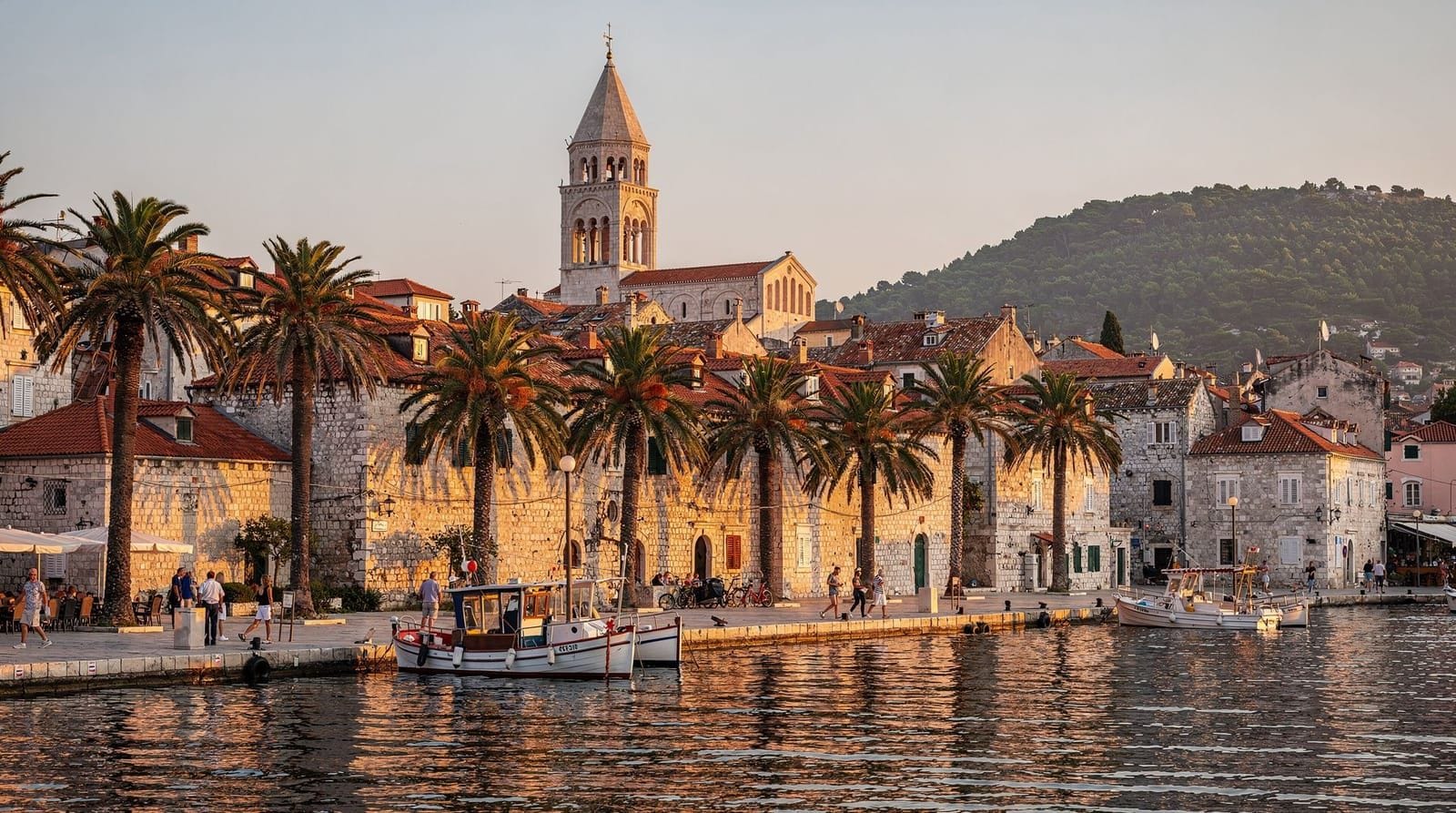
Hvar is the island most visitors want to see, and for good reason. The Venetian-era old town clusters around a broad harbour, with the 13th-century fortress (Fortica/Spanjola) rising 90 m above. Fortica entry is €10 and earns a panorama across the Pakleni Islands and the harbour — genuinely one of the better views in Dalmatia. Allow 45 minutes to reach the top at a walking pace.
The main square (Trg Sv. Stjepana) is the largest piazza in Dalmatia. The Franciscan monastery at the waterfront end of the square has a small museum with a Last Supper painting and pleasant cloister (€3 entry). Skip the town’s main beach (crowded, mediocre) in favour of the Pakleni Islands if you have time in the afternoon.
Lunch: 13:00
Avoid the harbour-facing restaurants on the main square — they are overpriced for the quality. Walk two streets back into town: Konoba Menego on Groda stairs specialises in Dalmatian prsut (prosciutto), cheese, and local wine. Lunch for two: €25–35.
Afternoon: Pakleni Islands: 14:30–17:30
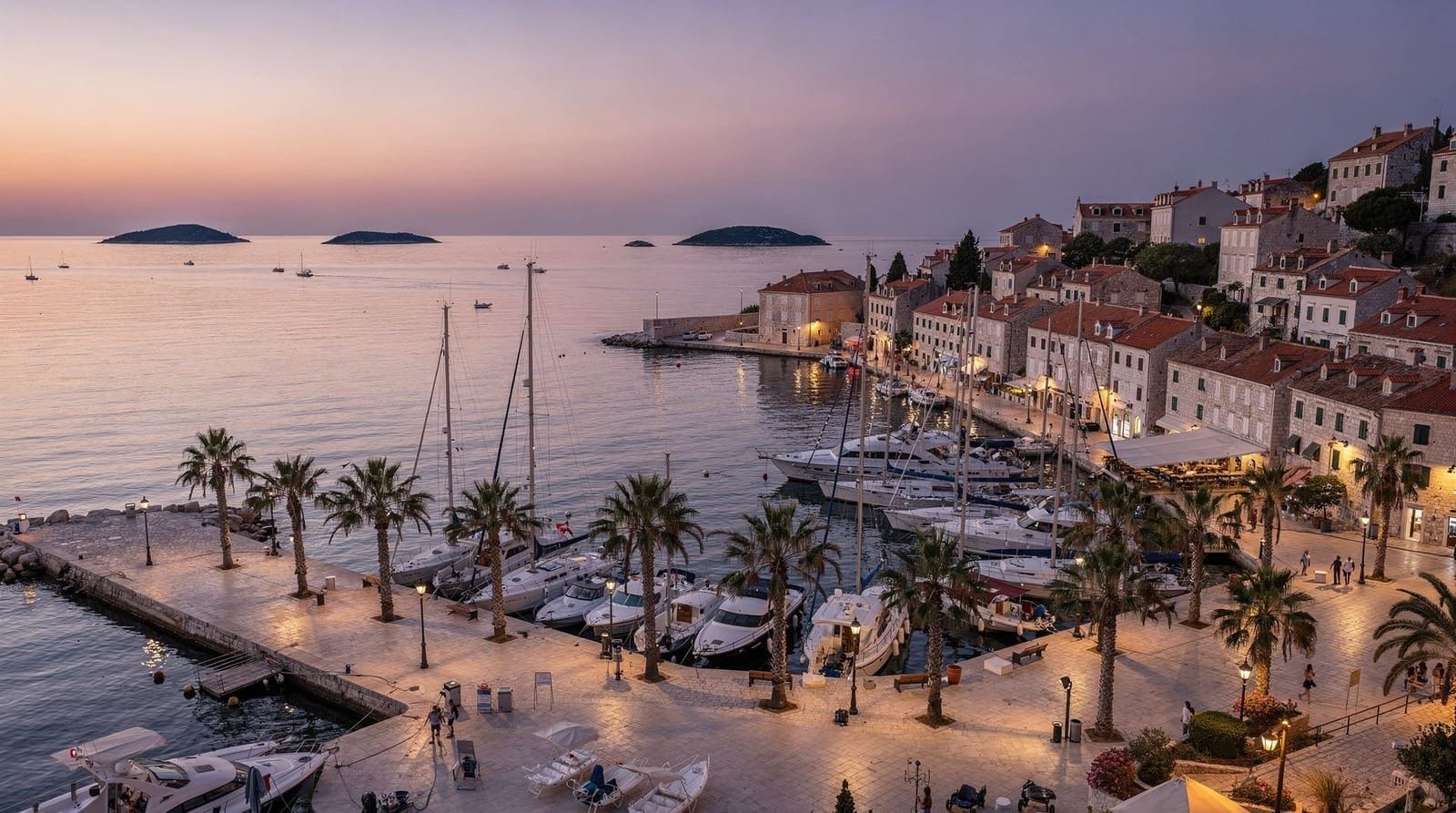
Water taxis from Hvar harbour take 10–20 minutes to reach the Pakleni Islands (Paklinski otoci), a scattered archipelago of pine-covered islets with clear water coves ideal for swimming. Taxi boats run on demand; cost €3–6 one way per person to Palmizana or Stipanska. Many visitors combine this with snorkelling. The water clarity in September, when algae blooms subside, is noticeably better than in August.
Return ferry to Split: 18:00 or 19:00
Check the Jadrolinija timetable before you leave in the morning. Last catamaran from Hvar to Split in shoulder season is often at 18:00 or 19:30 — do not miss it or you’re stuck overnight.
Evening in Split: arrive 19:30–20:00
Dinner near Bačvice beach after the ferry return. Nostromo (north of the ferry port) is the better-regarded fish restaurant if the budget allows (€25–40 mains). Zinfandel Food & Wine Bar on Mihovila Pavlinovića does sharing plates at more accessible prices.
Day 3 — Five islands boat tour or Hvar exploration
Option A: Blue Cave and 5 islands tour (full day, departs 08:30)
If you didn’t manage the Pakleni Islands on Day 2, or want to see the famous Blue Cave on Biševo island, the 5-island speedboat tour is the most efficient way to cover Hvar, Vis, Pakleni, and the Blue Cave in a single day.
From Split: Blue Cave, Hvar, Mamma Mia, 5 Islands Boat TourThis tour runs around 10–11 hours and costs €60–90 per person including boat, guide, and swimming stops. It does not include the Blue Cave entry ticket (€18–24 for adults depending on the season, paid at the cave). The cave is spectacular — an underwater opening that refracts sunlight into a surreal electric blue — but visits are limited to 10 minutes inside, and the queues in peak season (July–August) are long. September visits are significantly calmer.
Option B: Rest day in Split, Šibenik afternoon
If you prefer not to add another long tour day, use Day 3 as a rest day: morning at Bačvice beach, afternoon bus to Šibenik (1 hour, around €6 by bus). Šibenik’s UNESCO Cathedral of St. James is one of the finest Renaissance buildings in Croatia, funded by local taxes rather than church funds, which kept the design unusually civic and pragmatic. Two Venetian fortresses overlook the town from the hills. Šibenik is undervisited compared to Split, which is part of its appeal.
Day 4 — Krka National Park day trip
Departure: 08:00
Krka National Park is 85 km north of Split. Organised day tours depart Split at 08:00–09:00 and return by 17:30–18:00, costing €50–70 per person (includes transport and boat ride; park entry €20–40 extra depending on season).
Public bus alternative: Split station → Šibenik (1 hour, €6), then local bus to Skradin (40 minutes, €3), then 15-minute boat ride into the park (included in entry). Total journey time: 1.5–2 hours each way. More work but more flexibility.
Split: Krka National Park Day Trip with Boat Ride & SwimmingIn the park: 10:00–15:30
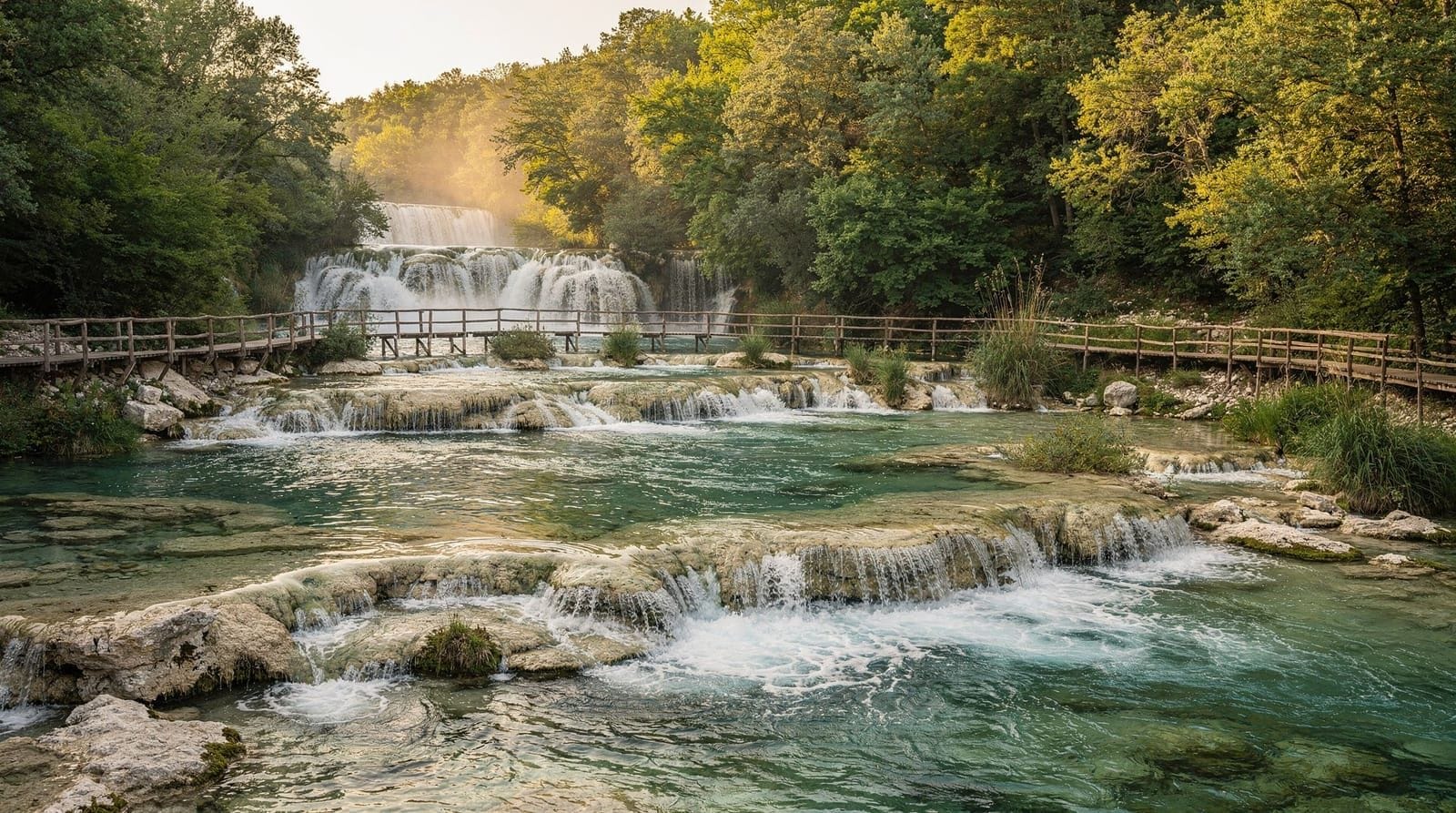
Skradinski Buk waterfall is the centrepiece: travertine cascades descending 45 m over 800 m of boardwalk. Swimming is allowed at marked zones downstream of the main cascade. The short boat excursion to Visovac island monastery (€15 extra) adds a calming counterpoint to the waterfall crowds.
Park entry fees 2026: approximately €20 in high season, €10 in shoulder season. Note: fees are lowest before 10:00 and after 15:00 in some seasons.
Return and evening: 18:00
By late afternoon you’re back in Split. A lighter dinner works well after the day’s walking: Bokeria wine bar for charcuterie and local cheese, or the Green Market (Pazar) near the Silver Gate for fresh fruit and yoghurt if you’re in budget mode.
Day 5 — Trogir half-day, then depart
Morning: 09:00 — Bus 37 to Trogir
Bus 37 runs from Split’s main station every 20–30 minutes, reaching Trogir in 30–40 minutes (€3 one way). This works perfectly as a half-day excursion on your final morning before afternoon or evening flights.
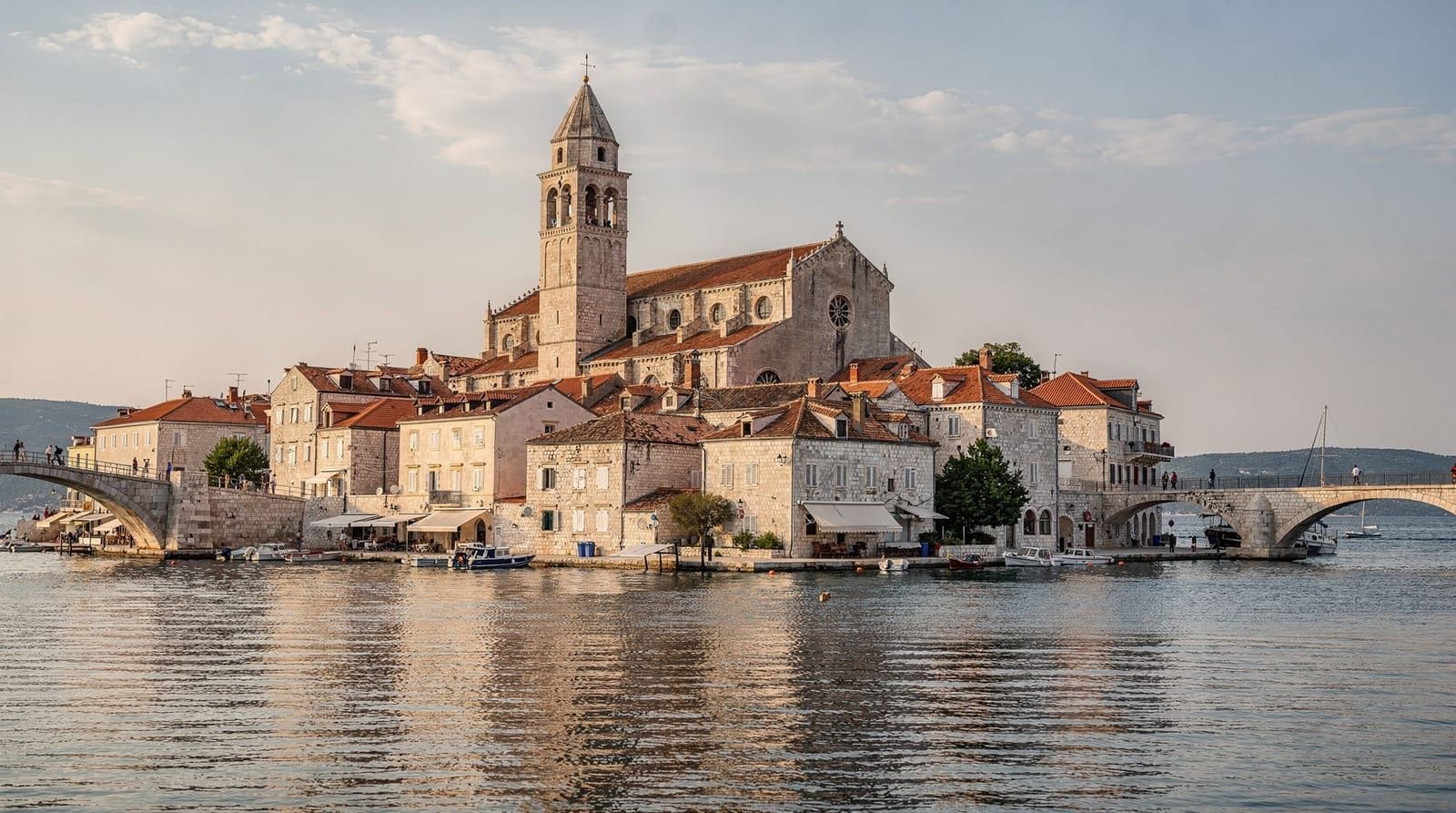
Trogir: Old Town Guided Walking TourTrogir old town sits on a small island. The Cathedral of Saint Lawrence has a Romanesque west portal (1240) among the finest stone carving in the Adriatic; the bell tower offers city views (€3). Kamerlengo Fortress on the western tip of the island charges €3 for rooftop access.
Allow 2.5 hours in Trogir, then bus back to Split (arriving around 12:30). This leaves time for airport transfer or a final lunch before departure.
Final lunch: 13:00
For a proper last meal: Konoba Matoni in Varoš, or Trattoria Bajamonti on the Republic Square just outside the palace walls — a long-established Split institution serving Dalmatian classics at reasonable prices (€12–18 mains).
Logistics summary
Ferries: Jadrolinija catamarans to Hvar — book online at jadrolinija.hr in peak season (July–August sell out). Shoulder season (May, September–October) has fewer services but no booking required.
Buses: Trogir (Bus 37, €3, 30–40 min), Šibenik (regional bus, €6, 1 hour). All depart from Split main bus/ferry terminal on Domovinskog rata.
No car needed: every destination on this 5-day itinerary is reachable by public transport or organised tour. A car adds flexibility for beaches on the Makarska Riviera but is not necessary for this route. See car vs no car in Dalmatia for the full analysis.
September recommendation: September is specifically better than August for this itinerary because Hvar town drops from shoulder-to-shoulder crowds to merely busy, the Blue Cave queues shorten significantly, and Krka’s boardwalk becomes walkable again at a human pace. See the dedicated September in Split guide for the full seasonal breakdown.
How this itinerary compares to going shorter or longer
Five days is the version most people end up with, but it’s worth knowing what you’re trading either way. Cut to three days and you lose the island entirely — see the 3-day Split itinerary for what stays. Extend to seven and Plitvice Lakes or a second island (Brač, via the Brač and Bol Zlatni Rat guide) becomes realistic without rushing the rest — the 7-day coast itinerary shows one version of that extra time. If Dubrovnik is non-negotiable, know that it doesn’t fit comfortably inside five days alongside everything else here; the Dubrovnik day trip from Split guide explains the time cost.
Making the Hvar day count if you only get one
Day 2 is the single day most people wish they’d planned better in hindsight. The mistake is trying to do the fortress, the town, and the Pakleni Islands all at a leisurely pace — pick two. If the fortress view matters most to you, go straight there from the ferry before the midday heat and save a shorter Pakleni visit for the afternoon. If swimming is the priority, skip the fortress climb and take an earlier water taxi to Palmizana. Either way, confirm the last return catamaran time before you leave Split that morning — missing it means an unplanned night on Hvar.
Frequently asked questions about a 5-day Split itinerary
Is 5 days enough time in Split and Dalmatia?
Five days covers the main highlights well: the old town, Hvar, Krka, and Trogir. It does not leave room for Dubrovnik (a separate 3-hour drive), Plitvice Lakes, or the more remote islands like Vis and Korčula. For those, see the 7-day coast itinerary or the 10-day Dalmatia itinerary.
Should I take the ferry or a boat tour to Hvar?
For a simple day trip or overnight, the Jadrolinija catamaran (€10–13 one way) is the most practical option. If you want to combine Hvar with the Blue Cave and other islands in a single day, an organised speedboat tour makes better use of limited time. See the Blue Cave tours guide for the trade-offs.
Where is the best place to stay for a 5-day Split itinerary?
Inside or just outside Diocletian’s Palace gives the best access to everything. The old town is noisy in high season (music until late); opt for the Silver Gate or northern sections for slightly quieter rooms. Bačvice beach area, 10 minutes’ walk away, is a good alternative. See where to stay in Split for neighbourhood detail.
How much does a 5-day Split trip cost?
At mid-range, budget roughly €150–200 per person per day (accommodation, meals, transport, entrance fees, two organised tours). In September with apartment accommodation, €100–130/person/day is achievable. See the Split travel budget guide for a full cost breakdown.
What is the best month for this 5-day itinerary?
September is the best single month: sea at 23–24°C, air at 24–27°C, 30–40% fewer crowds than July–August, and lower prices. May is the runner-up: slightly cooler sea (20°C), excellent weather for walking, and practically empty compared to summer. Read more in best time to visit Split.
Can I do the Blue Cave as a day trip from Split?
Yes. Speedboat tours run from Split harbour and cover Blue Cave (Biševo island), Vis, Hvar, and Pakleni Islands in 10–11 hours. The cave itself is a 10-minute visit; the surrounding islands fill the rest of the day. See Blue Cave tours explained for operator comparisons.
Do I need to book ferries to Hvar in advance?
In July and August, yes — especially if you want a specific departure time. Book at jadrolinija.hr. In May and September, advance booking is not required; just show up 20 minutes before departure.
What’s the biggest mistake people make on this itinerary?
Trying to add Dubrovnik as a sixth activity rather than accepting it doesn’t fit. The round-trip drive alone is 6 hours, which effectively cancels a full day elsewhere. If Dubrovnik matters, either extend to seven days using the 7-day coast itinerary as a guide, or save it for a separate trip focused on Dubrovnik and the south.
Can I swap Trogir for something else on Day 5?
Yes, if your flight allows a later start. Trogir is the easiest half-day to slot into a departure morning because it’s close and low-effort, but a final relaxed morning at Bačvice beach or the Green Market works just as well if you’ve already seen enough old towns by Day 5.
Top experiences
Bookable activities with verified prices and instant confirmation on GetYourGuide.