Dalmatia 10-day itinerary
From Split: Dubrovnik Guided Day Trip
The complete Dalmatian arc
Ten days is the minimum needed to do Dalmatia proper justice — enough time for overnight stays on Hvar and Vis, a day on Korčula, Krka National Park, and a full day in Dubrovnik without the exhaustion of moving every 24 hours. This is not a day-trip itinerary: you’ll base yourself in two or three places and move at a pace that lets each destination actually settle.
A rental car is recommended from Day 5 onward for the Makarska Riviera leg and the drive south to Dubrovnik, though the island sections (Days 3–7) are done without a car via Jadrolinija ferries. If you prefer a completely car-free trip, see the route notes at the end.
Budget estimate for two people at mid-range: roughly €2,500–3,500 for ten nights including accommodation, meals, transport, ferries, and two or three activities. September pricing is 20–25% lower.
| Route | Split → Hvar → Vis → Korčula → Split → Krka → Makarska → Dubrovnik → Split |
| Cost (2 people) | around €2,500–3,500 for 10 nights, mid-range |
| Getting around | Jadrolinija ferries (islands) + rental car from Day 5 |
| Best time | September for fewer crowds and lower prices; July–August hottest and busiest |
| Pace | Base-and-explore, not a different bed every night |
Day-by-day at a glance
| Day | Base | Highlight |
|---|---|---|
| 1 | Split | Diocletian’s Palace, Peristyle |
| 2 | Split | Salona, Klis Fortress, Marjan Hill |
| 3 | Hvar | Fortica, Pakleni Islands |
| 4 | Vis | Blue Cave, Stiniva Bay |
| 5 | Korčula | Old town walls, Grk and Pošip wine |
| 6 | Split | Pelješac wine stop or direct ferry back |
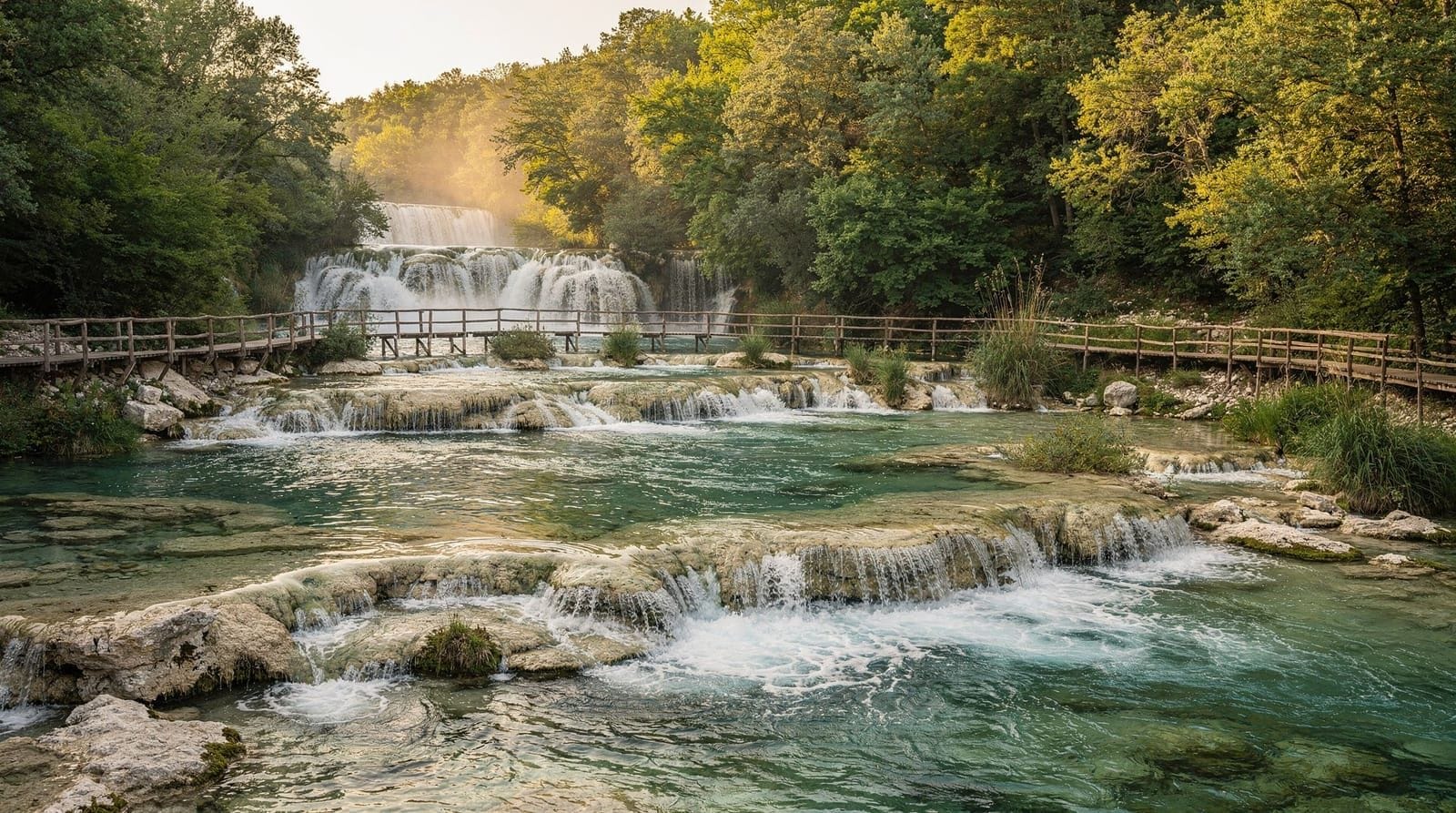
| 7 | Split | Krka National Park day trip |
| 8 | Makarska | Omiš, Brela, Makarska Riviera |
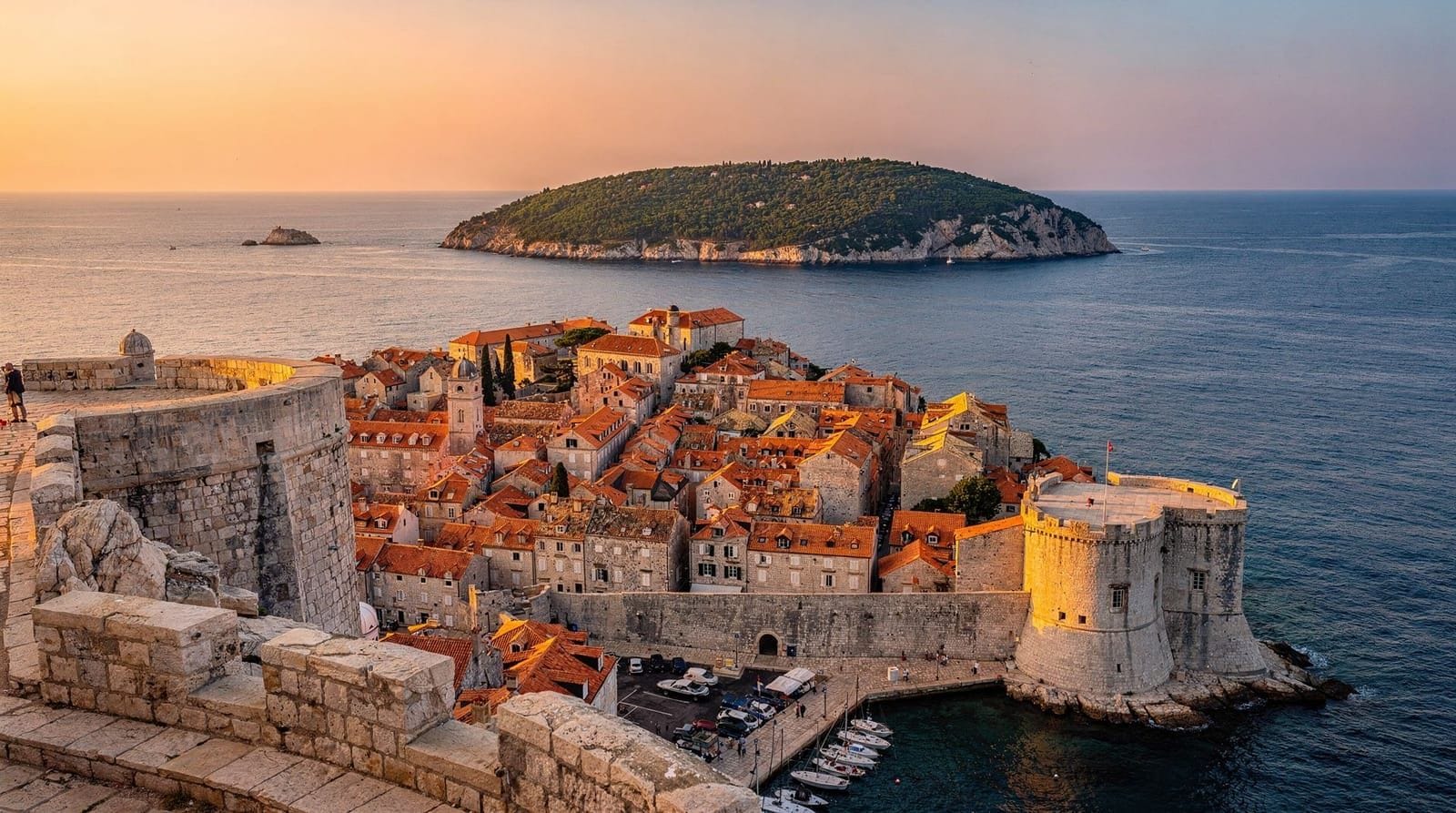
| 9 | Dubrovnik | City Walls, Lokrum, Fort Lovrijenac |
| 10 | Split | Pazar market, departure |
Day 1 — Arrive in Split
Arrival
Split Airport (SPU) to Split city centre: Pleso shuttle bus (€8, 30–40 min) or taxi (€25–40). Check in, then walk directly into Diocletian’s Palace — the Roman-era neighbourhood that forms Split’s old town.
Afternoon: Palace and Peristyle
The Cathedral of Saint Domnius (entry €5 + €3 bell tower) and basement halls (€10) are the essential visit. The Peristyle courtyard in late afternoon light is one of the finer architectural spaces in the Mediterranean — genuinely ancient stone worn smooth by 1,700 years of use.
Evening: Varoš neighbourhood
Dinner in the stone-alley neighbourhood west of the palace. Konoba Fetivi or Matoni both serve grilled fish and local wine (Plavac Mali, €4–6/glass) at honest prices. Reserve for summer evenings.
Day 2 — Split in depth: Marjan, Salona, Klis
Morning: Salona and Klis
Take a taxi or organised tour to Salona (ancient Roman city, 25,000 inhabitants at its peak — larger than Split) and Klis Fortress (Game of Thrones location for Meereen; entry €12). Both are 10–20 km from Split and work together as a morning. Organised tours from Split run half-day versions of this:
Split: Historical Tour of Salona, Klis Fortress and TrogirAfternoon: Marjan Hill
Marjan Hill west of the palace — forested, 178 m, excellent Adriatic views. The western trail reaches Bene and Kašjuni beaches in 45 minutes. This is the locals’ afternoon escape; you’ll see very few tourists.
Evening: Riva promenade
The Riva is the city’s social promenade along the southern wall of the palace. Sit with a coffee (€1.50–2) and watch the ferries. Dinner nearby at Zinfandel Food & Wine Bar for contemporary Dalmatian sharing plates.
Day 3 — Ferry to Hvar, overnight on the island
Morning ferry: 08:30
Jadrolinija catamaran to Hvar town (1 hour, €10–13). This is the point where your bags come with you — overnight on Hvar before continuing south.
Book Hvar accommodation in advance, particularly June–August. A pleasant mid-range option is staying in a private apartment in the old town, typically €80–130/night in shoulder season.
Hvar town: 10:00–13:00
Fortica fortress (€10, panoramic views), Venetian Arsenal, the main square. Lunch: Konoba Menego on Groda stairs for local prsut, cheese, and wine — much better value than the harbour-facing restaurants.
Afternoon: Pakleni Islands
Water taxis from Hvar harbour (€3–6 one way) to Pakleni Islands. The islets of Palmizana and Stipanska have clear swimming coves and a relaxed atmosphere. This is unambiguously one of the best afternoons in Dalmatia. Water visibility peaks in September. If you’d rather have the boat, lunch stop, and swimming spots organised for you instead of chasing water taxis, a half-day sailing option covers Pakleni and nearby islands with lunch included:
Hvar, Brač and Pakleni Islands cruise with lunchEvening: Hvar overnight
Hvar has a genuine nightlife scene — but you do not have to participate. The harbour cafés are lively and the old town at dusk, lit by stone-warm light, is pleasant to walk. Dinner at Gariful (harbour, splurge option, fresh grilled fish at €25–40 mains) or Giaxa (old town, similar quality, slightly lower prices).
Day 4 — Hvar to Vis: Blue Cave and Stiniva Bay
Morning: Blue Cave speedboat tour from Hvar
Vis is 1.5–2 hours from Hvar by regular ferry, but a speedboat tour combining the Blue Cave (Biševo island) and Vis is more efficient if you haven’t done it from Split.
Split: Blue Cave, Vis & Hvar Full-Day Trip by SpeedboatThe Blue Cave (Modra spilja) is 20 minutes by small boat from Komiža, Vis. The cave floods with natural electric-blue light between 11:00 and 12:30 — the only time when sunlight enters through the underwater opening at the right angle. Visits are 10 minutes inside, with a queue wait of 15–45 minutes depending on season. Cost: €15–20 per person, paid at the cave.
Afternoon: Stiniva Bay, Vis
Stiniva is a cove enclosed by limestone cliffs on Vis island — the kind of place that feels discovered even in peak season. Access is by boat (water taxi from Komiža, €5 each way) or a 45-minute hike down from the clifftop road. Swimming in the clear water between the rock walls is genuinely memorable.
Evening: Vis overnight
Vis island town has excellent restaurants given the island’s size. Konoba Bako (Komiža) is the most respected for fish — the grilled dentex and octopus salad are worth seeking out (€18–25 per main). Overnight in Vis: the island is quieter than Hvar and the accommodation more reasonably priced (€70–110/night).
Day 5 — Vis to Korčula via ferry
Morning ferry: 08:30
The Jadrolinija ferry from Vis to Vela Luka (western Korčula) runs daily. Journey: approximately 1.5 hours, €10–15. From Vela Luka, a local bus crosses the island to Korčula town (45 minutes, €3).
Korčula town: 12:00–17:00
Korčula old town occupies a peninsula jutting into the channel. The defensive towers and city walls (13th–16th century Venetian) are in better condition than Trogir’s. The Cathedral of Saint Mark (entry €2) has an unusual barrel-vaulted interior and a ciborium by Renaissance sculptor Bonino da Milano. The Marco Polo house (claimed birthplace; scholars debate this) charges €5 for a small exhibition — interesting if you enjoy maritime history, otherwise skippable.
Korčula also has a wine culture: the island’s Grk and Pošip white wines are among Croatia’s best. A short walk from the old town, the Bire winery offers tastings (call ahead; €10–15 per person).
Afternoon: town beaches and countryside
The town beaches immediately east of the old town (Gradac beach) are swimmable. Alternatively, hire a bicycle (€15/day) and ride to the quieter southern coast — Lumbarda village, 8 km away, has sandy beaches (sand is rare in Dalmatia).
Evening: Korčula overnight
LD Hotel or similar mid-range accommodation in Korčula town (€90–140/night). Dinner at Konoba Maslina for local specialities including black risotto (crni rižot, tinted with cuttlefish ink) — a Dalmatian staple done well here at €14–18 per main.
Day 6 — Korčula to Split: drive or ferry
Option A: car renters
If you picked up a rental car in Korčula (agencies in Korčula town), drive north along the Pelješac Peninsula — one of Croatia’s main wine regions. A stop at a Dingač or Postup vineyard for a wine tasting (estate visits €10–20, prearrange by email) is worthwhile. The drive along the peninsula is scenic: narrow road, steep hillsides, olive groves. Cross back to the mainland at Ploče and drive north on the coastal road to Split: approximately 3 hours total.
Option B: no car — ferry back to Split
Daily Jadrolinija ferry Korčula–Split runs in roughly 3–3.5 hours. Check the timetable; the direct service may be limited in low season (sometimes via Hvar).
Arrive Split: afternoon
Check back into your Split accommodation and take a light evening.
Day 7 — Krka National Park
Departure: 08:00
Krka National Park day from Split. Organised tours (€50–70, includes transport and boat) depart at 08:00–09:00 and return by 18:00. Public bus to Šibenik then Skradin works too.
Split: Krka National Park Day Trip with Boat Ride & SwimmingSkradinski Buk waterfall boardwalk (1.5 hours), swimming only in designated zones away from the falls (banned at Skradinski Buk since 2021), optional Visovac monastery boat (€15 extra). Pack sunscreen and water — the park has limited shade in the middle of the day. The combination of the canyon scenery, travertine pools, and old water mills makes Krka more visually varied than Plitvice, though Plitvice is larger and arguably more dramatic.
Evening back in Split
Rest evening. The Green Market (Pazar) near the Silver Gate has the best evening fruit and the cheapest yoghurt (€1.50 for a large pot of Vindija) if you want a light meal.
Day 8 — Drive south: Makarska Riviera
With a rental car, the Makarska Riviera between Split and Dubrovnik is worth a day. The coastal road passes through Omiš (consider a brief stop for the Cetina canyon view and a coffee), then south through Brela — arguably the most aesthetically perfect small beach on the Croatian mainland, with pine-shaded pebbles and turquoise water — and Makarska town.
Makarska has a long seafront promenade, a pleasant old town, and good restaurants at lower prices than Split or Dubrovnik. Konoba Stari Mlin (just outside the old town) does lamb peka and octopus salad in a shaded garden (€14–20 mains, book ahead for dinner). Continue to Dubrovnik or overnight in Makarska.
Overnight in Makarska (mid-range hotel or apartment: €80–130/night) saves 30–45 minutes of driving on Day 9.
Day 9 — Dubrovnik
Morning drive: Makarska to Dubrovnik
From Makarska: approximately 1.5 hours. Cross the 9 km Neum corridor (Bosnia) en route — passport required, minimal formality for Schengen citizens. Park outside Dubrovnik’s Old City (paid parking at Ilijina Glavica or Strašište, €5–8/day) — no cars enter the Old City walls.
From Split: Dubrovnik Guided Day TripDubrovnik old town: 10:00–16:00
Dubrovnik is UNESCO-listed and genuinely beautiful, but genuinely overcrowded June–August. In September the crowds are manageable. Priorities:
- City Walls walk: 2 km circuit, approximately 1.5–2 hours. Entry €35 in peak season. Go early morning (gates open 08:00) before cruise ship passengers arrive. The views over the terracotta roofscape and Adriatic are outstanding.
- Stradun: the limestone-paved main street. Polished smooth by centuries of foot traffic. Most of the streets branching off Stradun are quieter and more atmospheric.
- Lokrum Island: 15-minute ferry from the Old Harbour (€15 return, summer only). Game of Thrones filming location (the market scenes from Qarth). Botanical garden and peacocks on the island.
- Fort Lovrijenac: the detached fortress west of the city walls (€15 entry included with wall ticket). GoT fans recognise it as the Red Keep. The view back toward the walled city is the better-known photography angle.
Afternoon: Lapad or Banje beach
Banje beach, just east of the Ploče Gate, has a direct view of the city walls from the water. The beach is pebble; the shallow entry is gradual. Gets very busy in peak season. September it’s civilised.
Evening or overnight in Dubrovnik
If budget allows, overnight in Dubrovnik (accommodation is significantly more expensive than Split — expect €130–250/night for mid-range in the old town or nearby). If returning to Split, dinner in Dubrovnik first, then the 3-hour drive back (arrive around midnight).
Day 10 — Return to Split and depart
Morning in Split (if returned Day 9 evening)
Final morning in the palace. Walk to the Pazar market for local produce (dried figs, prsut, olive oil, lavender from Hvar). The Gregory of Nin statue at the Golden Gate is the last photo opportunity.
Airport shuttle
Pleso bus to SPU from the main terminal: €8, every 30–40 minutes. Allow 1.5 hours before departure.
Route notes: car-free version
The car-free version of this 10-day itinerary is feasible with adjustments:
- Day 8 (Makarska Riviera) becomes a half-day bus trip to Makarska by bus (75 min, €7 from Split), or skip it and add a rest day in Split or an extra island.
- Dubrovnik (Day 9) can be done as an organised day trip from Split or by bus (3 hours, €15–20) — an early departure and late return.
- Korčula–Split return by direct Jadrolinija ferry avoids the car return logistics.
Read the getting around Split guide for full public transport detail.
Where to stay along the route
You don’t need to book ten different beds. This itinerary is built around four bases: Split (Days 1–2 and again Days 6–7 and 10), Hvar (Day 3), Vis (Day 4), Korčula (Day 5), and either Makarska or Dubrovnik (Days 8–9). In Split, staying inside or just outside Diocletian’s Palace puts you within walking distance of everything on Days 1–2 — see the where to stay in Split guide for neighbourhood-by-neighbourhood detail. On Hvar and Vis, book accommodation as early as you can for June–August; both islands sell out of mid-range private apartments weeks in advance in peak season. Korčula town itself is small enough that any old-town listing works — there’s no wrong neighbourhood to pick.
If ten different check-ins still feels like too much movement, the which Dalmatian island for you guide can help you cut one overnight stop and add an extra night somewhere you’ll actually want to linger.
What to pack for ten days on the coast
Dalmatia in summer means one wardrobe for boats and beaches and a second, slightly more covered one for old-town churches and cathedrals (Saint Domnius in Split, Saint Mark’s in Korčula, and Dubrovnik’s churches all expect shoulders covered). Pack reef-safe sunscreen — it’s not always easy to find locally — a reusable water bottle (tap water is drinkable everywhere on this route), and sturdy sandals for the uneven Roman-era stone underfoot in Split, Trogir, and Dubrovnik’s old town. A dry bag is worth the space for the Blue Cave speedboat and any of the island-hopping legs, where spray is a given. If you’re renting a car from Day 5, keep a change of clothes accessible in your main bag rather than buried — the Makarska Riviera stops (Omiš, Brela) are best enjoyed with a quick swim, not just a photo from the road.
Ferry logistics worth knowing before you book
Jadrolinija timetables shift with the season, and the direct Korčula–Split service in particular can thin out considerably outside June–September, sometimes routing via Hvar and adding an hour or more. Book ferry tickets a day or two ahead in peak season for the Split–Hvar and Hvar–Vis legs — walk-up availability drops fast in July and August. If you’re travelling with a rental car, note that vehicle ferries need to be booked further ahead than passenger-only catamarans, and not every route in this itinerary carries cars (the Vis and Korčula legs are best done as a foot passenger with the car picked up later, per the Day 6 options above). The ferries and catamarans guide has the full seasonal breakdown.
Frequently asked questions about a 10-day Dalmatia itinerary
Which islands should I prioritise in 10 days?
Hvar for Venetian architecture, the Pakleni Islands, and nightlife. Vis for seclusion, Stiniva Bay, and the Blue Cave proximity. Korčula for the best-preserved walled old town after Dubrovnik. Brač (Zlatni Rat) is worth a day trip but not an overnight unless beaches are your primary interest. See which Dalmatian island for you for a personality-based framework.
Should I rent a car for 10 days in Dalmatia?
A car adds flexibility, particularly for the Makarska Riviera and the Pelješac wine region. It’s not needed for Split, the islands, Krka, or Dubrovnik (where parking is expensive anyway). A hybrid approach — car for days 6–9 on the mainland, no car for island days — is the most practical. Read car vs no car in Dalmatia.
Is Dubrovnik worth the day trip from Split?
Yes, but manage expectations: Dubrovnik in peak July–August is extremely crowded. September is significantly better. The city walls are genuinely one of the great European heritage walks. Factor in the 3-hour drive each way and depart Split by 07:00 for the best experience. See the Dubrovnik day trip from Split guide.
How do I get from Split to Vis and Korčula?
Vis: direct Jadrolinija ferry or catamaran from Split (2–3 hours). Korčula: ferry from Vis (1.5 hours) or from Split via Lastovo or Hvar depending on season. Timetables change seasonally — always check jadrolinija.hr before planning. See the ferries and catamarans guide for full logistics.
What is the best time for this 10-day Dalmatia trip?
September is the sweet spot: sea temperature 23–24°C, air 24–27°C, 30–40% fewer crowds than August, and lower prices. May works well too but the sea (around 19°C) is cooler for extended swimming. July and August are hot and crowded — entirely viable but you’ll queue everywhere. See best time to visit Split.
Is ten days enough, or should I cut it shorter?
Ten days is enough to do this full arc without rushing, but it’s not padded — most days have a clear morning and afternoon plan. If you only have a week, drop either Korčula or the Makarska Riviera day rather than trying to compress everything; the Split 7-day coast itinerary shows one way to trim it. Adding an extra day or two beyond ten is best spent as a second night on Hvar or Vis rather than a new stop.
Can I do this itinerary without booking a rental car?
Yes — the car-free route notes above cover it. You lose some flexibility on the Makarska Riviera and the Pelješac wine stop, but ferries and organised day trips cover every other leg, including Dubrovnik and Krka. It costs slightly more in guided-tour fees but removes parking and driving stress in Split and Dubrovnik, where a car is more hassle than help anyway.
Top experiences
Bookable activities with verified prices and instant confirmation on GetYourGuide.