Split 7-day coast itinerary
Split: Day Trip to Hvar & Brač Islands with Zlatni Rat Beach
Seven days on the Dalmatian coast
A week from a Split base is long enough to do the coast properly: two island stops, two national park visits, a medieval town, and an adventure day in the Cetina canyon — without the frantic pace of a 5-day trip. This itinerary stays within comfortable day-trip and overnight distance of Split, relying on ferries, buses, and one or two organised tours.
You do not need a car. The Jadrolinija ferry network connects Split to Hvar and Brač efficiently. Krka National Park and Omiš are reachable by bus or tour.
Budget for seven nights at mid-range: roughly €1,400–2,000 for two people (accommodation, meals, transport, three or four activities). September and May reduce this by 20–30% and dramatically improve the experience.
| Where | Split base with day trips to Hvar, Brač, Krka, Trogir, Omiš |
| Cost (2 people, 7 nights) | around €1,400–2,000, mid-range |
| Getting around | No car needed — ferries, buses, and two or three tours |
| Best time | September or May for weather and crowds |
| Booking | Book Hvar/Brač ferries and the rafting day ahead in peak season |
Day-by-day at a glance
| Day | Focus | Base |
|---|---|---|
| 1 | Diocletian’s Palace | Split |
| 2 | Hvar, Pakleni Islands | Split |
| 3 | Brač, Zlatni Rat | Split |
| 4 | Krka National Park | Split |
| 5 | Trogir, Blue Lagoon | Split |
| 6 | Omiš, Cetina rafting | Split |
| 7 | Slow morning, depart | — |
Day 1 — Arrive in Split
Arrival and orientation
The Pleso shuttle from Split Airport (SPU) drops at the main bus/ferry terminal in 30–40 minutes for €8. Taxis cost €25–40. On arrival, orient yourself around the ferry port: your island departures all leave from here over the week.
Afternoon: Diocletian’s Palace
Check in, then walk to Diocletian’s Palace. The Peristyle courtyard and Cathedral of Saint Domnius are the core (entry €5 for the cathedral, €3 for the bell tower). Walk the basement halls (€10) — atmospheric Roman vaulted chambers that give the best sense of the palace’s original scale.
Evening
Dinner in Varoš neighbourhood west of the palace. Konoba Matoni or Fetivi both serve Dalmatian grilled fish and peka at mid-range prices (€12–18 mains, €4–6 for local wine). Reserve ahead for summer evenings.
Day 2 — Hvar island
Morning ferry: 08:30
Jadrolinija catamaran to Hvar town: 1 hour, €10–13. Take the catamaran to Hvar town (not the car ferry to Stari Grad). Buy tickets at the terminal or online.
Hvar town: 09:30–13:00
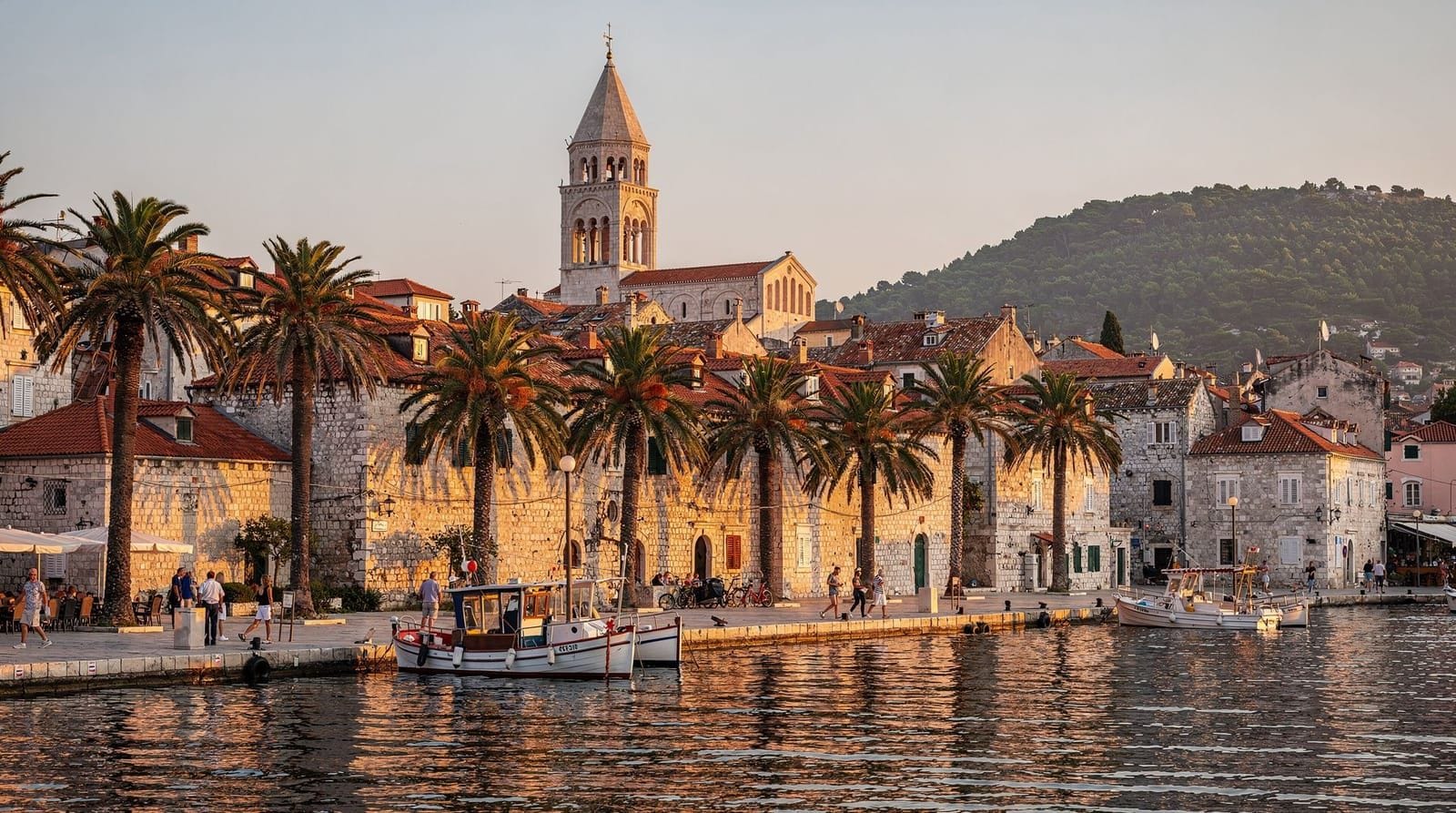
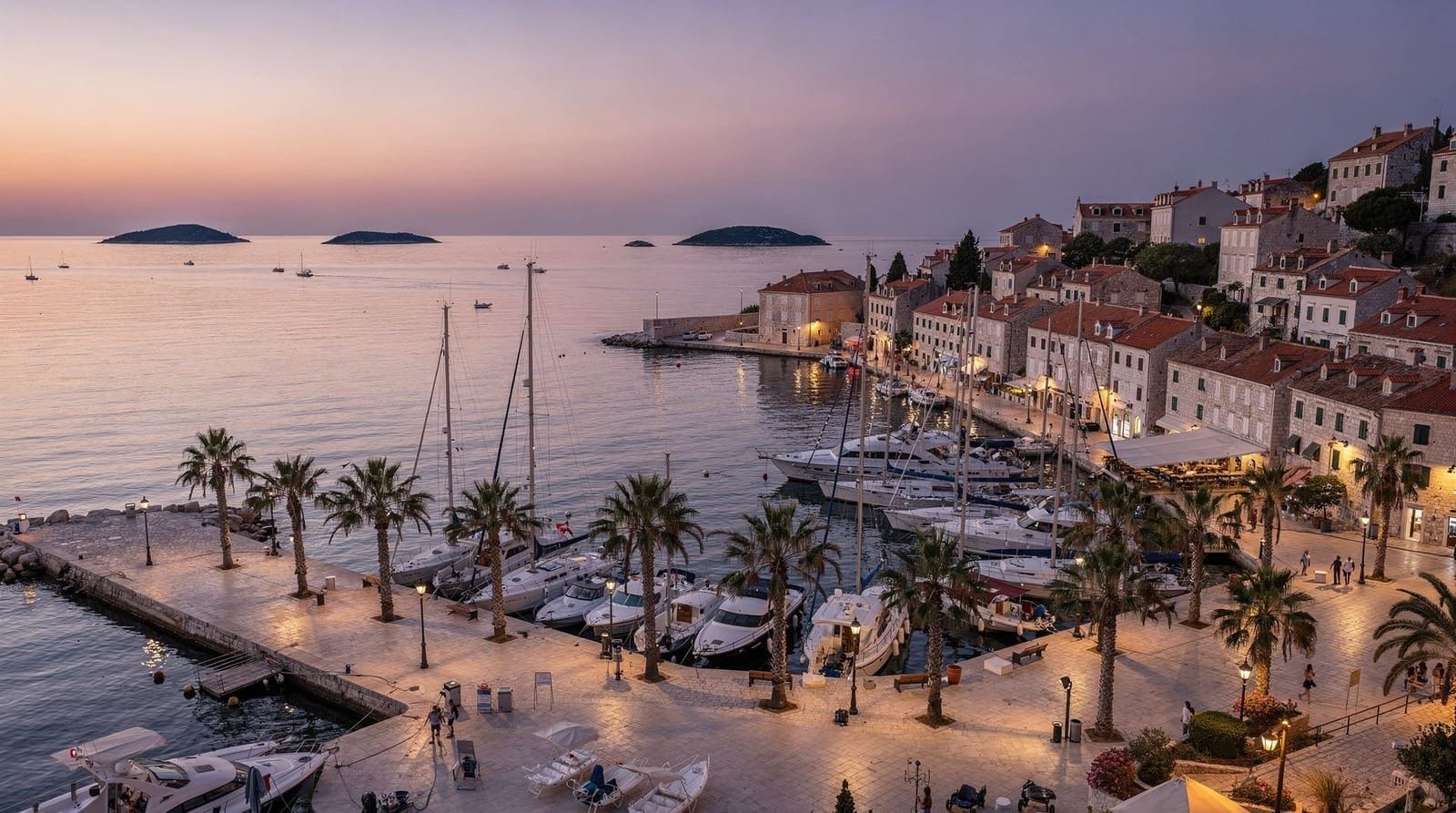
Hvar has the most beautiful harbour town in Dalmatia. Key stops: Fortica fortress (€10, 45-minute walk up, panoramic views over the Pakleni Islands), the Venetian loggia on the main square, and the 16th-century Arsenal (now a small theatre — €3 entry). Wander the narrow alleys behind the main square for a less curated version of the town.
Afternoon: Pakleni Islands: 13:30–17:30
Water taxis from Hvar harbour reach Pakleni Islands in 10–20 minutes (€3–6 one way). The islets of Palmizana, Sveti Klement, and Stipanska have clear-water coves ideal for swimming and snorkelling. Palmizana has a small winery and restaurant (pricey but the setting justifies it for one lunch). Return by water taxi before the last catamaran back to Split.
Last catamaran to Split: 18:00 or 19:30 — check timetable before departing in the morning.
Day 3 — Brač and Zlatni Rat beach
Morning ferry: 09:00
The car ferry from Split to Supetar (Brač) takes 50–60 minutes and costs €8 per person. Supetar is Brač’s main port. From Supetar, a bus runs to Bol (45 minutes, €4) — the village at the southern tip of the island near Zlatni Rat.
Alternatively, a day tour directly from Split covers Hvar and Brač together, with a stop at Zlatni Rat:
Split: Day Trip to Hvar & Brač Islands with Zlatni Rat BeachZlatni Rat (Golden Cape): 11:00–15:30
Zlatni Rat is a 500 m pebble spit that shifts shape with currents — Croatia’s most photographed beach. The beach itself is pebbly (bring flip-flops), the water is turquoise, and the peninsula extends into the Adriatic with pine trees shading the landward side. It’s busy in July and August; September brings calm. Windsurfing and kiteboarding are popular here due to the afternoon maestral wind.
Bol village behind the beach has a reasonable lunch scene. Taverna Riva on the harbour does grilled fish for €14–20 per main. Give the aggressively marketed restaurants right at the beach head.
Return: 15:30
Bus back to Supetar, then ferry back to Split. Arrive around 18:30–19:00.
Day 4 — Krka National Park
Organised tour departure: 08:00
Krka National Park day trip from Split runs 08:00–18:00 with most operators. Cost: €50–70 per person (includes transport and boat ride into the park; entry €20–40 extra depending on season). Alternatively, bus from Split station to Šibenik (1 hour), then bus to Skradin (40 minutes), then park boat.
Split: Krka National Park Day Trip with Boat Ride & SwimmingIn the park: 10:00–15:30
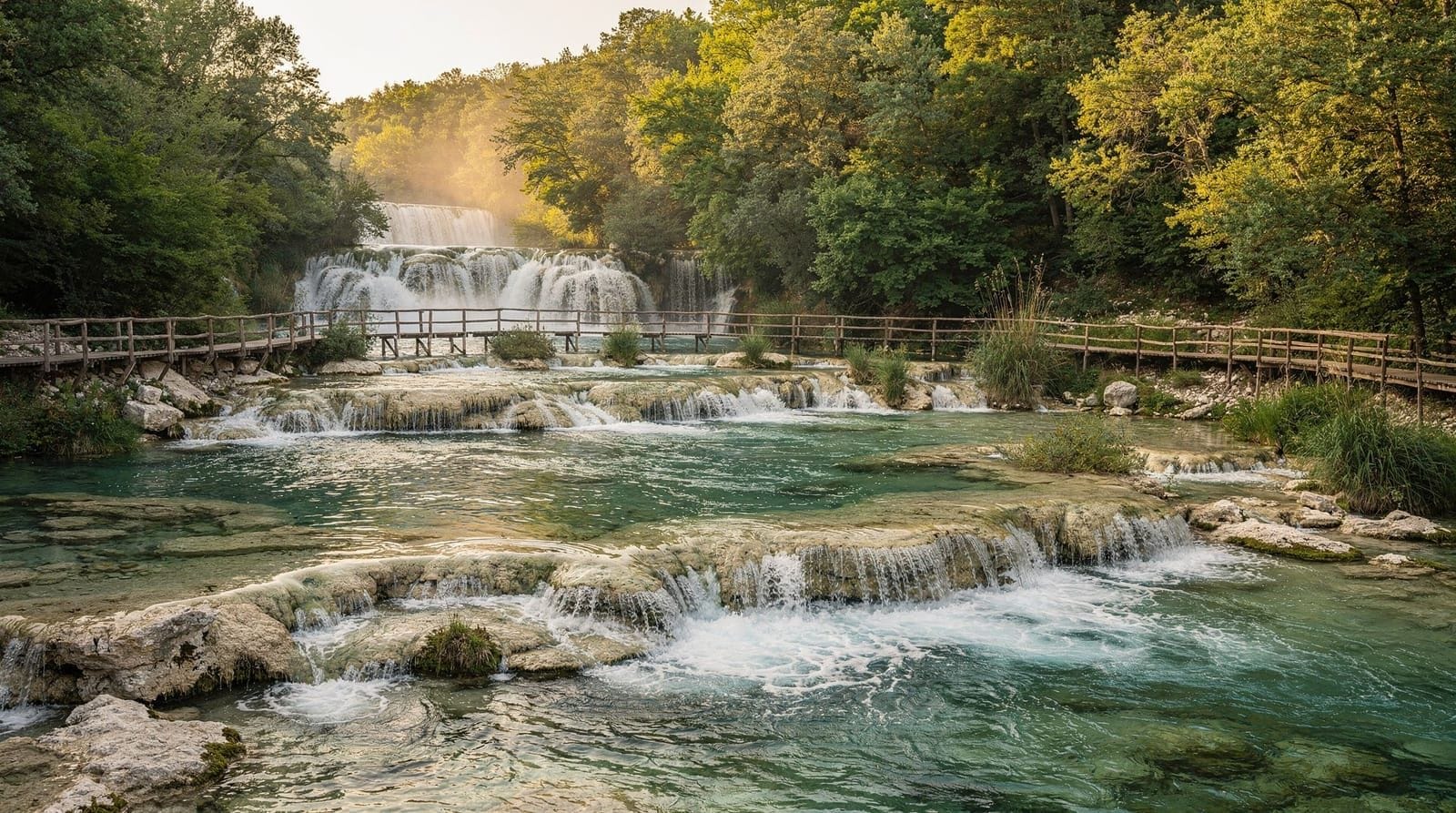
Skradinski Buk waterfall system is the main draw — travertine cascades and boardwalk loop (1.5 hours). Swimming in designated zones is allowed. The Visovac island monastery boat trip (€15 extra) adds 45 minutes but is worth it for the setting. Bring sunscreen, water, and walking shoes.
Rest of the day
Return to Split by 17:30–18:00. Take the evening off — Bačvice beach for a swim at low-crowd late afternoon, then dinner near the ferry port. Nostromo fish restaurant is Split’s best for fresh catch (€25–40 per main, book ahead).
Day 5 — Trogir and the Blue Lagoon
Morning: 09:00 — Trogir by bus
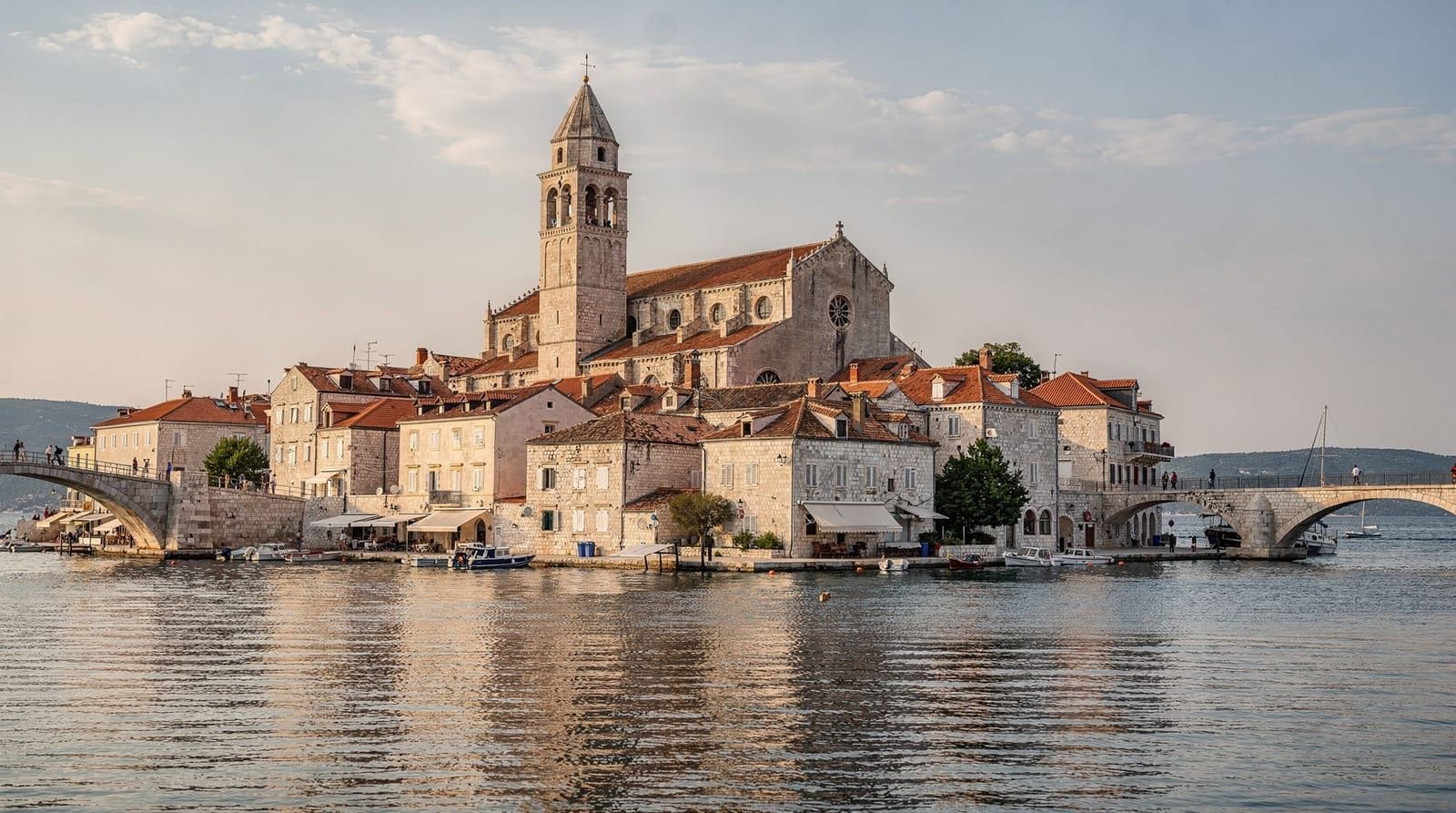
Bus 37 from Split station to Trogir takes 30–40 minutes (€3 one way). Trogir old town occupies a small island. The Cathedral of Saint Lawrence west portal (1240, by Master Radovan) is exceptional Romanesque carving. Kamerlengo Fortress (€3) and the Bell Tower (€3) offer views. Allow 2.5 hours.
Afternoon: Blue Lagoon speedboat half-day
From Trogir’s harbour, half-day speedboat tours visit the Blue Lagoon (a turquoise cove between Šolta, Čiovo, and the Trogir coast) and often include a stop at the historic Trogir waterfront. Some tours run from Split directly. The Blue Lagoon is best in calm conditions — morning tours are usually better than afternoon when the maestral wind picks up.
Return to Split by late afternoon.
Evening: 19:30
A lighter evening after a full day — the Bokeria wine bar on Domaldova serves sharing plates and local wines in a relaxed setting (€8–15 per plate). For something more substantial, Zinfandel Food & Wine Bar on Mihovila Pavlinovića does modern Dalmatian cooking with a good-value set menu at lunch (€18–22).
Day 6 — Omiš adventure: Cetina rafting and canyon
Bus to Omiš: 09:00
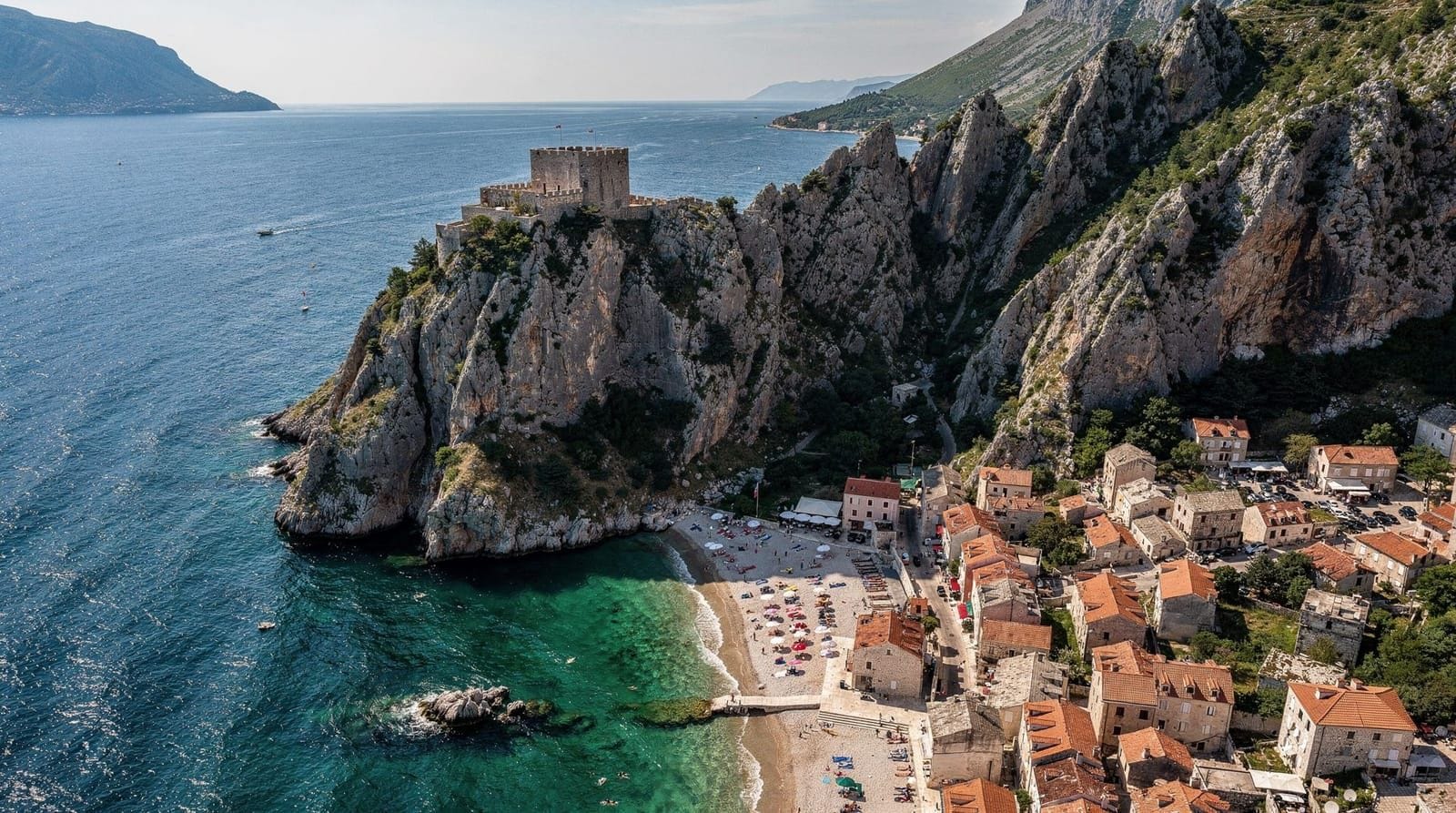
Bus 60 from Split station reaches Omiš in 30–40 minutes (€3). Omiš sits at the mouth of the Cetina River, where the gorge opens dramatically into the Adriatic. It’s the adventure capital of the Dalmatian coast.
Cetina River rafting: 10:00–13:30
The Cetina rafting route runs 12 km through class II–III rapids, taking 3–4 hours. The gorge is genuinely beautiful — 200 m limestone walls, wild figs, and a natural cave about halfway through where the river disappears underground briefly before re-emerging. The route ends with an option for cliff jumping (4–10 m) for those who want it. Operators provide wetsuits, helmets, and paddles; most charge €35–50 per person.
Split: Cetina River Rafting with Cliff Jumping and Cave TourLunch in Omiš: 14:00
Restoran Radmanove Mlinice (in the Cetina canyon, accessible by car or short walk from the rafting endpoint) is a heritage mill restaurant serving traditional Dalmatian food — grilled lamb and trout from the river in a lush garden setting. Budget €15–20 per main. It’s the most atmospheric lunch setting on this entire itinerary.
Afternoon: Omiš old town and beach
Omiš has a small medieval old town and a long shingle beach at the river mouth. The fortress of Mirabela above the town (20-minute climb) gives views over the coastline. Swim at Omiš beach before the bus back to Split (30–40 minutes).
Evening
A low-key final big night in Split. The Peristyle in the evening light — with occasional live klapa singing (traditional Dalmatian a cappella) in summer — is one of the genuinely free experiences worth seeking.
Day 7 — Slow morning, then depart
Morning: Split final walk
Use the final morning to revisit anything missed. The Pazar market (just outside the Silver Gate) runs every morning until around 13:00 — the best place in Split to buy olive oil, local honey, dried figs, and lavender. Prices are lower and quality higher than the tourist shops on the Riva.
The Archaeological Museum of Split (on Zrinsko-Frankopanska, 15 minutes’ walk from the palace) holds the best collection of artefacts from ancient Salona — a Roman city of 60,000 once larger than Split itself. Entry €5. Only worth it for history enthusiasts.
Departure
Shuttle bus from the main terminal to Split Airport runs throughout the day; journey 30–40 minutes, €8.
Practical notes for 7 days on the Dalmatian coast
Ferries: Jadrolinija catamarans to Hvar (jadrolinija.hr); car ferry to Supetar/Brač. Book in advance for July–August departures. Check timetables carefully — last catamaran times vary by season.
Buses: Bus 37 to Trogir (€3, 30–40 min), Bus 60 to Omiš (€3, 30–40 min), regional bus to Šibenik (€6, 1 hour). All from Split main bus station adjacent to the ferry terminal.
No car needed: every stop on this itinerary is reachable by public transport or organised tour. Read car vs no car in Dalmatia if you’re considering renting.
Accommodation strategy: base yourself in Split throughout — moving accommodation for island stays on a 7-day trip adds logistical complexity without proportional benefit. Hvar is a day trip by ferry; Brač is a day trip by ferry; only Dubrovnik or Korčula would merit an overnight away from Split.
For the island-hopping 5-day itinerary with overnight island stays, see the dedicated page.
Comparing the two island days
Day 2 (Hvar) and Day 3 (Brač) are deliberately different in character. Hvar is about the town, the fortress view, and the Pakleni Islands’ calm coves — a cultural-and-swim day. Brač’s Zlatni Rat is a single, spectacular beach and little else — a pure beach day, best enjoyed by simply picking a spot and staying most of the afternoon rather than trying to see the rest of the island. If your week is tight and you can only keep one island day, Hvar gives you more variety; Brač gives you the more photogenic beach. The Hvar vs Brač vs Vis guide compares all three in more depth.
Pacing the week so it doesn’t feel like a checklist
Seven consecutive active days is a lot, even at a moderate pace. The itinerary above front-loads the two ferry days (2 and 3) and the physically demanding rafting day (6), which means Day 7’s slow morning genuinely earns its place — resist the urge to squeeze in one more activity. If Day 4 (Krka) or Day 6 (Omiš) feels like too much after the island days, they can be swapped: Krka is calmer and works better as a mid-week reset, while Omiš rafting is more enjoyable with fresher legs earlier in the week. See the escape the crowds in Split guide for how to build in genuine downtime without losing a full day.
Frequently asked questions about the 7-day Dalmatian coast itinerary
Is 7 days enough for Dalmatia?
Seven days covers the main highlights from a Split base well: two islands (Hvar, Brač), Krka waterfalls, Trogir, and an adventure day in Omiš. It does not include Dubrovnik (add 2 days), Vis, Korčula, or Plitvice Lakes. For a more complete Dalmatia trip, see the 10-day Dalmatia itinerary.
Should I stay only in Split or overnight on an island?
Staying in Split and doing day trips is more practical and cost-effective for most travellers. Islands have limited accommodation in peak season, last-minute availability is poor, and ferry logistics are simpler when you return to a fixed base. An overnight on Hvar makes sense if you want to experience the nightlife or sunrise over the harbour — but factor in the ferry complexity.
What is the best beach in this 7-day itinerary?
Zlatni Rat on Brač is Dalmatia’s most spectacular beach and worth the ferry and bus journey. Pakleni Islands near Hvar offer the clearest water. For accessible in-town swimming, Bačvice in Split (sandy seabed, unusual for Croatia) and Kašjuni on Marjan Hill are the best options.
How active is this itinerary?
Moderate. The Cetina rafting day (Day 6) is the most demanding — about 3–4 hours of paddling through moderate rapids. All other days involve walking on flat terrain (palace, Trogir, Omiš old town) or ferry/bus travel. The Fortica fortress hike in Hvar (45 minutes) and Marjan Hill are optional climbs.
What to do if it rains?
Rain in Dalmatia is infrequent in summer (July, August have near-zero rainfall). In May and September, one or two overcast days are possible. The palace basement halls, the Archaeological Museum, the Trogir cathedral, and the Krka visitor centre all work in rain. Rescheduling island ferry days is advisable if wind warnings are issued.
Is Omiš worth a day trip from Split?
Yes, particularly if you plan to raft or do any adventure activity. Omiš without the rafting is a pleasant half-day — canyon viewpoint, fortress, beach — but the combination of the gorge scenery and Cetina rafting makes it one of the most memorable days on a Dalmatian itinerary. See the Cetina rafting guide for full details.
Can I do this itinerary in a different order?
Yes — the days are largely independent and can be reordered around weather and ferry timetables, with two exceptions: keep the rafting day away from your travel day (arrival or departure), and check the forecast before locking in Hvar or Brač, since choppy conditions can delay or cancel catamaran departures. Otherwise, swapping Day 4 (Krka) and Day 5 (Trogir) or moving Omiš earlier in the week works fine.
Is this itinerary too packed, or should I add a rest day?
It’s a full week without much slack, which suits travellers who’d rather see more than lounge. If a slower pace matters more, drop one day — Omiš/Cetina rafting or the Blue Lagoon half-day on Day 5 are the easiest to cut without losing the itinerary’s core — and use it as an unstructured day in Split around Marjan Hill and Bačvice.
Top experiences
Bookable activities with verified prices and instant confirmation on GetYourGuide.