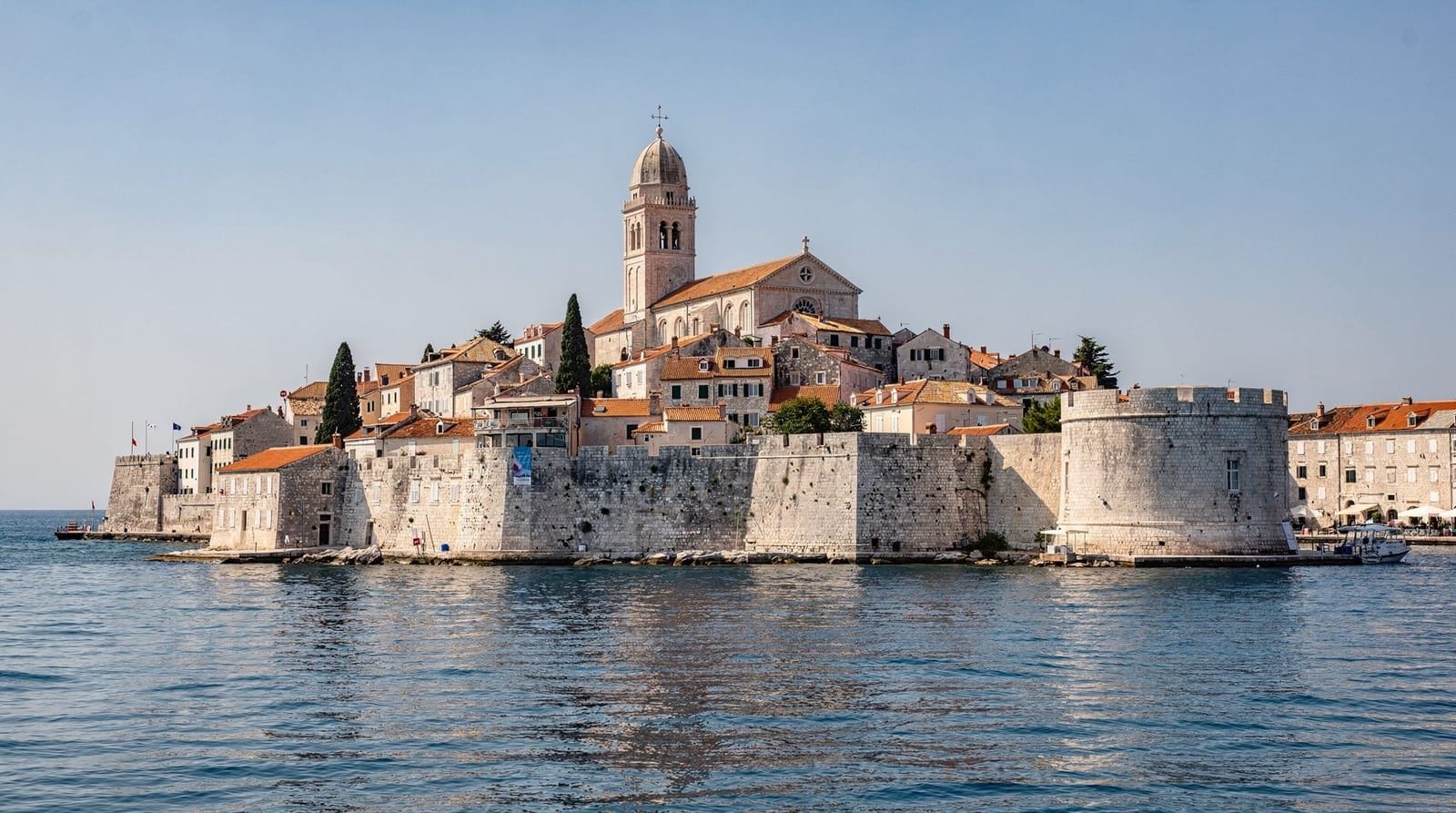
Island hopping 5-day itinerary from Split
Split: Boat Tour to Blue Cave, Vis, Blue Lagoon, Hvar, Brač
What island hopping from Split actually means
The phrase “island hopping” in Dalmatia covers a wide range of experiences — from 10-hour speedboat day tours that touch four islands in a day, to multi-day ferry routes staying one or two nights on each island. This itinerary does the latter: five days of genuine island immersion, moving by Jadrolinija ferry between Hvar, Brač, Vis, and Korčula.
The difference matters. A day tour gives you 45 minutes on each island. An overnight stay gives you the harbour at dusk, the morning when the day-trippers haven’t arrived yet, and the kind of slow afternoon that is the point of Dalmatia.
No car is needed. Jadrolinija ferries and catamarans connect all four islands to Split. See the full logistics section at the end.
Budget for two people, five nights: roughly €900–1,400 (mid-range accommodation on each island, meals, ferry tickets). September is 20–30% cheaper and significantly less crowded.
If five days isn’t in the schedule but you still want a taste of several islands, a single-day speedboat tour covers Vis, the Blue Cave, and the Hvar/Pakleni lagoon in one long day:
Blue Cave, Vis, Hvar and Pakleni Islands full-day speedboat tour| Islands | Hvar → Brač → Vis → Korčula, all by Jadrolinija ferry |
| Cost (2 people) | around €900–1,400 for 5 nights, mid-range |
| Getting around | No car needed — ferries and catamarans only |
| Best time | September for lighter crowds and better prices |
| Booking | Reserve accommodation and catamaran tickets ahead for July–August |
Day 1 — Split to Hvar: arrive and settle in
Morning ferry: 08:30
Jadrolinija catamaran from Split to Hvar town: 1 hour, €10–13. Take the catamaran to Hvar town (not the car ferry to Stari Grad — Stari Grad is 18 km from Hvar town with no easy local bus). Buy tickets at the ferry terminal or online at jadrolinija.hr.
Pack light for island hopping. Larger bags are manageable but become tedious on cobblestone streets. A medium backpack per person is ideal.
Hvar town: 10:00–13:00
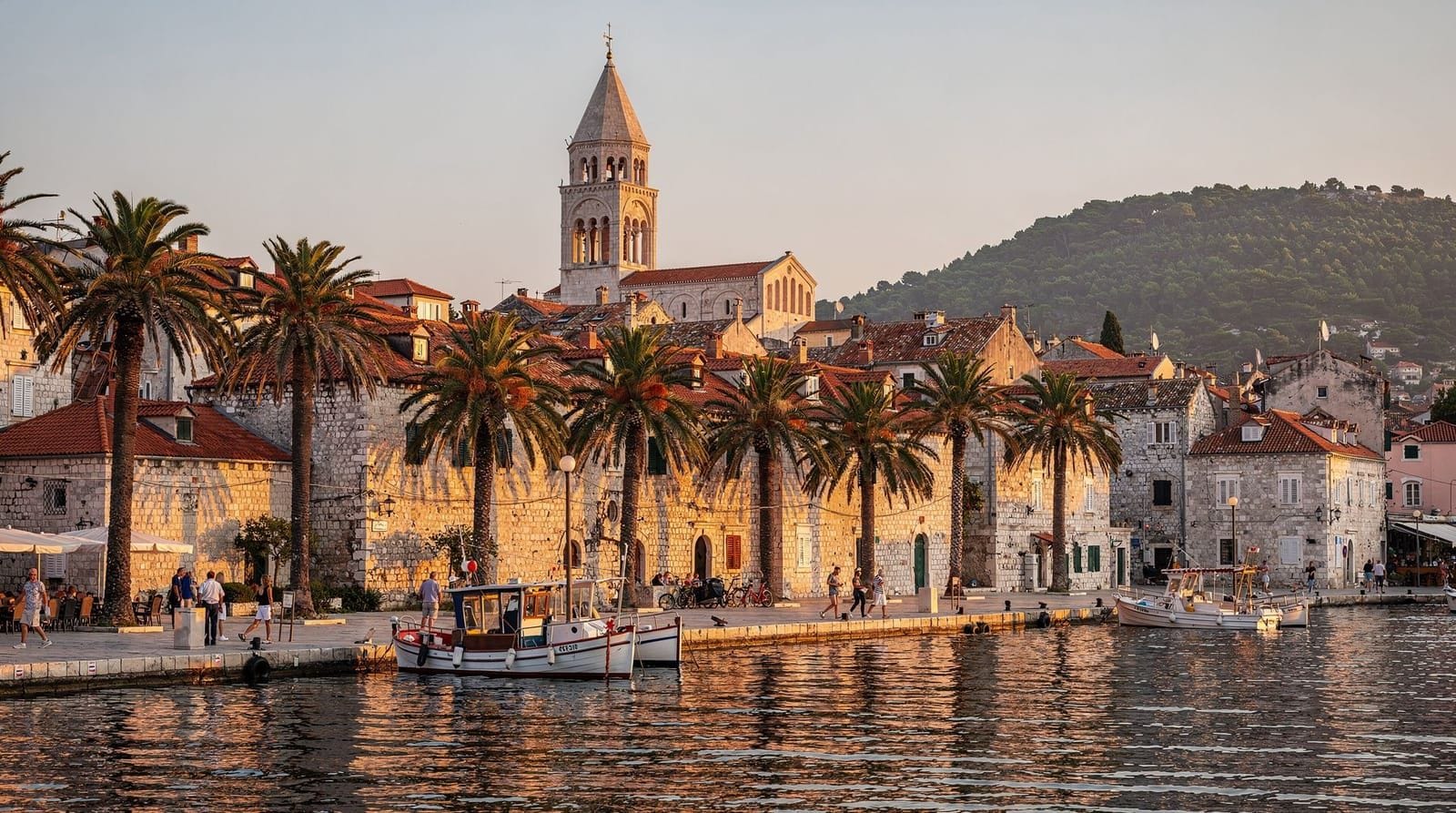
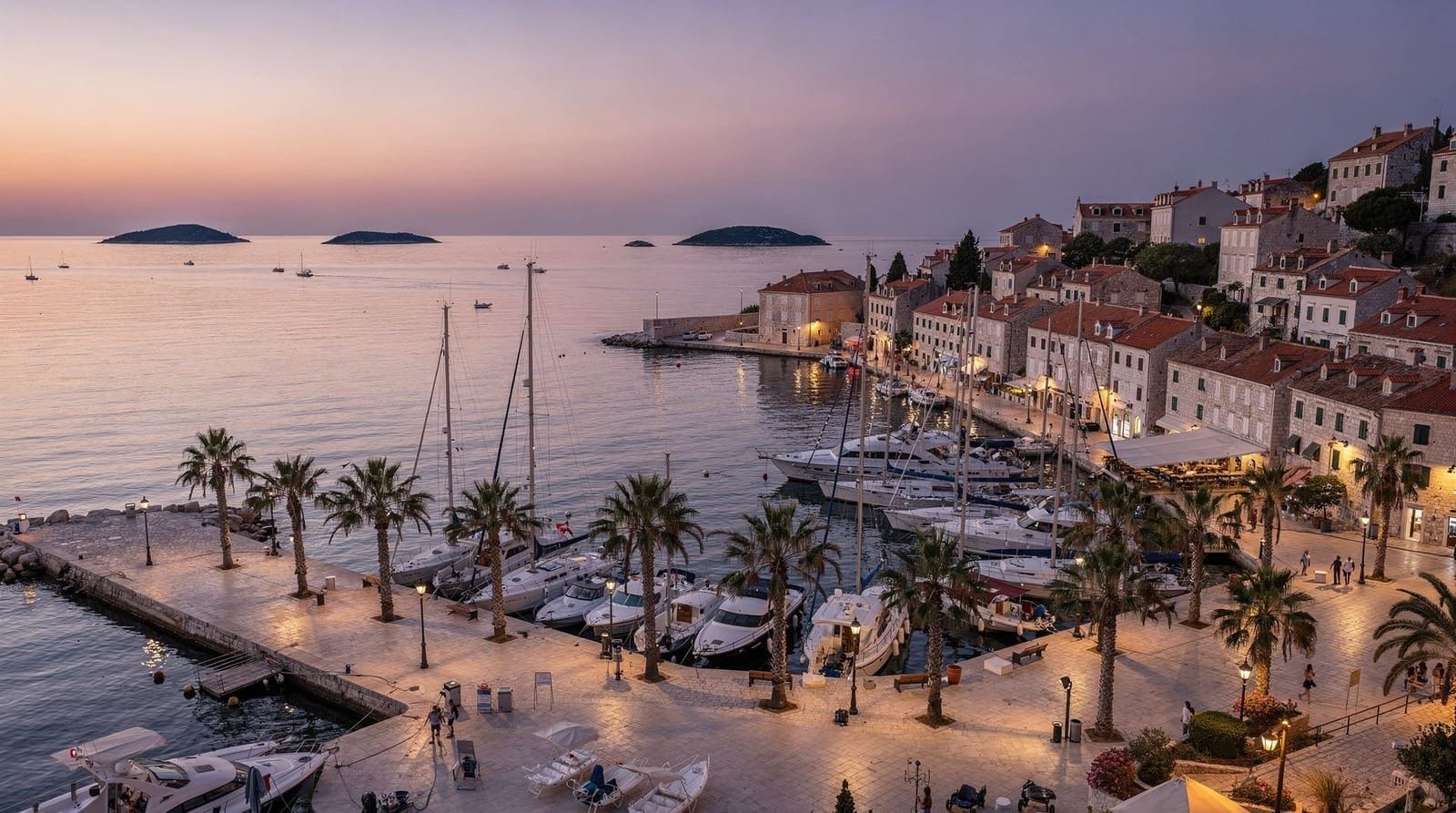
Hvar is Dalmatia’s most complete island town: Venetian loggia, Arsenal, main square (Trg Sv. Stjepana, largest piazza in Dalmatia), and the Fortica fortress (€10 entry) rising 90 m above the harbour. The fortress climb takes 45 minutes at a walking pace. The view from the top — Pakleni Islands scattered across turquoise water, the harbour below, limestone hills behind — is the defining image of Dalmatian island travel.
Afternoon: Pakleni Islands
Pakleni Islands are accessible by water taxi from Hvar harbour in 10–20 minutes (€3–6 one way per person). The pine-forested islets of Palmizana and Stipanska have clear swimming coves, and Palmizana has a small winery-restaurant for a longer lunch (€20–30 per head, not cheap but the terrace setting justifies it once). Water visibility in September is excellent — mask and snorkel are worth packing.
Evening: Hvar overnight
Stay in Hvar town. Options range from private apartments (€70–120/night in shoulder season) to boutique hotels (€120–180). The harbour area has Hvar’s nightlife — decent but not necessary to participate in. A simpler option: wine from the island’s cooperative shop (Hvar Pošip is an outstanding white), dinner at Giaxa restaurant on the upper streets of the old town, quiet walk back.
Day 2 — Hvar to Brač: Zlatni Rat beach
Morning ferry: 09:30
From Hvar, take the Jadrolinija ferry or catamaran to Supetar, Brač (check timetable — connections vary seasonally, sometimes via Split). Supetar to Bol (where Zlatni Rat is) requires a bus across the island: 45 minutes, approximately €4. Total travel: 2–3 hours depending on connections.
Alternatively, a speedboat day tour from Hvar covers Brač and Zlatni Rat more efficiently:
Split: Hvar, Brač, and Pakleni Cruise with Lunch and DrinksZlatni Rat: 11:30–16:00
Zlatni Rat (Golden Cape) is a 500 m pebble-and-shingle spit that extends into the Adriatic south of Bol village. The shape shifts slightly with currents. The water on both sides is turquoise and relatively shallow. Pine trees shade the landward section. This is Croatia’s most photographed beach and one of the most photographed in the Mediterranean — worth the journey.
What Zlatni Rat is not: a quiet, hidden cove. In July and August it is genuinely packed. September brings manageable crowds. Windsurfers use the beach for the afternoon maestral wind — the sight of sails against the limestone background is photogenic.
Bol village behind the beach has a 15th-century Dominican monastery on the promontory east of the spit. Brief visit (€3 entry) between swimming sessions.
Evening: Bol overnight
Bol has good accommodation: Hotel Elaphusa or several private apartments (€80–130/night). Dinner at Taverna Riva on the harbour for fresh grilled fish (€14–20 mains) — the fishermen who supply the restaurant are sometimes visible unloading nearby. Quieter evening than Hvar and more pleasant for it.
Day 3 — Brač to Vis: the farthest island
Morning ferry: 08:30
This is the logistical crux of the itinerary. There is no direct ferry from Brač to Vis. You’ll return to Split (car ferry from Supetar, 1 hour) and then take the Split–Vis ferry (2–3 hours). Total travel: 4–5 hours. Depart Bol early, catch the morning Supetar–Split ferry, then afternoon Split–Vis service. Check Jadrolinija timetables at jadrolinija.hr for the current season.
The slower pace of travel on Day 3 is not wasted: the Split–Vis ferry passes through open Adriatic with views of the entire island chain. Bring something to read, sit on the upper deck.
Vis: 14:00–18:00
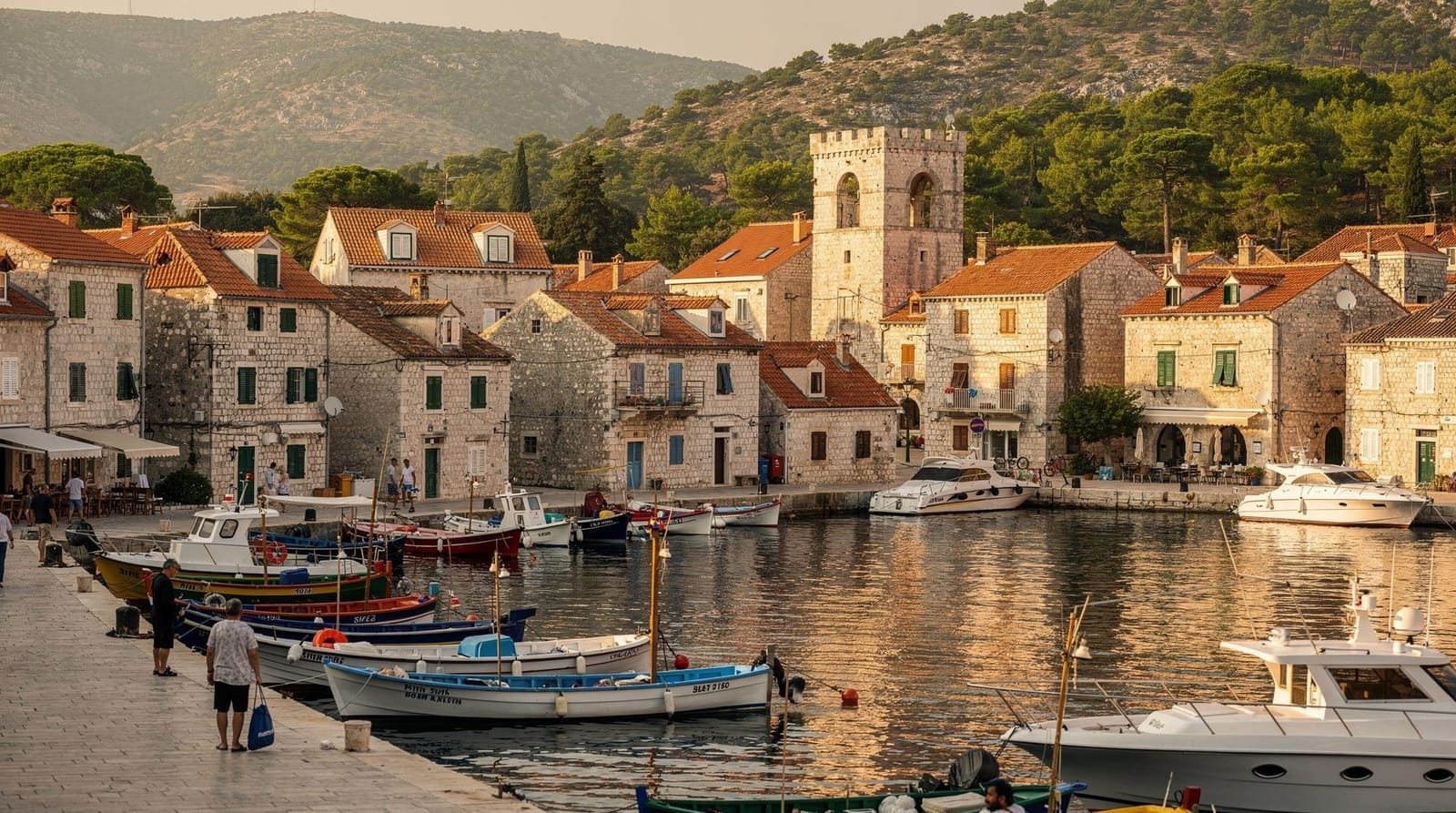
Vis is the island that rewards patience. It was closed to foreign visitors until 1989 (used as a Yugoslav military base), which left the island’s towns intact and its coastline largely undeveloped. Komiža, on the western side, is the fishing village where most visitors base themselves — small, walkable, with some of the best seafood restaurants in Dalmatia.
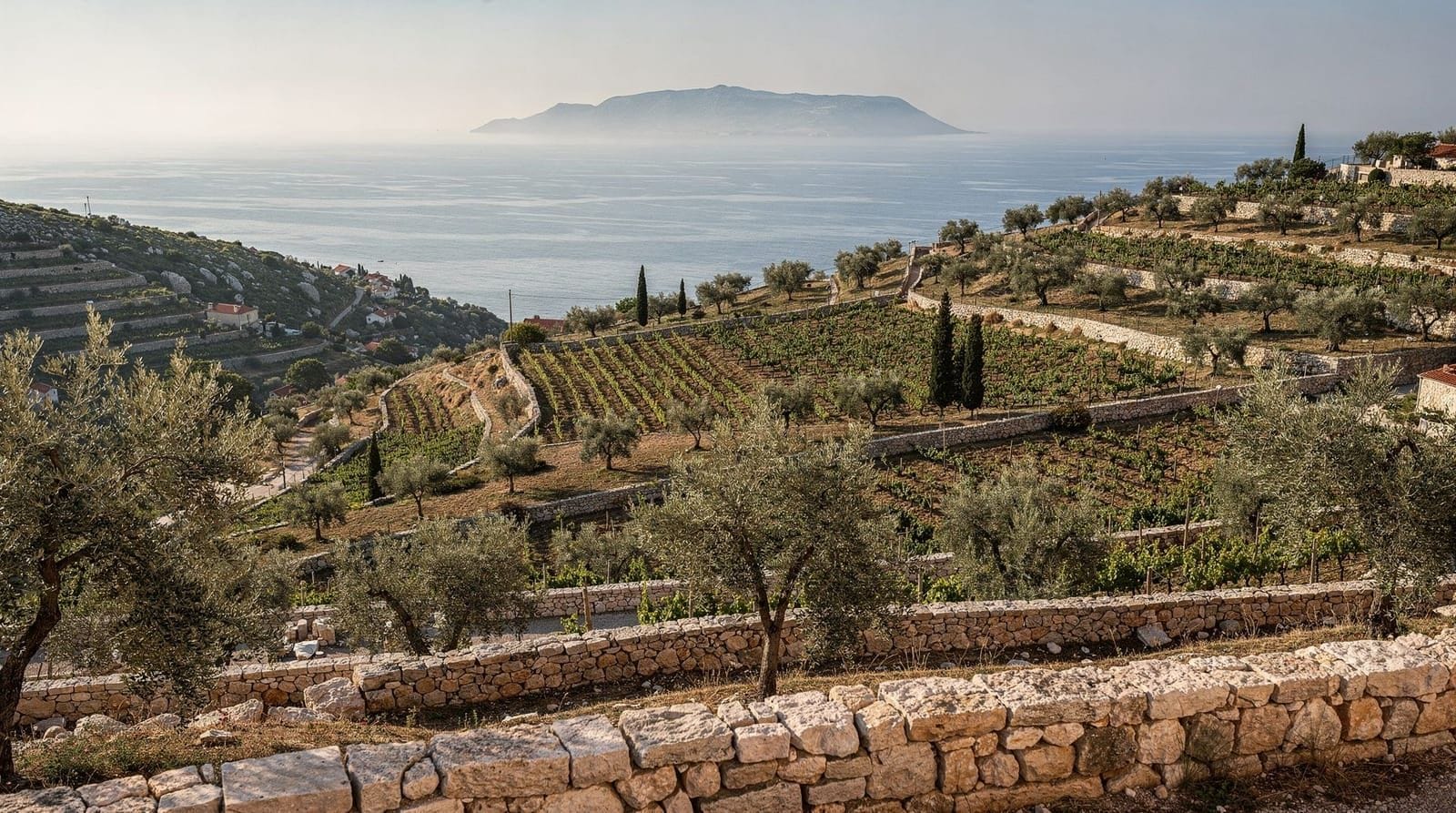
Vis town, on the eastern side (ferry arrival point), has Roman-era ruins (the theatre, bath complex) and a quiet British cemetery from the WWII period when the island served as Allied command post. The winemakers of Vis make the island’s Vugava white wine — a dry, mineral, distinctive white unique to the island.
Evening: Vis (Komiža) overnight
From Vis town ferry port, local bus or taxi to Komiža (10 km, €5–10 taxi). Accommodation in Komiža: private apartments from €70–100/night. Dinner at Konoba Bako — the island’s most respected restaurant for local fish, octopus, and sea-bream. Book ahead; the restaurant fills even in shoulder season.
Day 4 — Vis: Blue Cave and Stiniva Bay
Morning: Blue Cave (Modra spilja)
The Blue Cave on Biševo island, 5 km from Komiža, is one of Dalmatia’s signature experiences. Boat taxis from Komiža harbour run to Biševo (€5–8 one way); the cave entry itself costs €18–24 per adult depending on the season and is administered by concession operators. Visits are only possible when sea conditions are calm (the entrance is a low arch 1.5 m above water) and during the 10:00–12:30 window when sunlight angle creates the blue glow. Go in the morning.
The speedboat day tour that combines both Blue Cave and Vis is available from Split, but since you’re already on Vis, a local Komiža boat operator is the practical option.
Split: Blue Cave, Vis & Hvar Full-Day Trip by SpeedboatAfternoon: Stiniva Bay
Stiniva is a cove enclosed by limestone cliffs that nearly close into an arch — one of the most photographed beaches in Croatia. Access by water taxi from Komiža (€10–15 return, 20 minutes) or by a 45-minute hike down from the clifftop road (steeper return). The beach is gravel; the swimming between the cliff walls is exceptional. Bring water and snacks — no facilities at the cove itself.
Stiniva gets crowded between 11:00 and 14:00 in high season when day boats arrive. Arriving by 10:00 or after 15:00 (when boats leave) gives you the best experience. In September, crowds are manageable throughout the day.
Evening: Komiža
Sunset from Komiža’s Venetian tower (free, always open) looks west over Biševo and the open Adriatic. Dinner at Konoba Jastožera, another Komiža institution — specialising in lobster (jastog) if you want the local delicacy at approximately €35–50 per portion, or standard fish at more accessible prices.
Day 5 — Vis to Korčula and return to Split
Morning ferry: Vis to Korčula
Jadrolinija runs a ferry from Vis (Vis town) to Vela Luka, western Korčula approximately once daily. Journey: 1.5–2 hours. From Vela Luka, bus to Korčula town: 45 minutes, €3.
Korčula town: 13:00–17:00
Korčula old town is a near-perfectly preserved medieval walled town on a small peninsula. The fishbone street layout (streets angled to manage the bura wind from the north) is unique in Dalmatia. Cathedral of Saint Mark, the Moreška sword dance (performed Thursdays in summer — theatrical but genuinely old), and the Marco Polo house (disputed birthplace; €5 entry) occupy a few hours.
The wine is the real reason to visit Korčula: Grk and Pošip whites from the island are among Croatia’s most distinctive varieties. Stop at Toreta winery in Smokvica village (15 km east of Korčula town, requires taxi or bicycle) for a tasting, or ask your accommodation to arrange a bottle of local wine for the evening.
Return to Split: 18:00
Jadrolinija catamaran or fast boat Korčula–Split: approximately 3 hours. Arrive Split around 21:00–22:00 depending on timetable.
Or: if your flights depart from Dubrovnik (a common configuration for Dalmatia loops), take the Korčula–Dubrovnik connection instead. See the island hopping guide for route permutations.
Island hopping logistics
Ferry operator: Jadrolinija (jadrolinija.hr) operates all island ferries and catamarans. In July–August, book online at least 48 hours in advance, particularly for catamarans. In May and September, walk-on is usually possible.
Ferry types: car ferries (slower, cheaper, run year-round) versus catamarans/fast boats (faster, foot passengers only, seasonal). For island hopping without a car, catamarans are preferable.
Timetables: change between summer (June–September) and low season. Always verify the current timetable before planning a connection — do not rely on previous-year timetables.
What to pack: carry-on size bag only if possible. Ferry terminals have luggage storage (Split main terminal: €4–5/day), but accessing it mid-hop adds complexity. One medium backpack per person is the right format for this itinerary.
Accommodation booking: book all island nights in advance for July–August. September availability is better but popular places still fill two to three weeks ahead.
For a complete guide to ferry logistics, see ferries and catamarans to the islands.
Which island to cut if you only have 4 days
Day 3 (Brač to Vis) is the longest and most logistically demanding leg of this route — there’s no direct ferry, so you double back through Split. If a day is tight, the cleanest cut is Brač: go Split → Hvar → Vis → Korčula → Split instead, and see Zlatni Rat another time via the Brač and Bol Zlatni Rat guide as a standalone day trip. If Vis is the one you’d rather drop, the Hvar vs Brač vs Vis guide walks through what each island offers so you can weigh the trade-off before committing.
Eating well on four different islands
Each island has its own specialities worth seeking out rather than defaulting to the nearest harbour-view restaurant, which is usually the most expensive and least memorable option. On Hvar, the upper old-town konobas (away from the harbour) serve better value than the waterfront. On Brač, Bol’s fishing-family-run tavernas are worth the short walk from the beach. Vis has arguably the best seafood of the four islands — Komiža’s restaurants source directly from local boats, and the island’s Vugava white wine is worth pairing with it. Korčula’s Grk and Pošip wines are the standout, and a bottle from a Smokvica producer is a good souvenir to bring home. For a broader take on eating around the region, see the Dalmatian food guide and the konoba culture diary entry.
Frequently asked questions about island hopping from Split
Which Dalmatian islands are best for island hopping?
Hvar (architecture, Pakleni Islands, nightlife), Vis (seclusion, Blue Cave, Stiniva), Korčula (walled town, wine), and Brač (Zlatni Rat beach) are the four pillars. Šolta is closer to Split and calmer. Which island is right for you depends on your priorities — that guide maps islands to travel styles.
How do I get from island to island without a car?
Jadrolinija ferries and catamarans connect Split to each island. Direct inter-island connections are less frequent — the Vis–Korčula route runs once daily; Hvar–Brač often requires going via Split or using a private water taxi. Plan connections a day ahead and verify timetables at jadrolinija.hr.
Is it better to do day tours or overnight stays?
Overnight stays give a fundamentally different experience: the islands in the morning before day boats arrive, restaurants not overwhelmed at 13:00, and the pace of actually living on an island for a night. Day tours are efficient but superficial. For 5 days, overnight stays are worth the logistical effort.
Can I do island hopping in 3 days from Split?
Three days works if you limit to two islands — Hvar and Brač, or Hvar and Vis. Vis in 3 days requires careful planning (the ferry is 2.5–3 hours each way). The 3-day Split itinerary focuses on the city and Krka rather than islands; islands need at least 4–5 days to do properly.
What is the best month for Dalmatian island hopping?
September is the best month: sea temperature 23–24°C (warmer than early June), crowds 30–40% lighter than August, and accommodation 20–30% cheaper. May has excellent weather but sea around 19°C. July–August is high season: reliable weather, busiest crowds, highest prices. Read best time to visit Split.
How much does 5 days of island hopping cost?
At mid-range: roughly €150–200 per person per day (accommodation, meals, ferries, occasional tours or water taxis, entry fees). In September, the same trip runs €100–140/person/day. The Blue Cave entry (€18–24) and water taxis add up — budget €30–50 per person for local boat transport across the 5 days.
Do I need to book Jadrolinija ferries in advance?
For July and August, yes — book online at jadrolinija.hr at least 48 hours ahead, especially for catamarans on the Split–Hvar and Vis–Korčula legs. In May, June, and September, walk-on tickets are usually available, though it’s still worth checking the timetable the evening before each ferry day since availability tightens on short notice.
Which island has the best beaches for this route?
Brač’s Zlatni Rat is the headline beach and worth the detour even though it adds the trickiest ferry connection of the trip (Day 3). Vis’s Stiniva Bay is the more dramatic, cliff-enclosed alternative, and quieter outside the 11:00–14:00 day-boat window. Hvar’s Pakleni Islands offer the calmest, most swimmable coves of the four. See the best beaches near Split guide for the wider comparison.
Top experiences
Bookable activities with verified prices and instant confirmation on GetYourGuide.