Split, Dubrovnik and Mostar 7-day itinerary
From Split: Mostar and Kravice Waterfalls Tour
Duration: 12 hours
Split to Dubrovnik via Korčula and Bosnia
The most popular 7-day route in Dalmatia covers three distinct places: Croatia’s best city (Split), Croatia’s most famous city (Dubrovnik), and the Bosnian highlight of Mostar — with an island stop on Korčula in between. This is a genuine multi-country itinerary that uses Split as the starting point and Dubrovnik as the endpoint (or a long day trip from Split and back, if you prefer a fixed base).
The route south from Split to Dubrovnik is approximately 210 km by coastal road, passing through Makarska, then crossing the 9 km Neum corridor (Bosnia and Herzegovina, Schengen passports required — no visa, minimal formality) before re-entering Croatia for the final stretch to Dubrovnik. Mostar is 2 hours inland from Split, or 2 hours from Dubrovnik.
A rental car makes this route significantly more flexible, particularly for the Korčula island approach and the Pelješac peninsula wine region. Car-free alternatives exist but involve more coordination.
Budget for two people, seven nights: roughly €1,400–2,200 depending on accommodation choices and whether you overnight in Dubrovnik (expensive) versus treating it as a day trip from Split.
If a fixed Split base and no overnight moves suit your schedule better, Dubrovnik can be done as a long guided day trip instead of the Korčula-and-overnight route below:
Dubrovnik guided day trip from Split| Route | Split → Korčula → Dubrovnik → Mostar/Kravica → Split |
| Cost (2 people, 7 nights) | around €1,400–2,200, mid-range |
| Getting around | Rental car recommended; ferry/bus alternatives exist |
| Border crossing | Neum corridor (Bosnia, 9 km) or Pelješac Bridge |
| Best time | September for cooler driving and shorter Dubrovnik queues |
Day 1 — Arrive in Split
Arrival and orientation
Split Airport (SPU) to city centre: Pleso shuttle (€8, 30–40 min) or taxi (€25–40). Check into your Split accommodation and spend the afternoon in Diocletian’s Palace — the Roman-era old town that forms the centre of Split.
The Peristyle courtyard, Cathedral of Saint Domnius bell tower (€3), and basement halls (€10) give the essential orientation. A guided small-group tour of the palace adds historical depth, particularly useful before a week of heritage sites:
Split: Krka National Park Day Trip with Boat Ride & SwimmingNo — that GYG key is for Krka. Rather, focus the first evening on walking the palace without a tour: enter through the Golden Gate, loop through the basement, exit onto the Riva, and head to Varoš neighbourhood for dinner.
Evening: Varoš neighbourhood
Konoba Fetivi or Matoni for grilled fish and Dalmatian wine (€12–18 mains, €4–6 for local wine). Reserve ahead for summer.
Day 2 — Krka National Park day trip
Departure: 08:00
Krka National Park day trip from Split — the best waterfall day trip from the city before heading south. Organised tours (€50–70, includes transport and boat) depart at 08:00–09:00.
Split: Krka National Park Day Trip with Boat Ride & SwimmingThe Skradinski Buk waterfall boardwalk (1.5 hours, flat, accessible), swimming in designated zones, and optional Visovac monastery boat (€15 extra) fill the park time. Return to Split by 17:30–18:00.
Evening in Split
Final Split evening before heading south. The Bačvice waterfront promenade at dusk gives good views over the Adriatic and toward the islands you’ll pass on the ferry south. Dinner near the old town.
Day 3 — Split to Korčula: ferry south
Option A: car renters — coastal drive to Orebić, ferry to Korčula
Drive south from Split on the coastal road through Makarska (1.5 hours, with possible coffee stop at Brela — small beach village worth 20 minutes). Continue south to Orebić on the Pelješac Peninsula. Ferry from Orebić to Korčula town: 15 minutes, €3 per person plus €10 for the car. Total driving: approximately 2.5–3 hours.
Option B: no car — Jadrolinija ferry Split to Korčula
Jadrolinija runs Split–Korčula connections (sometimes direct, sometimes via Hvar) with journey time approximately 3 hours. Check current timetable at jadrolinija.hr — services vary by season.
Korčula town: afternoon
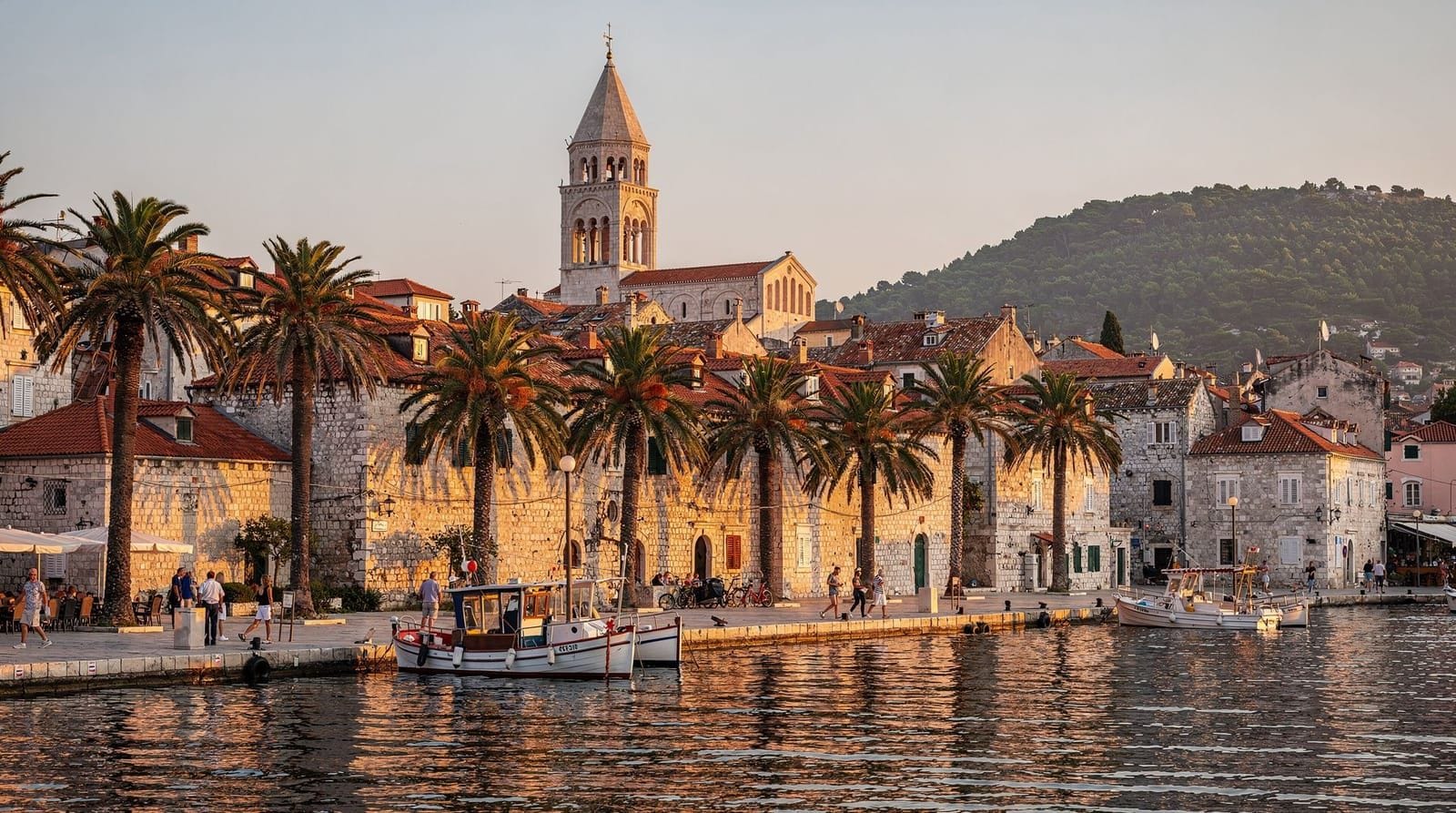
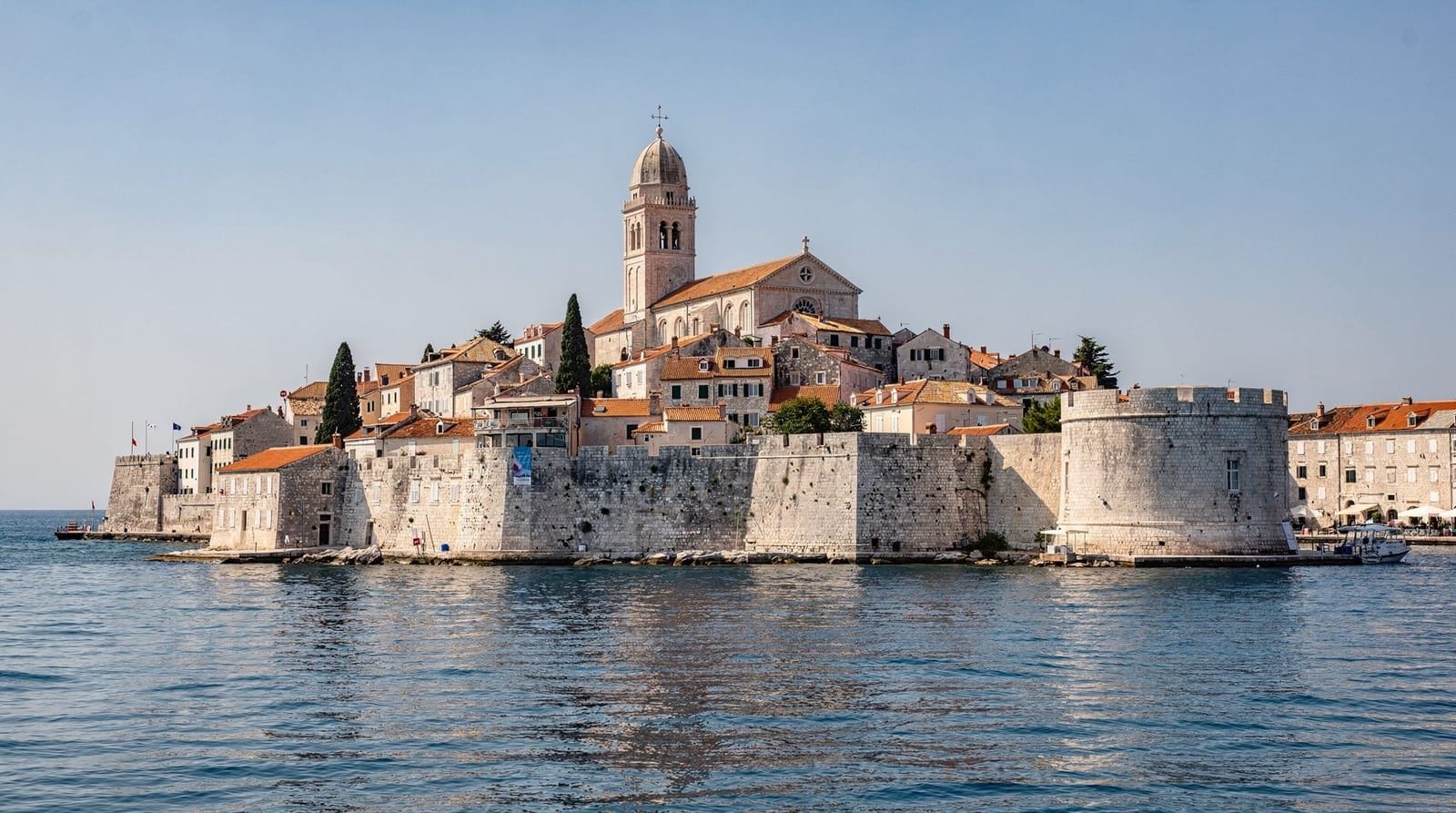
Korčula old town on its peninsula is one of the best-preserved walled towns in the Adriatic — arguably more architecturally coherent than Dubrovnik (the earthquake of 1667 didn’t reach Korčula). The Cathedral of Saint Mark (Romanesque-Gothic, 15th century), the Treasury, and the Marco Polo house (claimed birthplace; €5 entry with small museum) occupy an afternoon.
The town’s white wine (Pošip, Grk) is genuinely excellent. Stop at the Wine Corner bar in the old town for a tasting (€5–10 per glass, premium bottles available to take).
Evening: Korčula overnight
Accommodation: Lešić Dimitri Palace (boutique, expensive but remarkable) or standard mid-range apartment (€80–120/night in September, higher in August). Dinner at Konoba Maslina for crni rižot (black risotto) and grilled fish at honest Korčula prices (€14–18 mains).
Day 4 — Korčula to Dubrovnik
Morning: Pelješac Peninsula wine road
If you have a car, drive back across to the Pelješac Peninsula — one of Croatia’s two main red wine regions (Dingač and Postup designations). The Grgić or Miloš wineries near Potomje accept visitors with advance booking (email ahead; tasting €10–20 per person, spectacular views). The drive along the peninsula is scenic: steep limestone hillsides, pine forests, and glimpses of the sea below.
If no car: direct ferry/boat connections Korčula–Dubrovnik run in summer (check seasonal availability), or return to Split by ferry and travel south by bus to Dubrovnik (3 hours, €15–20 one way).
Arrive Dubrovnik: afternoon
Dubrovnik is the most crowded destination on this route. Park outside the Old City walls (parking areas at Ilijina Glavica or Porporela, €5–8/day) — no cars inside the walls. The most practical approach to Dubrovnik is an early morning start the next day for the city walls, then an afternoon beach.
Overnight in Dubrovnik: accommodation note
Dubrovnik accommodation is significantly more expensive than Split or Korčula. Mid-range hotels in the old town cost €150–300/night in peak season, €100–200 in September. Budget travellers often stay in the Lapad peninsula (20–30 minutes by bus) or Ploče area, saving 30–50% over old-town pricing. Booking months in advance is required for July–August.
Day 5 — Dubrovnik in full
Early morning: City Walls walk — 08:00
The city walls circuit (2 km, approximately 1.5–2 hours) is Dubrovnik’s signature experience. Open from 08:00; gates at the Pile entrance and Ploče entrance. Entry: €35 in peak season (one of the more expensive heritage entries in Croatia). Start at 08:00 to see the walls before cruise ship passengers arrive — the number of visitors changes dramatically between 08:30 and 10:30.
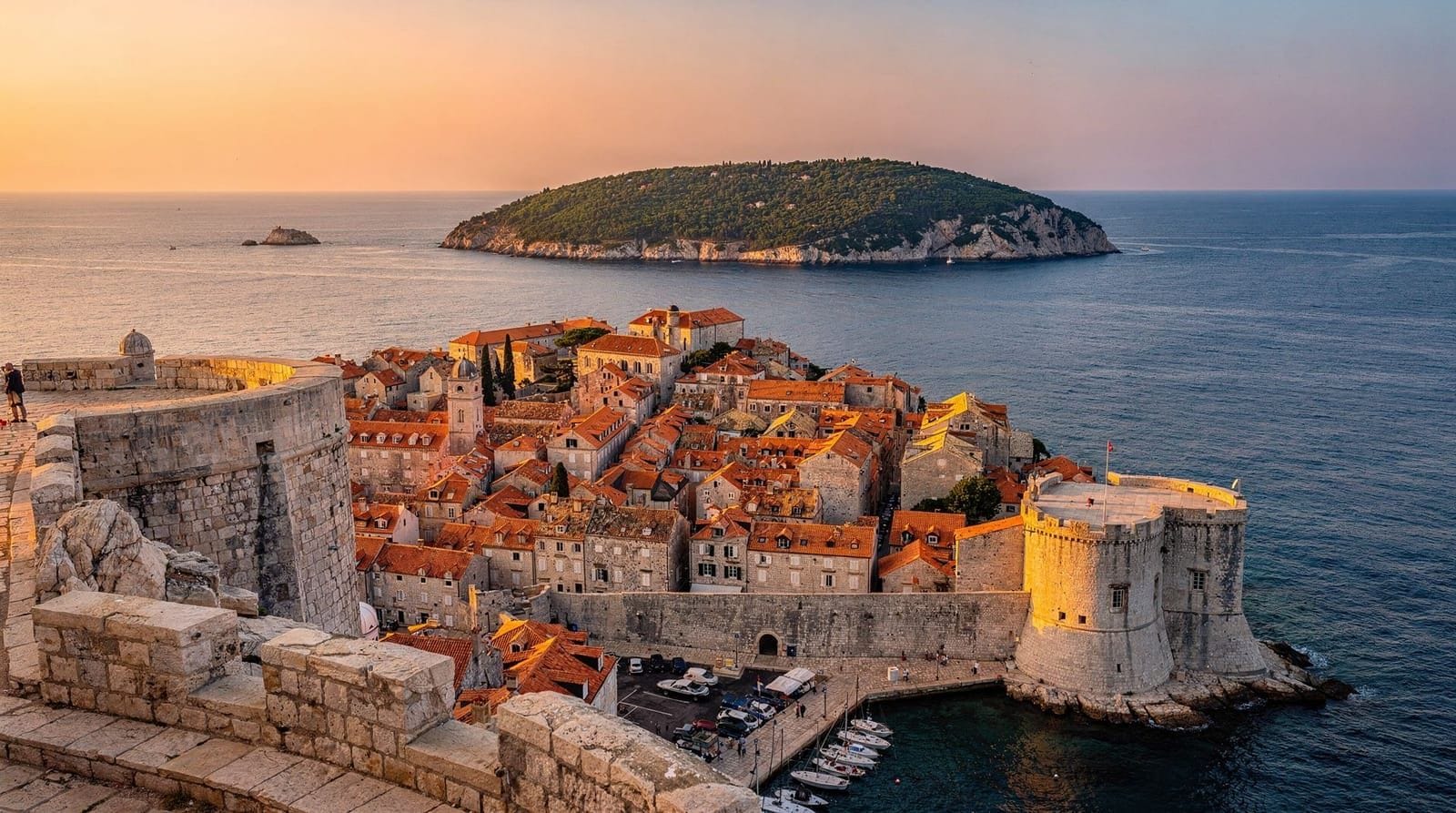
The view from the walls over the orange roofscape and the Adriatic is legitimate, not tourist-brochure exaggeration. Fort Lovrijenac (included in the wall ticket) is visible from the walls and accessible from the Pile Gate — Game of Thrones fans recognise it as the Red Keep.
Mid-morning: Stradun and old town
The Stradun (main limestone boulevard) was rebuilt after the 1667 earthquake; the façades are largely 17th-century Baroque but the footprint follows the medieval plan. The Rector’s Palace (€10 entry) and Sponza Palace (free to enter the atrium) add historical depth. The Dominican monastery at the eastern end of the Stradun has a cloister and a small museum containing a Titian painting — understated and worth the €3 entry.
Afternoon: Lokrum Island
Ferry from Old Harbour to Lokrum island (€15 return, runs summer only, check seasonal availability). Lokrum has botanical gardens, resident peacocks, and a ruined Benedictine monastery. GoT fans recognise the Throne of Swords replica and the scenes filmed in the monastery garden. Swimming from the rocks on the eastern side of the island in September — when the water is 23–24°C and the day boats thinning — is excellent.
Evening: dinner in the old town
The old town restaurants at dinner are generally overpriced (tourist premium), but Proto (in the old town, mid-century institution) is legitimate and has served decent fish since 1886. Expect €25–35 per main. Alternatively, a taxi to Lapad peninsula (15 minutes) accesses a range of better-value restaurants serving locals.
Day 6 — Mostar and Kravica Waterfalls
Departure: 08:30
From Dubrovnik or Split, an organised day tour to Mostar and Kravica Waterfalls covers both in a single day (10–12 hours total). From Split, the tour adds a ferry/drive component; from Dubrovnik, it’s approximately 2.5 hours to Mostar.
From Split: Mostar and Kravice Waterfalls TourMostar: 10:30–14:00
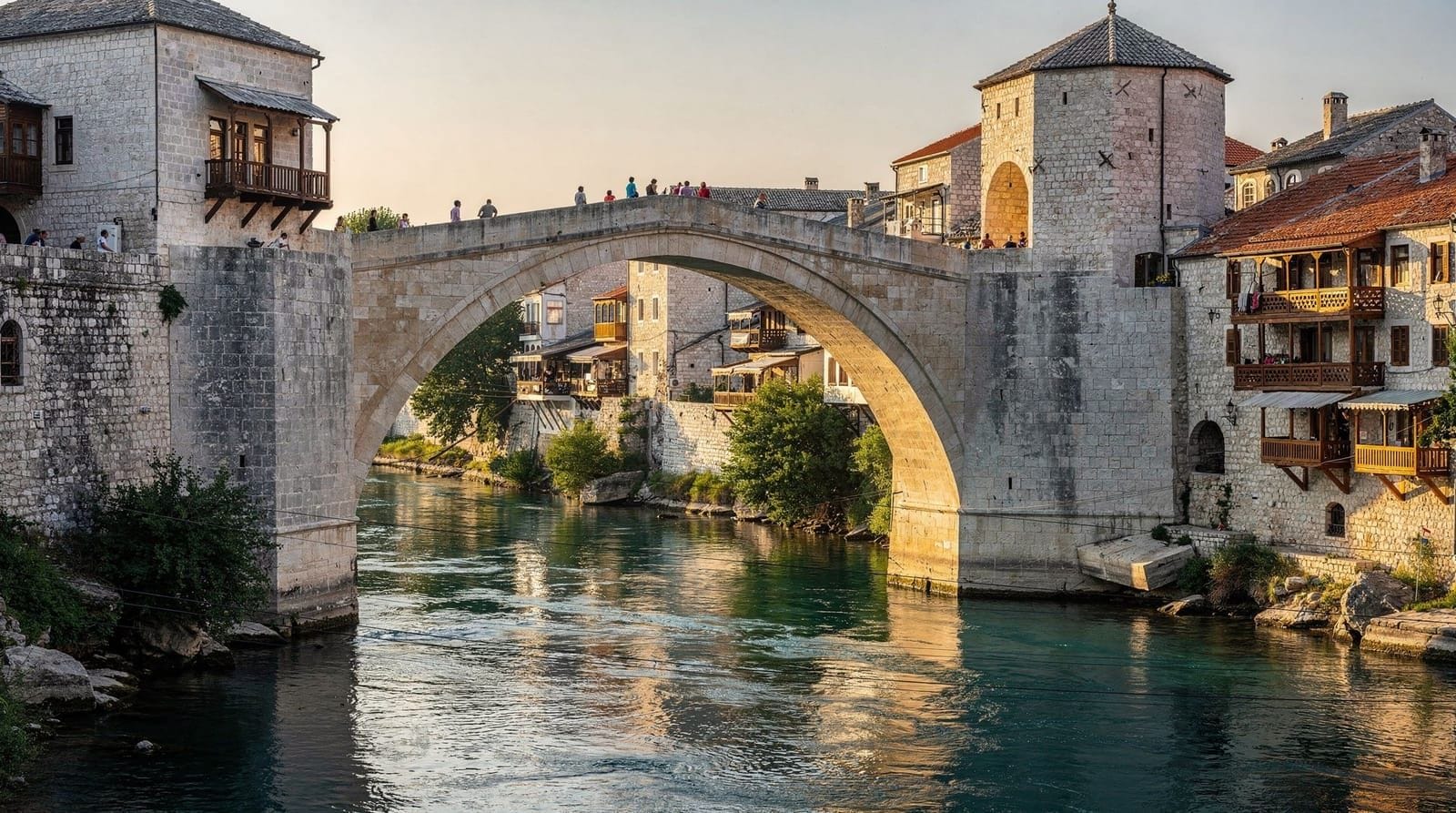
Mostar is the Bosnian Herzegovinian city most visited by Adriatic tourists — famous for the Stari Most (Old Bridge) rebuilt in 2004 after the 1993 wartime destruction. The bridge is a UNESCO World Heritage Site; the divers who jump from it (25 m into the Neretva River) charge a voluntary donation and perform throughout the day.
The old bazaar (Kujundžiluk) behind the bridge sells Turkish-influenced craft goods, copperware, and carpets. The food is genuinely different from Croatian: burek (flaky meat pastry, €2–3), cevapi (minced meat sausages in flatbread, €5–7), and Bosnian coffee (thick, served in a džezva with sugar cubes, €1.50). Have lunch here rather than in the tourist restaurants on the bridge plaza.
Kravica Waterfalls: 15:00–17:00
Kravica is a 28 m waterfall forming a 120 m horseshoe of cascades — turquoise pool below, dense vegetation behind. Swimming is the main activity; entry to the swimming area costs €5–8 per person. In summer the pool can be crowded; in September the crowds have thinned significantly. The 90-minute drive from Mostar on mountain roads is part of the experience.
Return: 19:00–20:00
Back to Split or Dubrovnik depending on your overnight base for this night.
Day 7 — Return to Split and depart
Drive or ferry back to Split
From Dubrovnik: 3-hour drive north on the coastal road (via the Neum corridor, passport ready) or 3-hour bus (€15–20, regular departures). From Korčula: see Day 3 logistics in reverse.
Final Split morning
The Pazar market (Silver Gate, morning until 13:00) is the best souvenir stop: local olive oil, dried figs from Brač, Hvar lavender, and prosciutto from the hinterland. Prices at the market are significantly better than tourist shops on the Riva.
Airport shuttle from Split main terminal (€8, 30–40 min).
Logistics: key decisions for this route
Car or no car: a car makes the Pelješac Peninsula and the Dubrovnik–Mostar–Split connection significantly easier. Without a car, all legs are doable by ferry and bus but require more careful timetable coordination. See car vs no car in Dalmatia.
Neum corridor: the 9 km section of Bosnia on the Split–Dubrovnik coastal road requires a passport at both border crossings (Croatian exit, Bosnian entry, Bosnian exit, Croatian entry). For Schengen citizens, formalities take 5–15 minutes. Queue in peak season can add 30–45 minutes; plan accordingly. The Pelješac Bridge (opened 2022) bypasses Neum entirely — it’s the preferred route if your GPS takes you via the Pelješac Peninsula north of the bridge.
Mostar currency: Bosnia uses the Bosnian mark (BAM, approximately €0.51 per BAM). Credit cards are accepted in most restaurants and shops but small cash is useful for markets and the Kravica entry.
Deciding where to overnight: Split, Korčula, or Dubrovnik base
This route has more overnight-base decisions packed into seven days than most Dalmatia itineraries, and getting them right matters for both budget and pace. Korčula (Day 3) is worth the overnight rather than a rushed afternoon stop — the town is genuinely different after the day-trip crowds leave. Dubrovnik is the expensive night; if budget matters more than convenience, treating it as a long day trip from a fixed Split base (see the guided day trip option above) saves significantly, though it means less time at a relaxed pace inside the walls. Mostar and Kravica work equally well as a day trip from either Dubrovnik or Split — pick whichever end of the route you’re closer to on Day 6.
What this route skips, and whether that matters
Seven days across three countries’ worth of sights means islands beyond Korčula (Hvar, Vis, Brač) don’t fit. If island time matters more to you than Mostar, the Split 7-day coast itinerary swaps Bosnia for Hvar and Brač instead. If you want both the islands and this route’s full scope, the 10-day Dalmatia itinerary is the longer version that fits more in without the same daily pressure.
Frequently asked questions about Split, Dubrovnik, and Mostar
Should I do Mostar as a day trip from Split or Dubrovnik?
Dubrovnik is closer to Mostar (2.5 hours vs 3 hours from Split) and the combination with Kravica Waterfalls makes a logical day. The organised tour from Split covers both Mostar and Kravica in a long day (10–12 hours) which is worthwhile but tiring. See the Mostar and Kravica day trip guide for detail.
Is Dubrovnik worth visiting on this route?
Yes, but manage expectations. Dubrovnik is genuinely beautiful — the city walls are among the best in Europe. It is also genuinely overcrowded in July–August when cruise ships disgorge 10,000+ visitors per day. September is significantly better. Book the walls walk at 08:00 opening to avoid the worst crowds.
Is Korčula worth a night on this route?
Yes. Korčula old town is underseen compared to Dubrovnik and offers a more intimate version of the Venetian Adriatic town experience. It also breaks the Split–Dubrovnik drive into manageable sections. The local wine (Pošip, Grk) alone justifies a night.
How long does it take to get from Split to Dubrovnik?
By car: 2.5–3 hours via the coastal road and Neum corridor, or 3–3.5 hours via the Pelješac Bridge (longer route but avoids the border crossing). By bus: approximately 3 hours. By organised tour: 3.5 hours. See Split to Dubrovnik transport.
Do I need a visa for Bosnia (Mostar)?
UK, EU, US, Canadian, and Australian passport holders do not need a visa for Bosnia and Herzegovina for stays up to 90 days. You do need your passport at the border (a national ID card may work for EU citizens — check current rules). Croatia’s Schengen membership since 2023 does not cover Bosnia.
What is the best time for this 7-day route?
September is the sweet spot: comfortable driving temperatures, shorter queues at Dubrovnik walls, Kravica Waterfalls at their most photogenic level, and Mostar without the peak summer heat (July–August temperatures in the Neretva valley reach 38–40°C). See best time to visit Split.
Can I do this route without a rental car?
Yes, but expect more coordination. Jadrolinija ferries cover Split–Korčula and buses cover Korčula–Dubrovnik and Dubrovnik–Split, while organised tours handle the Mostar and Kravica day. It’s entirely doable car-free; you’ll simply follow published timetables more closely than a car-based version of this route. See car vs no car in Dalmatia for the trade-offs.
Is seven days enough for Split, Dubrovnik, and Mostar together?
Yes, at the pace laid out here, though it’s a fuller week than a Split-only itinerary. If you’d rather slow down, cut the Krka day (Day 2) — it’s the one day that could be skipped without weakening the Split–Korčula–Dubrovnik–Mostar arc, since Krka is also covered on shorter Split-based itineraries you can save for a future trip.
Top experiences
Bookable activities with verified prices and instant confirmation on GetYourGuide.