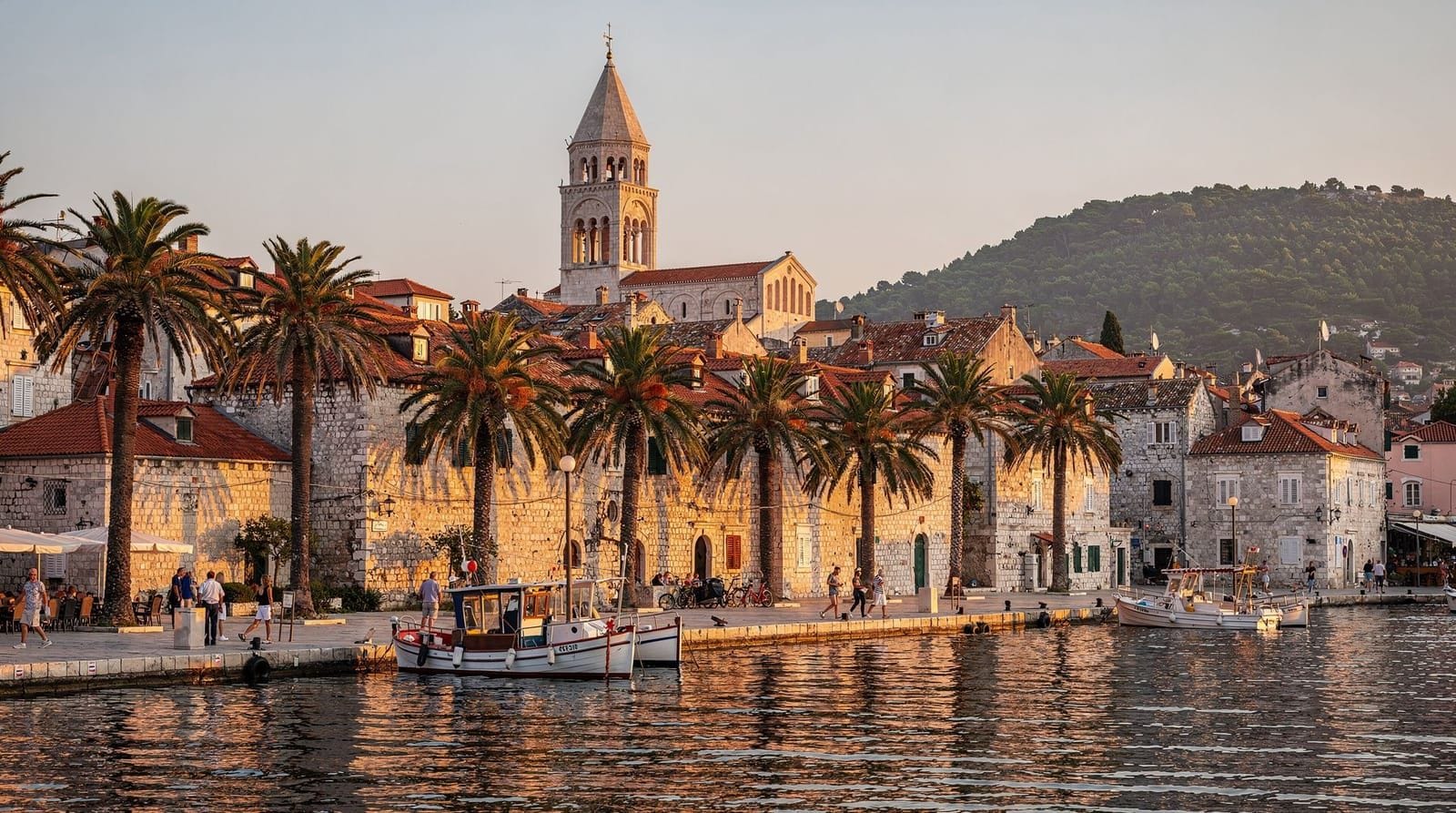
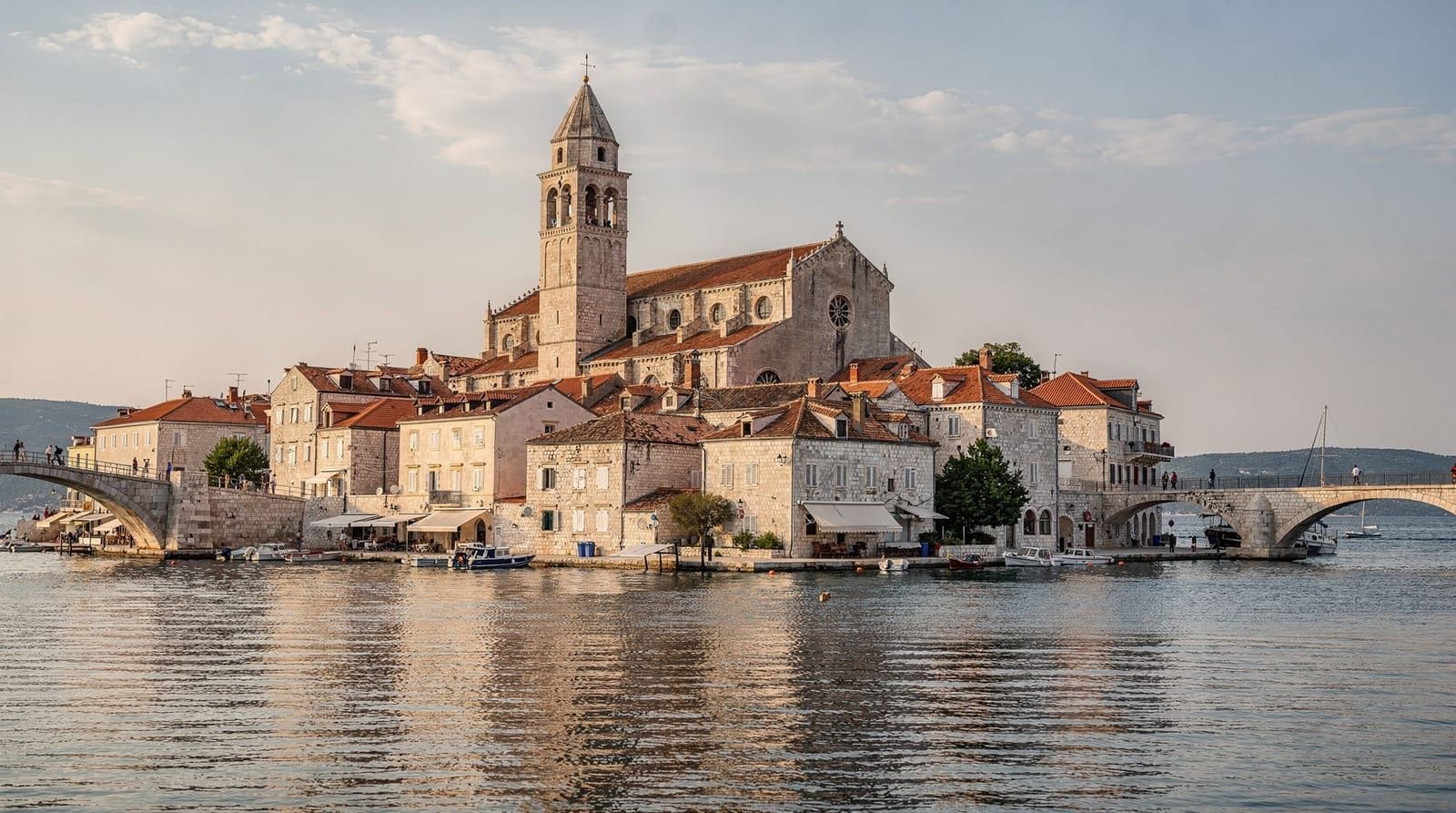
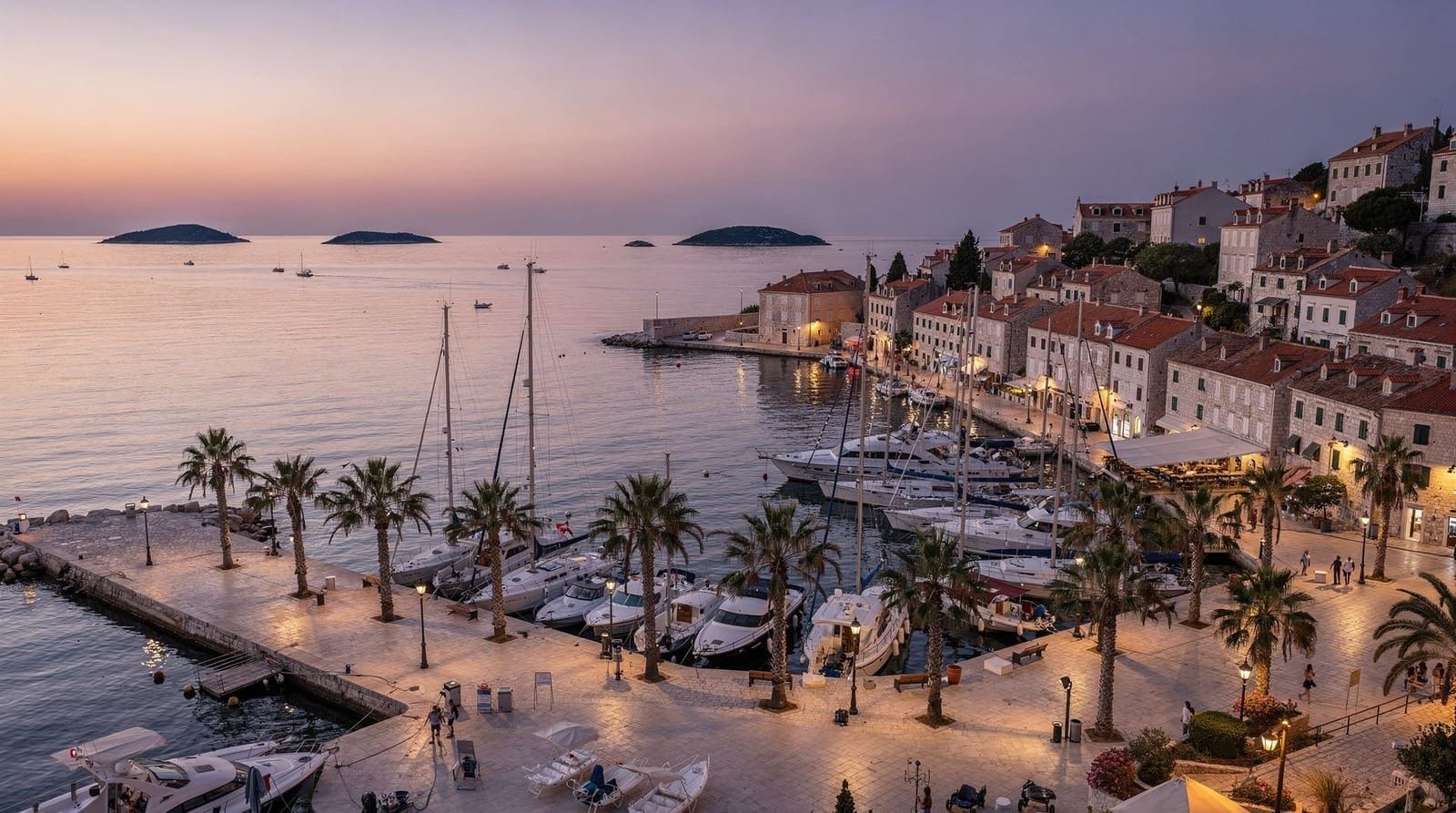
Split food and wine 4-day itinerary
Split: Small Group Food Tour with Private Option
Dalmatian food: what you’re actually eating
Dalmatian cuisine is not complicated, and that is its strength. The food tradition is built on a small repertoire of high-quality local ingredients: Adriatic fish caught daily, lamb and goat from the Dinaric hinterland, olive oil pressed from varieties grown here for 2,500 years, wine from vines on limestone soils that produce some of the most distinctive flavours in Southern Europe.
The tourist traps in Dalmatia are real — the Riva promenade restaurants in Split serve overpriced mediocrity to captive audiences. But three or four streets back, a konoba (traditional tavern) run by the same family for two or three generations will serve you a meal that is specific to this place, at prices that reflect the local cost of living.
This 4-day food and wine itinerary focuses on the specific: a morning food tour through Split’s historic markets, an olive oil tasting with context, an evening peka dinner (the Dalmatian slow-roasting method), a Hvar vineyard visit, and a Trogir morning to eat in a town that hasn’t been overrun by tourist restaurants yet.
Budget for two people, four nights: roughly €700–1,000 including accommodation, meals (eating well, not splurging), food tours (€40–75 per person each), wine, and transport. September prices are 20–25% lower.
| Where | Split, Trogir, Hvar |
| Cost | around €700–1,000 for two, 4 nights (excl. flights) |
| Time needed | 4 days, no car needed |
| Included tastings | Food tour, palace wine tasting, olive oil tasting, one peka dinner |
| Best time | September for cooler market mornings and lower tour prices |
Day 1 — Arrive in Split: Green Market and first dinner
Arrival
Split Airport (SPU) to city: Pleso shuttle bus (€8, 30–40 min). Arrive in Split and check in by mid-afternoon, leaving time for a first market visit.
Afternoon: Pazar Green Market
The Pazar (Green Market) runs just outside the Silver Gate of Diocletian’s Palace, every morning until approximately 13:00 and in reduced form through early afternoon. If you arrive by 14:30, catch the late afternoon version. This is where Split’s residents buy vegetables, fruit, fish, and dairy — a working market with working prices. Look for:
- Prsut: Dalmatian air-dried prosciutto, sliced by the vendor from the leg. Smokier and more robust than Italian prosciutto. Buy 100 g (approximately €4) and eat it on the spot or with bread.
- Sir: local sheep’s milk cheese, aged in olive oil. Ask to taste before buying. Prices around €3–5 per 100 g.
- Figs: dried Brač figs are among the best in Croatia — sweet, slightly waxy, not sugary. Buy a small bag (€2–3) for snacking over the week.
- Olive oil: the stalls with locally pressed oil in unlabelled bottles are usually better value than the packaged tourist shops. Ask where it’s from; growers from the Kaštela or Omiš area sell direct.
Early evening: walking the palace
A short walk through Diocletian’s Palace before dinner. Food itinerary or not, the Peristyle in late afternoon light is worth 20 minutes.
Dinner: peka reservation
Peka is Dalmatia’s iconic slow-cooked dish — lamb, veal, or octopus placed in a heavy iron pot, covered with a clay or iron bell (peka), and buried under hot coals or wood ash for 2–3 hours. The result is meat that falls apart, infused with olive oil, garlic, and herbs. Order it 24 hours ahead; most konobas that serve peka require advance notice.
Konoba Matoni (Tomića stine, Varoš neighbourhood, west of the palace) is the recommended option. Order the lamb peka for two (€22–28 per portion). Arrive at the agreed time — the peka cannot wait. Share with a carafe of house Plavac Mali (€8–12 for half a litre).
Day 2 — Split food tour and market morning
Morning: guided food tour: 09:00–12:30
Split’s food market tour is the best single investment for understanding what you’re eating for the rest of the week. Good guides cover: the history of the Pazar market and its connection to the palace basement food distribution system, how to identify quality prsut versus industrially produced alternatives, the Dalmatian wine regions (Pelješac for Plavac Mali, the islands for white varieties), and at least five or six tastings including fresh catches at the fish market.
Split: Small Group Food Tour with Private OptionThe fish market (Ribarnica, inside the palace near the eastern entrance) sells the morning catch from small boats. The variety depends entirely on what was caught — dentex, sea bass, dorada, John Dory, blue-shell mussels. A guide who knows the vendors can get you a tasting directly. Cost for the small-group tour: €40–60 per person.
Afternoon: wine tasting in Diocletian’s Palace
Wine tasting in the palace basement or adjacent historic cellars:
Split: Old Town Food Tour with 9 Tastings & Local WinesSplit and the surrounding area has several wine bars with serious selections. Wine & Cheese Bar (inside the palace, near the Silver Gate) has a curated list of Croatian wines, with particular depth in Dalmatian varieties: Plavac Mali from Pelješac and Hvar, Pošip from Korčula, Grk from Korčula, Debit from Šibenik. Staff there are knowledgeable and will guide tastings with context.
The Dalmatian peka dinner (if you didn’t do this Day 1) can be moved here for the evening.
Evening: waterfront and a simple dinner
After two substantial eating experiences, a lighter dinner is appropriate. The Bačvice waterfront promenade has two good options: Trattoria Trenta on the waterfront for simple pasta and salad (€10–14), or the produce from the Pazar market for a self-assembled dinner at your accommodation if you have a kitchen.
Day 3 — Hvar: lavender, vineyards, and fresh seafood
Morning ferry: 08:30
Jadrolinija catamaran to Hvar town (1 hour, €10–13). Hvar is Croatia’s best island for wine and culinary tourism. Lavender fields bloom across the interior in June; the scent and the purple landscape are Hvar’s signature. In September the fields have been harvested but lavender products (oils, sachets, soaps) are sold year-round at the market in Hvar town.
Morning in Hvar town: market and heritage
Hvar town has its own morning market on the western end of the main square — smaller than Split’s Pazar but with island-specific produce: local honey (Hvar’s wildflower honey is among the best in Croatia), carob products, lavender, and fresh vegetables from island gardens. Browse and buy; the walk through the old town to the market takes you past the Venetian Arsenal and the Cathedral of Saint Stephen (both worth a brief stop).
Afternoon: vineyard visit
Hvar’s viticulture is concentrated in the interior villages — Sveta Nedjelja on the south coast, Velo Grablje in the highlands, and Pitve in the valley. The most accessible vineyard for visitors without a car is Ivan Dolac cooperative, which also has a tasting room in Hvar town.
For a more immersive experience, a half-day Dalmatian food and wine tour from Split or Trogir can include a vineyard visit in the Hvar interior with transportation included:
Dalmatian Delights: Food & Wine Tour from Split or TrogirHvar wines to know: Bogdanuša (light, floral white, unique to Hvar), Plavac Mali (the island’s signature red, higher alcohol than Pelješac Plavac, more concentrated fruit). Most vineyards charge €10–20 for a structured tasting with food pairing.
Evening: fresh seafood dinner in Hvar
Hvar has genuine quality at the higher end. Gariful restaurant on the harbour (€25–40 mains) sources its fish from local boats; the presentation is more refined than a standard konoba but the raw material is the same. Book ahead. Alternatively, Giaxa in the old town offers similar quality at slightly lower prices. Return catamaran to Split: 18:00 or 19:30 — verify timetable before leaving in the morning.
Day 4 — Trogir morning: the real local market
Morning: 09:00 — Bus 37 to Trogir
Bus 37 from Split station every 20–30 minutes, reaching Trogir in 30–40 minutes (€3 one way). Trogir has a small market on its waterfront (weekday mornings) that serves locals rather than tourists — the opposite of Split’s Pazar, which has been partially absorbed into tourism.
Trogir market and old town: 09:30–12:00
The Cathedral of Saint Lawrence (west portal, 1240, Master Radovan — exceptional Romanesque carving) and a coffee on the waterfront before the day-trippers arrive. Trogir’s café culture is its own experience: the Venetian loggia on the main square has been serving coffee drinkers since the 14th century in essentially the same function, even if the espresso machine arrived later.
Konoba Trs on Radovanova street does lunch starting at 12:00 — fresh pasta with local seafood (rakova pasta, crab sauce, €14; grilled dentex, market price, typically €18–22). One of the most reliable lunches within 40 minutes of Split.
Afternoon: olive oil tasting
Near Klis fortress (20 km from Split, reachable by taxi or the organised tasting tour), the Stella Croatica olive oil museum and production facility offers a tasting of six oils with explanation of variety differences (Oblica, Levantinka, Drobnica) and production methods. Entry includes the tasting (€10–15 per person, book online):
Split: Olive Museum Klis with Olive Oil TastingCroatian olive oil has won international awards in recent years; the Dalmatian producers are among the most serious in the Mediterranean. This tasting gives context for what you’ve been cooking with or dipping bread into all week.
Final evening in Split
For a final dinner: Nostromo (Split, north of ferry terminal) for the best fresh fish in the city if the budget allows (€25–40 mains). Or Bokeria wine bar for a more affordable final evening with excellent local wines, sharing plates of prsut and cheese, and a casual atmosphere well suited to ending a food-focused trip. Book a table at Bokeria for the evening — it fills even on weekday nights in shoulder season.
Dalmatian food vocabulary
Useful terms for ordering and market browsing:
- Peka — slow-roasted under clay bell
- Prsut — air-dried cured ham (similar to prosciutto)
- Sir — cheese; ovčji sir = sheep’s milk cheese
- Crni rižot — black risotto (cuttlefish ink)
- Buzara — shellfish cooked in white wine, garlic, breadcrumbs
- Gregada — fish stew with potato, island-specific
- Plavac Mali — the dominant red wine grape of southern Dalmatia; deep colour, high tannin
- Pošip — the flagship white wine of Korčula island; dry, mineral
- Prošek — sweet dessert wine from dried grapes; controversial name (EU protected term dispute)
- Grappa/Lozovača — grape marc spirit, often homemade, offered after dinner
For a complete guide to eating in Dalmatia, see the Dalmatian food guide and where to eat in Split.
Dalmatian wine regions at a glance
Dalmatia’s wine geography is worth understanding before you taste, because the grape tells you as much as the label does.
| Region | Signature grape | Style |
|---|---|---|
| Pelješac Peninsula | Plavac Mali | Robust red, high alcohol, deep colour |
| Hvar island | Bogdanuša (white), Plavac Mali (red) | Light floral white; more concentrated red than Pelješac |
| Korčula island | Pošip, Grk | Dry, mineral whites |
| Šibenik hinterland | Debit | Underrated, food-friendly white |
| Vis island | Vugava | Dry, mineral, indigenous to Vis |
A structured tasting that walks through several of these side by side, rather than one grape at a time, gives useful context before you start ordering by feel in restaurants:
Split educational wine tasting and sipping experienceBringing food and wine home
Dalmatian olive oil and wine both travel reasonably well if packed with care. Buy wine bottles from a proper wine shop rather than a supermarket if you want something distinctive — Vinart near the Silver Gate stocks small producers you won’t find at the airport. Olive oil in 250 ml tins or bottles fits hand luggage restrictions; the market stalls at the Pazar sell smaller sizes than the tourist shops specifically for this reason. Dried figs and prosciutto (prsut) both keep well for the flight home if vacuum-wrapped, which most market vendors will do on request. For a broader shopping list beyond food, see where to stay in Split for neighbourhoods with the best small shops nearby, or Split travel budget for how food and wine costs fit into an overall trip budget.
If cooking classes interest you more than tastings, a hands-on olive oil and cooking session near the palace adds a different kind of depth than tasting alone — see the olive oil and cooking classes in Split guide. And if peka is the dish you came for, the peka and konoba dining guide covers how to order it properly and which konobas take it seriously.
Frequently asked questions about food and wine in Split
What is the best Dalmatian food to try in Split?
Peka (slow-roasted lamb or octopus under a clay bell — order 24 hours ahead), fresh grilled fish from the daily catch, crni rižot (black risotto), prsut (Dalmatian cured ham), and local sheep’s milk cheese. For market shopping, the Pazar market outside the Silver Gate is the reference point. See Dalmatian food guide.
What wine should I drink in Dalmatia?
Plavac Mali from Pelješac Peninsula (robust red, high alcohol, deep colour) and Pošip from Korčula (dry, mineral white) are the benchmark choices. On Hvar, try Bogdanuša white and Hvar Plavac. Debit from Šibenik is an underrated white. Avoid the house wines in tourist-facing Riva restaurants unless you taste first. See Croatian wine and Dalmatian vineyards.
Where should I eat in Split?
Avoid the Riva promenade restaurants — they serve tourist traffic at tourist premiums. Head to Varoš neighbourhood (west of the palace) for konobas, or north of the palace for a mix of local and tourist-facing options. Specific recommendations: Konoba Matoni (peka, fish), Konoba Fetivi (local wine, grilled meats), Nostromo (best fish restaurant), Bokeria (wine bar, sharing plates). See the full where to eat in Split guide.
Is Dalmatian food vegetarian-friendly?
Partly. The cuisine is heavily fish and meat focused, but the local vegetable produce (tomatoes, courgettes, aubergines), legumes (borlotti beans), and cheese make a satisfying vegetarian plate assembled at a market. Most konobas have pasta dishes that can be made without meat. The food tour still works for vegetarians — the market component is entirely plant-based.
What is the Split food tour like?
The small-group food tour (3–4 hours) covers the Green Market, fish market, and several food stops inside or near the palace. Tastings typically include prsut, cheese, olive oil, a main dish (peka or grilled fish), and wine. The best tours are led by local guides with genuine market relationships. Expect to leave full. See the Split food tour guide.
Is September a good time for this food and wine itinerary?
Yes. Market produce is at its best in early September (late-summer figs, tomatoes, the first of the season’s olive oil), tour prices drop 20–25% from August peak, and outdoor konoba terraces are more comfortable without the midday heat. See Split in September for the fuller seasonal picture.
Should I book the food tour or Hvar day first?
Book the food tour for Day 2 as written — it builds vocabulary and context (what prsut should taste like, how to read a wine list) that makes the Hvar vineyard visit and the Trogir olive oil tasting more rewarding rather than repetitive. If time is tight, the Hvar day is the one to protect; the market and palace tastings can be done independently without a guide if the budget is the constraint.
Top experiences
Bookable activities with verified prices and instant confirmation on GetYourGuide.