Split slow travel 7-day itinerary
Split: Half Day Sailing Tour with Swim Stop, Snacks and Wine
What slow travel in Split actually means
Most Dalmatian itineraries are fundamentally logistics plans — ferry at 08:30, palace at 10:00, catamaran back by 18:00. That’s fine for a 3-day visit with a checklist. It’s the wrong mode for seven days.
The slow travel version of Split starts with a different question: what would it feel like to actually live here for a week? Not to tour Split, but to be in Split — to go to the same market every other morning, to find a café where they know your order, to watch the light change on the Peristyle at different times of day.
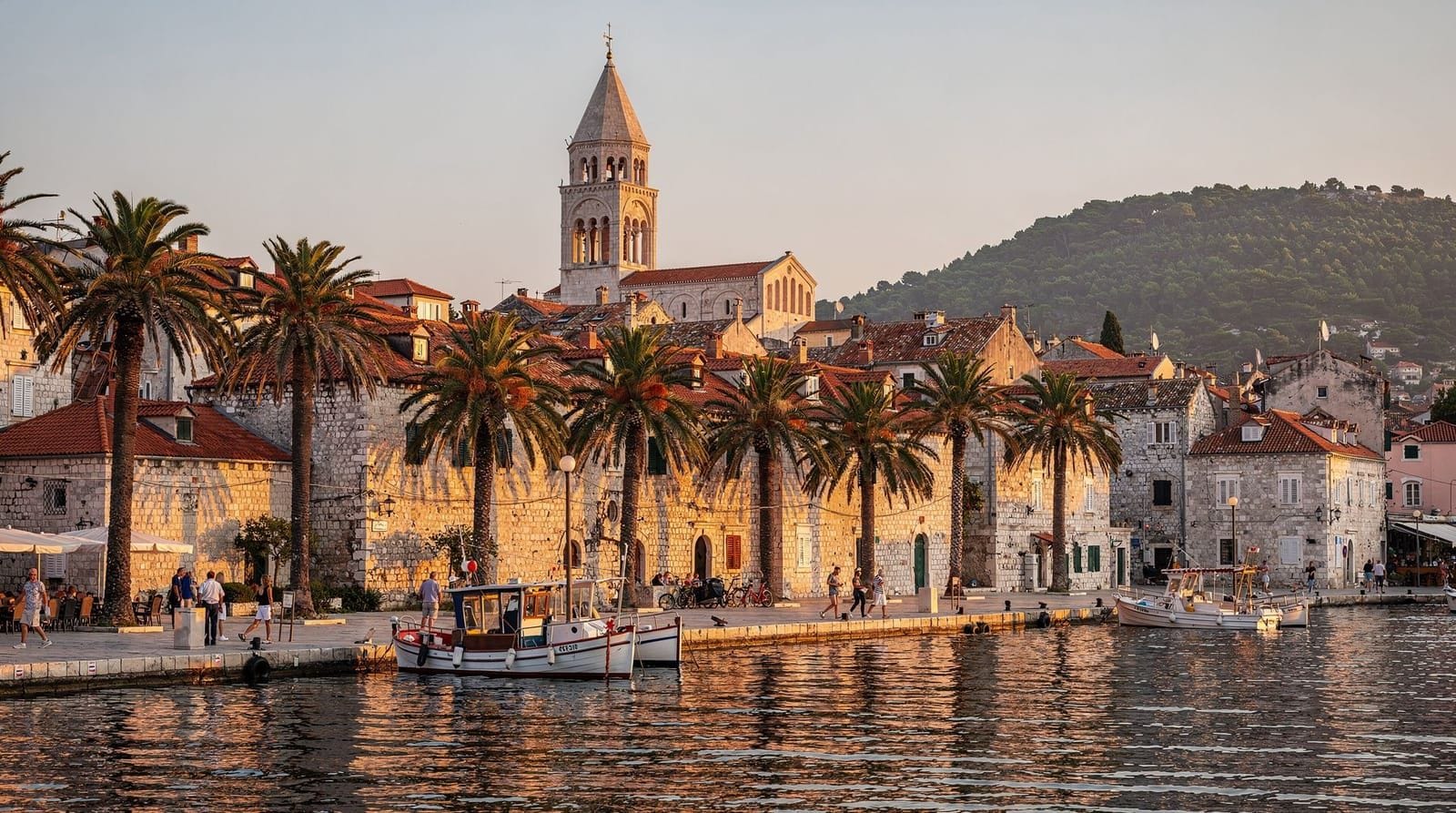
This 7-day itinerary has two destination moments (an overnight on Vis island and a day on Brač), and the rest is Split: Marjan Hill at various hours, the Pazar market, a sailing afternoon, a sea kayak at sunset, and evenings that don’t finish with a to-do list.
It works best in September, when the pace of the city slows with the crowds, the sea stays warm, and there is a particular quality of light in the late afternoon that photographers and people who like light travel specifically for.
No car. No schedule tighter than “morning ferry” twice. Budget for two people, seven nights at a rented apartment with a kitchen: roughly €1,000–1,400 (€70–110/night apartment, meals €25–40/day for two when cooking some, activities €50–75 per activity).
| Where | Split, Vis, Brač, Marjan Hill |
| Cost | around €1,000–1,400 for two, 7 nights |
| Time needed | 7 days, no car needed |
| Pace | Two destination days (Vis, Brač), five spent in and around Split |
| Best time | September for warm sea and thinner crowds |
Which island for the overnight: Vis, Brač, or Šolta
| Island | Character | Best for |
|---|---|---|
| Vis | Genuinely undertouristed, best food, Blue Cave access from Komiža | A full overnight, as in this itinerary |
| Brač | Better beaches (Zlatni Rat), more infrastructure | A single day trip, not an overnight |
| Šolta | Quietest of the three, fewer things to do | Travellers who want silence over variety |
Day 1 — Arrive and walk slowly into Split
Arrival
Split Airport (SPU) to city: Pleso shuttle bus (€8, 30–40 min). Choose your accommodation deliberately for a week’s stay. An apartment with a kitchen costs roughly the same as a mid-range hotel room but gives you significantly more control over meals and the feeling of actually inhabiting a place. The Varoš neighbourhood (west of the palace) or the Bačvice area are both good options for a week; avoid the palace interior for sleep (noise from venues in high season).
Afternoon: unplanned walk through the palace
Go to Diocletian’s Palace with no specific goal. Enter through the Iron Gate (west entrance) and walk without a map. The palace has been lived in continuously for 1,700 years and contains every era of architecture from Roman to 21st-century: a Roman arch serves as doorway to a Venetian apartment; a medieval courtyard opens into a Roman cistern; someone has hung their washing between two 3rd-century column capitals.
Give yourself 90 minutes. Sit on the Peristyle steps. Have a coffee. Watch what people actually do in the place where they happen to live inside a Roman emperor’s residence.
Evening: Varoš dinner without the menu
If you see a hand-written menu in chalk outside a konoba in Varoš, that’s where to eat. The daily catch at the fish market determines what’s served at the better konobas. Konoba Matoni, Konoba Fetivi, or whichever neighbourhood place you happen to walk past that has a genuinely occupied terrace. Dinner for two: €50–70.
Day 2 — Marjan Hill at dawn
Morning: 06:30 — Marjan before anyone arrives
Set an alarm for 06:00. The Marjan Hill summit at dawn in September sees the sun rise over the Dinaric Alps to the east, the islands — Hvar, Brač, Šolta — becoming visible as the light strengthens. By 07:30 you’re at the summit with the city still quiet below and the Adriatic turning from grey to blue. The 45-minute walk from the Šperun steps base is empty at this hour.
Down from the summit, the western slope trails lead to Bene beach — a shaded pebble cove that at 08:30 has three local swimmers and no tourists. The water is 23°C. Swim for 20 minutes.
Late morning: Green Market and a slow breakfast
The Pazar market outside the Silver Gate runs every morning. Buy bread from the bakery stall, local cheese, tomatoes (the small, ridged Dalmatian variety has more flavour than anything you’ll find in a supermarket), and a jar of local honey. Make breakfast at your apartment or eat on a bench outside the market.
Afternoon: the palace at noon
Go back to the palace in the opposite light from yesterday. Midday has a different quality — harsher on photographs but more revealing of the stone’s texture and the way the city has grown up through and around the Roman walls. Find the street of Papalićeva (just north of the Peristyle) and walk it both directions: one of the narrowest in the city, it changes character at every hour.
Evening: sailing half-day tour
Book the half-day sailing tour for late afternoon: departure around 16:00, return 19:30. The Dalmatian maestral wind makes afternoon sailing on the Adriatic the more pleasant direction — you’ll be west of Split, passing the Pakleni Islands channel with views of Šolta and Brač. Wine, swim stop, snacks included.
Split: Half Day Sailing Tour with Swim Stop, Snacks and WineDay 3 — Day trip to Brač: the island of stone
Morning ferry: 09:00
Car ferry Split to Supetar, Brač (1 hour, €8/person). Brač is the island most visible from Split — you can see its limestone ridge from the Riva on clear days. The island is the source of the white limestone used to build Diocletian’s Palace (and, more recently, the White House in Washington).
From Supetar, take the bus to Bol (45 minutes, €4) for Zlatni Rat beach. Or do the opposite of the standard Dalmatian day trip: stay in Supetar.
Option: a Supetar slow morning
Supetar is a small port town that functions as a working settlement rather than a resort. The 18th-century parish church, the waterfront promenade with locals having morning coffee, the small market on the main square — a morning here has none of the manufactured quality of tourist destinations. Swim from the town beach (pebble, immediate from the waterfront), lunch at the simple restaurant on the square, and take the afternoon bus down to Bol.
Or: Zlatni Rat and Bol
Zlatni Rat for swimming, Bol for lunch (Taverna Riva, fresh fish, €14–20), then afternoon swimming on the east side of the spit where the windsurfers aren’t. Return: bus to Supetar, ferry to Split.
Evening in Split
Pick up ingredients at the Pazar late market (sometimes runs until 16:00 on weekdays) and cook at your apartment. A simple Dalmatian meal: grilled fish with olive oil and lemon, tomatoes, bread, a bottle of Pošip from a wine shop near the Silver Gate (Vinart on Kralja Tomislava has the best selection in Split). Eating in for one evening of seven is not an economy measure — it’s how the city feels to people who actually live here.
Day 4 — Vis overnight: the slow island
Morning ferry: 08:00
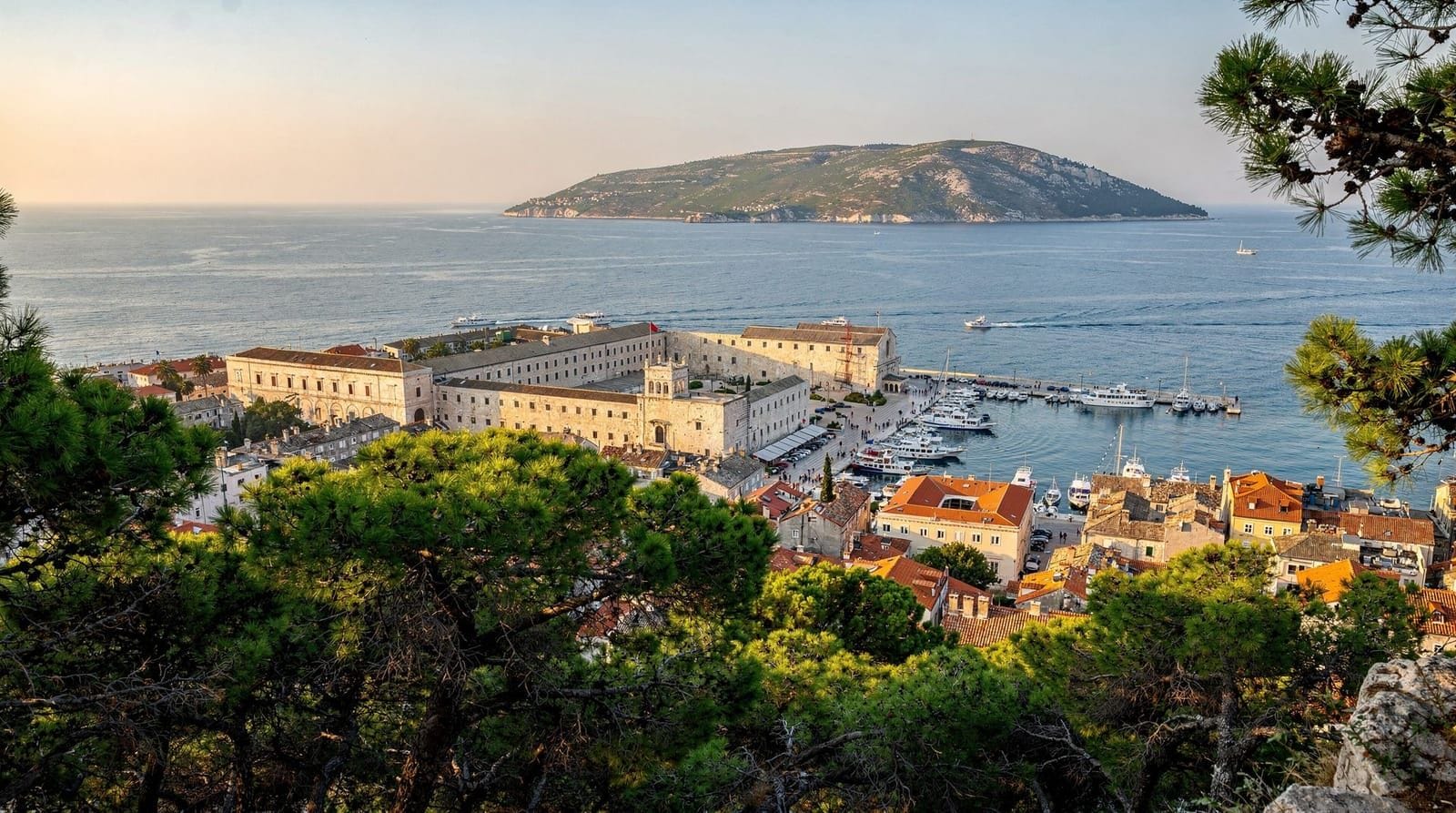
The Jadrolinija ferry Split to Vis town takes 2–2.5 hours (€15–20/person). This is a slow crossing — pack something to read or simply watch the water change from the harbour-grey of Split to the deep blue of open Adriatic. Vis appears on the horizon after about 90 minutes.
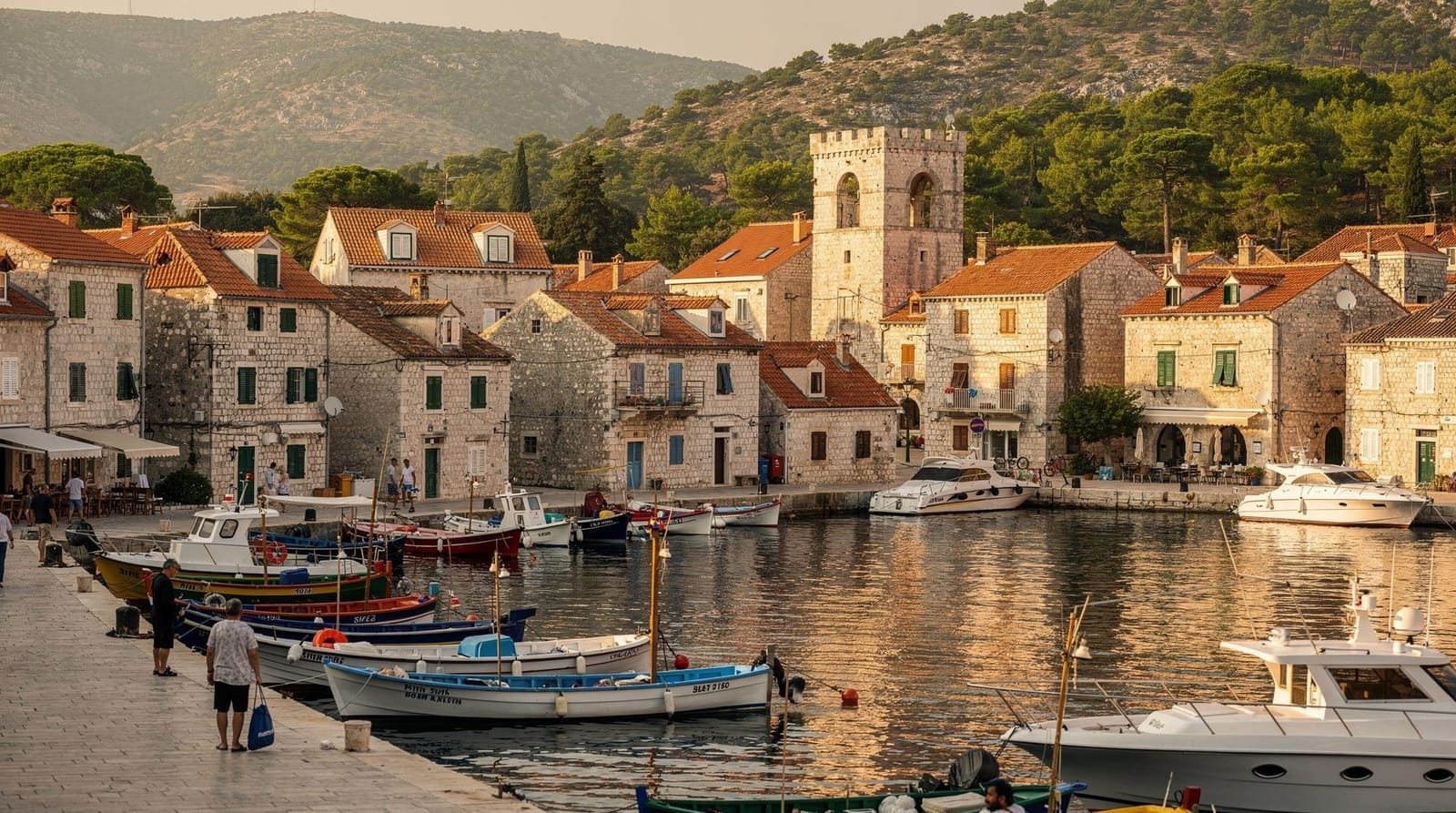
Vis was closed to foreign visitors until 1989 — used as a Yugoslav military base. This accident of history means the island’s towns are genuinely authentic rather than tourist-retooled. Vis town on the eastern side has Roman ruins (small amphitheatre, bath complex), a WWII Allied command tunnels network, and a slow pace that requires no particular effort to enjoy.
Afternoon: Vis town orientation
Walk along the waterfront (Šetalište Apolonija Zanelle) past the baroque church and the small British cemetery (WWII Commonwealth graves — a strange and moving presence on a small Dalmatian island). The wine shop on the main square sells Vugava — Vis’s indigenous white grape, dry, mineral, unlike any other Croatian wine. Buy a bottle and sit on the waterfront with it.
Evening: Vis overnight
Vis has some excellent accommodation for what it is: small island, genuine community. Issa Hotel (mid-range, harbour views, €90–130/night) or Fabrika Hostel (budget, social atmosphere, €30–50/night/person). Dinner at Konoba Vatrica in Vis town for grilled lamb and local wine — simpler and quieter than the Komiža restaurants, and the better version of a Vis evening if you arrived by afternoon ferry and want a calm night.
Day 5 — Vis: Stiniva, Komiža, and Blue Cave
Morning: Komiža and Blue Cave
Take a local bus or taxi from Vis town to Komiža (10 km, €3–8). The Blue Cave on Biševo island is accessible by boat from Komiža harbour (€5–8 per person each way to Biševo, plus €18–24 cave entry depending on the season). Go in the morning — the cave’s electric blue effect only works between 10:00 and 12:30.
Afternoon: Stiniva Bay
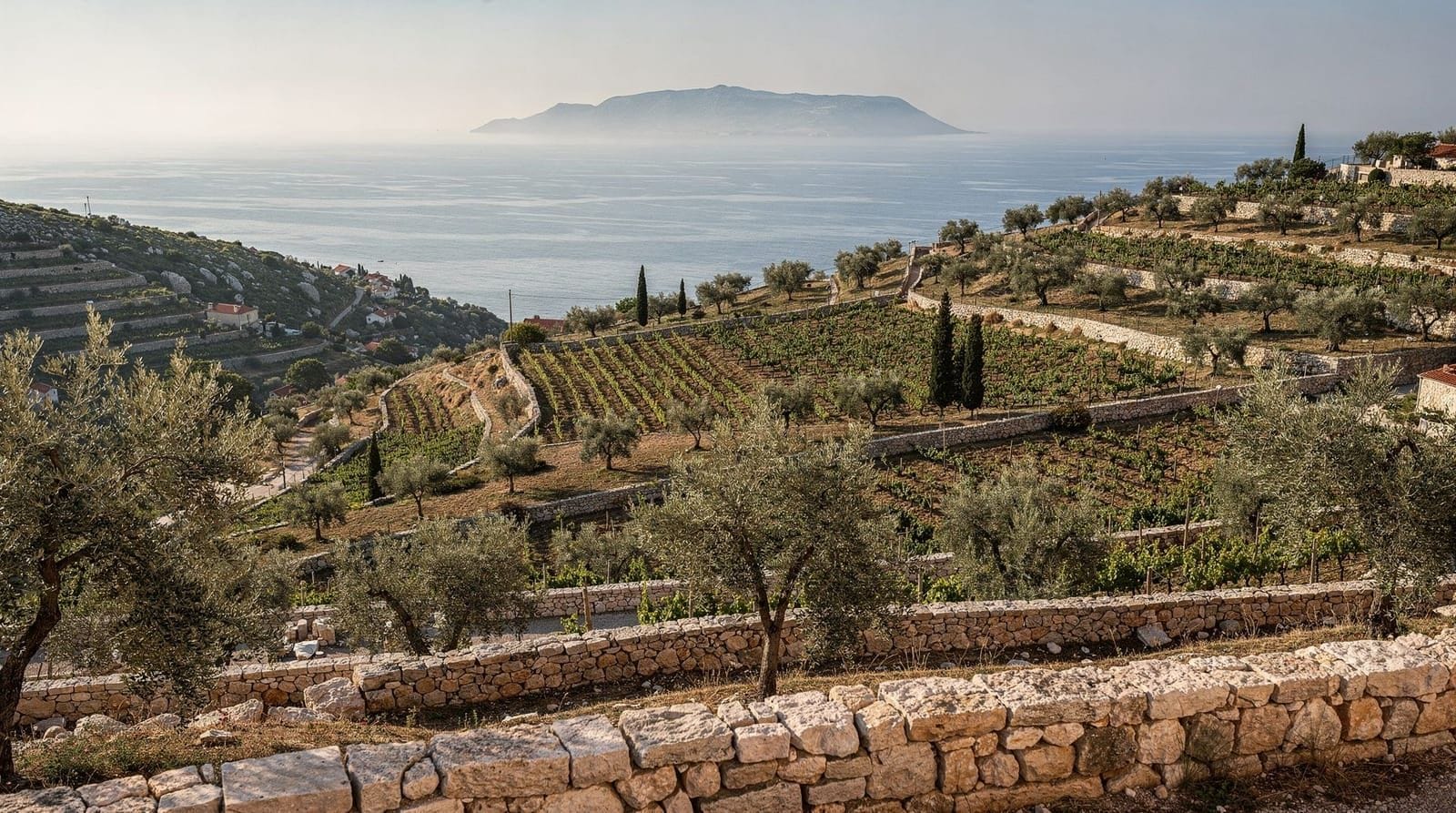
Stiniva is 30–40 minutes from Komiža by water taxi (€10–15 return) or a 45-minute hike from the clifftop road. The cove enclosed by limestone walls has the best swimming on this entire 7-day itinerary. The silence in Stiniva, with the cliffs rising on three sides, is part of the experience. Go in the afternoon when the morning tour boats have left.
Stay in Stiniva until the light starts to soften. Water taxi back to Komiža.
Evening: dinner in Komiža
Konoba Bako is Komiža’s most respected restaurant: simple menu, exceptional freshness, a terrace above the harbour. Dentex, sea bream, or octopus — whatever the boats brought in. Reserve 24 hours ahead.
Return to Split: evening ferry or next morning
Evening catamaran from Vis to Split (check timetable — sometimes 17:30 or 19:00, not always a later option). Or stay another night on Vis and take the morning ferry back on Day 6.
Day 6 — Back in Split: the city you know now
Morning after return
The second arrival in Split is different from the first. You know where the Pazar is, which gate to use, where the coffee is better. The palace feels like a city you’ve spent time in rather than a destination you’re ticking off. This is the slow travel payoff.
Morning: Pazar market again
Revisit the market. By now you might recognize a vendor or two. Buy the same cheese and see if it tastes different at this end of the week (it usually does — either you’ve calibrated to the flavour or you’re imagining it, and both are fine).
Afternoon: sunset sea kayaking
The sunset kayak tour (17:30–20:30) from the Bačvice waterfront is the right final afternoon activity. Paddling west along the limestone coast into the dropping sun, with the islands you visited over the week visible on the horizon.
Split: Guided Sunset Sea Kayaking & Snorkeling Tour w/ WineWine stop at the end of the tour. Watch the Adriatic go dark.
Evening: final konoba
Return to whichever konoba was best over the week and order whatever you didn’t get to try the first time. This is the correct use of a final dinner.
Day 7 — Slow morning, depart
Morning: one more walk
Walk to Marjan Hill base, take the path toward Kašjuni beach, swim in the morning before the beach fills. The limestone cliffs above the water catch the morning light from the east. Swim for 20 minutes. Dry off. Walk back through Varoš.
The Pazar market for last provisions: olive oil, dried figs, honey to take home. The best olive oil for carrying on a plane is the small 250 ml bottles sold at the market (€5–8) — they fit in a bag and survive the return trip.
Airport shuttle
Pleso bus from the main terminal (€8, 30–40 min), runs every 30–40 minutes. Allow 1.5 hours before departure.
Notes on slow travel in Dalmatia
The right accommodation: a week in an apartment rather than a hotel changes the quality of the stay. Cook occasionally, do one morning’s market shopping, sit on a terrace with coffee. The city feels different when you’re not constantly checking out and checking in.
September vs summer for slow travel: September is specifically better for this itinerary because the heat is manageable, the sea at 23–24°C is at its best, and the city is not at peak capacity. You can sit on the Peristyle steps for 20 minutes without being photographed by 12 other people doing the same thing. See split in September.
What to skip: this itinerary deliberately skips Krka (too structured for the pace here — save it for the 5-day itinerary), Dubrovnik (a logistical day that belongs in a different kind of trip), and boat tours with itineraries you don’t control. Slow travel chooses its own speed.
Remote working from Split: if you’re combining this with work, September is ideal. The time zone is CET (UTC+2 in summer), which works well for European and US East Coast overlap. Cafés near the palace have reliable WiFi; apartment internet is generally good in Split. The Coworking Split space near the ferry terminal offers day passes for structured work days.
For more on what makes Split work for longer stays, see escape the crowds in Split and is Split worth it.
What slow travel costs compared to a fast itinerary
Seven unhurried days cost more in total than a packed 3-day trip, but less per day. A rented apartment at €70–110/night beats a hotel room at equivalent quality, and cooking two or three dinners at home (grilled fish from the Pazar, bread and cheese, a bottle of Pošip) saves €30–40 a night compared to eating out every meal. The genuine extra cost is the Vis overnight — accommodation, an extra ferry crossing, and a second Blue Cave visit if you didn’t already see it from Split — which adds roughly €150–250 for two people that a shorter itinerary skips entirely.
Weighed against a 3-day Split itinerary pace, the daily spend on this slower version is often lower once accommodation and cooking are factored in; see Split travel budget for the fuller comparison. For the logistics of moving between islands without a car, car vs no car in Dalmatia explains why ferries and buses work fine at this pace.
A day with genuinely no plan
If the seven days allow it, keep one day completely open rather than assigning it to Marjan, Brač, or Vis. Wake without an alarm, walk toward the Pazar market, and decide over coffee whether the day wants a swim, a nap, or a walk to somewhere you haven’t been yet — Kaštela to the north, or the quieter streets of Split 3 (the modernist district inland from the old town) are both legitimate options nobody puts on a checklist. This is the day that tends to be remembered longest precisely because nothing was scheduled. See island hopping from Split if the open day turns into a spontaneous ferry decision instead.
Frequently asked questions about slow travel in Split
Is Split a good destination for slow travel?
Yes. The city has enough variety in its immediate surroundings — islands within 1–3 hours by ferry, a national park within 1 hour, a forested hill in the city itself — that seven days can be unhurried without feeling like there’s nothing to do. The cost of living is lower than Western European cities; accommodation, food, and transport are all reasonably priced in September. See split travel budget for figures.
How long should I stay in Split?
Five to seven days allows you to properly inhabit the city rather than tour it. Three days is enough to see the highlights. Two weeks is possible for slow travellers who want to explore the full island chain, Plitvice, Dubrovnik, and Mostar without rushing. Most visitors stay 3–5 days; a week is the sweet spot for the slow travel mode.
Which island is best for a quiet overnight from Split?
Vis is the quietest of the main islands — fewer tourists, excellent food, and the Blue Cave accessible from Komiža. Šolta is even quieter but smaller and less visited for a reason (fewer things to do). Brač has better beaches (Zlatni Rat) but more tourism infrastructure. See which Dalmatian island for you.
What is Marjan Hill like in the morning?
Marjan Hill before 08:00 in September is exceptional. The summit path is empty or nearly so. The views west toward the open Adriatic and east toward the Dinaric Alps in morning light are the best in the city. Local runners and dog walkers pass; otherwise you have the hill. See the Marjan Hill hiking guide.
Can you work remotely from Split?
Yes — the infrastructure (cafés with WiFi, coworking spaces, reliable apartment internet) is good. September is the ideal month: fewer tourists, CET timezone, comfortable working temperatures. The slow travel mode described in this itinerary works well for people splitting their day between work and being present in the city.
Is a 7-day slow itinerary more expensive than a shorter trip?
Not necessarily per day. A rented apartment with a kitchen and a couple of home-cooked dinners typically costs less per night than a comparable hotel-plus-restaurants 3- or 5-day trip, even though the total spend across seven nights is higher. The one genuine added cost is the Vis overnight, which adds accommodation and an extra ferry crossing. See Split travel budget for a line-by-line comparison.
Should I pick Vis or Brač for the overnight island stay?
Vis, if an overnight is what you want — it has the more authentic town, the better food, and access to the Blue Cave from Komiža without the day-trip crowds. Brač has better beaches (Zlatni Rat) but is better suited to a single day trip than an overnight, since most of what it offers is reachable from Split in a few hours. See honest island verdict for Dalmatia for the fuller comparison across all the main islands.
Top experiences
Bookable activities with verified prices and instant confirmation on GetYourGuide.