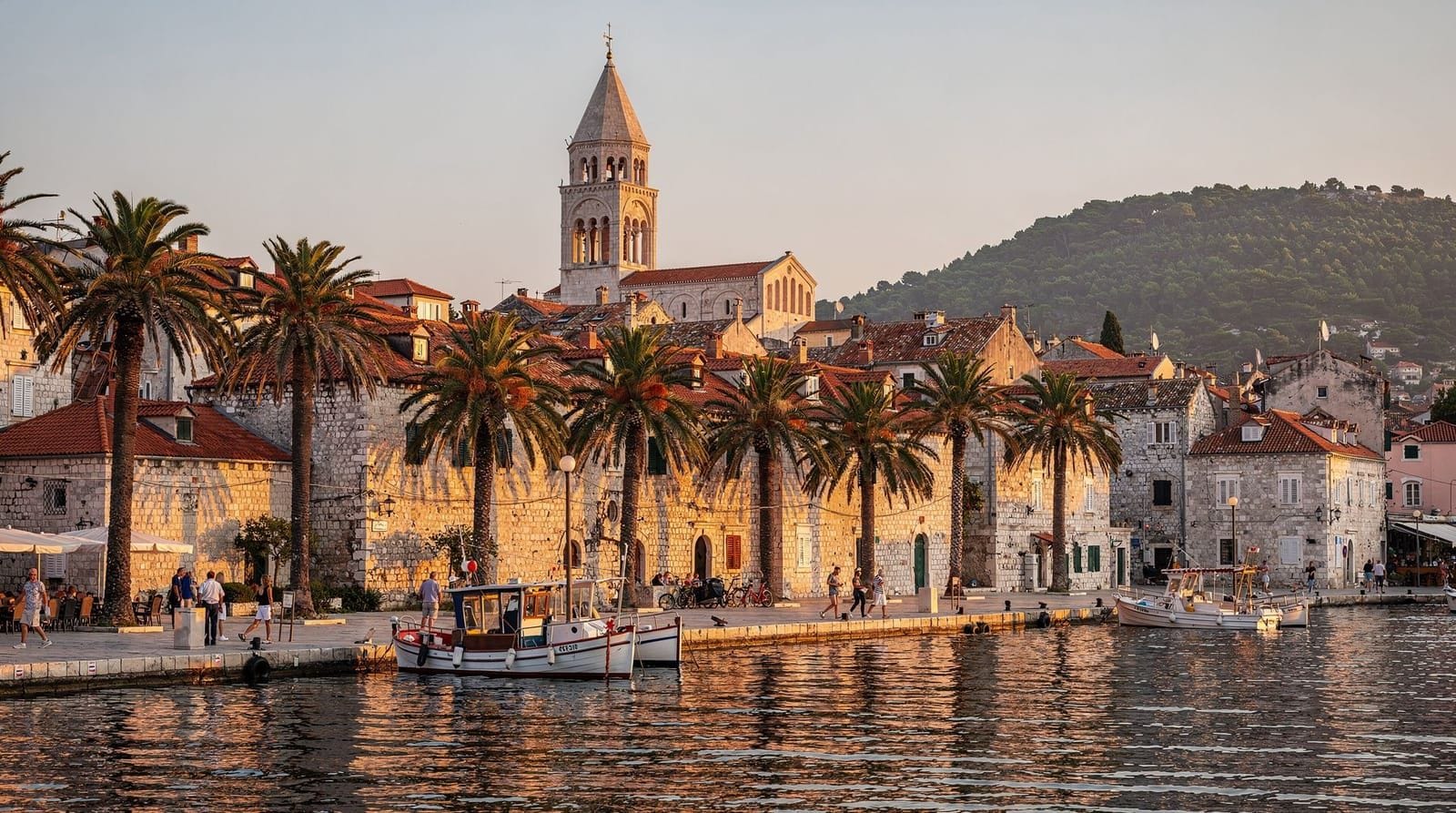
Split weekend escape 2-day itinerary
From Split: Half-Day Tour of Trogir Old Town in Small Group
Two days is enough to fall for Split
Split rewards short visits. The city is compact — you can walk from the ferry port to Marjan Hill in 25 minutes, and Diocletian’s Palace has been absorbing short-stay visitors since the 4th century. The question with two days isn’t whether there’s enough to do; it’s how to prioritise so you don’t spend a weekend ticking boxes at pace.
This weekend itinerary is built for the escape: two days that feel longer than they are, because the pace is right. A morning in the palace, an afternoon on the hill, an evening in the old town. A morning in Trogir before heading back. A sunset somewhere that earns it.
No car, no complex logistics. Bus 37 handles Trogir (€3, 30–40 min). Everything else is on foot from a central Split accommodation.
| Where | Split and Trogir |
| Cost | around €400–600 for two, 2 nights (excl. flights) |
| Time needed | 2 days, no car needed |
| Getting there | Split Airport (SPU), Pleso shuttle bus, around €8/person |
| Best time | September or May for fewer crowds at the same sights |
Two days at a glance
| Day | Morning | Afternoon | Evening |
|---|---|---|---|
| 1 | Arrival, check in | Diocletian’s Palace | Marjan Hill, then Varoš dinner |
| 2 | Trogir half-day | Bačvice beach | Nostromo or a final Varoš meal |
Day 1 — Arrive in Split, discover the city
Morning or early afternoon: arrival
Split Airport (SPU) is 25 km southeast. Pleso shuttle bus (€8, 30–40 min) drops at the main ferry/bus terminal on Domovinskog rata street. Taxis cost €25–40 per vehicle. If you’re arriving from a European city on a morning flight, you can be in the palace by midday.
Drop bags at your accommodation. Ideal location for two days: inside or just outside the palace walls (Varoš neighbourhood, west of the palace, is quieter and has better restaurants). Bačvice beach area (10 minutes south of the ferry terminal) is also good — easier to walk to the beach and quieter in the evenings.
Afternoon: Diocletian’s Palace
The palace takes half a day to explore properly. Start at the Golden Gate (north entrance), the most intact of the four original gates, with Roman arches still functioning as city infrastructure. Walk south to the Peristyle — the central courtyard — which is surrounded by ancient columns supporting later medieval and modern buildings. This is the emotional core of the city.
From the Peristyle, the Cathedral of Saint Domnius (built inside the original Roman mausoleum) charges €5 entry for the nave and €3 for the bell tower. The bell tower climb (131 steep steps) is worth doing once — the views over the orange roofscape toward the Adriatic and the islands are the best in Split.
Split: Old Town - Diocletian Palace Guide Tour - Small GroupA 90-minute guided tour of the palace gives essential context that self-guided wandering misses: the difference between Roman, Venetian, and 19th-century construction; the stories behind the specific gates and towers; the original function of the Mausoleum. If you’re seeing Roman architecture for the first time, a guide makes the visit significantly richer.
The basement halls (€10 entry, entered from the Peristyle south side) are atmospheric vaulted chambers beneath the palace courtyard — dark, cool, ancient. Not essential but atmospheric.
Late afternoon: Marjan Hill
After the palace, walk west through Varoš neighbourhood (the old stone quarter with the best restaurants) to the base of Marjan Hill. The forested park rises 178 m above the sea. The lower path from Šperun steps to the first viewpoint (St. Michael’s chapel) takes about 25 minutes on a paved path. The full summit is another 20 minutes — the panorama from the top extends to the islands of Hvar, Brač, and Šolta on clear days.
The western side of Marjan Hill drops to Bene and Kašjuni beaches — quiet pebble coves with direct sea access and some shade from pine trees. If the timing works, a swim here in late afternoon is better than any city beach.
Evening: the Riva and dinner
The Riva promenade along the southern wall of the palace is Split’s social theatre — cafés, ice cream, boats, people watching. Sit for a coffee or Karlovačko beer (€3–4) and watch the Adriatic light fade over the islands. The Riva is not for dinner (overpriced tourist restaurants), but it’s exactly right for a drink before heading to Varoš.
For dinner: Konoba Matoni on Tomića stine (peka slow-roasted lamb or octopus — order 24 hours ahead if you can, otherwise go for grilled fish) or Konoba Fetivi on Pupačićeva (local wine, honest menu, better value than the palace interior restaurants). Dinner for two with wine: €50–70.
Day 2 — Trogir morning, Bačvice afternoon
Morning: 09:00 — Bus 37 to Trogir
Bus 37 leaves Split’s main bus station (adjacent to the ferry terminal) every 20–30 minutes. Journey: 30–40 minutes, €3 one way. Buy the ticket from the driver. This is Split’s local commuter bus — you’ll share it with residents heading to work in Trogir.
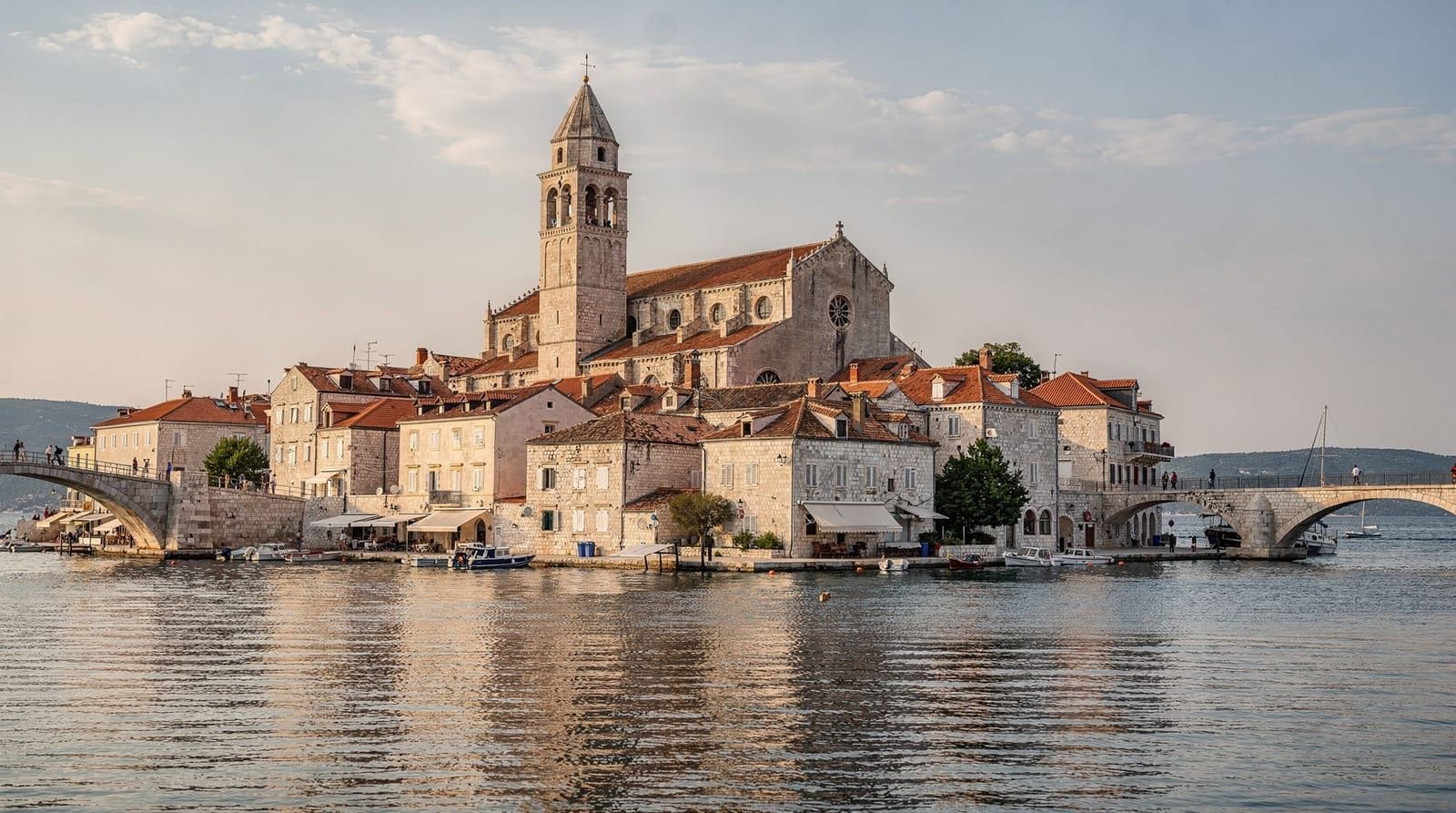
From Split: Half-Day Tour of Trogir Old Town in Small GroupTrogir old town occupies a small island connected by bridges to the mainland and to Čiovo island. The UNESCO old town is entirely walkable in 10 minutes across its length. For two hours:
- Cathedral of Saint Lawrence (Katedrala Sv. Lovre): the west portal carved by Master Radovan in 1240 is exceptional Romanesque stonework. The 13 tiers of figures (saints, apostles, animals, allegories) read like a medieval illustrated Bible. Cathedral nave entry: free. Bell tower: €3.
- Kamerlengo Fortress (15th century Venetian): southwest of the old town, entry €3 for rooftop access and views over the waterfront.
- Town Loggia and Clock Tower: the open-air loggia on the main square is free to walk through. The 15th-century loggia served as the civic courthouse and meeting place for centuries.
The side streets of Trogir — particularly behind the cathedral — are quieter than the main square and worth exploring. The town is small enough that you can’t really get lost.
Coffee and pastry in Trogir: 10:30
The café on the main square facing the cathedral has reliable coffee and the best terrace in town. A croissant or local pastry here (€2–3) and 20 minutes watching the square is perfectly calibrated to a weekend pace.
Lunch in Trogir: Konoba Trs on Radovanova street is the recommendation for fresh pasta with local seafood (€12–15). Order the pasta with crab sauce (rakova pasta) if it’s on the menu. Eat at the same table that’s served this lunch on warm days since the 1980s.
Return to Split: 13:00
Bus 37 back. Arriving around 13:30–14:00.
Afternoon: Bačvice beach
Bačvice beach is 10 minutes’ walk south from the ferry terminal. It’s a sandy-bottomed shallow cove — unusual in Croatia, which is mostly pebble coastline. The sandy seabed makes it suitable for swimming without reef shoes. The beach gets crowded in July–August; a late-afternoon visit (after 15:00) thins the crowds as families with children leave.
The picigin game (local water sport involving keeping a small ball in the air — players are waist-deep in water) is played here most afternoons by local enthusiasts. Watching is free and enjoyable.
Late afternoon: Pazar market or souvenir run
The Pazar market (Green Market) outside the Silver Gate runs every morning. If you didn’t visit on Day 1, late afternoon may catch some remaining vendors. For food souvenirs: Hvar lavender products (€5–15), Brač dried figs (€3–5), local olive oil from the Kaštela region (€8–15), and artisan honey.
Final dinner and evening
For a final dinner of genuine quality: Nostromo (just north of the ferry terminal, Kraj Sv. Marije) is Split’s most respected fish restaurant. Fresh catch, simply prepared, honest kitchen. Not cheap (€25–40 per main) but the right choice for a final evening. Book a table in advance even for a weekend.
If the budget has run thin: the Pazar market area has a bakery (Pekarnica Galić on the street behind the market) with focaccia-style bread with toppings for €2–3 that has fed local workers’ lunches for years. A much cheaper, entirely legitimate meal.
Airport shuttle from the main terminal: €8 per person, every 30–40 minutes. Allow 1.5 hours before your departure for security.
Practical notes for a Split weekend
Accommodation: a central location genuinely matters for a two-day visit. Varoš neighbourhood (southwest of the palace) is ideal — quiet streets, better restaurant access, 5 minutes from the palace and 10 minutes from Bačvice. Inside the palace walls is atmospheric but noise from the entertainment venues until late can disturb sleep in summer.
Getting to and from Split: Ryanair, easyJet, Eurowings, and Vueling fly from multiple European cities. Split Airport (SPU) has routes from London, Amsterdam, Berlin, Paris, Vienna, and many others in the summer schedule. Flight times from London: 2.5 hours.
Timing: September weekend visitors will find the Riva and Trogir notably less crowded than July–August without losing anything material in terms of weather or services. May weekends are excellent for the same reasons — the crowds haven’t arrived yet. See best time to visit Split.
What doesn’t fit in two days: island visits (minimum 4 hours travel plus time on the island — not practical for two days), Krka National Park (85 km away, full-day logistics), Plitvice Lakes (200 km, full day). For those, see the 3-day Split itinerary or the 5-day itinerary.
The honest note about the Riva: the restaurants on the Riva waterfront are the worst value in Split — tourist-facing, mediocre food at high prices. The rule in Split: the closer to the ferry port and Riva, the worse the food-to-price ratio. Walk two streets north or west and the equation changes entirely.
If your flight times don’t fit this itinerary
A late-morning arrival on Day 1 compresses the palace visit but doesn’t ruin it — the Diocletian’s Palace guide has a shorter self-guided route if the 90-minute tour no longer fits before Marjan Hill. If you land in the evening instead, swap Day 1 and Day 2: do the palace at a relaxed pace on the morning of your second day and Trogir immediately after arrival, since Bus 37 runs from early morning through the evening. For the airport transfer itself, see Split airport to city for shuttle timings and taxi alternatives if the Pleso bus schedule doesn’t line up with a late flight.
Split weekend budget breakdown
For two people over two nights, a realistic mid-range budget looks like: accommodation €140–220 (two nights at €70–110), food €120–180 (a mix of konoba dinners and market lunches), the guided palace tour and Trogir transport around €50–70 combined, and airport transfers €30–50 return. That totals roughly €400–600 excluding flights, broadly in line with Split travel budget estimates for a short mid-range stay. Cutting the guided palace tour and doing Trogir independently on Bus 37 rather than an organised tour saves €20–30 per person without losing much.
Frequently asked questions about a Split weekend getaway
Is 2 days enough to see Split?
Two days is enough to cover Split’s essential experiences — the palace, Marjan Hill, and a Trogir half-day — without feeling rushed. You won’t reach the islands (Hvar, Brač) or national parks (Krka), but you will see what makes Split genuinely different from other Mediterranean cities. See the 3-day Split itinerary if you want to add Krka.
What is the best area to stay in Split for a weekend?
Varoš neighbourhood, southwest of Diocletian’s Palace, gives the best balance: walking distance from the palace and old town, quieter streets than the palace interior, and better restaurants. Bačvice beach area is an alternative — 10 minutes from the palace but closer to the beach. See where to stay in Split.
Can I visit Trogir as a day trip from Split?
Yes — a very easy half-day trip on Bus 37 (€3, 30–40 min). Trogir old town takes 2–2.5 hours to explore properly. This fits naturally into a morning on Day 2 of a weekend itinerary. See the Trogir half-day trip guide for detail.
What is the best restaurant in Split for a special dinner?
Nostromo (north of the ferry terminal, Kraj Sv. Marije) is the most consistently praised fish restaurant in the city — fresh catch, honest cooking, knowledgeable service. Book in advance. For something more casual and budget-friendlier, Konoba Matoni in Varoš (order peka the day before) or Bokeria wine bar for sharing plates are both strong options. See where to eat in Split.
Is Split good for a romantic weekend?
Yes. The combination of the ancient palace, the waterfront promenade, and the Varoš restaurant scene creates a naturally romantic setting. Sunset from Marjan Hill summit, dinner at Konoba Fetivi by candlelight, and a late evening walk through the palace under stone arch streetlights — these experiences require no planning beyond showing up. September weekends are particularly good: warm evenings, fewer crowds.
How much does a Split weekend cost for two people?
Roughly €400–600 for two people over two nights at a mid-range level, covering accommodation, meals, the guided palace tour, Trogir transport, and airport transfers. See the budget breakdown above and Split travel budget for how this scales up or down.
What if I only have one day in Split, not a full weekend?
Prioritise the palace and Marjan Hill on Day 1 of this itinerary and skip Trogir — the Split old town walking guide covers a self-guided version of the same ground that fits into a single day without a guided tour.
Top experiences
Bookable activities with verified prices and instant confirmation on GetYourGuide.