Is a car worth it in Dalmatia? Our honest verdict after three trips
The question we get most often
People planning a Dalmatia trip ask about car rental more than almost any other logistics question. The calculus seems simple: bigger country, more scattered attractions, a car must be the answer. But the reality is more nuanced, and on two of our three trips we deliberately drove carless — once by accident (the rental prices that week were absurd) and once by choice.
Here’s the full picture from people who’ve done it both ways. If you’re still building the overall plan, our Split first-timer guide and the which Dalmatian island for you guide help you decide how much of the trip happens on the mainland and how much on the water, which is really the question that decides whether a car makes sense.
| Split city | Skip the car; parking runs around €2–3/hour and streets are pedestrian |
| Islands | Skip it; catamarans are faster and cheaper than car ferries |
| Plitvice / Krka / hinterland | A car genuinely helps; buses exist but are slower |
| Rental cost | around €35–60/day for a compact, more in peak summer |
| Best approach | Hybrid — no car in Split + islands, rent for mainland days |
Split city: a car is an active problem
If your base is the old town of Split, a car creates more problems than it solves. The palace interior is entirely pedestrian; the streets around it in the historic centre are too narrow for vehicles. Parking in Split proper is expensive (€2–3/hour in the centre), competitive, and often requires walking back to the car fifteen minutes in the wrong direction.
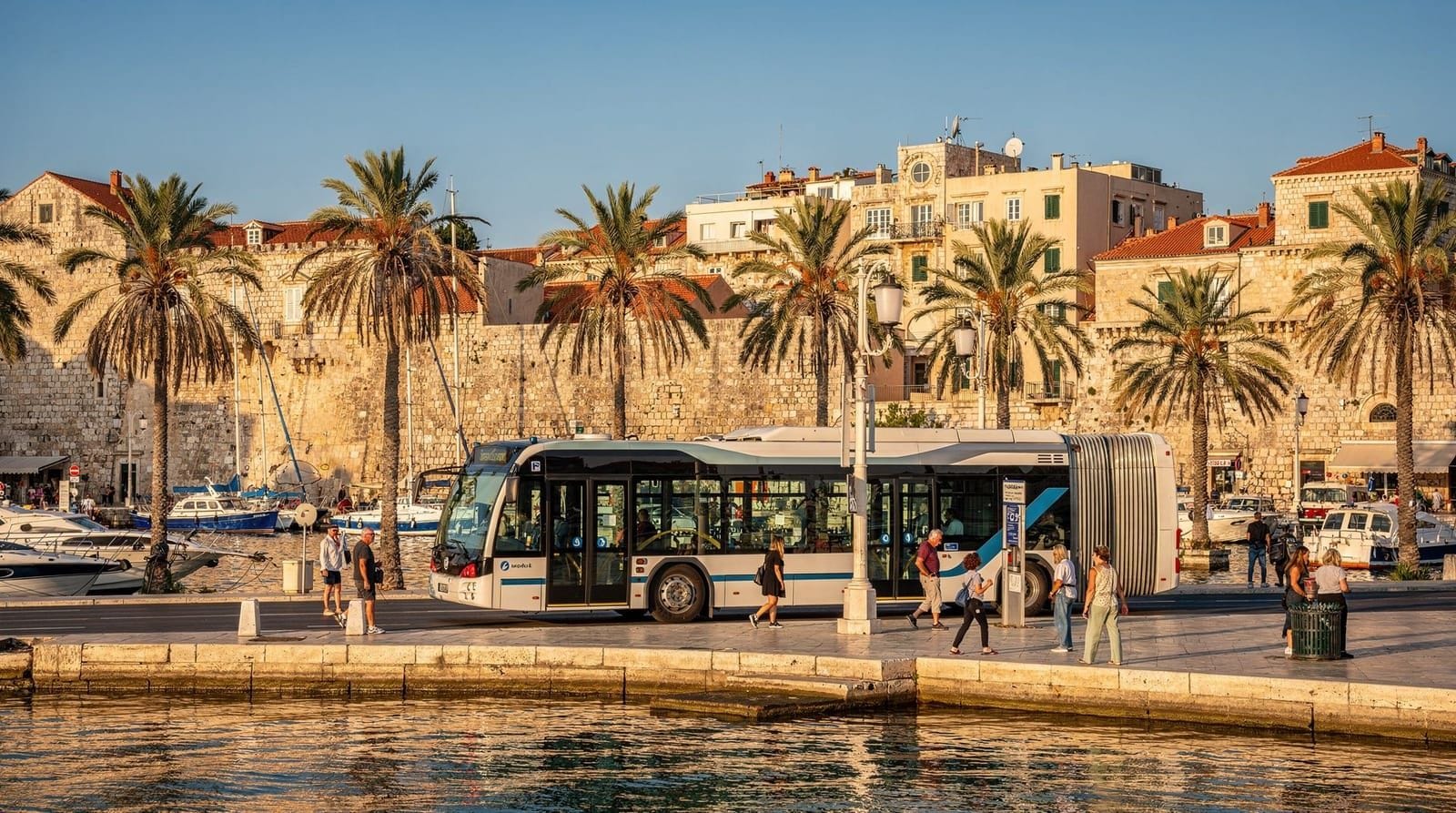
The good news: you don’t need a car for Split itself. The city bus network covers the main attractions reasonably well. Bus line 37 gets you to Trogir in about 30 minutes for €2. Bus 60 goes to Omiš in similar time. Taxis and apps like Bolt operate reliably in and out of the centre.
If you’re only doing Split city and island trips, skip the car entirely. Most of what’s worth seeing in town is reachable on foot, as our Split old town walking guide and Diocletian’s Palace guide show, and if you’re arriving by air, the airport to city guide covers getting into town without a rental. Choosing the right neighbourhood also matters: our where to stay in Split guide explains which areas let you leave the car question behind altogether.
The island ferry situation with a car
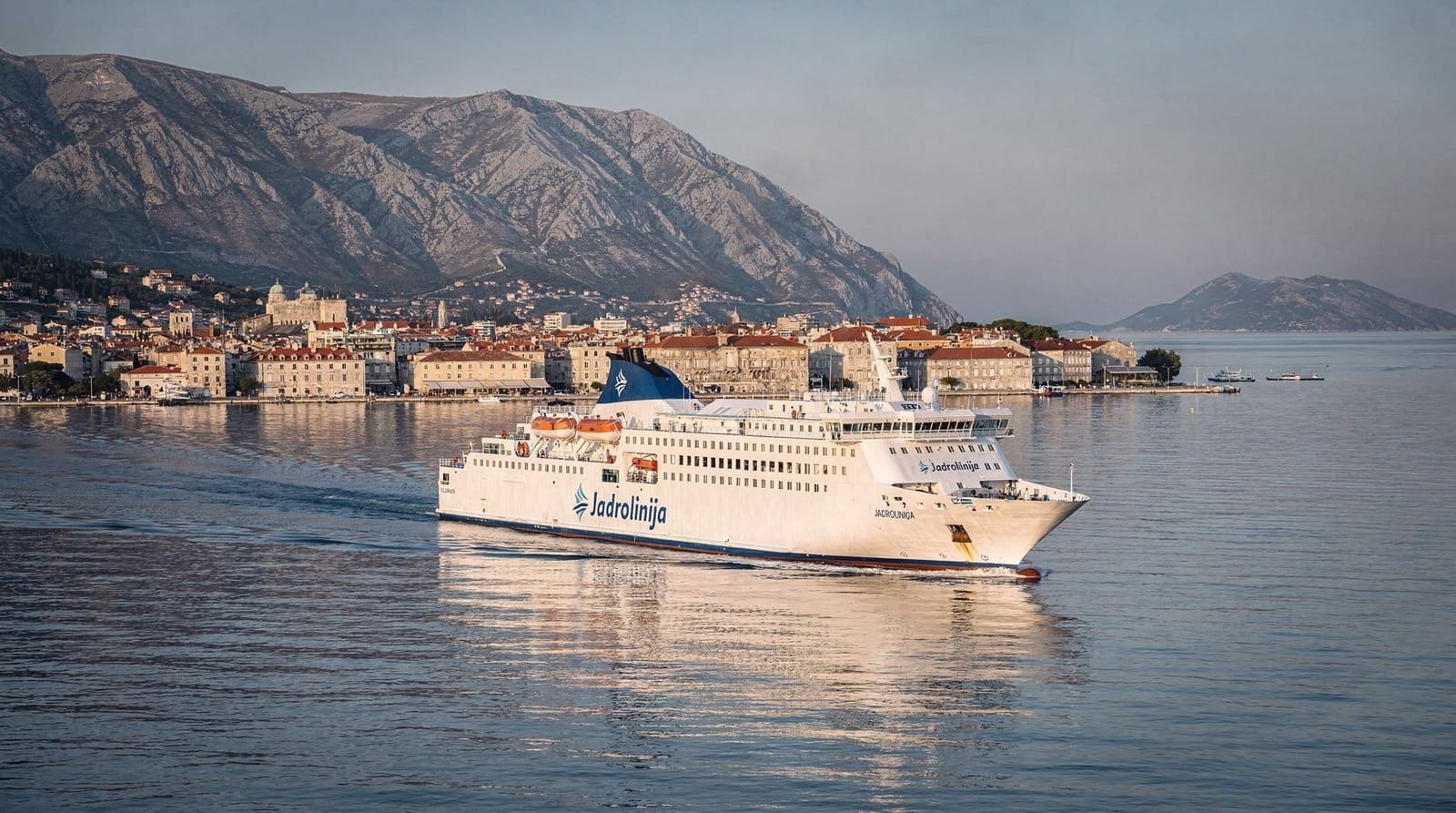
This is the most important logistics note in this entire piece: taking a car on a Jadrolinija ferry to the islands is significantly more complex and expensive than taking a passenger catamaran without one.
Car ferry prices (split between vehicle and passengers): Split to Supetar (Brač) runs approximately €35–45 for a car plus two adults. Split to Stari Grad (Hvar): similar. These aren’t ruinous, but combined with the advance booking requirement and the fact that car ferries take longer than catamarans (2 hours vs. 1 hour for Hvar), the car-with-islands equation becomes less appealing.
More practically: in peak season (July–August), the car ferries to Hvar and Brač operate on a first-come, first-served basis that can mean queuing for 2–3 hours. We’ve stood in that queue on a hot August morning and it’s not the holiday you imagined. You can book car space in advance for some routes on the Jadrolinija website, but availability varies and the booking window is limited.
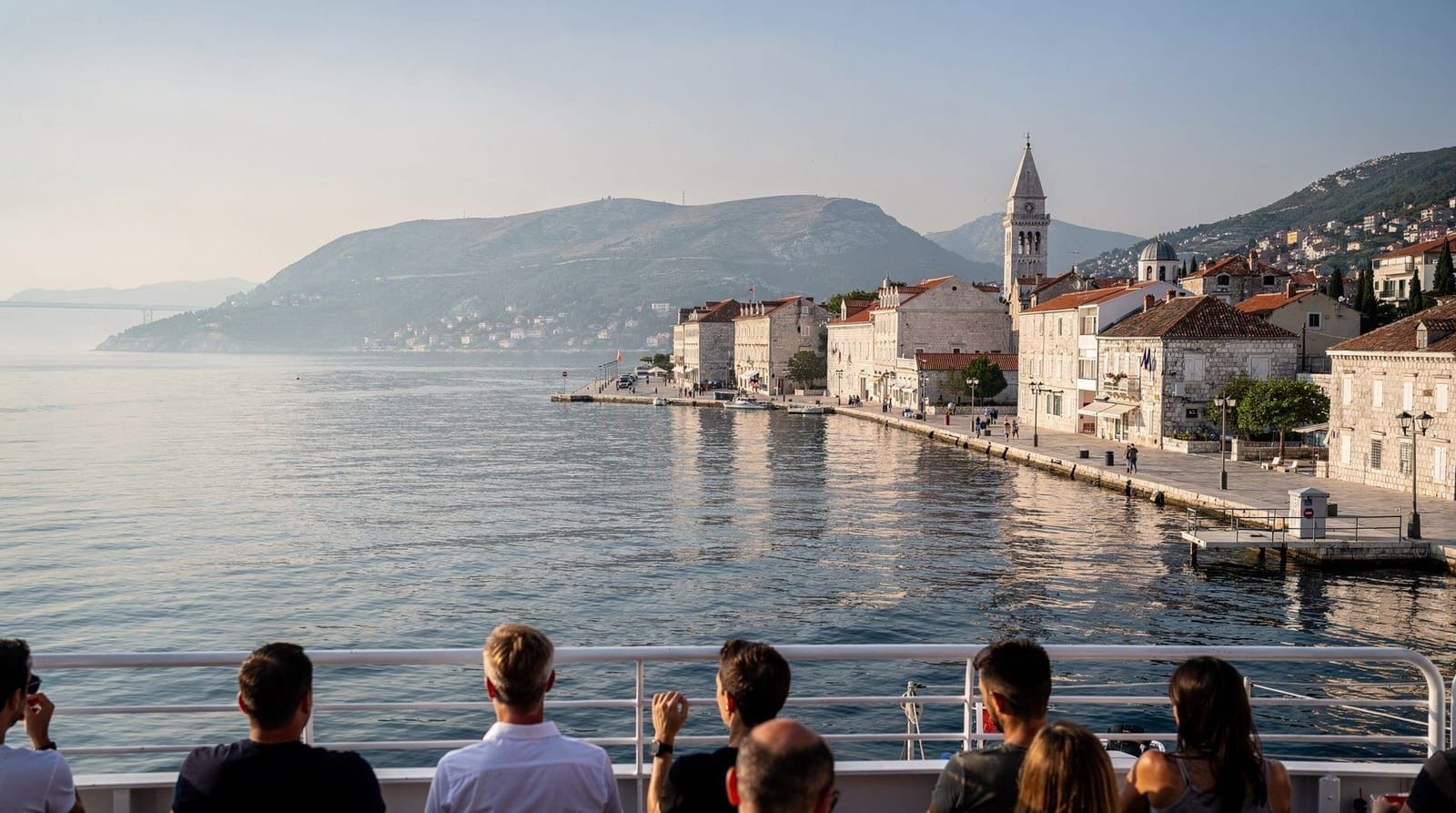
The catamaran networks (Jadrolinija and private companies) don’t take cars at all. They’re faster, more frequent in summer, and carry only passengers and bikes. If islands are a major part of your trip, we’d lean toward carless travel and using the ferry and catamaran network as your primary island transport.
For islands specifically, an organised day tour by speedboat sidesteps the whole car-ferry question entirely — you’re not driving anywhere and you’re not queuing at a car ferry ramp at 6 a.m.
Hvar and Brač day tour by speedboat from SplitIf you want to see how the islands compare before committing to a route, the Hvar vs Brač vs Vis comparison and our island hopping from Split guide lay out the options, and the five-island tour guide covers the boat-tour alternative in more depth.
Where a car genuinely wins
The mainland hinterland and the national parks are where a car earns its keep.
Plitvice Lakes: Public transport exists (direct buses from Split take about 3 hours), but returning from Plitvice on a Saturday in summer by bus involves fighting for a seat. With a car, you control your own timeline, can leave at dawn, and have the flexibility to stop at the Korana Gorge or Rastoke on the way back.
Krka National Park: Easier by bus (Šibenik connection), but a car lets you approach Krka from different directions, visit Skradin (the most charming village near the park, often skipped on bus tours), and combine the park with Šibenik old town at your own pace. Our Krka day trip guide covers the options in detail. If you’d rather not drive at all, a guided day tour with transport included gets you there without the rental-and-parking logistics.
Krka Waterfalls day tour from Split with transportMakarska Riviera and Biokovo: The towns along this stretch of coast — Makarska, Brela, Baška Voda — are connected by bus, but the mountain road up to the Biokovo Skywalk lookout and the Biokovo Nature Park requires either a car or a booking on the park’s shuttle from Makarska.
The southern route to Dubrovnik: If you want to stop at Ston (oysters, medieval walls), the Pelješac Peninsula wine villages (Dingač, Potomje), and have any flexibility around the Neum corridor at the Bosnia crossing, a car is the only realistic way to do it. The Split to Dubrovnik transport options guide covers the public and private alternatives.
The Dalmatian interior: Villages like Sinj, Drniš, and the hinterland around the Cetina valley are essentially inaccessible without a car. If the coast is your whole trip, this doesn’t matter. If you want to understand the region more fully, it opens up significantly. The Cetina valley is a good example, and so is Klis Fortress, which sits just outside the city and fits neatly into a mainland driving day.
For the big parks, the Plitvice day trip from Split and getting to Krka and Plitvice guides compare driving with the bus and tour options, so you can decide park by park rather than renting for the whole trip.
The hybrid approach that worked best
On our most recent trip, we did this: no car for the first five days (Split base, island-hopping by catamaran, day trips by bus and organised tour), then picked up a rental car for three days of mainland exploration — Plitvice, the Dalmatian hinterland, and a drive back through the Pelješac Peninsula toward Dubrovnik before returning it at Split Airport.
This avoided the worst parking and ferry complications while still giving us the freedom for the mainland legs. Rental cars are available at Split Airport and at several in-city agencies. Budget around €35–60/day for a compact car in shoulder season, more in peak summer.
A few parking practicalities: if you’re based in Split old town, agree with your accommodation whether they have nearby parking or can recommend a facility. Several apartments quote a free or subsidised parking spot in their listing — this is worth specifically filtering for if you’re driving.
The cost breakdown
Comparing car vs. no-car for a week in Dalmatia, from Split base, doing islands + Plitvice + Krka + optional Dubrovnik:
With car: Rental €250–350 (7 days), fuel €80–120, parking €50–80, ferry car supplements €100–150 if doing islands by car. Total additional: €480–700.
Without car: Bus tickets and shared transfers for same destinations: €60–100. Organised tours for Plitvice and Krka (including transport): €90–120 combined. Total additional: €150–220.
The car approach costs roughly €300 more per person for a solo traveler, less per person if you’re a group of four splitting costs.
| With car | Without car | |
|---|---|---|
| Total extra cost (1 week, solo) | around €480–700 | around €150–220 |
| Flexibility | High — own timeline, stops anywhere | Fixed schedules and tour departure times |
| Best for | Groups splitting cost, hinterland-heavy trips | Solo/couple trips, island-heavy trips |
| Parking/ferry hassle | Real, especially peak season | None |
For more on overall costs, our Split travel budget guide breaks down all the major expenses with seasonal pricing. The full car vs no car in Dalmatia guide goes even deeper on this if you’re on the fence.
For transport within Split itself, see our getting around Split guide.